How To Keep A Cat From Jumping Over A Gate


To prevent your cat from jumping over a gate, consider installing a taller barrier exceeding 5 feet. Place deterrents like orange-scented spray on top of the gate for added discouragement. Provide alternative paths like cat shelves or perches near the gate and engage in regular play sessions to dissipate their energy. Set up climbing structures to redirect their jumping tendencies. These methods enhance security and cater to your cat's natural behavior, ensuring they stay safely contained. Further tips and tricks can help maintain this behavior effectively.
Install a Taller Gate
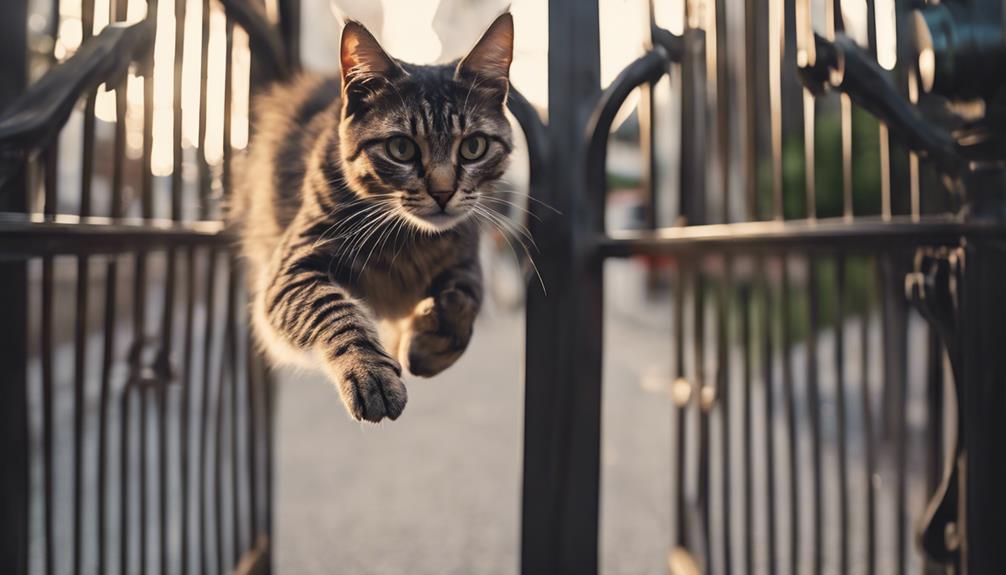
One effective method to prevent cats from jumping over a gate is by installing a taller barrier exceeding 5 feet in height. Taller gates make it challenging for cats to gain balance and jump over, greatly reducing the risk of their escape.
Use Deterrents on Top
To further enhance the effectiveness of keeping a cat from jumping over a gate, utilizing deterrents on top can serve as an additional measure to discourage their escape attempts.
Placing orange-scented spray or tape on the cat-proof fence can deter cats due to their aversion to citrus scents.
Regular reapplication of the deterrents guarantees they remain effective in deterring cats from attempting to jump over the gate.
Provide Alternative Pathways

To deter cats from jumping over gates, it is essential to provide alternative pathways that cater to their natural behaviors. By offering designated cat shelves or perches near the gate, cats can be redirected to explore these cat-friendly paths instead.
Additionally, engaging cats with toys and treats on the ground level can help distract them from attempting to leap over the gate.
Cat-Friendly Paths
Implementing cat-friendly paths around the gate can effectively provide alternative pathways for the feline to explore, redirecting their jumping behavior towards designated climbing areas or shelves.
| Cat-Friendly Paths | Description | Benefits |
|---|---|---|
| Shelves | Elevated platforms for climbing | Encourages vertical movement |
| Cat Trees | Structures for climbing and perching | Provides exercise and exploration |
| Climbing Areas | Designated spaces for climbing activities | Redirects jumping behavior |
Distraction With Toys
Introducing interactive toys strategically near the gate can effectively divert a cat's attention from attempting to jump over it. By providing toys that engage the cat's natural instincts, such as chasing or hunting, you can keep them entertained and prevent them from fixating on the gate.
Additionally, rotating toys frequently can help maintain the cat's interest and decrease the likelihood of boredom-induced gate jumping.
Redirect With Treats
Utilize strategic placement of treats to guide the cat's attention away from attempting to jump over the gate, encouraging them to follow an alternative pathway on the ground level.
- Scatter high-value treats along the ground, leading away from the existing fence.
- Reward the cat with treats or toys for staying on the ground level.
- Use consistent reinforcement to discourage gate jumping behavior.
Set Up Climbing Structures
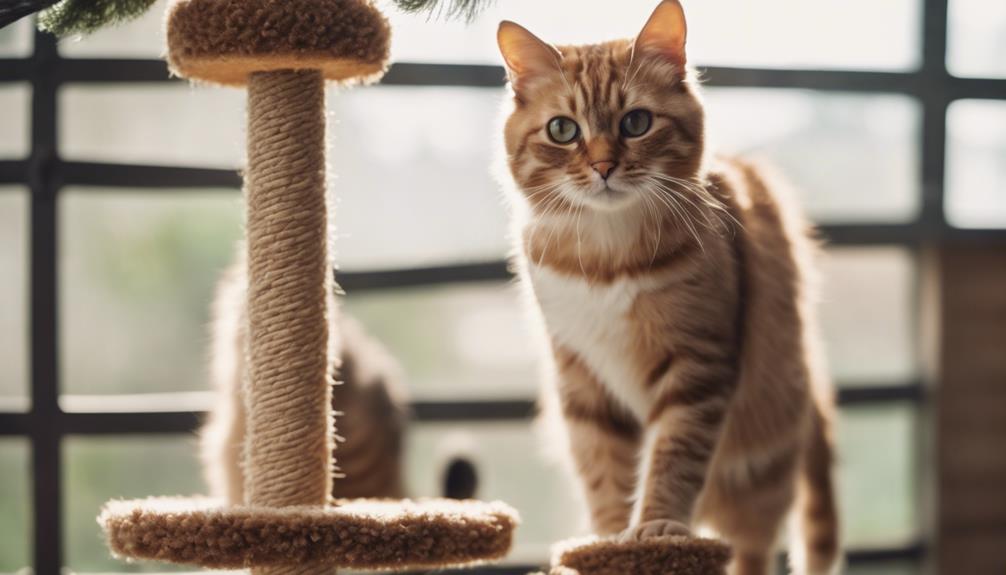
To prevent a cat from jumping over a gate, setting up climbing structures like cat trees, wall shelves, and scratching posts can redirect their jumping impulses towards these designated areas.
These climbing structures provide vertical spaces for the cat to explore, play, and satisfy their natural climbing instincts, ultimately deterring them from attempting to leap over the gate.
Use Cat Trees
Cat trees serve as effective tools in discouraging cats from jumping over gates by providing them with vertical spaces to climb and explore.
- Cat trees offer a safe and designated area for cats to exercise their climbing abilities.
- Placing cat trees strategically near gates diverts cats' attention from attempting to leap over barriers.
- Climbing structures like cat trees satisfy a cat's natural instinct to climb, reducing their desire to jump over gates.
Install Wall Shelves
When creating a feline-friendly environment, incorporating wall shelves as climbing structures can effectively deter cats from attempting to jump over gates. Cats enjoy vertical spaces, and shelves provide opportunities for exploration and climbing.
Installing shelves at varying heights can create an engaging environment for cats to navigate. Climbing structures like wall shelves satisfy a cat's natural instinct to climb and perch, encouraging them to focus on vertical exploration rather than jumping over the gate.
Provide Scratching Posts
Incorporating scratching posts and setting up climbing structures in the living space can provide cats with engaging vertical outlets for their natural behaviors.
- Cat Trees: Tall structures with various levels for climbing and perching.
- Shelves and Platforms: Elevated spaces for cats to explore and observe.
- Multiple Scratching Posts: Placed strategically to divert cats' attention from gate-jumping attempts.
Engage in Regular Playtime
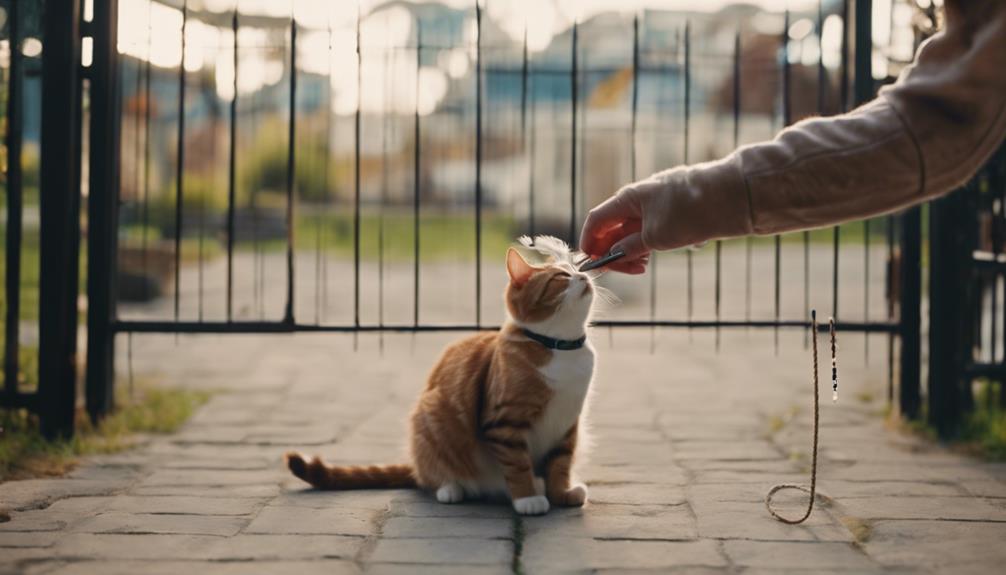
Engaging in scheduled play sessions on a daily basis is essential for channeling a cat's energy and preventing them from attempting to jump over gates. Regular playtime helps cats release excess energy, reducing their urge to engage in jumping behaviors.
Interactive sessions with toys like feather wands or laser pointers engage cats mentally and physically, satisfying their natural instincts. Providing a variety of activities prevents boredom and strengthens the bond between cat and owner.
Consider Double-Sided Tape
To address the challenge of preventing cats from jumping over gates, one effective strategy worth exploring is utilizing double-sided tape as a deterrent. Placing double-sided tape along the top edge of the gate can discourage cats from attempting to jump over.
Here's why this method works:
- Cats dislike the sticky sensation on their paws.
- The tactile aversion can train cats to avoid jumping.
- Reapplying the tape maintains its deterrent effect.
Try Aluminum Foil Method
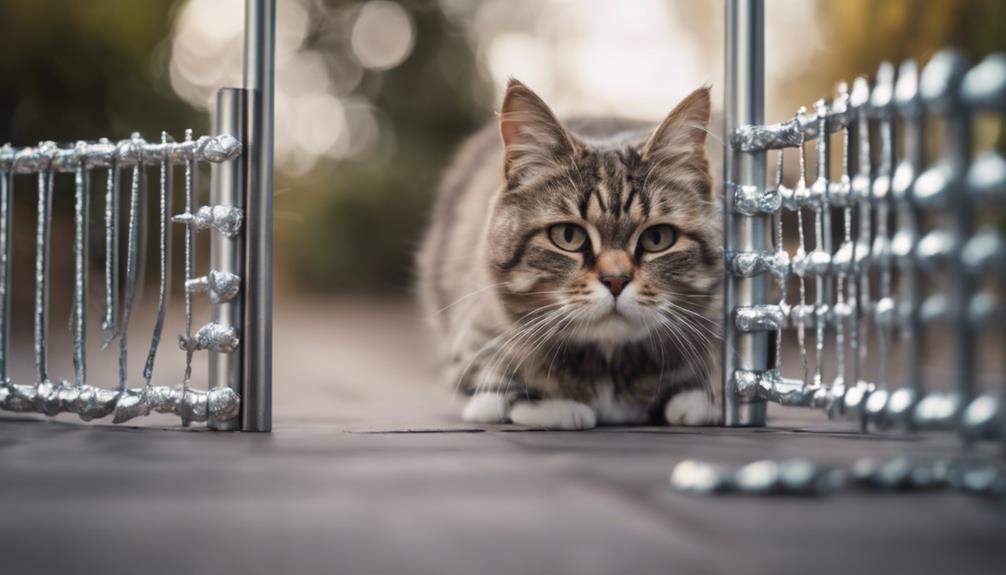
Aluminum foil can be a practical and effective method to deter cats from jumping over a gate. Placing it on top of the gate creates a reflective surface that startles cats, discouraging them from attempting to jump.
Cats also dislike the texture and sound of aluminum foil under their paws, making it an effective deterrent. Make sure the foil is securely attached to the gate to prevent easy removal by the cats.
Redirect Cat Behavior
When addressing the issue of preventing cats from jumping over a gate, redirecting their behavior can be an effective approach.
- Provide interactive toys to keep the cat engaged.
- Offer scratching posts and climbing structures as alternatives.
- Create vertical spaces like cat trees or shelves to satisfy climbing instincts.
Can the Methods for Keeping a Cat from Running Out the Door Also Be Used to Keep Them from Jumping Over a Gate?
Yes, the methods for keeping a cat from running out the door can also be used to prevent them from jumping over a gate. By installing barriers, using deterrents, providing environmental enrichment, and training your cat, you can effectively learn how to prevent cat escapes in various situations.
Ensure Adequate Exercise
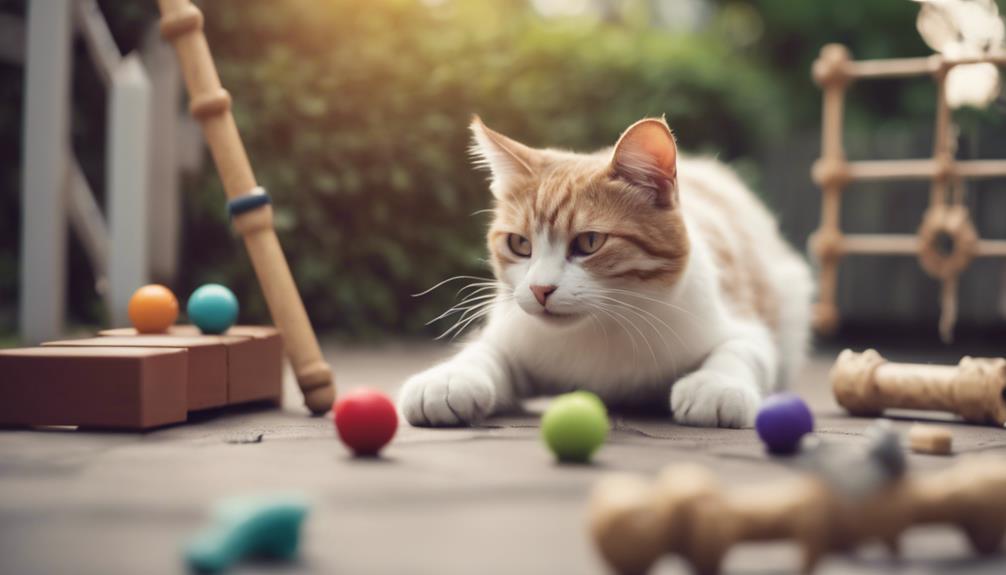
Regular exercise is essential for ensuring that cats remain physically and mentally stimulated, reducing the likelihood of them attempting to jump over gates.
Providing interactive play sessions with toys like feather wands or laser pointers can offer both mental and physical stimulation.
Setting up a cat tree or shelves for climbing and perching satisfies a cat's natural instincts, thereby reducing the need for them to scale taller fences.