How To Keep A Collar On A Cat


To keep a collar on a cat, make sure it fits snugly with space for two fingers to prevent choking or slipping. Regularly adjust as your cat grows to maintain a comfortable fit. Train your cat positively with short sessions to help them adapt to wearing a collar. Collars are vital for safety, aiding in identification and reducing risks indoors and out. Use ID tubes for secure feline identification and consider breakaway or stretch collars for safety. Starting early and being consistent in training will help your cat accept wearing a collar for their well-being. Additional insights on cat collar safety and alternatives await.
Proper Collar Fit for Cats

Ensuring a proper fit for a collar on a cat is essential for both the pet's safety and comfort. Cat collars should fit snugly but allow space for two fingers to prevent choking. This important fit reduces the risk of the collar getting caught on objects.
It's vital that the collar is not too loose to prevent the cat from slipping out of it and not too tight to avoid discomfort. Regularly checking and adjusting the collar maintains the proper fit as the cat grows.
Training Techniques for Collar Wear
Implementing effective training techniques is essential in ensuring a cat's successful adaptation to wearing a collar. Conduct short daily collar training sessions, using positive reinforcement such as treats and praise.
Monitor the collar fitting regularly to prevent discomfort. Encourage the cat with play and rewards during training to create a positive experience.
Persistence and consistency are key in helping the cat adapt to the properly fitted collar.
Importance of Cat Collar Safety
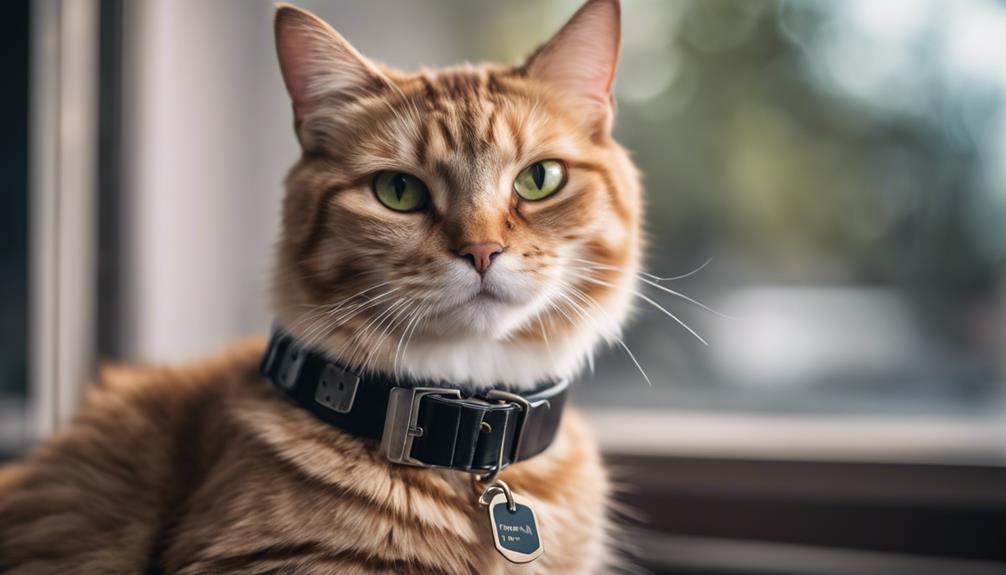
Cat collar safety is essential in ensuring the well-being and security of feline companions. It is especially vital for outdoor cats to wear a collar to prevent escapes and aid in identification if they get lost. Collars also provide added safety measures for cats who go out on a harness and leash. Indoor cats prone to door dashing should wear collars to reduce the risk of getting lost in unfamiliar surroundings.
| Importance of Cat Collar Safety |
|---|
| Prevents escapes for outdoor cats |
| Aids in identification if lost |
| Adds safety for cats on harnesses |
| Reduces risks for indoor cats |
| Helps in unfamiliar surroundings |
Identifying Lost Cats With Collars
Identifying lost cats with collars is an important aspect of pet safety. Collar identification tags are essential for quick and immediate identification in case a cat goes missing.
While microchipping offers permanent identification, collars with ID tags provide a visible and accessible way to identify lost cats.
Collar Identification Tags
When it comes to ensuring the swift and safe return of lost feline companions, collar identification tags play a crucial role. These ID tags are essential for identifying lost cats and assisting in reuniting them with their owners. The table below illustrates the important information that should be included on a cat's collar ID tag:
| Information | Example |
|---|---|
| Cat's Name | Whiskers |
| Owner's Contact | 555-123-4567 |
| Medical Needs | Allergic to seafood |
Microchip for Identification
Utilizing microchip technology enhances the effectiveness of identifying lost cats, especially when paired with collars and ID tags for thorough identification measures.
Microchipping offers a permanent solution for cat identification, ensuring easy recognition even if the collar is lost.
When combined with collars and ID tags, microchips provide an added layer of security, increasing the likelihood of reuniting lost felines with their owners.
Benefits of Using ID Tubes
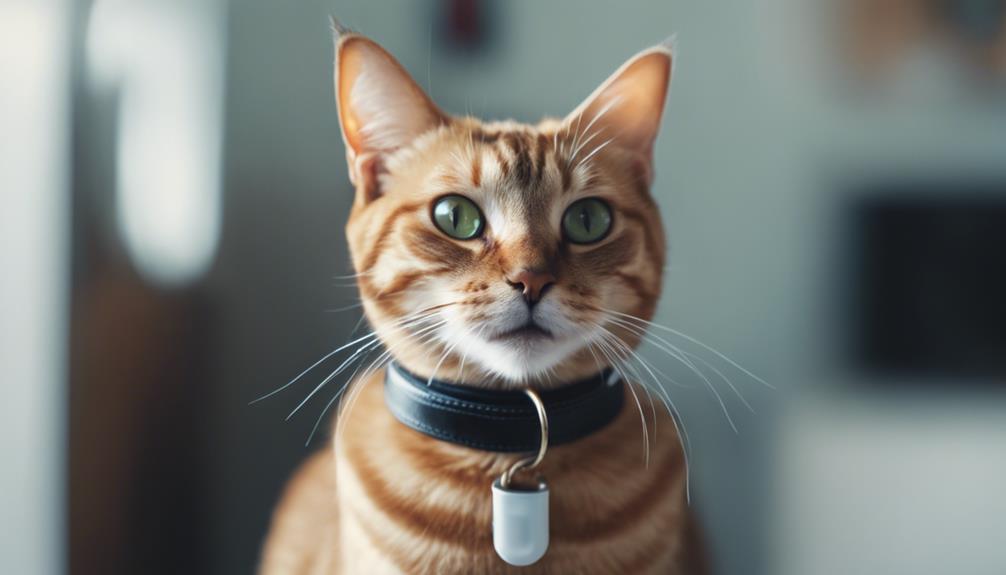
The utilization of ID tubes presents a practical and secure solution for enhancing feline identification within a household. These tubes serve as a secure alternative to traditional tags, reducing the likelihood of collar removal by cats.
Easy to attach and effective, ID tubes offer an added layer of security, especially for cats prone to losing their collars. While not escape-proof, ID tubes provide a reliable method for cat identification, enhancing safety and security.
Choosing the Right Collar Type
Selecting an appropriate collar type is essential in ensuring the safety and comfort of your feline companion. Consider a breakaway collar to prevent choking hazards, a stretch collar for flexibility, and a collar with a buckle clasp. Utilize an ID tube for added security.
Starting collar training early with kittens helps establish positive associations.
Starting Collar Training Early

How important is it to start collar training early for cats to acclimate comfortably to wearing a collar?
Training kittens in collar wearing from a young age establishes positive associations, facilitating higher acceptance rates.
Early exposure to collars sets a foundation for cats to view them as routine. Positive experiences during this training phase greatly influence a cat's willingness to wear a collar long-term, making early collar training essential for success.
Collar Alternatives for Cats
When considering collar alternatives for cats, options like breakaway collars offer safety by releasing if the cat encounters trouble.
Harnesses, on the other hand, provide comfort and flexibility for cats who may find traditional collars restrictive.
Each alternative has its advantages, catering to different needs and preferences for feline companions.
Breakaway Collars for Safety
Breakaway collars, equipped with a safety mechanism that allows for quick release in case of entanglement, are highly recommended by veterinarians for both indoor and outdoor cats to mitigate the risk of choking or injury.
- Designed to release if a cat gets caught.
- Safety mechanism for quick escape.
- Ideal for climbing and exploring cats.
- Reduces accidents and injuries.
- Recommended by veterinarians for safety.
Harness Options for Comfort
Harnesses provide a comfortable and secure alternative to traditional collars for cats, guaranteeing a snug fit without causing discomfort.
Cat harnesses, such as vest, step-in, and H-harnesses, distribute pressure evenly across the body, reducing the risk of neck injuries.
Ideal for outdoor adventures or cats prone to slipping out of collars, harness training involves gradual introduction and positive reinforcement to guarantee feline comfort and acceptance.
Tips for Keeping Collars Secure
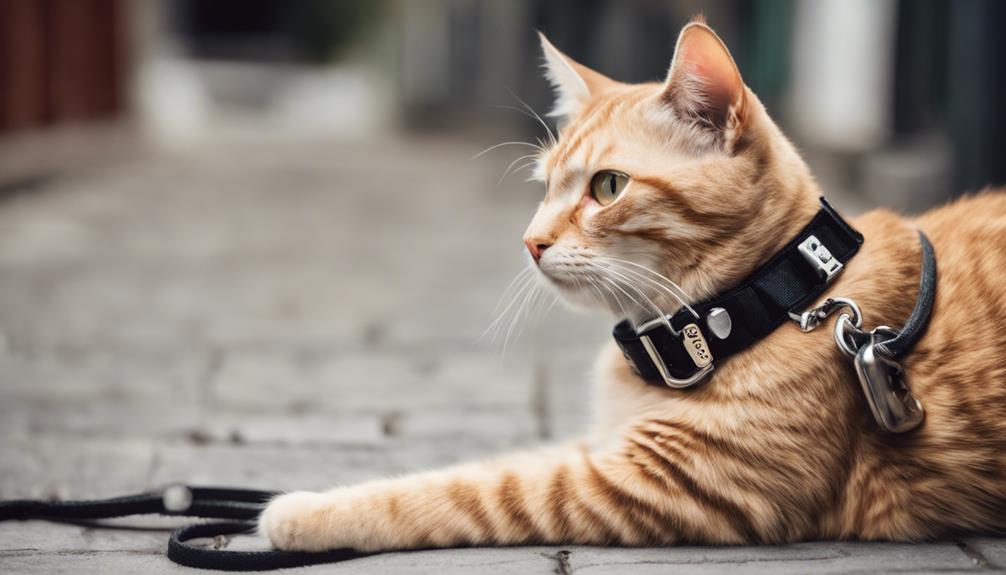
To enhance the security of a cat's collar, it is advisable to choose one with a buckle clasp for added protection.
Consider using an ID tube for extra safety, opt for a stretch collar for emergency release, start training your cat to wear a collar from a young age for better acceptance, and microchip resistant cats as an alternative.
Is It Possible to Keep a Breakaway Cat Collar Secure on My Cat?
Yes, it is possible to keep an open breakaway cat collar secure on your cat. You can use a collar that fits properly and check it regularly for any signs of wear. Additionally, make sure the buckle is secure and consider adding an identification tag to the collar for added security.
Microchipping Vs. Collar Usage
When considering the choice between microchipping and collar usage for cat identification, it is important to weigh the benefits of each method carefully. Collars provide quick visual identification, especially for outdoor cats at risk of getting lost. On the other hand, microchipping offers permanent identification, guaranteeing easy recognition even if the collar is removed. Here is a comparison between collars and microchipping for cat identification:
| Aspect | Collars | Microchipping |
|---|---|---|
| Identification | Visual and quick | Permanent |
| Lost Prevention | Effective for outdoor cats | Guarantees identification even if collar is lost |
| Ease of Use | Simple to put on | Requires a vet visit for implantation |