How To Make Cat Sneeze To Clear Nose


To help your cat sneeze and clear its nose, start with a vet consultation to identify any underlying issues causing sneezing. If important, gentle methods are needed, try tickling the cat's nose with a feather or offering a whiff of catnip. Stimulating sneezing can help clear congestion. Methods like warm compresses, saline nasal sprays, and a humidifier can relieve nasal congestion. L-Lysine supplements may help manage feline herpes virus. Long-term monitoring is essential. These steps can aid in improving your cat's breathing and overall comfort. Additional tips and detailed instructions can offer further support and guidance.
Vet Consultation
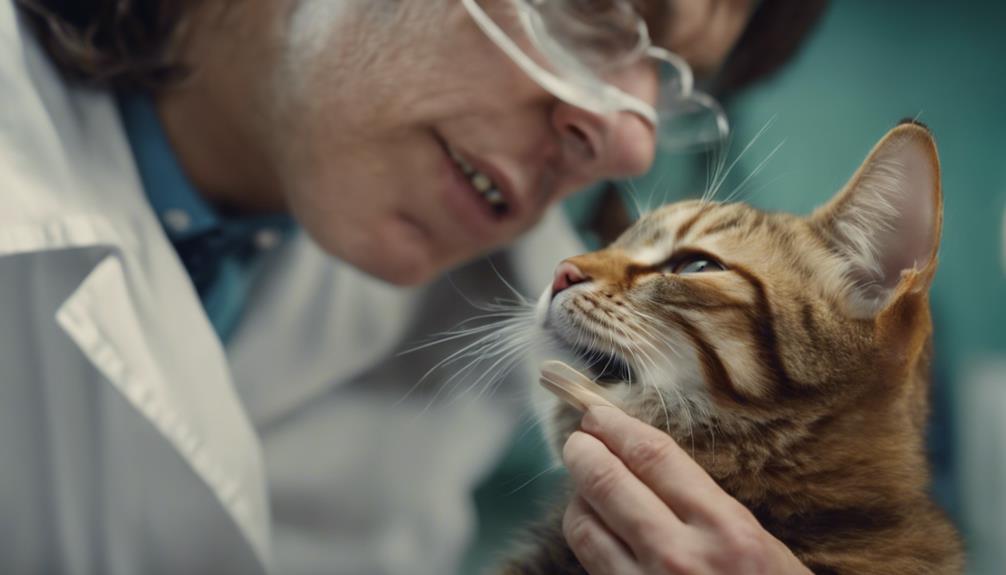
Why is a vet consultation essential before attempting to make your cat sneeze to clear its nose?
Vets play an important role in evaluating your cat's nasal health. They can determine the underlying causes of sneezing and provide the best solutions.
Steam Method
To aid in clearing a cat's nasal passages, utilizing the steam method can be beneficial in loosening mucus and promoting sneezing.
Inhaling steam in a steamy bathroom can effectively clear a cat's nose. This natural and gentle approach can provide relief for cats with nasal congestion or respiratory issues.
The steam method offers a soothing and non-invasive way to help cats sneeze and clear their noses.
Nasal Spray
When contemplating the use of nasal sprays for cats, it is vital to opt for non-medicated sprays specifically formulated for feline use. These sprays can help trigger sneezing, aiding in clearing the cat's nasal passages effectively.
Consulting a veterinarian before administering any nasal spray is imperative to guarantee the safety and well-being of your pet.
Natural Remedies
Using a non-medicated nasal spray approved by a veterinarian can be an effective natural remedy for triggering sneezing in cats to clear their nasal passages.
Over-the-counter saline solutions, safe alternatives, can also help. These sprays work by stimulating the nasal passages, promoting sneezing to expel mucus and clear congestion.
Before using any nasal spray, consult with a vet to guarantee safety and effectiveness for your cat's health.
Proper Application Techniques
Proper administration of the non-medicated nasal spray approved by your veterinarian is essential to effectively induce sneezing in your cat and clear its nasal passages.
- Follow the vet's instructions for safe and effective application.
- Use over-the-counter saline solution as an alternative nasal spray.
- Avoid human nasal sprays, which may be harmful to cats.
- Consult your vet before using any nasal spray.
Tickle Nose
Make sure to gently stimulate your cat's nose with a feathered toy to elicit a sneeze reflex and help clear its nasal passages.
The tickling sensation can trigger a natural sneeze response in your cat, aiding in the removal of any blockages.
This method, when combined with steam or saline spray, can enhance the effectiveness of clearing your cat's nasal passages.
Ensure your cat is comfortable and stop if it displays signs of distress.
Humidifier Use
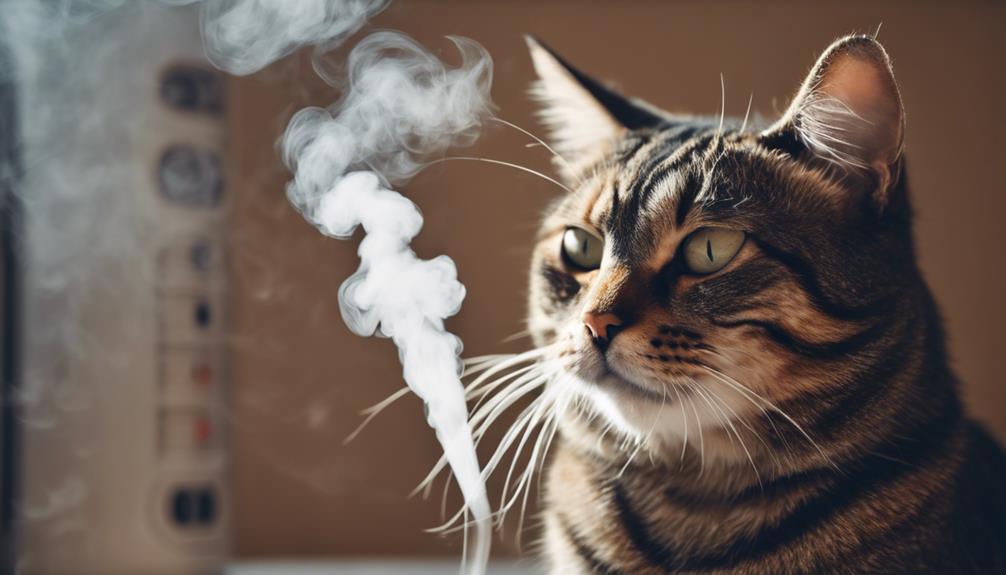
To further alleviate your cat's nasal congestion and enhance respiratory comfort, consider utilizing a humidifier to introduce moisture into the air.
- Using a humidifier can help moisten the air and clear your cat's nasal passages.
- Humidifiers can reduce nasal congestion in cats by loosening mucus.
- Opt for a cool mist humidifier to avoid potential burns for your cat.
- Proper humidity levels can soothe your cat's respiratory system and promote easier breathing.
- Humidifiers are a safe and effective way to provide relief for your cat's stuffy nose.
L-Lysine Supplements
L-Lysine supplements offer several benefits for managing feline herpes virus. These benefits include reducing the frequency and severity of flare-ups that can lead to nasal congestion in cats.
It is important to follow the recommended dosage and administration guidelines from your veterinarian when using L-Lysine supplements. This ensures their effectiveness and safety.
While these supplements are generally well-tolerated, some cats may experience mild side effects. Therefore, monitoring your pet's response is essential.
L-Lysine Benefits
When administered properly, L-Lysine supplements have shown significant benefits in managing feline herpes virus outbreaks in cats.
- Reduces severity and frequency of herpes virus outbreaks
- Inhibits virus replication in the body
- Available in treats, powders, and gels
- Helps manage viral infections effectively
- Consult your vet for proper dosage and administration
Dosage Recommendations
Administering the appropriate dosage of L-Lysine supplements for cats plays an essential role in effectively managing feline herpesvirus symptoms. Typically, the recommended dosage ranges from 250-500 mg per day. The dosage may vary depending on the cat's weight and the severity of upper respiratory symptoms.
It is important to consult a vet before starting any supportive care regimen. L-Lysine supplements are available in various forms like treats, powders, and gels for easy administration.
Possible Side Effects
While L-Lysine supplements can be beneficial for managing feline herpesvirus symptoms, it is important to be aware of potential side effects that may arise.
- Digestive issues like diarrhea or vomiting can occur in some cats.
- Allergic reactions, though rare, may manifest as swelling or difficulty breathing.
- Overuse can lead to amino acid imbalances affecting overall health.
- Consult a vet for proper dosage guidance.
- Monitor for adverse effects and adjust treatment accordingly.
Warm Compress
To help alleviate nasal congestion in a cat, employing a gentle warm compress on its nose can be beneficial.
The warmth from the compress can help loosen nasal mucus, aiding in the expulsion of nasal discharge.
This method can also be useful in cases of bacterial infection, as it promotes sneezing to clear the nasal passages.
Use a soft, warm cloth to prevent skin irritation, repeating the application as needed for relief.
Prank Sneezing Powders
Prank sneezing powders should never be used on cats due to the potential harm they can cause to the feline's nasal passages and respiratory system.
- Cats nose can be sensitive to foreign substances.
- Showing signs of irritation or discomfort.
- Harmful chemicals in powders may lead to respiratory issues.
- Discomfort and distress in cats are possible outcomes.
- Prioritize cat's safety by avoiding these powders.
Avoid Red Pepper
Introducing red pepper to induce sneezing in cats is not recommended due to its potential to irritate and harm felines.
The use of red pepper can lead to discomfort and damage to the delicate nasal passages of cats.
It is important to opt for safer alternatives that are approved by veterinarians when addressing nasal issues in cats.
Red Pepper Irritates Cats
Red pepper, due to its potential to cause irritation and discomfort, should be avoided when attempting to induce sneezing in cats to clear their nose.
- Inhaling or ingesting red pepper can lead to respiratory system irritation in cats.
- Cats possess a sensitive respiratory system prone to red pepper irritation.
- Use of red pepper may result in nasal irritation, sneezing, and health complications for cats.
- Seeking guidance from a veterinarian is safer than using red pepper for cat sneezing.
- Red pepper can cause discomfort and potential harm to felines.
Harmful to Felines
Harmful to felines, the use of red pepper should be strictly avoided when attempting to induce sneezing in cats to clear their nose due to its potential to irritate their nasal passages and cause discomfort.
Cats, with their strong sense of smell, can be particularly sensitive to red pepper, which may lead to respiratory issues if ingested or inhaled.
To prevent harm, it is best to opt for safer alternatives like steam or saline solutions.
Choose Safer Alternatives
When seeking to alleviate nasal congestion in cats, it is imperative to prioritize their well-being by opting for safer alternatives such as steam or nasal sprays instead of utilizing red pepper, which can potentially lead to discomfort and respiratory issues.
- Steam: Helps clear nasal passages gently.
- Nasal Sprays: Specifically designed for feline use.
- Gentle Tickling: Can stimulate sneezing without harm.
- Warm Compress: Relieves congestion effectively.
- Humidifier: Adds moisture to the air, aiding in breathing.
Can Clearing a Cat’s Nose Help Get Rid of Fleas?
Clearing a cat’s nose won’t get rid of fleas. To treat cat fleas, use flea treatments like topical medications, flea collars, or oral medications. Regular grooming and vacuuming can also help eliminate fleas in the environment. Consult a veterinarian for the best how to treat cat fleas.
Monitor Long-Term Effectiveness
To gauge the enduring efficacy of L-lysine supplements in managing feline herpes virus symptoms, it is imperative to diligently assess any sustained changes in the frequency or severity of your cat's nasal issues over an extended period.
| Aspect to Monitor | What to Do | Frequency |
|---|---|---|
| Sneezing Frequency | Record | Daily |
| Breathing Improvement | Note | Weekly |
| Comfort Level | Evaluate | Monthly |