How To Prevent Insect Bites On Cats


To prevent insect bites on cats, use parasite preventatives like topical ointments or collars year-round. Consult a vet for suitable options and maintain consistent usage. Check for heartworm preventatives like Revolution monthly. Apply flea and tick preventatives, plus cat-safe mosquito repellents. Keep cats indoors during peak mosquito times. Regularly inspect your cat's fur, especially ears, face, neck, and belly for bites or redness. Watch for changes in behavior and seek prompt veterinary care if needed. Safeguard your cat's well-being with these preventative measures. Additional insights are available for effective insect bite prevention strategies.
Parasite Preventatives for Cats

Discussing the prevention of insect bites on cats starts with understanding the importance of utilizing effective parasite preventatives. Mosquito bites can transmit harmful diseases to cats, making year-round administration of preventatives vital.
Flea preventatives, including topical ointments, chewables, and collars, are common options. Consult with a veterinarian to determine the most suitable parasite preventative for your cat. Consistent use of these preventatives is essential to safeguard your cat's health.
Choosing the Right Preventative
When selecting the appropriate preventative for protecting your cat from insect bites, it is essential to consult with your veterinarian to guarantee the safety and effectiveness of the chosen product.
Consider using cat-safe picaridin products as mosquito repellents and look for heartworm prevention options like Heartguard or Revolution.
Administer monthly heartworm prevention to safeguard your cat's health, ensuring the chosen preventative is safe and efficient for your feline companion.
Consistent Preventative Measures
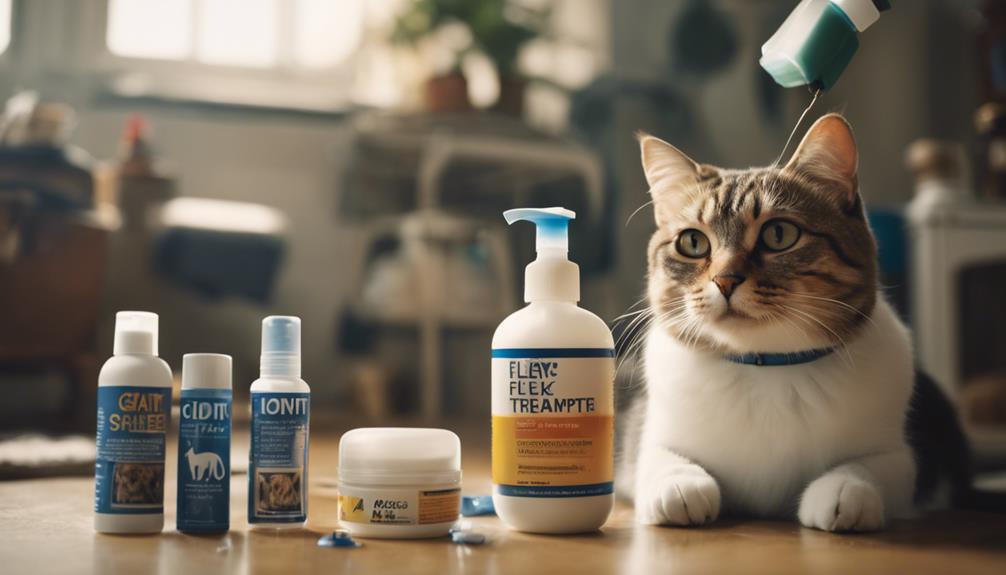
To effectively safeguard your cat from insect bites, maintaining consistent preventative measures is essential. Use monthly flea and tick preventatives to protect your cat, apply cat-safe mosquito repellents, and keep your cat indoors during peak mosquito activity times. Consulting with your veterinarian for advice on the best preventative measures is vital.
Implementing natural repellents like citronella and ensuring a clean environment also help reduce insect exposure.
Regular Cat Inspection
Regularly inspecting your cat's fur is essential to detect any signs of insect bites, such as redness, swelling, or skin lesions.
Focus on checking areas like the ears, face, neck, and belly where insects tend to hide.
Be vigilant for any changes in behavior or discomfort that could indicate your cat has been bitten.
Cat Fur Examination
Conducting routine inspections of your cat's fur is essential for detecting and addressing any potential insect bites promptly. By examining specific areas where insects may target, like the ears, nose, and base of the tail, you can identify redness, swelling, or irritation. Use a fine-toothed comb to check for fleas, ticks, or mites. Consult your veterinarian for proper diagnosis and treatment.
| Cat Fur Examination | Insect Bites | Veterinarian |
|---|---|---|
| Specific Areas | Redness | Diagnosis |
Skin and Ears
When examining your cat's fur for potential insect bites, it's important to focus on the skin and ears as key areas of concern.
- Look for signs of redness, swelling, or skin lesions.
- Check ears for irritation, redness, or scratching.
- Note any scabs, bumps, or hair loss.
- Observe behavior changes like excessive scratching.
Regular inspection of these areas can help detect mosquito bites or other bug-related issues promptly.
Prompt Veterinary Care
When your cat shows signs of insect bites, seeking prompt veterinary care is essential. Early treatment can prevent complications and guarantee your cat receives the necessary care promptly.
A veterinarian's examination can help determine the type of bite and recommend suitable remedies for your cat's well-being.
Quick Vet Visits
Seeking prompt veterinary care is vital for effectively addressing severe reactions to insect bites on cats. Quick vet visits can help identify the type of bite, such as mosquito bite hypersensitivity or flea bites, and recommend appropriate treatment.
If your cat displays signs of an allergic reaction to insect bites, speaking to your veterinarian immediately is important. Fast veterinary intervention can prevent complications and guarantee your cat's well-being.
Early Treatment Crucial
Given the importance of swift veterinary attention for severe reactions to insect bites on cats, early treatment becomes paramount in ensuring the well-being of your feline companion. Understanding how cats' immune systems respond to insect bites is important to know. Immediate intervention can prevent allergic reactions and skin issues, while prompt medical care minimizes discomfort and reduces the risk of secondary infections.
| Importance of Early Treatment | Effects on Cats |
|---|---|
| Prevents complications | Minimizes discomfort |
| Identifies insect bite type | Reduces risk of infections |
| Alleviates pain | Prevents allergic reactions |
Prompt Medical Attention
For the best health and well-being of your cat, immediate veterinary care is essential upon observing any signs of infection or severe reactions to insect bites.
Seek prompt veterinary care if you notice any signs of infection or severe reactions to mosquito bites on your cat.
Immediate attention is vital for insect bites causing discomfort, swelling, or unusual behavior in your cat.
Timely medical intervention can prevent complications and safeguard your cat's well-being after bug bites.
Veterinarians can provide appropriate treatment and guidance to manage insect bite reactions in cats effectively.
Protection From Fleas and Ticks

Protection from fleas and ticks is essential for maintaining the health and well-being of cats. Fleas can cause itching, scabs, and hair loss, while ticks feed on blood and may lead to diseases. Year-round prevention is vital to avoid infestations.
Using treatments like Bravecto and Revolution can help control mites. Regularly checking for ticks, cleaning the area after removal, and monitoring for signs of illness are also important practices.
Avoiding Mosquito Bites
To safeguard your feline companion from the risks associated with mosquito bites, utilizing cat-safe picaridin products can be an effective measure. Remember to limit outdoor exposure during peak mosquito times and keep cats indoors during dawn, dusk, and nighttime when mosquitoes are active.
Encouraging outdoor cats to adapt to indoor living can also minimize mosquito exposure. Consult your veterinarian for safe and effective mosquito prevention options for cats.
- Use cat-safe picaridin products
- Limit outdoor exposure during peak mosquito times
- Keep cats indoors during dawn, dusk, and nighttime
- Consider encouraging outdoor cats to adapt to indoor living
Are the Methods for Preventing Insect Bites on Cats Also Effective for Preventing Tick Bites?
Yes, the methods for preventing tick bites on cats are also effective for preventing tick bites. Using flea and tick preventatives specifically designed for cats, regularly checking your cat for ticks, and keeping your yard tidy can all help keep your feline friend safe from tick bites.
Preventing Common Bug Bites

When safeguarding your feline companion from common bug bites, utilizing cat-safe picaridin products remains an important preventive measure. These products effectively repel mosquitoes, reducing the risk of bites on dogs and cats. Implement preventative measures like topical ointments, chewables, or flea collars to protect against heartworm disease.
Administer year-round parasite preventatives and consult with a veterinarian regularly to guarantee your cat's protection from flea and tick infestations.