How To Protect Bird Nests From Cats


Protect bird nests from cats by keeping them indoors during breeding season. This decreases predation risks and guarantees a safer environment for nesting birds. Attaching bells to cat collars alerts birds of cats' presence, giving them a chance to escape. Place nest boxes away from trees to deter climbing predators like cats. Clearing debris around nests reduces hiding spots and makes monitoring easier. Using snake repellents near nests can also deter climbing predators effectively. These methods are essential for protecting bird nests from cats and maintaining bird populations. Help safeguard nesting birds by implementing these strategies.
Keep Cats Indoors During Breeding Season

During the breeding season, it is essential to keep cats indoors to minimize their impact on nesting bird populations. Cats, as natural predators, pose a substantial threat to young or nesting birds.
Indoor confinement is vital for reducing the risk of predation. By keeping cats inside, the chances of birds being preyed upon are greatly decreased, ensuring a safer environment for nesting birds during this critical period.
Attach Bells to Cat Collars
Attaching bells to cat collars is a vital method to alert birds of a cat's presence.
The sound of bells can give birds a chance to escape from approaching cats, reducing bird predation rates.
Installing bells safely and understanding cat behavior modification are essential points to take into account when implementing this strategy.
Bell Collar Benefits
The utilization of bell collars on cat accessories demonstrates a practical and efficient method to mitigate the predation of birds by felines.
By attaching bells to cat collars, birds are alerted to the presence of cats, allowing them a chance to escape.
Studies show that this simple addition can reduce successful hunting attempts on wildlife by up to 41%, making it a valuable tool in protecting bird nests in gardens and natural areas.
Installing Bells Safely
To guarantee the safe installation of bells on cat collars as a means of protecting bird nests, proper attachment techniques are essential.
- Confirm the bell is securely attached to the collar.
- Regularly check the bell for wear and tear.
- Use lightweight bells to prevent discomfort for the cat.
- Position the bell where it can be easily heard by birds.
- Introduce the cat to the bell gradually to avoid stress.
Cat Behavior Modification
Considering the importance of safeguarding bird nests from cat predation, implementing behavior modification strategies through the use of bells on cat collars is an effective method to reduce hunting activities near avian habitats. The sound of bells alerts birds, giving them time to escape. Studies show that this simple approach decreases bird predation rates, protecting the nest effectively.
| Benefits of Bells on Cat Collars |
|---|
| Alerts birds of cat presence |
| Gives birds time to escape |
| Reduces hunting success rate |
Place Nest Boxes Away From Trees
Strategically positioning nest boxes a minimum of 10 feet from trees can effectively deter climbing predators like cats.
- Cats use trees to access nests easily.
- Bird nests near trees are vulnerable to cat attacks.
- Trees create pathways for cats to reach bird nests.
Clearing debris around nest boxes can help prevent cat predation.
Proper placement greatly reduces the risk of cats preying on birds.
Clear Debris Around Nests
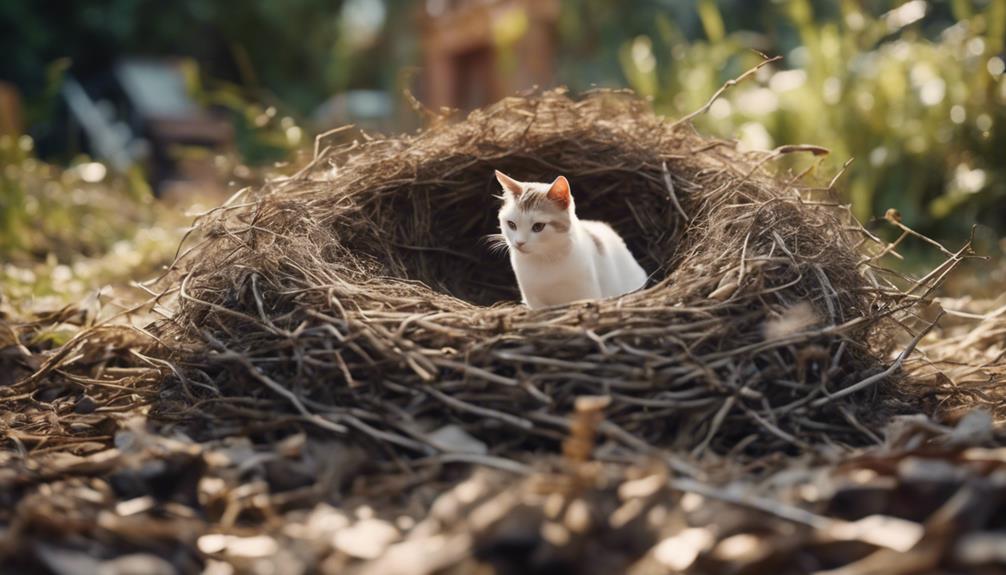
Positioning bird nests away from trees not only deters climbing predators like cats but also involves clearing debris around the nests to reduce hiding spots and potential threats.
Clearing debris helps create a safer environment by eliminating places where cats can hide and sneak up on nests. This practice also allows for easier monitoring of the area, making it less inviting for cats to approach and potentially harm the nest from predators.
Use Snake Repellents Near Nests
Snake repellents can be effective in deterring snakes, which pose a significant threat to nesting birds. By strategically placing these repellents near nests, a barrier can be created against climbing predators like snakes.
Understanding the proper placement tips and safety considerations for using snake repellents is important in safeguarding bird nests from potential snake attacks.
Snake Repellent Effectiveness
Utilizing snake repellents near bird nests can effectively deter snakes from encroaching on nesting areas.
- Some snake repellents use natural ingredients like clove oil and cinnamon.
- Chemical snake repellents emit odors that snakes find unpleasant.
- Solid snake repellents can be sprinkled around the perimeter of the nest.
- Liquid snake repellents can be sprayed directly on the ground near the nest.
- Proper application of snake repellents can help protect bird nests from potential threats.
Proper Placement Tips
When safeguarding bird nests, strategic placement of snake repellents near nesting areas is essential to deter potential threats.
During nesting season, using snake repellents in the vicinity of nests can help protect nesting birds from snake attacks.
Safety Considerations for Use
Ensuring the safe and effective use of repellents near bird nests is paramount for protecting nesting birds from potential threats.
When using snake repellents near nests, consider the following:
- Proper placement can deter nest predators.
- Strategic positioning safeguards baby birds.
- Repellents create a barrier against snakes.
- Proactive measures prevent snake attacks.
- Safeguarding nests aids bird survival.
Educate Others About Nest Protection
By spreading awareness about the importance of safeguarding bird nests from cats, individuals can play a significant role in protecting these vulnerable avian habitats. Educating others about predator threats and deterrent methods for cats can empower proactive measures. Involving neighbors and wildlife authorities in nest protection efforts creates a collective impact on bird conservation. Collaborating with local experts can guarantee effective strategies to prevent predators from harming bird nests.
| Importance of Educating Others About Nest Protection |
|---|
| Raises awareness about safeguarding bird nests |
| Encourages proactive measures to protect nests |
| Creates a collective impact on bird conservation |
| Empowers others with deterrent methods for cats |
| Offers guidance and support from local wildlife authorities |
Is the Protection Tactics for Cats from Coyotes Useful for Bird Nests as well?
If you’re looking to protect your cat from coyotes, you may also be helping to safeguard bird nests in your area. By implementing tactics to keep your cat safe from coyotes, you are indirectly reducing the threat to local birds and their nests from these predators.
Regular Nest Monitoring for Safety

To enhance the protection of bird nests from predators such as cats, implementing a system of regular nest monitoring is essential for ensuring the safety of eggs and chicks. Monitoring involves checking for disturbances or signs of predation, using cameras or visual checks, promptly addressing threats, and ultimately increasing nesting success rates. This proactive approach can help prevent cat attacks and safeguard the vulnerable bird populations.
- Regularly monitor bird nests
- Check for signs of disturbance
- Use cameras or visual checks
- Address threats promptly
- Increase nesting success