How To Protect Your Cat From Coyotes


To safeguard your cat from coyote attacks, start indoors with safety measures like keeping them inside during vulnerable times. Utilize identification methods like microchipping and ID tags for quick retrieval. Avoid declawing to maintain their natural defenses. Provide stimulation with toys and scratching items. Keep cats indoors during dawn and dusk when most active. Install a protective fence and deterrents outdoors. Regularly check equipment for maintenance. Educate the community and neighbors about coyote risks. These practices combined will help protect your beloved feline friend from potential harm. Further insights await for ensuring your cat's safety.
Importance of Indoor Safety Measures
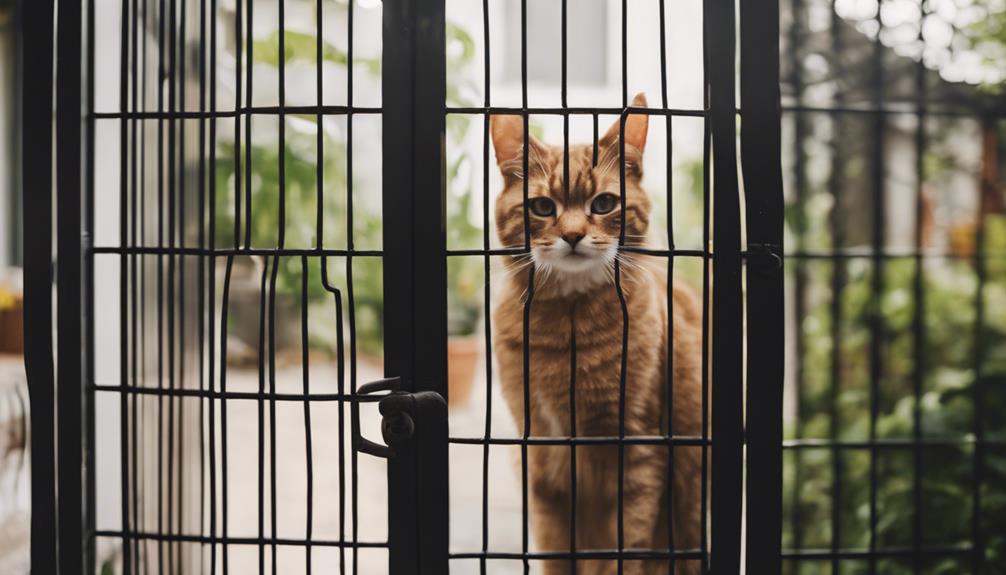
Implementing strict indoor safety measures is imperative to safeguard your indoor cat from the heightened risk of coyote attacks during nighttime and seasons of increased activity. Bringing cats indoors during vulnerable hours, particularly between 10:00 PM and 5:00 AM, greatly reduces the chances of encounters with coyotes.
Microchipping and Identification Tags
Microchipping your cat involves implanting a small chip under its skin with a unique ID number for easy tracking if it gets lost.
Identification tags on collars provide immediate owner contact information.
Ensuring proper registration of microchips is vital for reuniting lost cats with their owners efficiently.
Importance of Microchipping
For the safe identification and swift return of lost cats, microchipping provides a reliable and permanent solution compared to traditional collars and tags.
These tiny chips, inserted under the cat's skin, contain a unique code that can be scanned by vets or shelters for shelter reunification.
Unlike collars that can fall off, microchips offer a dependable method of tracking lost pets, greatly increasing the chances of finding them.
Benefits of ID Tags
Utilizing identification tags, whether in the form of traditional collars or microchips, offers pet owners a dual-layered approach to safeguarding their cats' identification and increasing the likelihood of a swift reunion if they go missing.
ID tags provide visible information for quick identification, while microchips offer a permanent solution with a unique code linked to the owner's contact details. This dual method greatly enhances the chances of reuniting with a lost cat, especially important as coyotes eat cats.
Ensuring Proper Registration
When safeguarding your cat against potential threats like coyotes, ensuring proper registration of both microchips and identification tags is a vital step in enhancing their safety and increasing the likelihood of a swift reunion if they stray.
- Microchipping provides permanent identification.
- Registration of microchips with updated contact details is essential.
- Collars with breakaway mechanisms prevent injuries and display tags effectively.
Avoiding Declawing for Protection
Preserving a cat's natural defenses and well-being involves refraining from the painful and detrimental procedure of declawing. Cats rely on their claws for defense, balance, and climbing.
Declawing can lead to behavioral issues and leave cats vulnerable and defenseless. Instead of declawing, providing indoor entertainment and stimulation can help satisfy a cat's natural instincts and protect them from potential harm, such as encounters with coyotes.
Providing Indoor Entertainment and Stimulation
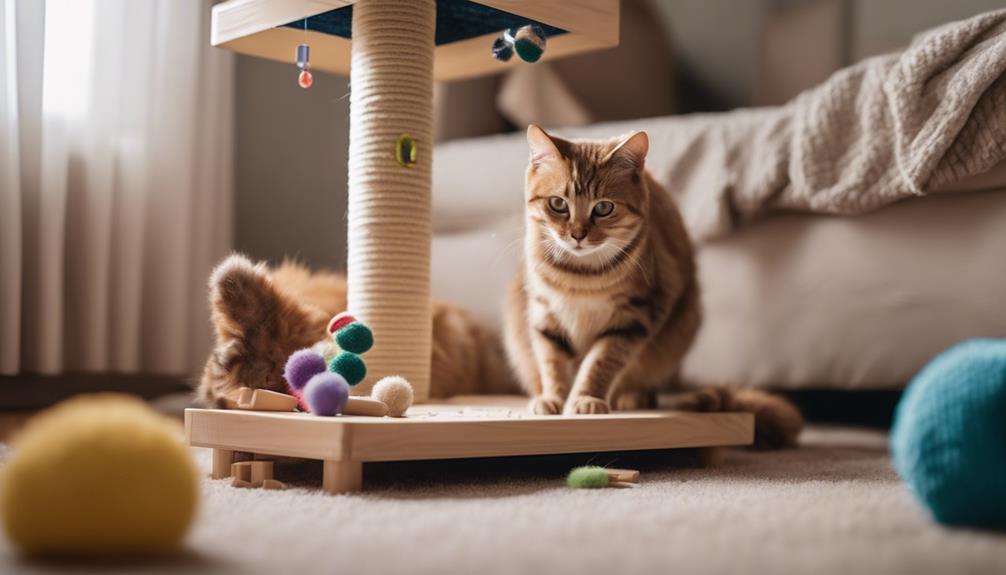
To ensure your cat's well-being and mental stimulation, it is essential to provide indoor entertainment and enrichment that cater to their natural instincts and behaviors.
- Interactive toys, puzzle feeders, and scratching posts keep cats engaged.
- Vertical spaces like cat trees satisfy climbing instincts.
- Rotating toys and introducing new ones regularly prevent boredom.
Keeping Cats Indoors During Dawn and Dusk
During dawn and dusk, coyotes are most active, posing a higher threat to outdoor cats. Keeping cats indoors during these times is an essential safety measure to protect them from potential coyote attacks.
Dawn and Dusk Risks
At dawn and dusk, when coyotes are most active, it is essential to keep cats indoors to protect them from potential encounters with these predators.
- Coyote attacks on cats are most common during these times.
- Cats are vulnerable due to low visibility.
- Indoor cats are less likely to face coyote threats during peak activity hours.
Indoor Safety Measures
Implementing strict indoor safety measures during dawn and dusk is essential to safeguard cats from potential encounters with coyotes, the most active predators during these peak hunting times.
Cats tend to be more vulnerable to predatory activity by coyotes during twilight hours, making it important to keep them indoors during these periods.
Protecting cats from outdoor risks, especially during peak hunting times, greatly reduces the chances of coyote attacks.
Supervised Outdoor Time
To guarantee the safety of your cat from potential encounters with coyotes, it is advisable to supervise their outdoor time and keep them indoors during dawn and dusk, the peak hunting times for these predators.
- Cats are often targeted by coyotes during dawn and dusk.
- Keeping cats indoors during these times helps keep them safe.
- Supervised outdoor time guarantees cats have a safe place away from potential threats.
Securing Outside Food Sources
Securing outdoor food sources is essential in safeguarding your cat from potential encounters with coyotes. To protect your cat, keep food sources like garbage in animal-proof containers. Feed cats during the day, promptly disposing of any leftovers.
Remove attractants such as fruit trees and bird feeders. By eliminating appetizing scents and securing outside food sources, you can help prevent coyotes from venturing into your property and posing a threat to your cat.
Installing a Protective Fence
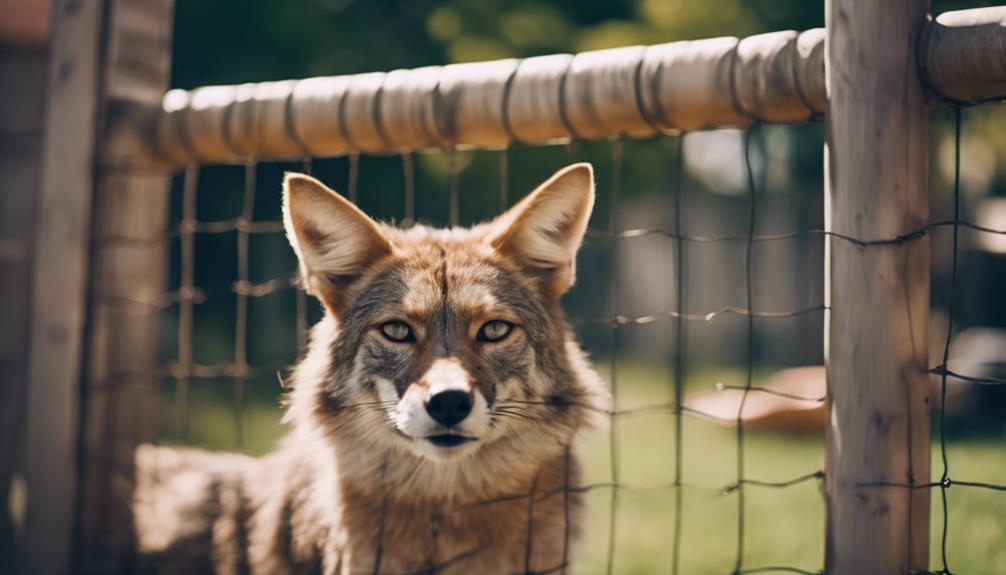
To enhance the safety of your cat and deter potential coyote threats, consider installing a protective fence at least 6 feet tall around your property.
- Add a roller bar or woven-wire extension to the fence's top for extra protection.
- Extend wire into the ground or install a wire apron to prevent coyotes from digging under.
- Strengthen the fence effectively to make sure persistent coyotes cannot breach it.
Using Cat Posts for Safety
Cat posts serve as essential structures to provide elevated safe spaces for cats, safeguarding them from potential coyote threats. These wooden structures, typically 10-12 feet tall, offer a secure refuge for cats in open areas.
Implementing Coyote Repellent Lights
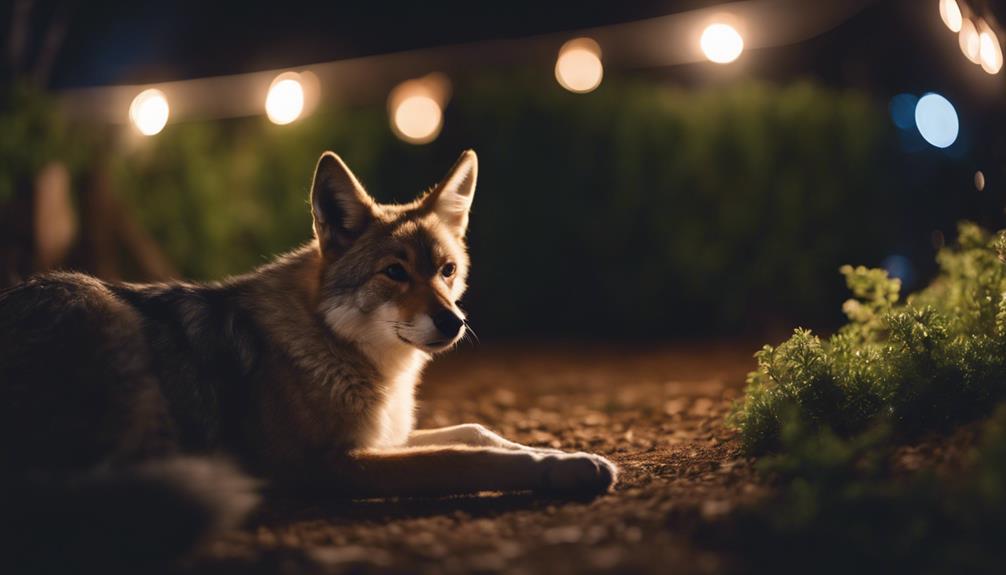
Coyote repellent lights are an effective way to deter these predators from approaching your property.
The placement of these lights is vital to maximize their effectiveness in scaring off coyotes.
Additionally, choosing the right type of lights and ensuring proper maintenance will help in protecting your pets from potential encounters with coyotes.
Light Placement Tips
Implementing coyote-repellent lights requires strategic placement throughout your property to effectively deter potential coyote threats.
- Position LED lights where they can cover vulnerable areas.
- Guarantee lights emit red flashes visible to urban coyotes.
- Place lights at varying heights to maximize coverage and protect your cat.
Choosing the Right Lights
Strategically selecting the appropriate lighting options plays a pivotal role in effectively deterring coyotes and safeguarding your outdoor pets. Red LED lights, like those offered by Nite Guard Solar, emit flashes that mimic predator eyes, keeping coyotes away. These lights, recommended by the National Park Service, can be strategically installed around your property to create a barrier against coyotes, protecting your pets from harm.
| Coyote Repellent Lights | Benefits |
|---|---|
| Red LED lights | Mimic predator eyes |
| Strategic installation | Deters coyotes |
| Protects outdoor pets | Reduces risk |
| Recommended by NPS | Safeguards pets |
Maintenance and Upkeep
Maintaining proper upkeep of the red LED lights, known for mimicking predator eyes, is crucial to sustain their effectiveness in deterring coyotes and safeguarding outdoor pets like your cat.
- Regularly check the lights for any damage or malfunction.
- Clean the lights to ensure maximum brightness.
- Replace the batteries as needed to keep the lights operational.
Can Coyote Protection Measures Also Keep Cats Away from Bird Feeders?
Yes, keeping cats away from bird feeders is a concern for many bird enthusiasts. While coyote protection measures may help deter cats, it’s important to also utilize other methods such as placing feeders in high or inaccessible locations and using motion-activated deterrents to keep cats at bay.
Final Tips for Cat Protection
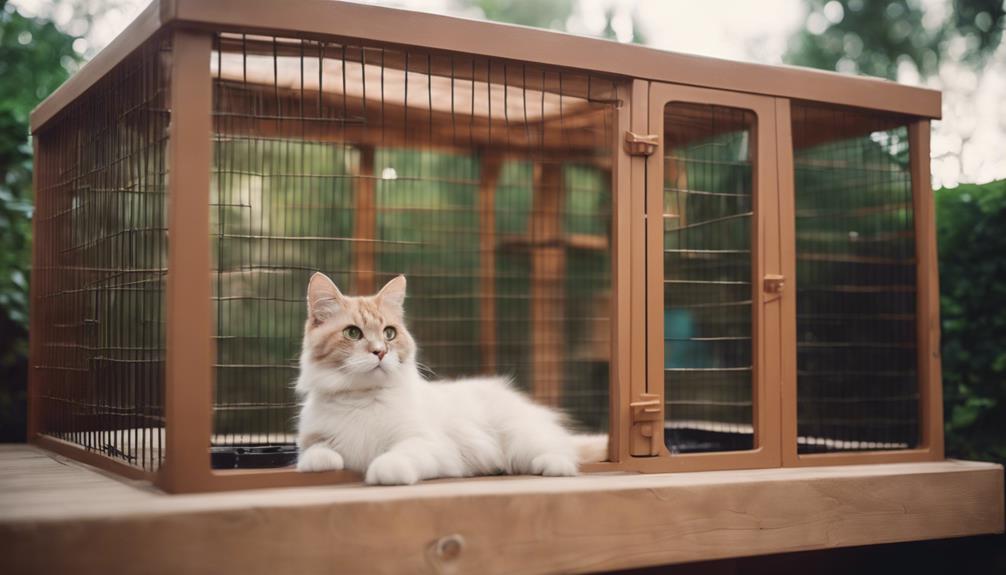
To enhance the safety of your cat from coyotes, consider these final tips for protection.
Guarantee outdoor cats can climb at least six feet above ground to avoid encounters. Train them to come back home promptly when called to keep coyotes away.
Utilize motion-activated deterrents and secure enclosures for added safety measures. Employ GPS trackers and cameras for enhanced monitoring and educate the community on coyote behavior for a safer environment.