How To Stop Cat Chewing Electric Cords


To guarantee cat chewing on electric cords, consider reasons like dental pain, boredom, or curiosity. Use deterrent methods like bitter apple spray, motion-activated devices, or protective tubing. These help with teething discomfort, dental issues, and stress triggers. Opt for safe products such as citrus-scented sprays and non-harmful chemicals. Confirm cat safety by inspecting and covering cords, and keeping them out of reach. For persistent issues, seek veterinary advice. Protecting your cat and home from harm is essential, and addressing cat chewing behavior promptly is key to their safety and well-being.
Reasons for Cat Chewing Behavior
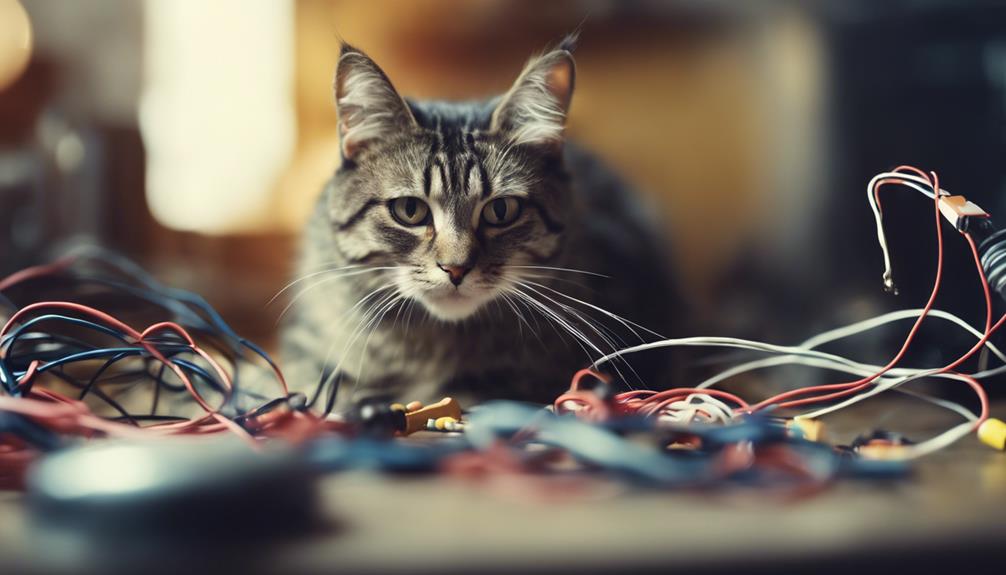
Why do cats exhibit the behavior of chewing on electric cords?
Cats may chew on cords due to dental pain, boredom, or curiosity.
Kittens might find cords appealing for tactile sensations or as a form of play.
Indoor cats, lacking stimulation, may view cords as entertainment.
Teething kittens could chew to alleviate discomfort from new teeth.
Cats with dental issues might chew to relieve mouth pain.
Understanding Cat Chewing Triggers
Cats exhibit chewing behavior on electric cords due to various triggers such as curiosity, teething discomfort, dental issues, boredom, stress, or underlying health problems. Kittens, in particular, may chew cords as part of their playful exploration. Dental pain can lead cats to seek relief by chewing. Stress and anxiety can also drive cats to gnaw on cords.
Identifying these triggers is essential for developing effective prevention strategies.
Implementing Deterrent Methods

To discourage cats from chewing on electric cords, effective deterrent methods can be implemented to protect both the felines and the cords from potential harm. Options include using:
- Bitter apple spray or citrus-scented products
- Motion-activated deterrent devices
- Protective tubing
- Double-sided tape
- Aluminum foil
- Pet-safe cord protectors
These deterrents aim to prevent cats from accessing and damaging cords through tactile and scent-based strategies.
Using Safe Products for Deterrence
When deterring cats from chewing on electric cords, it is important to utilize safe products that are effective yet non-harmful to the felines. Consider using cat deterrents like bitter apple spray or citrus-scented products such as orange oil. Avoid harmful chemicals or high-voltage deterrents.
Protective tubing and extension cords can also help prevent cats from accessing and chewing on electric cords.
Ensuring Cat Safety Around Cords
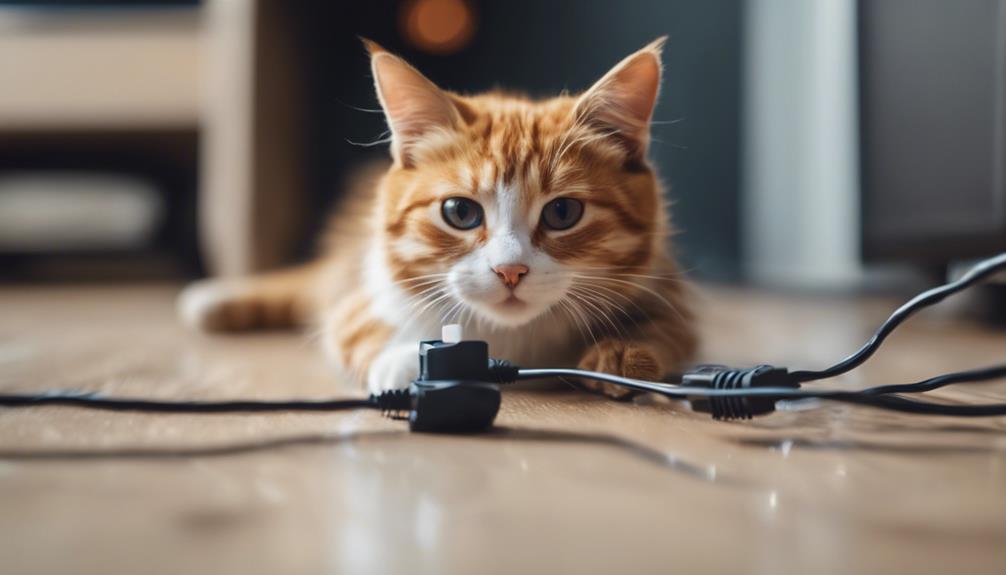
To maintain a safe environment for your feline companion, it is crucial to take proactive measures to guarantee cat safety around electric cords.
Protect your cat by covering cords, keeping them out of reach, and using deterrent sprays to prevent chewing behavior.
Regularly inspect cords for damage and address any issues immediately to secure a safe environment for your cat.
Can Chewing Electric Cords Lead to the Need for Syringe Feeding in Cats or Kittens?
Chewing on electric cords can be dangerous for cats and kittens, potentially leading to the need for syringe feeding kittens tutorial. It’s important to keep cords out of their reach to prevent accidents and potential harm. Stay vigilant and provide a safe environment for your furry friends.
Seeking Veterinary Advice for Chewing Issues
When faced with persistent chewing behavior in cats, seeking veterinary advice is essential. Veterinarians can help identify any potential medical or dental issues that may be causing the behavior, ensuring the cat's overall health is not compromised.
Professional guidance from a vet can also aid in modifying the cat's behavior and addressing any health implications associated with the chewing habit.
Vet Consultation for Chewing
Seeking veterinary consultation is crucial in addressing and resolving the issue of cat chewing on electric cords.
- Rule Out Medical Issues: Vet consultation helps identify any underlying medical problems causing the behavior.
- Detect Dental Problems: Vets can determine if dental issues are triggering the chewing habit.
- Recommend Behavioral Modifications: Professionals suggest ways to modify cat behavior.
- Address Compulsive Chewing: Vet guidance can help manage compulsive chewing in cats.
- Ensure Comprehensive Approach: Professional advice guarantees a thorough strategy to stop cord-chewing behavior.
Professional Behavior Modification
Veterinary consultation plays a pivotal role in implementing professional behavior modification techniques to address persistent issues of cat chewing on electric cords.
Vets can identify underlying behavioral problems, dental diseases, or iron deficiencies contributing to the behavior.
Health Implications of Chewing
Addressing the potential health implications of cat chewing on electric cords requires immediate evaluation by a qualified professional.
- Chewing on cords can lead to heart or lung damage.
- Siamese and Burmese cats are more prone to cord chewing.
- Taste buds may attract cats to cords.
- Electrical burns are risks for young cats.
- Veterinary advice is essential if chewing behavior persists.