How To Stop Cats From Eating Plants


To stop cats from eating plants, consider reasons behind their behavior like health issues or nutrient seeking. Opt for unappealing plants with rough textures and avoid toxic varieties. Use creative solutions like elevated stands and cat-friendly plant alternatives such as catnip. Prevent boredom-related chewing by providing mental stimulation and interactive toys. Implement preventative measures like deterrents and safe chew toys. Enhance their environment with enrichment activities and training techniques. Monitor for signs of toxicity and consult a vet if necessary. Understanding cats' natural instincts and behaviors is key to addressing plant-eating habits effectively. Additional insights can help manage your cat's plant consumption.
Reasons Cats Eat Plants
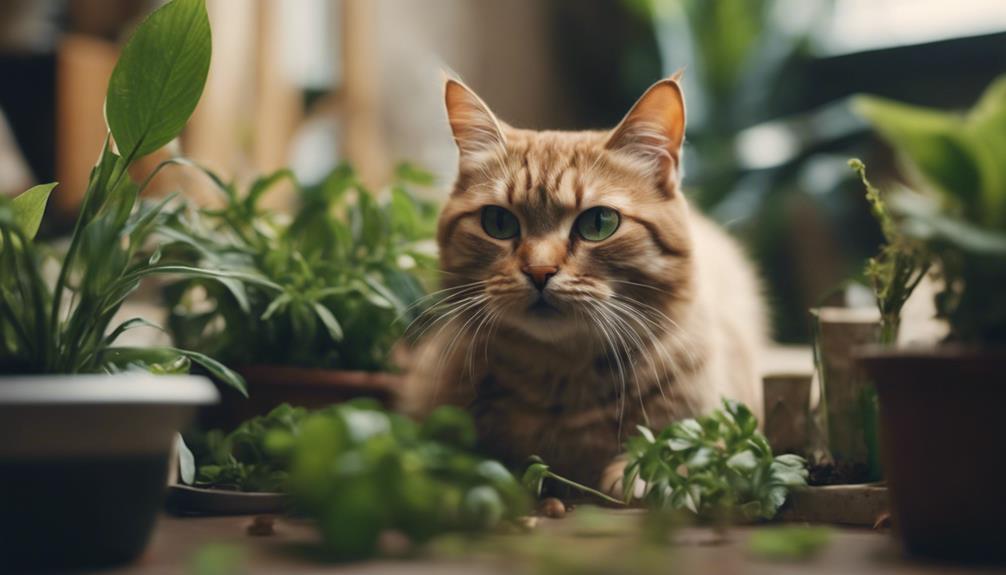
There are several underlying reasons why cats may be inclined to eat plants. Cats eat plants due to health issues like dental problems or stress. They may seek extra nutrients or fiber from plants.
Boredom, lack of attention, curiosity, or specific plant preferences can also drive cats to chew plants. Cat tongues with papillae can trap plant material, and even non-toxic plants can cause stomach issues for cats.
Unappealing Plants for Cats
Plants with textures or thorns that cats find unpleasant can be effective deterrents to prevent them from chewing on foliage. Opt for plants with rough or spiky textures, such as succulents or cacti, to discourage cats.
Avoid toxic plants like lilies or philodendrons, and consider safe alternatives like catnip or wheatgrass. Making plants unappealing to cats can help prevent them from eating harmful foliage and guarantee their safety.
Creative Plant Placement Solutions
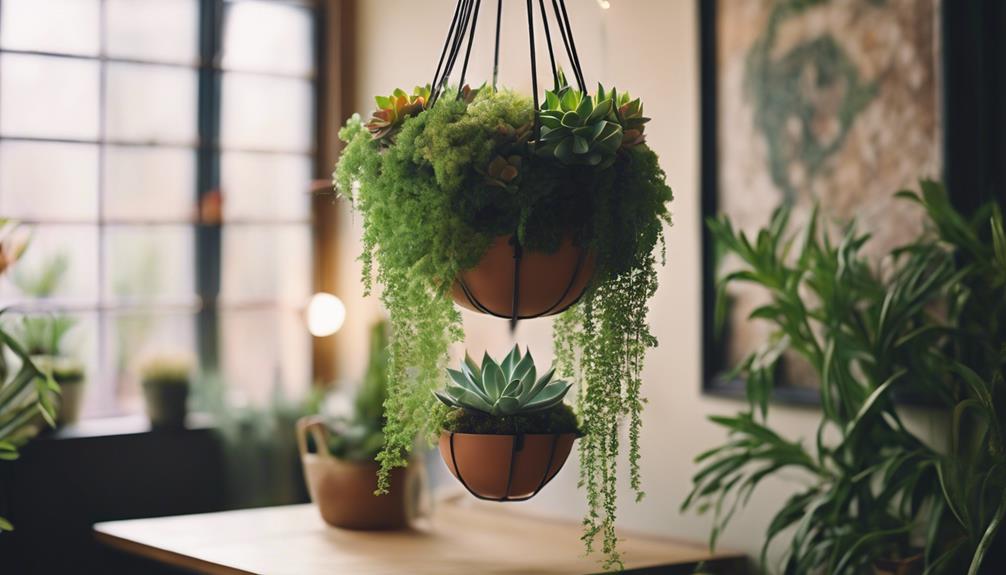
When looking to prevent cats from eating plants, considering elevated plant stands, hanging planters, and cat-proofing with barriers can be effective solutions.
Elevated plant stands can keep plants out of reach of curious felines, while hanging planters provide a safe space for plants away from their grasp.
Using barriers like decorative rocks or fences can also deter cats from accessing and potentially damaging plants in the garden.
Elevated Plant Stands
Elevated plant stands offer an elegant and practical solution for safeguarding plants from curious felines, particularly when combined with strategic placement techniques.
While cats can still climb to reach plants, hanging baskets positioned high with no climbing access can be more effective.
Elevated stands are ideal for toxic plants, keeping them out of reach.
Decorative rocks placed on soil can also deter cats from digging in planters on elevated stands.
Hanging Planters Solution
Incorporating hanging planters into your indoor or outdoor space can provide an effective and stylish solution for safeguarding your plants from curious felines. Placing plants in hanging baskets keeps them out of reach, especially on high shelves where cats may still access.
This method works well for toxic plants that need to be kept away from cats. By using hanging planters, you can effectively protect your plants from being eaten.
Cat-Proofing With Barriers
To safeguard your plants from curious felines, implementing creative plant placement solutions can effectively cat-proof your indoor or outdoor space.
Hanging baskets can be a practical barrier, especially for toxic plants, as they keep foliage out of reach. Placing these baskets high with no climbing access can prevent cats from reaching them.
Additionally, using decorative rocks on soil can deter cats from digging around your plants, keeping them safe.
Cat-Friendly Plant Alternatives
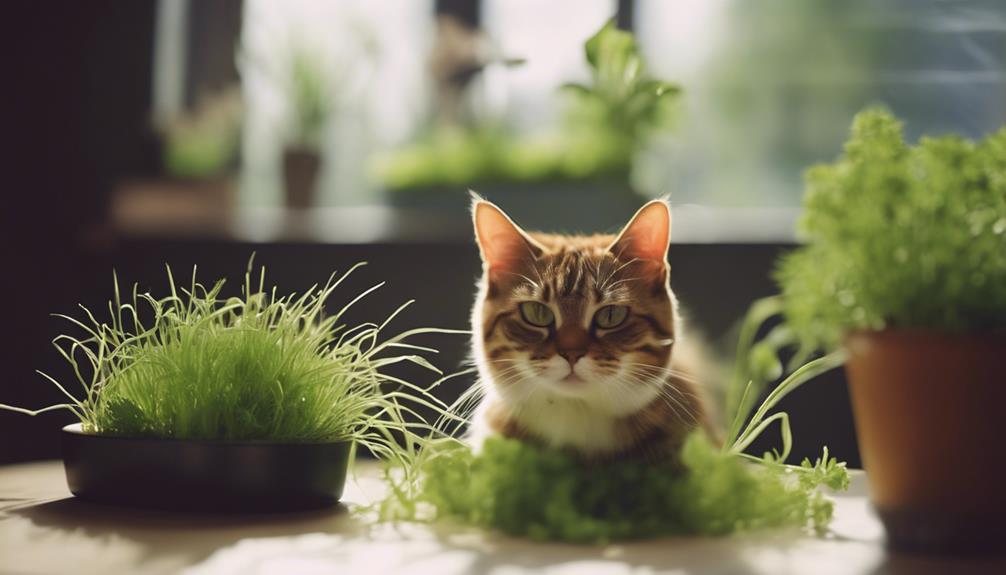
Cat owners can provide safe and appealing alternatives for their feline companions to chew on by incorporating catnip and pet grass into their indoor environment. Mint or peppermint plants can also be attractive options.
These cat-friendly plants help redirect a cat's attention from houseplants, especially when placed in their favorite lounging spots. Offering safe plants for cats to chew on can satisfy their natural instincts and reduce their interest in other plants.
Preventing Boredom-Related Plant Chewing
In order to prevent boredom-related plant chewing in cats, providing them with mental stimulation and interactive toys is crucial.
Engaging cats in daily play sessions and offering environmental enrichment can distract them from chewing on plants out of sheer boredom.
Introducing puzzle feeders, rotating toys, and creating a stimulating indoor environment with climbing structures can help keep cats entertained and less likely to resort to plant chewing.
Provide Cat Toys
Engaging cat toys, such as feather wands and interactive playthings like the Frisco Cat Tracks Butterfly Cat Toy, are effective tools in preventing boredom-related plant chewing in cats.
Daily play sessions with these interactive toys can deter plant consumption by keeping cats entertained and mentally stimulated.
Providing solo play toys for independent play can redirect a cat's attention away from houseplants, reducing the likelihood of them snacking on plants for entertainment.
Grow Cat Grass
To provide a safe and appealing alternative for cats to curb their plant-chewing behavior, growing cat grass indoors is an effective strategy. Cat grass, such as wheat or oat grass, satisfies cats' natural urge to chew on plants, reducing the likelihood of them targeting houseplants.
Rich in fiber, cat grass aids digestion and hairball control. Offering cat grass in designated areas can redirect cats' attention, preventing them from seeking out other plants to nibble on.
Use Deterrent Sprays
One effective method to deter cats from chewing on plants, particularly to address boredom-related behavior, is through the use of deterrent sprays containing citrus or bitter solutions. These sprays, like citronella or lavender essential oil sprays, create unpleasant scents for cats, training them to avoid plant chewing.
It is essential to understand which deterrent sprays are safe for cats and which may be poisonous to your cat when choosing a deterrent spray.
Using Citrus or Bitter Sprays
Citrus or bitter sprays are effective tools for deterring cats from eating plants due to their unpleasant taste and scent.
- They contain natural oils that cats find off-putting.
- The taste is designed to discourage cats from chewing on plants.
- The strong scent can mask the appealing smell of plants, making them less enticing.
Implementing Distraction Techniques
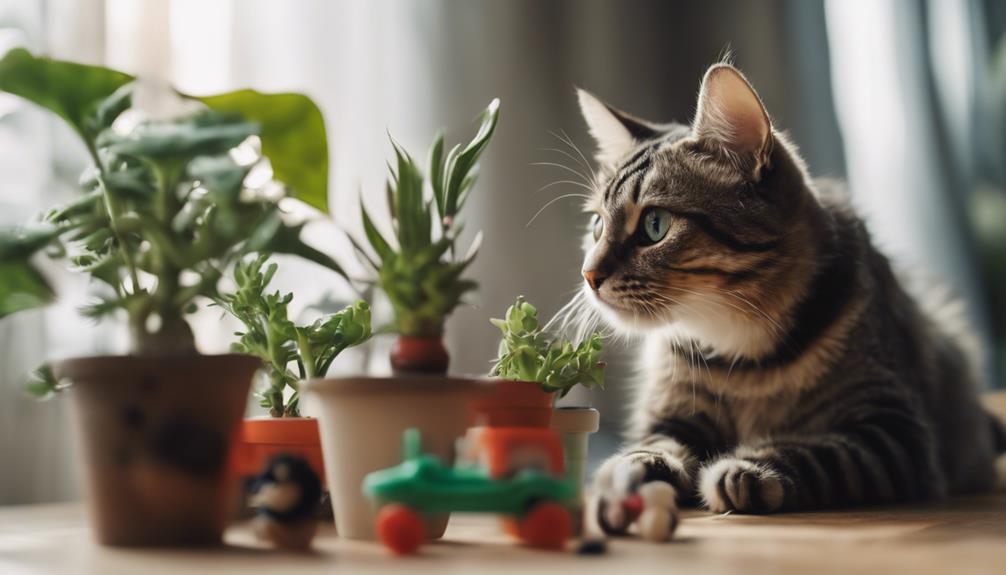
Engage cats away from plants by utilizing interactive toys or play sessions as effective distraction techniques to prevent them from nibbling on greenery. Implementing clicker training or using a spray bottle when cats approach plants can help the cat learns to avoid them. Consistency is key. Provide your cat with alternative activities to keep them entertained and away from your plants.
| Distraction Techniques | Description | Effectiveness |
|---|---|---|
| Interactive Toys | Keep cats entertained and engaged away from plants | High |
| Play Sessions | Spend quality time playing with your cat to divert their attention | Medium |
| Clicker Training | Teach cats to associate a clicking sound with avoiding plants | Effective |
| Spray Bottle | Use a spray bottle to deter cats from approaching and eating plants | Moderately effective |
| Providing Alternatives | Offer cat-friendly plants or designated play areas to keep cats occupied | Highly effective |
Providing Catnip or Wheat Grass
To further deter cats from eating plants, consider providing catnip or wheat grass as safe and appealing alternatives that can satisfy their chewing instincts and offer enrichment.
Key Points:
- Catnip is a safe alternative that distracts cats from other plants.
- Catnip provides cat enrichment due to its stimulating effect.
- Offering catnip allows cats to satisfy their chewing instincts in a natural way.
Can Teaching a Cat to Fetch Distract Them from Eating Plants?
Teaching a cat the fetch technique can be a beneficial way to distract them from eating plants. By engaging in the playful activity of fetching, cats can redirect their attention away from potentially harmful plants. This can be a useful method for mitigating the risk of plant poisoning in curious felines.
Ensuring a Stimulating Environment
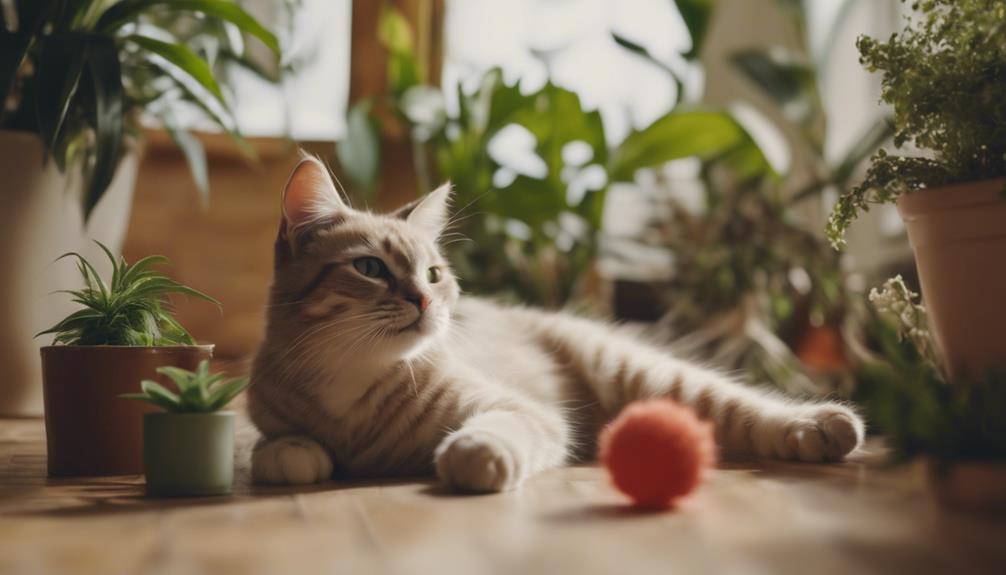
Creating an enriching environment for cats involves providing interactive toys, scratching posts, climbing structures, and other stimulating elements to prevent boredom-related plant chewing. Engage your cat with puzzle feeders, hiding spots, and window perches to divert their attention from plants.
Rotate toys regularly to maintain interest and mental stimulation, reducing the likelihood of plants becoming their source of entertainment. By offering a variety of engaging activities, cat lovers can help their feline companions spend more time happily exploring their environment.