How To Tell If Cat Is Overweight


Identify if your cat is overweight by observing visible signs like a lack of a defined waistline and excess fat covering the ribs. Notice any struggles in mobility or reduced activity levels. Feel along your cat's body, focusing on the ribs and spine, for excess weight. Use an overweight cat chart to compare the current weight to the ideal range. If unsure, consult a veterinarian for a thorough evaluation. By being attentive to these indicators, you can guarantee your cat's health and well-being are prioritized. Understanding these signs is vital for maintaining your cat's quality of life.
Signs of Cat Obesity

When evaluating a cat's weight status, key indicators of potential obesity include the presence of a visible waistline and excess fat covering the ribs. Cats deemed overweight may struggle to jump or move easily.
Utilize an overweight cat chart to compare your cat's weight to the ideal range. Monitoring physical limitations or reduced activity levels can also help identify if your cat is suffering from obesity.
Physical Indicators of Cat Weight
One of the most essential aspects in determining a cat's weight status is to observe and recognize the physical indicators of their body condition.
Look for a visible waistline when viewing your cat from above, check if ribs are easily felt with a slight fat layer, and observe for decreased agility.
These signs can help categorize your cat's weight, assess their health, and identify if they are overweight.
Assessing Cat Body Condition

When evaluating your cat's body condition, it's important to visually inspect for signs of overweight, such as a lack of a visible waistline or a pronounced pooch from the side view.
Additionally, feeling for excess fat by gently pressing along your cat's ribcage can help determine if they are carrying too much weight.
If you suspect your cat is overweight, consulting with a veterinarian for a thorough examination is recommended to guarantee their health and well-being.
Visual Inspection for Overweight
How can you visually determine if your cat is overweight by evaluating their body condition? Look for a visible waistline from above and a slight upward indentation from the side.
Feel for your cat's ribs to check for excess weight.
Use a chart to compare their current weight to the ideal weight range.
Observe any difficulty in movement, as it may indicate your cat is overweight.
Feel for Excess Fat
Feeling for excess fat is an important step in evaluating your cat's body condition to determine if they are overweight. When examining your feline's body, make sure to feel along the ribcage and spine. Excess fat may feel like a thick layer covering these areas.
A healthy cat should have a slight covering of fat without feeling overly padded. Aim to feel the ribs to strike a balance between being too prominent or too hidden.
Vet Consultation for Evaluation
Seeking a veterinarian's expertise is crucial in accurately evaluating your cat's body condition and determining if they are overweight. Vet consultations utilize body condition scoring systems to assess the amount of excess fat and overall health of your cat.
Professional evaluation can help distinguish between a cat at a healthy weight and one that is overweight, providing guidance on managing weight-related conditions effectively.
Checking Cat Waistline
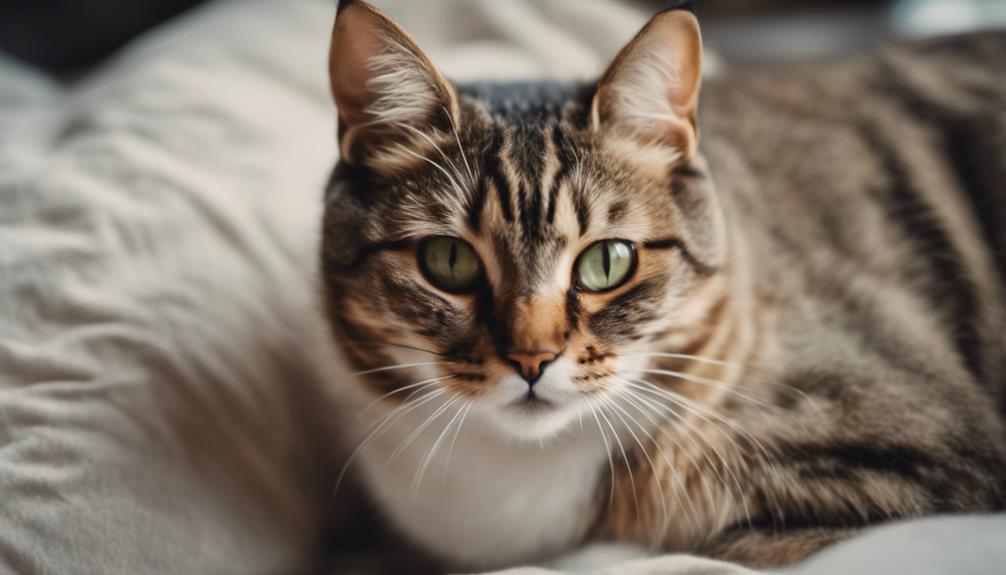
When evaluating a cat's weight, one effective method is to examine the presence of a visible indentation or narrowing at the waistline when viewed from above.
- A well-defined waistline indicates a healthy weight for your cat.
- A lack of waistline definition may suggest that your cat is overweight.
- Monitoring your cat's waistline can help you track changes in weight over time.
Feeling Cat Ribs
When feeling your cat's ribs, you should be able to easily sense them without applying excessive pressure. Feeling the ribs should offer insight into your cat's weight status, with easily felt ribs generally indicating a healthy weight.
If the ribs are difficult to detect, it might suggest that your cat is carrying excess weight that could impact their overall well-being.
Rib Coverage
Checking your cat's rib coverage by feeling its ribs is a simple yet essential method to assess its weight and overall health. It should be easy to feel the ribs with a slight covering of muscle and fat.
Here are some key points to take into account:
- Easy rib feel without pressing too firmly
- Lack of rib feel may indicate overweight
- Determining healthy body condition through rib coverage
Ribs Easily Felt
With a gentle touch along your cat's side, feeling its ribs should be effortless and should not require excessive pressure. Ribs should be easily felt to indicate a healthy weight.
If ribs are hard to feel without pressing firmly, it may signal excess weight. Regularly monitoring your cat's weight through feeling its ribs can contribute to maintaining their overall health.
Using Cat Weight Chart
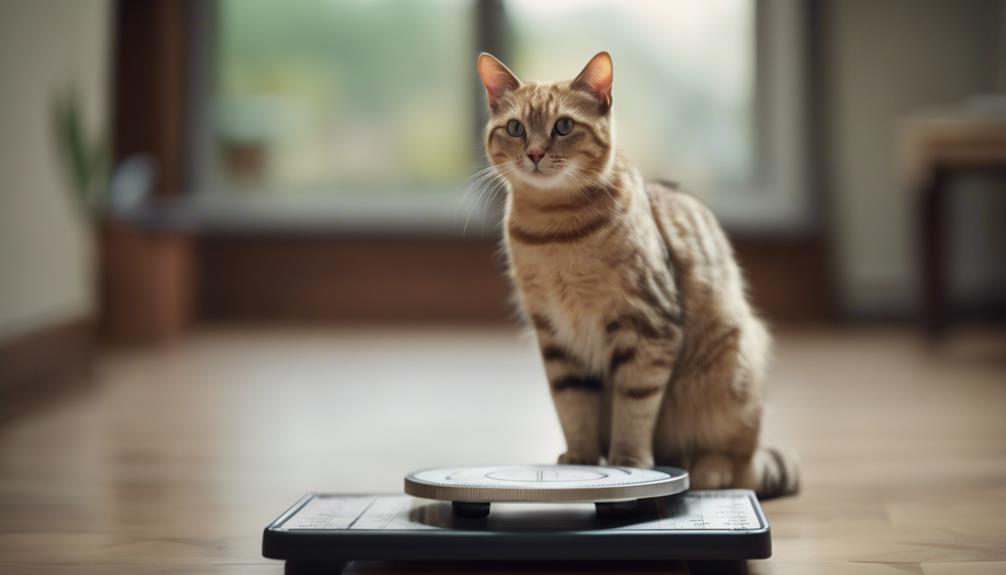
Utilizing a cat weight chart offers a practical method for determining a feline's ideal weight status based on their breed and size.
- Helps categorize cats into ideal, overweight, or obese
- Provides a reference point for evaluating weight
- Guides in monitoring weight, adjusting diet, and exercise routine
Noticing Cat Activity Levels
Observing your cat's daily movements can provide valuable insights into their overall health and weight status. Monitor if your cat is less active, struggles to jump, shows reduced interest in playing, or displays lethargy. These behaviors could indicate weight-related issues.
Cats that tire quickly during playtime or seem reluctant to move around may be experiencing overweight-related problems. Evaluating your cat's activity levels can help identify potential weight issues early on.
Identifying Cat Weight Issues
To identify potential weight issues in your cat, start by checking for a visible waistline and feeling for their ribs. Monitoring your cat's weight regularly and consulting with a veterinarian are crucial steps in managing their health.
Body Condition Scoring
Evaluating a cat's body condition through scoring is a valuable method for identifying weight issues and determining the best weight and fat covering for their breed and size. This assessment involves feeling the cat's body to gauge fat distribution accurately. To guarantee an informed evaluation, consulting with a veterinarian is recommended for proper guidance and interpretation of the body condition scoring system.
- Helpful method for weight identification
- Determines best fat level
- Involves feeling for fat distribution
Weight Monitoring Tips
When evaluating a cat's weight, it is essential to look for visible indicators such as a defined waistline and a slight upward indentation when viewing the cat from the top or side. Feeling your cat's ribs and observing physical abilities can help identify potential weight issues.
Utilize an overweight cat chart to compare your cat's weight to the ideal weight range. Watch for behavior changes that may signal weight concerns.
Veterinarian Consultation Importance
Seeking guidance from a qualified veterinarian is essential in accurately identifying and addressing potential weight issues in cats.
- Vets can help rule out underlying health problems that may be contributing to your cat's weight gain.
- Professional advice from a vet is vital for weight management.
- Consulting with a veterinarian is the first step in developing a plan to see if there are any extra measures needed for your cat's health.
Consulting a Vet
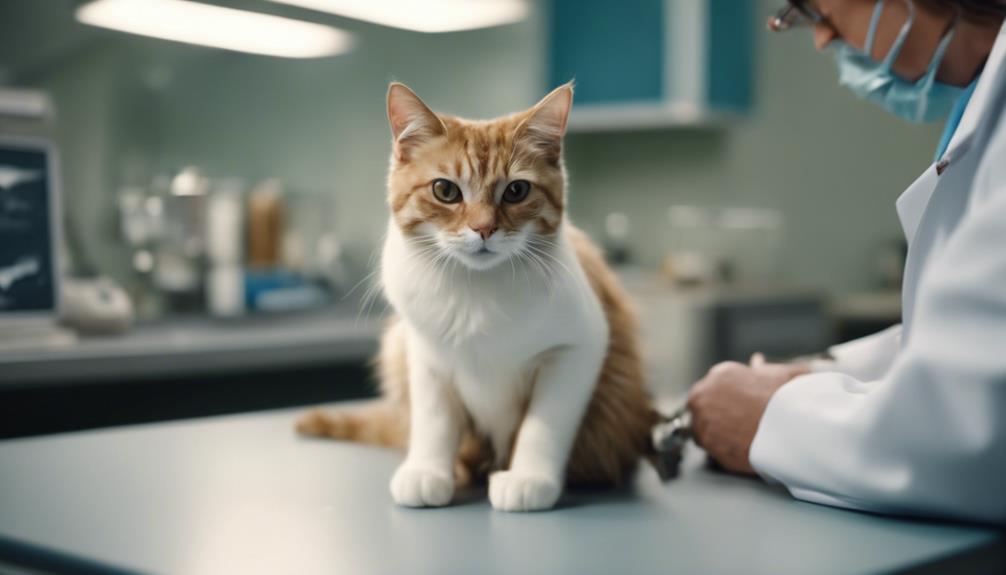
A veterinarian consultation is vital for accurately evaluating a cat's weight and formulating a tailored weight management plan. Consulting a vet can address unexplained weight gain, provide professional advice on appropriate actions, uncover underlying health concerns, and establish a structured weight management plan.
Regular consultations with a vet are essential for tracking progress, monitoring weight loss, and ensuring the cat's overall health is maintained throughout the process.
What Are the Signs of an Overweight Cat and How Can I Help Them Lose Weight?
Telling if a cat is underweight includes visible ribs, spine, or pelvic bones and a lack of energy. To help your cat lose weight, switch to a balanced diet with a controlled portion size, increase physical activity, and consult a veterinarian for guidance.
Managing Cat Weight
To effectively manage your cat's weight, it is essential to consult with a veterinarian to accurately assess their current weight status and develop a tailored weight management plan.
- Adjust portion sizes based on your cat's breed, age, and lifestyle.
- Consider specialized weight loss cat food for significant weight reduction.
- Monitor your cat's weight regularly for any unexplained gain.