How To Train Your Cat To Use A Cat Door


To train your cat to use a cat door, employ positive reinforcement techniques. Begin by placing treats near the door to create a positive association. Use high-value treats like tuna or chicken and reward your cat when they interact with the door. Encourage exploration by placing toys or catnip on the other side of the door. Be consistent in rewarding and praising your cat without resorting to negative reinforcement. Gradually introduce the cat door using treats strategically and toys to make it a positive experience. Be patient, consistent, and positive. Your cat will confidently use the cat door with time and encouragement.
Introduction to Training Your Cat
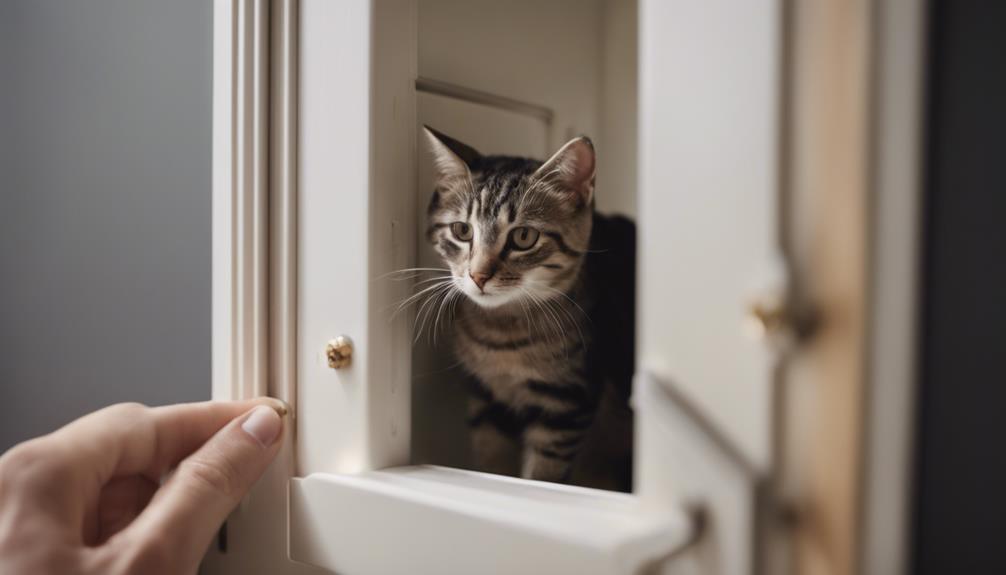
When introducing your feline companion to the concept of using a cat door, establishing a solid foundation through positive reinforcement techniques is crucial for successful training. Factors to take into account include starting with treats near the door, initially removing the flap, and gradually encouraging your cat to approach the door.
Consistency, patience, and positive reinforcement are key elements in effectively training your cat to use the cat door.
Creating a Positive Association
To create a positive association with the cat door, consider using high-value treats as rewards. These treats can encourage your cat to approach and interact with the door.
Treats for Encouragement
Using high-value treats such as freeze-dried chicken or tuna can be a powerful tool in motivating your cat to engage with the cat door. Reward your cat with treats immediately after they interact with the cat door, reinforcing positive behavior.
Positive reinforcement through treats helps create a positive association with the cat door. Consistency in associating treats with using the cat door is vital for effective training and encouraging your cat.
Patience and Consistency
Developing a positive association with the cat door requires patience and consistency in training your feline companion. Use high-value treats like cooked chicken or tuna to make your cat comfortable using the door.
Keep training sessions around 5 minutes daily to reinforce the behavior. Avoid rushing your cat through the door to prevent fear or anxiety. Remember to praise and reward your cat immediately after a successful attempt.
Monitor their body language for signs of comfort or stress.
Encouraging Exploration and Rewards
When encouraging exploration and rewards to create a positive association with the cat door, utilizing high-value treats like tuna or chicken is key.
Reward your cat immediately after they pass through the cat flap to reinforce the behavior.
Encourage training by placing toys or catnip on the other side of the cat door.
Consistency in rewarding and praising your cat for using the cat door will help establish a routine without using negative reinforcement or punishment.
Gradual Introduction of the Cat Door
When introducing your cat to a cat door, start by using treats strategically to motivate and guide them.
Alongside treats, incorporating toys can also help in making the cat door a fun and positive experience for your feline friend.
Start With Treats
To initiate the process of training your cat to use a cat door, begin by enticing them with high-value treats to create a positive association with the door.
Use these treats to reward your cat when they show interest in the cat flap. Gradually introduce the cat door by propping it open with treats nearby, encouraging your cat to approach and interact with it.
This approach helps your cat feel comfortable using the cat door.
Encourage With Toys
Introducing toys near the cat door serves as a valuable method to engage your cat's curiosity and encourage familiarity with the entrance.
By using interactive toys and gradually moving them closer to the cat door, you can motivate your cat to explore the area.
Consider incorporating treats or catnip toys to create a positive association with the cat door without overwhelming your cat.
Monitoring your cat's response will help determine readiness to train further.
Encouraging Approach and Treats
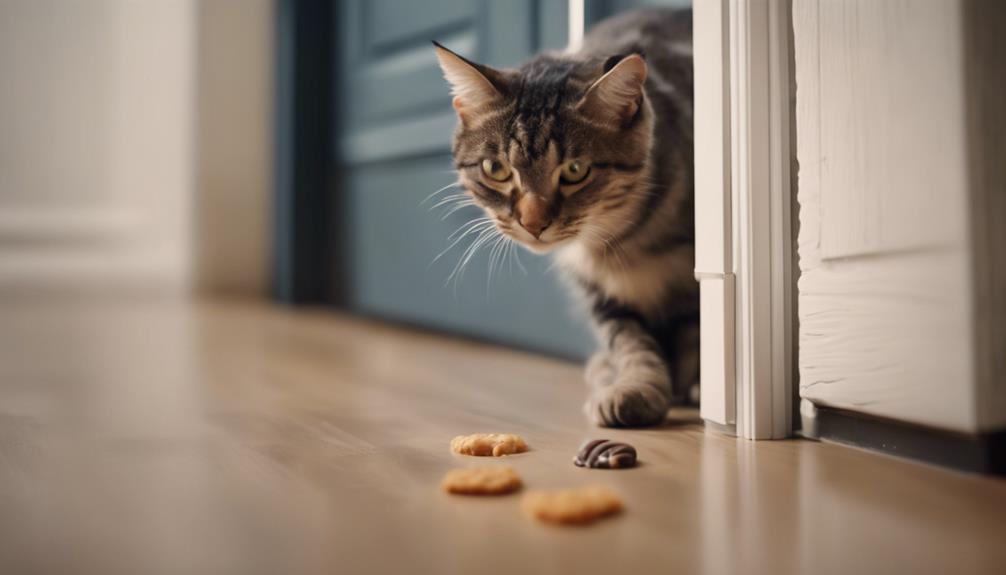
Using high-value treats such as freeze-dried chicken or tuna is an effective method to encourage your cat to approach the cat door. Reward your cat with treats each time they show interest or get close to the door.
Placing treats near the cat door creates a positive association, enticing your cat to explore. Consistently rewarding any positive interaction with treats helps in training your cat to come and go through the door.
Daily Training Sessions
Engage your cat in daily training sessions lasting approximately 5 minutes each to effectively teach them how to use the cat door. Consistency is key; start the training when your cat is comfortable and ready. Encourage your cat by using gentle pushes to guide them towards the cat door. Monitor their progress and adjust the training pace accordingly to make certain they are responsive and not overwhelmed.
| Training Tip | Description |
|---|---|
| Start Slow | Begin when cat is relaxed and receptive. |
| Gentle Push | Encourage cat towards the cat door gently. |
| Monitor Progress | Watch for signs of comfort and adjust. |
Using the Right Incentives
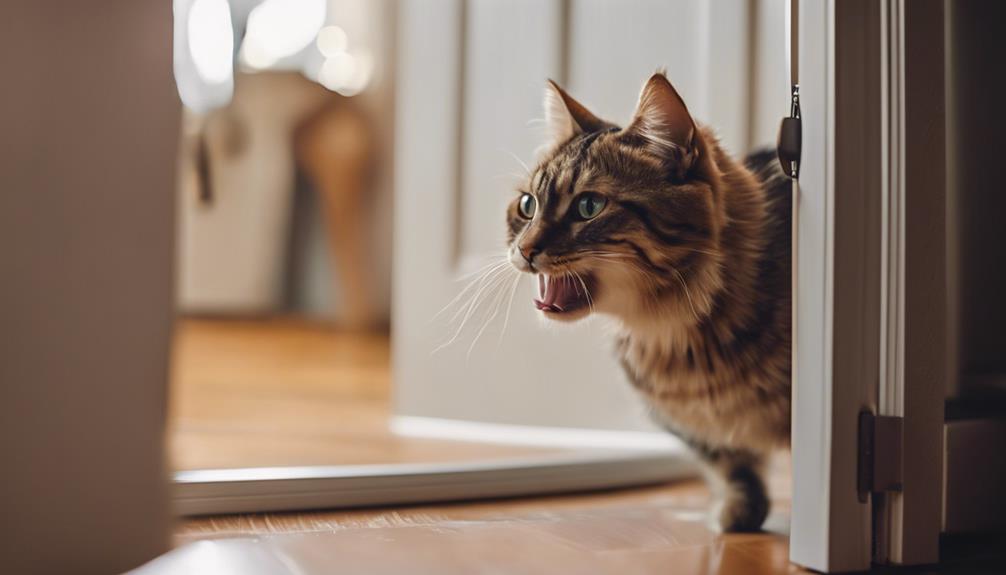
When training your cat to use a cat door, leveraging the right incentives such as high-value treats and favorite toys is instrumental in encouraging their successful navigation through the door.
Give your cat freeze-dried chicken or tuna as rewards and incorporate playtime with their preferred toys. Positive reinforcement, through treats or play sessions, helps create a positive association with the cat door, ensuring consistent rewards for desired behavior.
Building Confidence in Your Cat
To instill confidence in your cat when training them to use a cat door, it is beneficial to take gradual steps that familiarize them with the door and create a comfortable environment for exploration.
Make sure the cat is comfortable by rubbing their scent on the cat flap. Use treats to encourage positive associations, prop the flap open initially, and provide privacy near the door for cats with limited visibility.
Can the Same Training Techniques Be Used for Training Cats and Kittens for Different Behaviors?
Training your kitten litter box requires patience and consistency. The same training techniques can be used for training cats and kittens for different behaviors, including using positive reinforcement, clicker training, and consistency in routine. However, the methods may need to be adjusted based on the individual cat’s personality and behavior.
Enjoying Independence With the Cat Door

Embracing the newfound freedom provided by a cat door enhances the feline's sense of independence and enriches their daily experiences.
Cat flaps allow cats to go outside at their leisure, engaging in natural behaviors and exploring their surroundings.
Teaching your cat to use a cat door opens up a world of mental and physical stimulation, aiding in preventing behavioral issues and promoting overall well-being.