Is Cyclamen Poisonous To Cats


Cyclamen is poisonous to cats due to terpenoid saponins, causing gastric distress and irregular heartbeats. Symptoms of poisoning include excessive salivation, diarrhea, vomiting, and potential fatal seizures in severe cases. Treatment involves seeking immediate veterinary care, inducing vomiting, and avoiding home remedies. Prevention includes keeping cyclamen out of reach, monitoring cats, and emphasizing cat safety. Understanding cyclamen toxicity in cats is important, as it can lead to severe health issues if ingested. Immediate action is necessary if ingestion is suspected. Keep in mind that not all cats are attracted to cyclamen, but precautions should still be taken for their safety.
Dangers of Cyclamen for Cats

Cyclamen poses a significant risk to cats due to the presence of terpenoid saponins, which are known to be toxic to felines, potentially causing gastric distress and irregular heartbeats.
These compounds, found in various parts of the plant, can lead to severe health issues if ingested by cats. These toxic substances can cause symptoms ranging from vomiting and diarrhea to more serious complications such as organ damage. Pet owners should exercise caution and ensure plants containing these compounds are kept out of reach to prevent accidental ingestion. Understanding citronella safety for cats is particularly important, as citronella-based products and plants are commonly used but can pose significant risks to feline health.
It is essential for pet owners to be aware of these dangers and take preventive measures to keep their cats safe from cyclamen poisoning.
Symptoms of Cyclamen Poisoning in Cats
The ingestion of certain plants can have detrimental effects on feline health, and recognizing the symptoms of poisoning is essential for prompt intervention and care.
Symptoms of cyclamen poisoning in cats may include excessive salivation, diarrhea, and vomiting. Ingestion of cyclamen can also lead to toxic effects on the heart, resulting in abnormalities in heart rhythm.
Severe cases of cyclamen toxicity in cats can even lead to fatal seizures.
Treatment for Cyclamen Ingestion in Cats

When a cat ingests cyclamen, it is important to monitor for symptoms and seek immediate veterinary care. Inducing vomiting may be necessary if ingestion occurred within the last two hours.
Home remedies are not recommended, especially for larger ingestions, as professional intervention is essential to address cyclamen toxicity effectively.
Cat Symptoms After Ingestion
Following ingestion of cyclamen, cats may exhibit symptoms such as excessive salivation, diarrhea, and vomiting. Cyclamen is toxic to cats and can cause abnormalities in their heart rhythm.
Immediate veterinary care is essential to address cyclamen ingestion in cats and prevent fatal consequences like seizures. Monitoring small ingestions at home is possible, but larger ingestions, especially of tubers, require urgent veterinary attention to mitigate toxicity effects promptly.
Veterinary Care Necessary
After a cat ingests cyclamen, immediate veterinary care becomes essential to mitigate the potential toxicity effects and safeguard the well-being of the feline.
Inducing vomiting, especially within two hours of ingestion, may be necessary. Small ingestions can sometimes be monitored at home, but larger ones, particularly involving tubers, require urgent attention.
Contacting a veterinary clinic for advice and intervention is imperative due to cyclamen being toxic to cats.
Home Remedies Not Recommended
Seeking home remedies for treating cyclamen ingestion in cats is not recommended due to the potential risks associated with improper interventions. Immediate veterinary attention is essential as home remedies like inducing vomiting may not effectively treat cyclamen toxicity in cats.
Veterinary professionals can provide appropriate treatments such as activated charcoal or intravenous fluids, emphasizing the importance of avoiding delays in seeking medical intervention for a poisoned cat.
Preventing Cyclamen Poisoning in Cats

To prevent cyclamen poisoning in cats, it is essential to keep these plants out of their reach. Place cyclamen in areas inaccessible to cats, such as bathrooms, if grown indoors.
Monitor cats around cyclamen to prevent chewing on leaves or tubers. If ingestion occurs, contact a veterinary clinic immediately. Inducing vomiting may be necessary within 2 hours of ingestion for the cat's safety.
Understanding Cyclamen Toxicity in Cats
Cyclamen toxicity in cats can lead to various symptoms such as gastrointestinal distress, cardiac issues, and potentially fatal outcomes. Understanding these symptoms and the potential severity of cyclamen poisoning is essential in recognizing and addressing the issue promptly.
Treatment options for cats exposed to cyclamen toxicity may involve supportive care, decontamination, and in severe cases, specific antidotes or therapies tailored to the symptoms presented.
Symptoms in Cats
Exposure to cyclamen can result in various symptoms in cats, underscoring the potential dangers of this plant's toxicity to felines. Cats may experience excessive salivation, diarrhea, and vomiting after ingesting cyclamen.
Additionally, cyclamen toxicity can lead to abnormalities in the central nervous system, including seizures and irregular heart rhythms. It is vital to emphasize that while cyclamen is toxic to cats, it is also harmful to dogs.
Immediate veterinary attention is essential in cases of ingestion.
Treatment Options
When addressing the toxicity of cyclamen in cats, the treatment options available are essential in managing and mitigating the potential harm caused by ingestion.
Inducing vomiting under veterinary guidance, monitoring small ingestions at home, and seeking immediate veterinary attention for larger ingestions, especially of the tubers, are critical steps.
Prompt action post-ingestion is important to counter the toxic effects of plants that are harmful to cats.
Cyclamen Exposure Risks for Cats
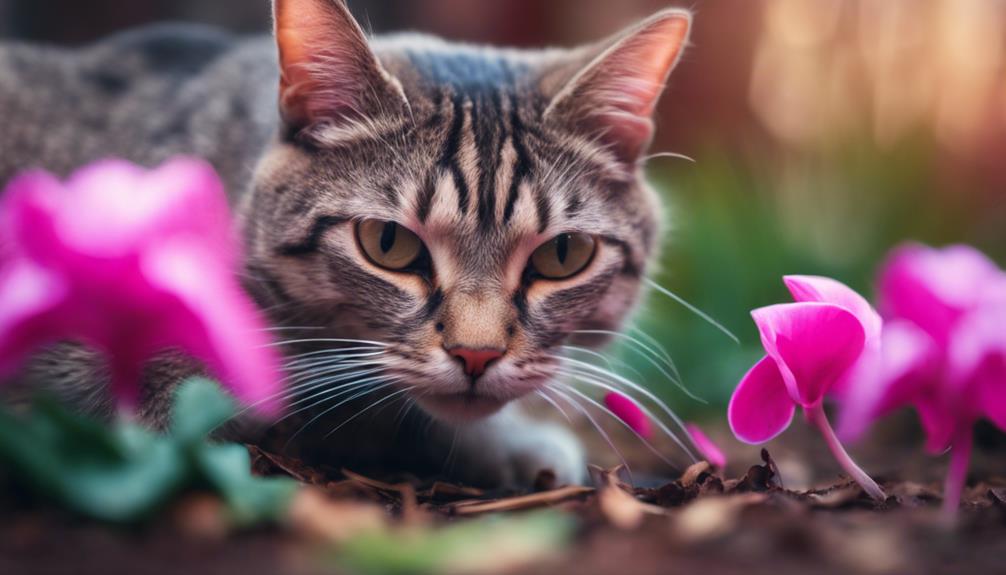
Proximity to cyclamen plants poses minimal risk to cats, but ingestion of any part containing terpenoid saponins can lead to severe health issues. Cats are at risk when chewing on or consuming cyclamen tubers, as this can result in gastric problems, abnormal heart rhythm, and even death.
It is essential to be aware of the potential dangers posed by these plants and take necessary precautions to protect feline companions.
Immediate Actions for Cat Ingestion of Cyclamen
If a cat ingests cyclamen, prompt action is essential – immediately remove the cat from the plant and contact a veterinary clinic for guidance.
Inducing vomiting may be necessary within 2 hours of ingestion, especially for larger amounts or tuber consumption, emphasizing the importance of swift professional care in such cases.
Symptom recognition and appropriate treatment are key aspects that underscore the significance of veterinary intervention in cases of cyclamen poisoning in cats.
Cat Symptoms and Treatment
Cat symptoms of cyclamen ingestion, such as excessive salivation, diarrhea, and vomiting, are indicators of potential toxicity that require immediate veterinary attention to prevent serious complications.
Ingestion can lead to heart arrhythmias and fatal seizures. Veterinary care may involve inducing vomiting within 2 hours to mitigate the effects.
Keeping cyclamen away from cats and opting for safer alternatives is advisable.
Veterinary Care Importance
Seeking immediate veterinary care is essential in cases where a cat ingests Cyclamen due to its toxic nature. Ingestion of this plant is toxic to cats and can lead to severe effects. The table below outlines the importance of immediate veterinary care and the potential actions that may be taken to address Cyclamen ingestion in cats.
| Veterinary Care Importance | Immediate Actions for Cat Ingestion of Cyclamen |
|---|---|
| Prompt Veterinary Attention | Contact veterinary clinic immediately |
| Inducing Vomiting | Within 2 hours of ingestion |
| Monitoring at Home | For small ingestions, but under supervision |
| Urgent Vet Attention | Required for larger ingestions |
Safe Plant Alternatives for Cat Owners

To guarantee the well-being of feline companions, cat owners can explore a variety of safe plant alternatives. Some of these include orchids, freesias, roses, sunflowers, and wax flowers. These cat-friendly plants like daisies, zinnias, aster, petunias, and snapdragons can be grown indoors or outdoors, creating a vibrant and safe garden space for cats.
Choosing non-toxic options like petunias and snapdragons prioritizes cat safety and promotes a healthy living environment.
Common Misconceptions About Cyclamen and Cats
Amidst popular beliefs surrounding the interaction of cyclamen with feline companions, there exist notable misconceptions that merit clarification.
While cyclamen is a popular indoor plant, not all cats are attracted to it. However, ingesting any part of the plant can lead to severe consequences such as gastric problems, abnormal heart rhythm, and even death.
Contrary to some beliefs, mere proximity to cyclamen does not cause immediate harm like loss of coordination in cats.
Can Cats Be Harmfully Affected by Multiple Types of Houseplants?
Yes, it is true that cats can experience aluminum plant toxicity in cats if they come into contact with certain types of houseplants. Some common houseplants, such as peace lilies and pothos, contain substances that are harmful to cats if ingested. It’s important to be mindful of the types of houseplants you have in your home if you have a feline friend.
Expert Advice on Cyclamen Toxicity in Cats

Expert advice on cyclamen toxicity in cats underscores the importance of understanding the potential dangers posed by this plant to feline companions.
If you suspect your pet has ingested cyclamen, be vigilant for signs of toxicity such as gastric issues and abnormal heart rhythms.
Immediate action is vital in such cases to mitigate potential harm.
Keeping cyclamen out of reach is a preventive measure to safeguard your cat's health.