Is Eucalyptus Poisonous To Cats


Eucalyptus can be toxic to cats as it contains harmful chemicals like eucalyptol. Cats struggle to metabolize these substances efficiently, putting them at risk of organ damage. Symptoms of eucalyptus poisoning in cats include vomiting, diarrhea, fatigue, drooling, and respiratory issues. Treatment involves decontamination, inducing vomiting, administering activated charcoal, and providing supportive care. Prevent exposure by keeping eucalyptus products out of reach and avoiding essential oils near cats. Immediate veterinary care is vital if ingestion occurs. Be cautious and prioritize your cat's safety around eucalyptus.
Potential Dangers of Eucalyptus for Cats
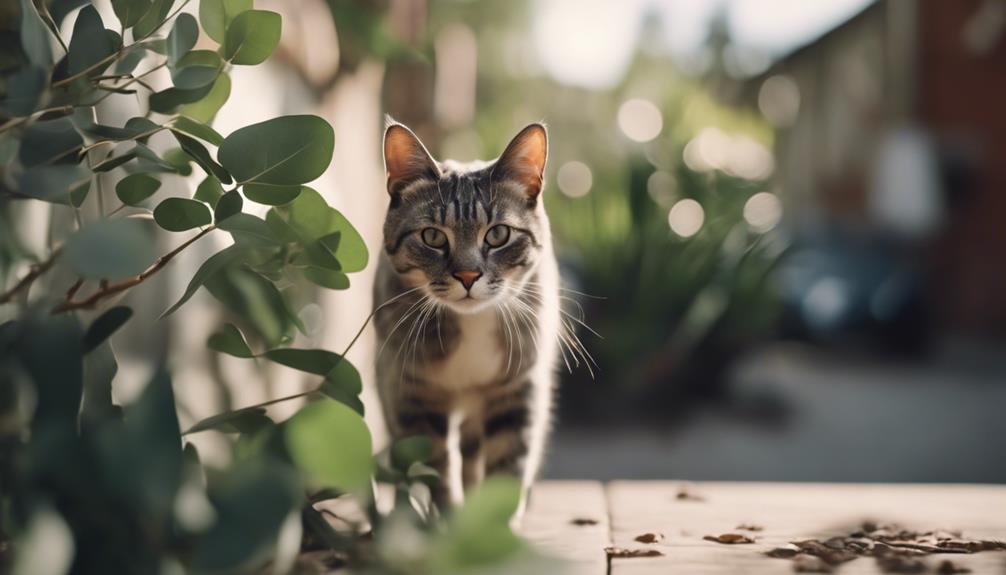
Eucalyptus poses potential dangers to cats due to the presence of toxic chemicals like eucalyptol that cats are unable to metabolize effectively. These chemicals can lead to organ damage in cats. It's important to keep eucalyptus away from cats to prevent accidental ingestion.
If you suspect eucalyptus poisoning, contact a vet right away. Understanding these risks is vital for ensuring the safety and well-being of your feline companion.
Symptoms of Eucalyptus Poisoning in Cats
Signs of toxicity resulting from exposure to eucalyptus in cats can manifest through various symptoms, indicating potential poisoning. Ingestion of eucalyptus leaves or oil can cause drooling, vomiting, diarrhea, weakness, depression, and difficulty breathing in cats. In severe cases, it can even lead to seizures or coma. It is important to seek immediate veterinary attention if any of these symptoms are observed in a cat that has been exposed to eucalyptus. Similar symptoms may also be seen in cases of cedar toxicity in cats, as both eucalyptus and cedar contain compounds that are toxic to felines. Therefore, it is crucial to keep these plants and their oils out of reach of cats to prevent accidental poisoning.
- Vomiting and diarrhea.
- Fatigue and muscle tremors.
- Drooling and respiratory distress.
- Weakness, lack of coordination, gastrointestinal issues, neurological symptoms, and potential organ damage underscore the importance of prompt veterinary care for cats affected by eucalyptus poisoning.
Treatment Options for Eucalyptus Toxicity
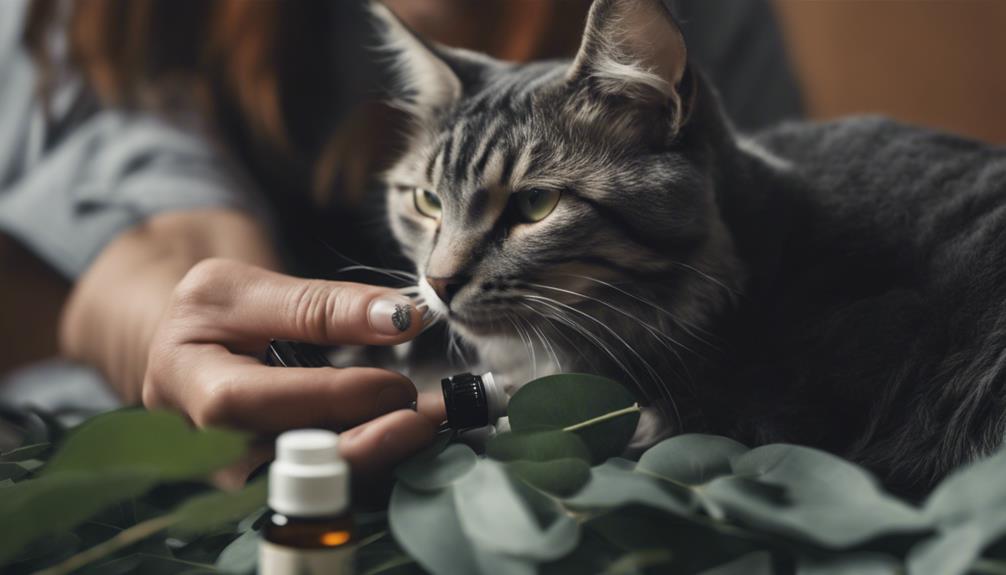
Effective treatment for eucalyptus toxicity in cats involves prompt decontamination procedures to eliminate the oil from their fur or skin. If a cat has ingested eucalyptus essential oil, inducing vomiting may be necessary. Administering activated charcoal helps absorb remaining toxins, while supportive care like intravenous hydration and stomach protectants can aid recovery.
Blood tests are recommended to monitor organ function and detect potential complications post-eucalyptus ingestion.
Preventing Eucalyptus Exposure to Cats
To safeguard the well-being of cats, it is essential to take proactive measures to prevent their exposure to eucalyptus.
- Keep eucalyptus plants, oils, and products out of reach of cats.
- Store eucalyptus securely in inaccessible areas.
- Avoid using eucalyptus essential oils or dried eucalyptus near cats.
- Hang eucalyptus out of cats' reach to prevent accidental ingestion.
Can Coleus Poisoning in Cats Be Treated the Same Way as Eucalyptus Poisoning?
Coleus toxicity in cats can cause symptoms such as vomiting and diarrhea. Treatment for coleus poisoning in cats may involve inducing vomiting or administering activated charcoal to absorb toxins. However, eucalyptus poisoning requires different treatment, so it’s important to consult a veterinarian for proper care.
Importance of Veterinary Care for Eucalyptus Ingestion
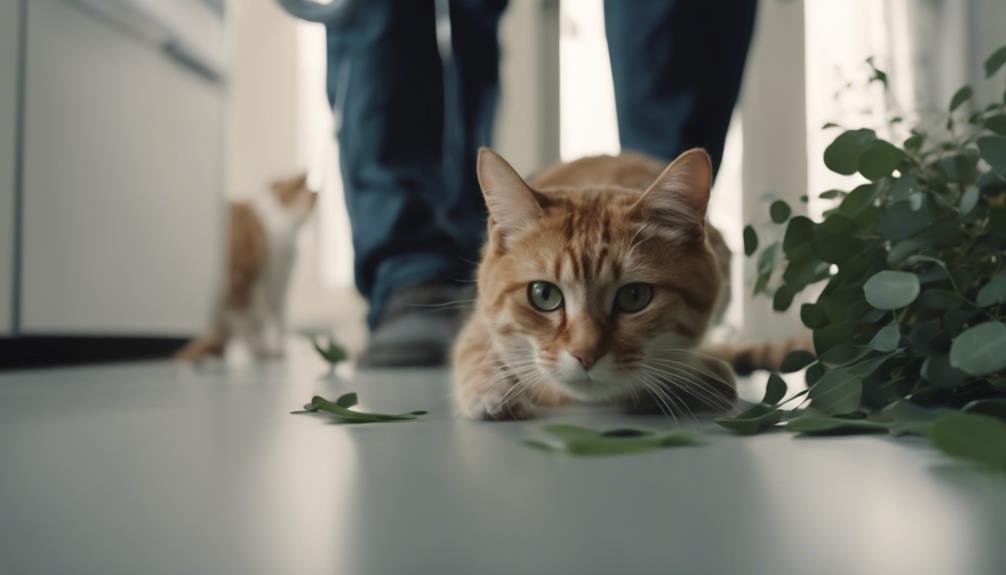
Veterinary care plays an essential role in addressing eucalyptus ingestion in cats, requiring immediate attention to mitigate potential harm and guarantee proper treatment.
| Aspect | Importance |
|---|---|
| Eucalyptus oil | Can be toxic to cats if ingested |
| Veterinary care | Immediate intervention is essential |
| Organ damage | Eucalyptus poisoning can cause severe harm |
| Symptoms | Vomiting, diarrhea, weakness, drooling |
| Supportive care | Essential for managing eucalyptus ingestion |