Is Food Coloring Safe For Cats


Food coloring can be unsafe for cats. The chemicals in them might harm their digestive system and cause allergies. It's important to watch for symptoms like vomiting after ingestion. Prolonged exposure can impact a cat's overall health negatively. The FDA rigorously regulates color additives in cat food for safety, ensuring proper labeling and oversight. Opt for vet-approved natural food colors or consult a vet before using any new coloring agents. Understanding these risks is essential for your cat's well-being.
Potential Risks of Food Coloring for Cats
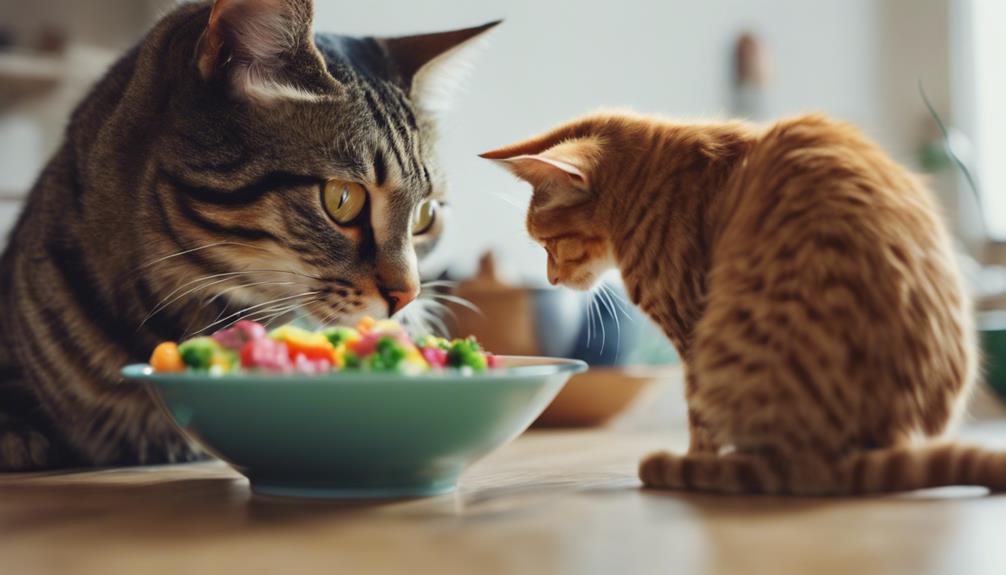
Food coloring poses potential risks to cats due to the presence of harmful chemicals that can affect their gastrointestinal health. Cats may experience allergic reactions to certain food coloring ingredients, leading to toxicity and various health concerns. Additionally, the artificial dyes found in some food colorings may contribute to long-term health issues, such as kidney or liver complications, if consumed regularly. Pet owners should always scrutinize the safety of the ingredients in their cat’s diet and opt for natural, unprocessed options to minimize risks. For example, while considering snacks like popcorn, a common question arises: can cats safely eat popcorn? This highlights the importance of evaluating not only the main food item but also any additional flavorings or additives it may contain.
Monitoring for symptoms such as vomiting is essential if a cat ingests food coloring. Adverse effects from long-term exposure can impact their overall well-being, emphasizing the importance of understanding these risks.
FDA Regulations on Food Coloring for Cats
The regulation of color additives in cat food by the FDA is a meticulous process that prioritizes safety and accurate labeling. The FDA strictly monitors certified and exempt colors. Certified colors, mostly artificial, have specific usage guidelines, while exempt colors are natural pigments derived from sources like plants. Continuous FDA oversight guarantees the safety of all food colorings used in cat food products.
| Category | Type | Source |
|---|---|---|
| Certified Colors | Artificial | Man-made |
| Exempt Colors | Natural | Plants, Fruits, Vegetables |
Health Implications of Artificial Food Coloring
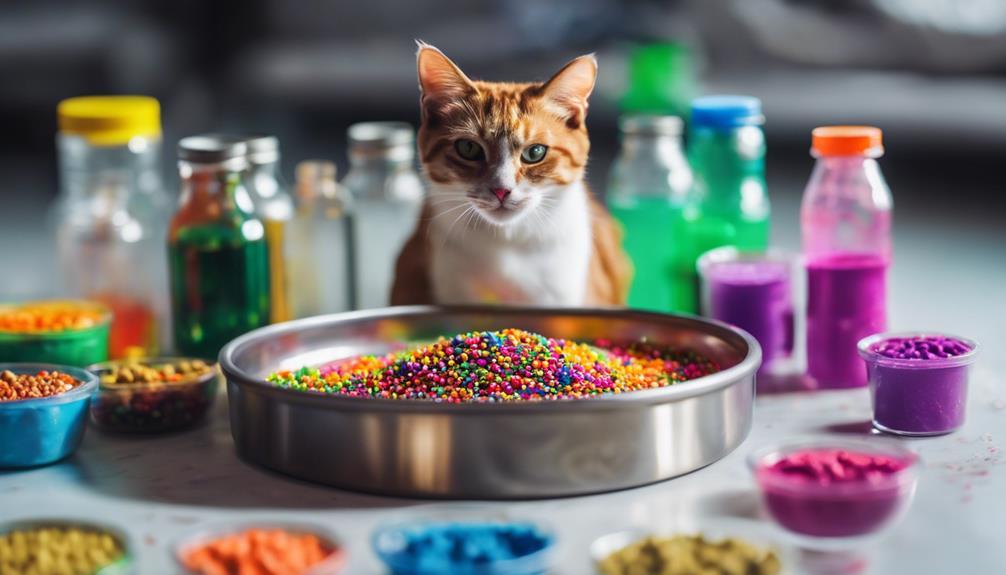
In light of recent studies and concerns surrounding artificial food coloring, veterinary professionals are increasingly emphasizing the potential health risks these additives pose to feline companions. Artificial food coloring has been linked to potential risks for cats, including allergies, hyperactivity, and even cancer. As a result, many veterinarians are urging pet owners to opt for natural, dye-free foods and treats for their feline friends. Additionally, some experts advise against allowing cats to consume any human food that may contain artificial coloring. Can a dog impregnate a cat? This is an interesting question that has a straightforward answer – no, it is not possible for a dog to impregnate a cat. The genetics of dogs and cats are so different that interbreeding between the two species is not biologically feasible.
- Artificial food coloring may contain harmful chemicals for cats.
- Cats can exhibit allergic reactions to certain artificial food coloring ingredients.
- Ingesting food coloring in large quantities can be toxic to cats.
- Long-term exposure to artificial food coloring may have adverse health effects on cats.
Benefits of Natural Food Coloring for Cats
With the growing concerns over the potential health risks associated with artificial food coloring for cats, the utilization of natural coloring alternatives sourced from safe ingredients like beet juice or turmeric is gaining recognition among veterinary professionals.
These vet-approved, cat-safe natural food coloring options contain no harmful additives or chemicals, making them a safe choice for enhancing the color of homemade treats without the risks posed by artificial colors.
Can Food Coloring Have Negative Effects on a Cat’s Digestive System?
Food coloring can have negative effects on a cat’s digestive system. It can cause stomach upset and diarrhea. Instead, consider giving your cat natural supplements like catnip. Catnip benefits for digestion include soothing the stomach and promoting healthy digestion. It’s a safe and natural alternative to food coloring.
Safe Alternatives to Artificial Food Coloring
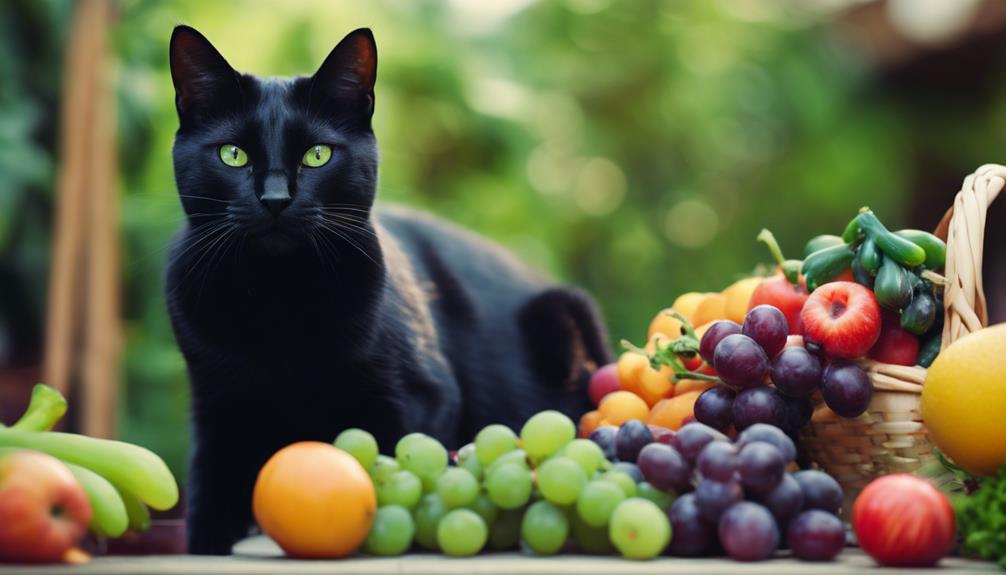
Safe alternatives to artificial food coloring for cats include natural options like beet juice or turmeric, which can be used without posing potential health risks.
- Opt for vet-approved natural food colors.
- Consider commercially available cat-safe food coloring products.
- Consult a veterinarian before using new coloring agents.
- Use safe options in homemade treats to avoid artificial colors and prioritize cat safety.