Is It True That All Cats Have Webbed Feet


Cats don't all have webbed feet. Certain breeds, like Maine Coons, have specialized webbing for swimming and hunting. The webbing aids in agility, speed, and balance, but it's not a universal trait. Variations exist among breeds, with some having longer or thicker webbing. These adaptations serve specific purposes, such as swimming proficiency or traversing diverse terrains. Understanding these nuances can enhance our appreciation for cats' unique features and abilities.
Understanding Cats' Webbed Feet
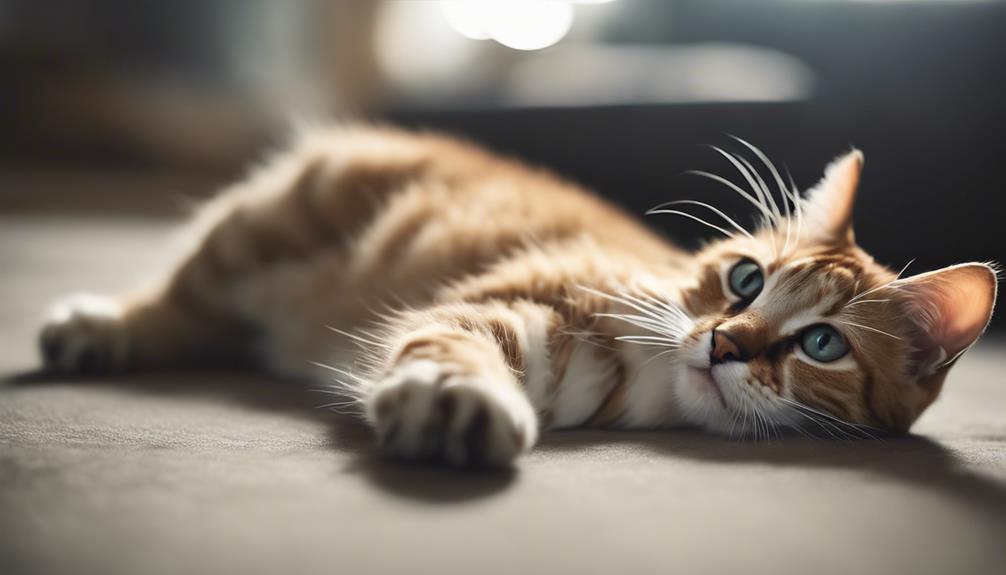
Cats' webbed feet play a crucial role in enhancing their hunting abilities and overall agility. Maine Coon cats, known for their large size, also have specialized webbed feet, particularly beneficial for swimming.
These webbed toes are an evolutionary adaptation that helps in traversing various terrains and moving swiftly. The webbing contributes greatly to cats' speed, stealth, and efficiency in both hunting and exploring their environments.
The Purpose of Cats' Webbing
An essential aspect of feline anatomy, the partially webbed feet of cats serve a vital purpose in enhancing their physical capabilities. This webbing aids in hunting, providing cats with improved agility as they navigate various terrains.
Additionally, the webbing enables cats to swim proficiently, making them adept at moving through wet environments. Overall, the interdigital skin between their toes plays a pivotal role in enhancing cats' balance, movement, and hunting skills.
Notable Features of Cats' Webbed Feet
Cats' webbed feet possess unique features that enhance their hunting prowess and survival skills.
A closer look at cat paw anatomy reveals the significance of their webbing in aiding agility and stability during movement.
These adaptations play an important role in enabling cats to navigate diverse terrains and excel in various environmental conditions.
Cat Paw Anatomy
Featuring interdigital skin between their toes, cats' webbed feet play a crucial role in enhancing their agility and stealth in various environments.
The length and thickness of the webbing in cats' feet vary among breeds. This unique feature aids in balance, agility, and quiet movement, allowing cats to navigate different terrains for hunting and survival.
Certain breeds, like Maine Coons, have adapted features for swimming efficiently.
Function of Webbing
Enhancing their agility and stealth, the webbed feet of cats play a vital role in facilitating their movement across various terrains and environments. These specialized feet aid in hunting by providing stability on different surfaces, enhancing their agility to stalk prey effectively.
Additionally, cats' webbed feet enable efficient swimming when needed, making them versatile and adaptable predators in diverse settings.
Adaptations for Hunting
Webbed feet in cats serve as essential tools in their hunting arsenal, providing them with crucial traction, shock absorption, and stealth capabilities. The webbing between their toes helps cats move silently by spreading their weight, enhancing their ability to stalk prey unnoticed.
This adaptation allows cats to navigate diverse terrains, ensuring they can pursue and capture their targets effectively. Cats' webbed feet contribute immensely to their hunting success, balance, and agility.
Variations in Cat Webbing
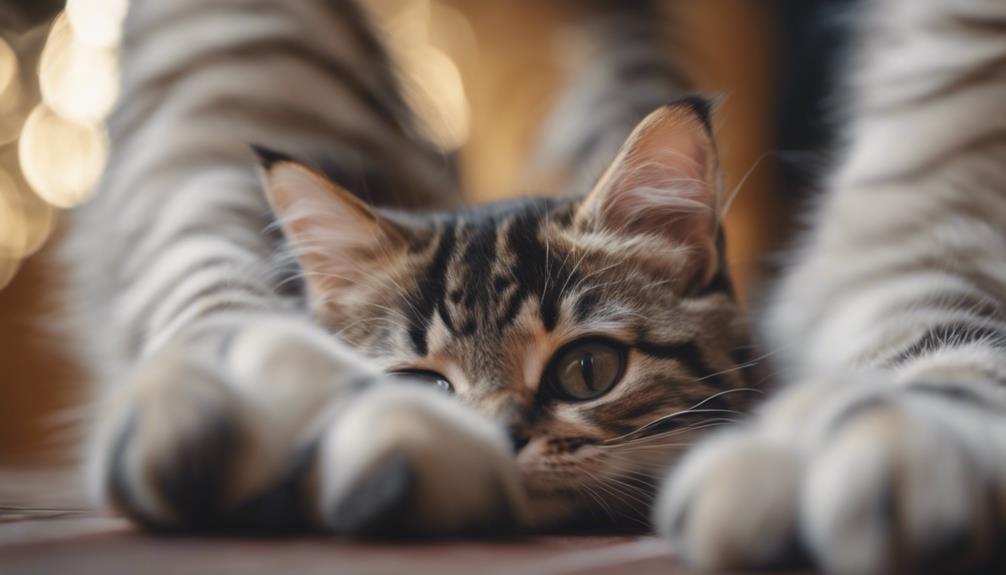
Among different cat species and breeds, the extent and characteristics of toe webbing display notable variations.
For instance, the Maine Coon breed is known for having webbed feet adapted for swimming and exploring.
The visibility and length of webbing between a cat's toes can differ depending on the breed.
These variations in webbing contribute to cats' abilities in hunting, traversing diverse terrains, and swimming effectively.
Webbed Feet in Different Cat Breeds
Cats of various breeds exhibit distinct adaptations in their feet, including partial webbing, to enhance their swimming capabilities. Maine Coon cats, known for their water-loving nature, have partially webbed feet that aid in swimming efficiency.
This adaptation is reminiscent of their big cat cousins, like tigers, who have fully webbed feet for efficient swimming. Such specialized features contribute to these breeds' enjoyment and proficiency in water activities.
Care Tips for Cats' Webbed Feet
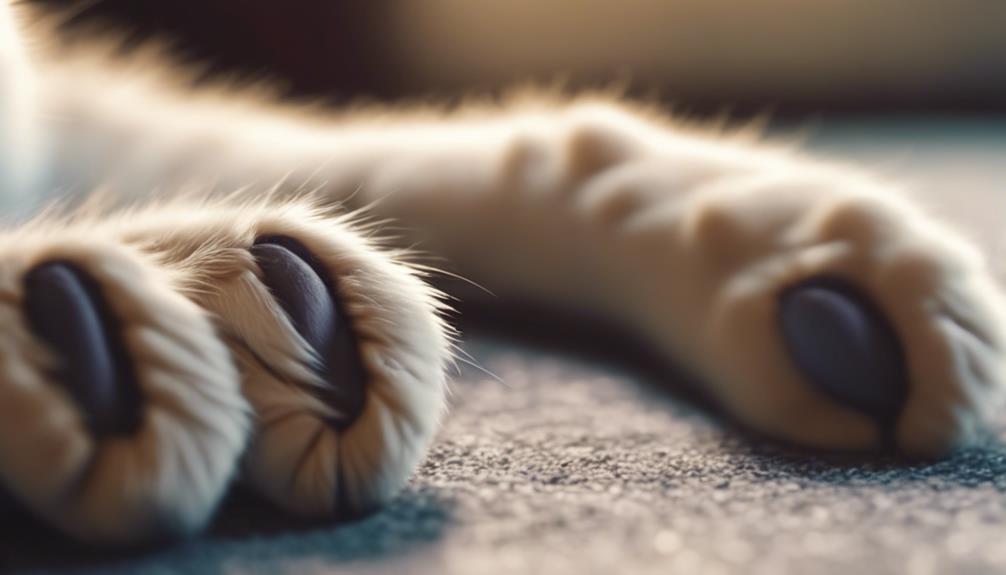
When caring for cats with webbed feet, it is essential to understand their function, maintain proper hygiene for their paws, and provide opportunities for exercise to enhance agility.
Ensuring that your feline friend's webbed feet are clean and free from debris can help prevent infections and discomfort. Incorporating gentle foot handling and regular grooming into your cat's care routine can contribute to their overall well-being and happiness.
Webbed Feet Function
An essential aspect of maintaining your cat's overall well-being involves understanding the functionality of their webbed feet and implementing appropriate care practices.
Cats' webbed feet aid in agility and balance, important for hunting and survival.
Regular inspection of their webbed toes is recommended to guarantee their well-being.
These unique feet contribute greatly to cats' abilities to navigate various terrains with ease, making them adept hunters in the wild.
Hygiene for Paws
Understanding the proper hygiene practices for cats' webbed feet is pivotal in ensuring their overall paw health and well-being. Regularly inspecting paws, cleaning paw pads with a damp cloth, and gradually introducing paw handling are essential steps. Avoid harsh chemicals near cats' paws to prevent irritation. Trimming nails regularly helps maintain paw health and prevents injuries. Ensuring these practices are part of your cat's care routine will contribute to their overall well-being.
| Hygiene Tips for Cats' Paws | ||
|---|---|---|
| Regularly Inspect Paws | Clean Paw Pads Gently | Gradually Introduce Paw Handling |
Exercise for Agility
To maintain peak agility and muscle strength in cats with webbed feet, regular exercise is essential. Interactive toys, climbing structures, and engaging play sessions can improve coordination and reflexes while providing mental stimulation.
Indoor obstacle courses and puzzle toys challenge dexterity and problem-solving skills. Encouraging active playtime not only enhances circulation but also contributes to the overall well-being of cats with webbed feet.
Debunking Myths About Cat Webbing
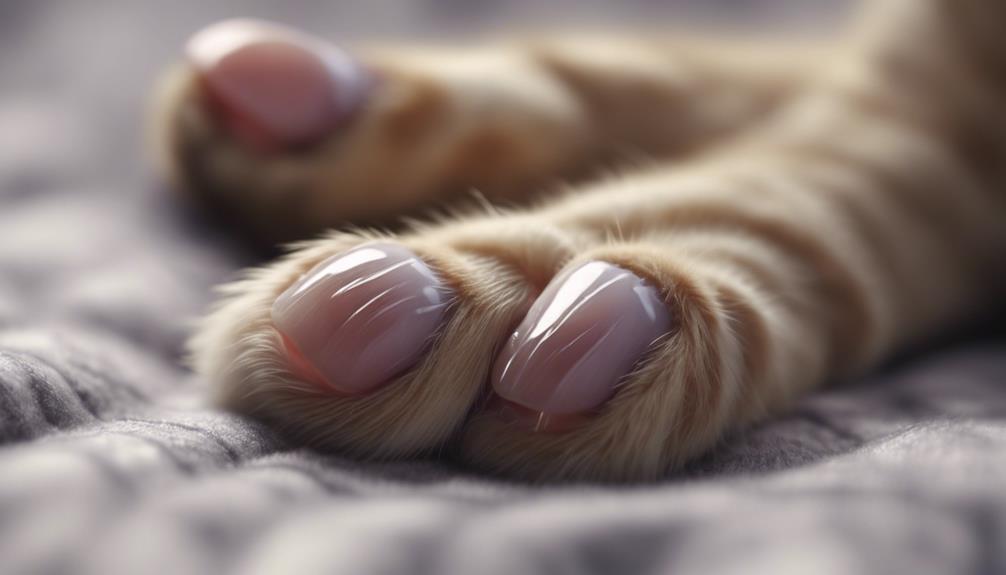
Contrary to popular belief, misconceptions surrounding cats' webbed feet often stem from a lack of understanding of feline anatomy and evolutionary adaptations.
While not all cats have fully webbed feet, most cat breeds possess some degree of webbing between their toes. This feature aids in their agility, stealth, and exploration across various terrains.
Debunking myths about cat webbing can help cat owners appreciate the unique adaptations of individual cats.
Do All Cats Have Webbed Feet Like They Have Tails?
No, all cats have tails but not webbed feet. Cats’ tails are used for balance and communication, while their non-webbed feet are designed for agility and speed. This unique combination of features allows cats to excel in their natural hunting and climbing abilities.
Exploring Cats' Natural Adaptations
Exploring the natural adaptations of cats reveals the remarkable functionality and evolutionary advantages of their webbed feet, enabling them to excel in various activities from hunting to swimming.
Cats' webbed feet aid in their need to hunt, enhancing agility and balance while showcasing impressive survival skills.
This evolutionary trait not only supports their hunting prowess but also contributes to their overall adaptability and success in different environments.