Is It True That All Cats React To Catnip


While it's commonly believed that all cats react to catnip, this is not entirely accurate. Genetic factors heavily influence a cat's response to catnip. Around 50-70% of cats exhibit a positive reaction, while approximately one-third are non-responders due to lacking specific genes. Factors like age, breed, and sensitivity to smell also play a role in a cat's reaction to catnip. Understanding these influences sheds light on why not all cats react to catnip. The complexities of catnip sensitivity reveal a fascinating world about our feline companions.
Catnip and Feline Sensitivity
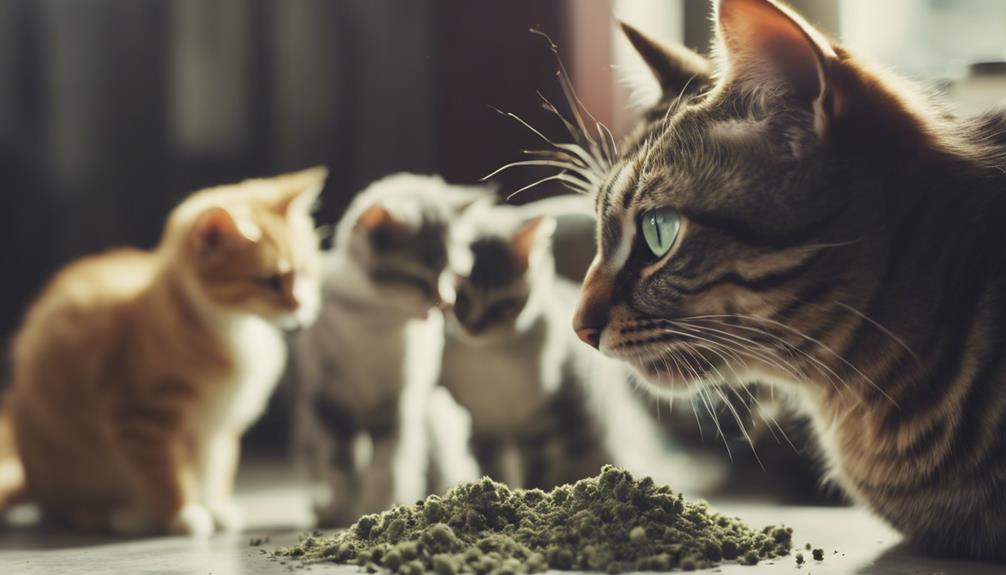
In relation to feline sensitivity, the reaction to catnip is primarily determined by genetic factors, with approximately 50-70% of cats exhibiting a positive response. Some cats, around one-third, are non-responders due to lacking the specific gene. Kittens under three months old and certain elderly cats may also not react to catnip.
Non-responders can enjoy alternatives like silvervine, with 75% showing a positive reaction to it.
Factors Affecting Catnip Response
Factors affecting catnip response in cats include their age and breed. Kittens under three months old and certain breeds may not react to catnip. Sensitivity to smell plays a vital role, with some cats being more responsive due to their enhanced olfactory perception.
Additionally, individual cat preferences can influence their reaction to catnip, leading to variations in how they engage with this herb.
Cat's Age and Breed
The age of a cat and its breed play significant roles in determining its response to catnip. Kittens under three months old may not respond due to an immature olfactory system. Sensitivity typically develops between three to six months.
Breeds like Siamese may have a higher likelihood of response. Elderly cats might show reduced reaction, and around 1/3 of adults lack the genetic trait for catnip sensitivity.
Sensitivity to Smell
Understanding a cat's sensitivity to smell, particularly in relation to catnip response, sheds light on the intriguing genetic and developmental factors at play.
Catnip response is hereditary, with 50-70% of cats reacting positively. Around 1/3 lack a response due to genetic reasons.
Kittens under three months old typically don't react because of an immature olfactory system.
Cats develop sensitivity to nepetalactone, with elderly cats potentially showing decreased sensitivity.
Individual Cat Preferences
Influenced by genetic predispositions and individual inclinations, catnip response varies among feline companions. Approximately one-third of cats lack the genetic makeup to react to catnip.
Factors such as age-related changes and individual cat preferences also impact their response. Some cats exhibit more intense reactions to catnip due to genetic variations, while age-related declines in sensitivity may cause older cats to be less responsive to this herb.
Catnip Sensitivity Across Feline Species
How do different feline species vary in their sensitivity to catnip?
- Domestic cats are the most common responders to catnip.
- Wild cats like cougars, lions, and leopards also show catnip responses.
- Sensitivity levels vary within species.
- Catnip sensitivity is observed in a wide range of feline species.
Catnip's Varied Effects on Cats

Catnip's effects on cats can vary greatly based on genetic predispositions and age-related factors. Some cats exhibit a strong response to catnip due to genetic sensitivity to nepetalactone, while others may not react at all. Kittens under three months old typically do not respond until they mature, and elderly cats may lose their sensitivity over time. Hereditary factors also play a significant role in determining a cat's reaction to catnip.
| Catnip Effect | Response to Catnip | Genetic Factors |
|---|---|---|
| Strong reaction | Positive | Sensitive |
| No reaction | None | Non-sensitive |
| Reduced response | Varied | Hereditary |
Understanding Catnip's Influence on Behavior
Catnip can have varying effects on a cat's behavior, including influencing play behavior, relaxation, and aggression.
When cats interact with catnip, they may exhibit increased playfulness, followed by a sense of calm or relaxation. Understanding feline emotions is crucial in providing proper care for cats. Catnip is known to elicit a range of behaviors in cats, and being aware of how they react to it can help in creating enriching environments for them. By recognizing their responses to catnip, owners can better understand their pets’ emotional needs and preferences.
In some cases, catnip can trigger aggressive behavior in cats, which can vary depending on the individual cat's response.
Catnip and Play Behavior
Exposure to catnip has been observed to significantly increase play behavior and activity levels in cats.
Some cats, about 50-70%, respond positively to catnip, while non-responders may have genetic factors influencing their lack of reaction.
Alternatives like silvervine and Tatarian honeysuckle can be used for non-responders, with 75% of cats showing a positive response to silvervine.
Catnip and Relaxation
Understanding the calming effects of catnip on feline behavior involves delving into the compound nepetalactone's interactions with cats' nasal receptors. Catnip can make cats mellow out, exhibiting behaviors like rolling and rubbing. The effects, lasting 5-15 minutes, are mediated through the olfactory system. Not all cats respond to catnip, with kittens under three months typically showing no reaction due to hereditary factors.
| Catnip | Calming Effect |
|---|---|
| Nepetalactone | Receptors |
| Behavior | Olfactory System |
| Kittens | – |
Catnip and Aggression
When examining the effects of catnip on feline behavior, it is important to take into account how this plant compound can impact the level of aggression exhibited by some male cats.
- Some male cats may become overly aggressive or rambunctious when exposed to catnip.
- Monitoring catnip reactions in multicat households can help prevent rough play and aggression.
- Introducing catnip to male cats in separate rooms initially can help manage their reactions.
- Different cats may exhibit various responses to catnip, including heightened playfulness or vocalization.
Myth Busting: Not All Cats React?
While it is commonly believed that all cats react to catnip, the reality is that approximately 50-70% of cats actually show a positive response to this herb. Lack of response is often due to genetics, with around 1/3 of cats lacking the gene to respond. Kittens under three months old and some elderly cats may also not react. Alternatives like silvervine and Tatarian honeysuckle can be effective for non-responders.
| Category | Percentage | Reason |
|---|---|---|
| React to Catnip | 50-70% | Genetic factors play a role |
| Non-responders | 30-50% | Lack gene for response |
| Alternatives | Silvervine: 75% | Effective for non-responders |
Enhancing Catnip Responsiveness
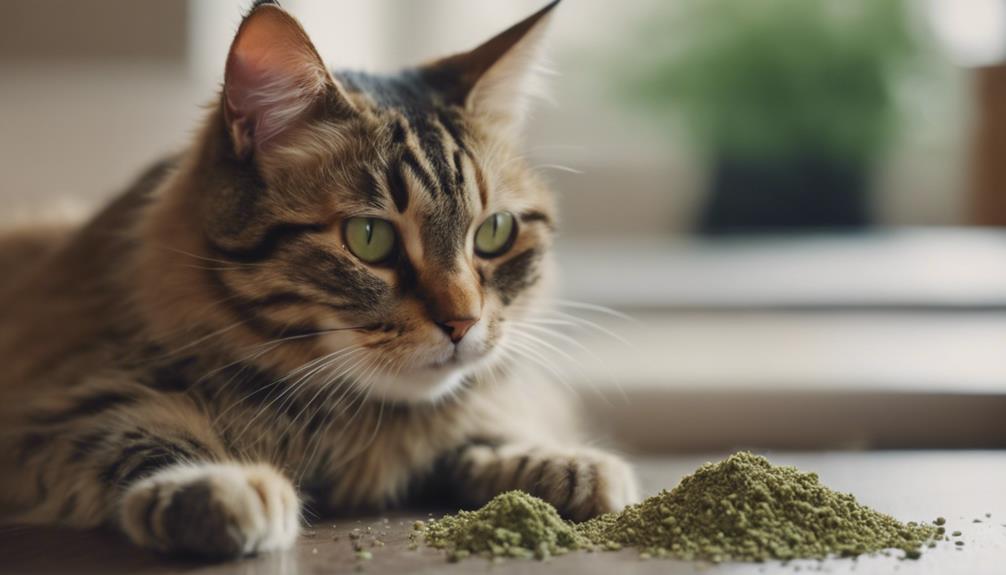
To enhance a cat's responsiveness to catnip, incorporating alternatives such as silvervine and Tatarian honeysuckle can be effective strategies.
- 75% of non-responders show a positive response to silvervine.
- Cat Twig Silvervine stick toy engages non-responding cats.
- Rosemary and peppermint offer stimulating effects.
- Blends of catnip and silvervine cater to both non-responding and responding cats.
Do Cats Need Catnip to Hunt and Kill Mice?
Some people wonder if all cats kill mice because of their instinctual hunting abilities. While catnip may attract cats, it isn’t necessary for hunting. Cats hunt and kill mice due to their predatory nature, sharp senses, and agile bodies. Catnip is simply a recreational treat for some felines.
The Science Behind Catnip Sensitivity
Understanding the genetic basis of catnip sensitivity sheds light on why some felines are responsive while others show no reaction to this aromatic herb. Catnip sensitivity is hereditary, with around 50-70% of cats responding positively. Genetics also play a role in the lack of response, affecting about a third of cats. Kittens and elderly cats may not react due to age-related factors. Immediate sensitivity occurs if the cat carries the necessary genes for a positive response.
| Catnip Sensitivity | Explanation |
|---|---|
| Hereditary | Catnip sensitivity is passed down genetically, influencing whether a cat will respond positively to catnip. |
| Lack of Response | Approximately one-third of cats do not react to catnip due to genetic factors that impede their sensitivity. |
| Kittens, Elderly Cats | Young kittens under three months and some elderly cats may not respond to catnip due to age-related reasons. |
| Immediate Sensitivity | Cats display an immediate reaction to catnip if they possess the genetic makeup for a positive response. |