Is Pilea Toxic To Cats


Pilea plants, also known as Chinese Money Plants or Friendship Plants, are safe for cats as they are non-toxic. They do not contain harmful compounds in their leaves, stems, or sap that could harm feline companions. Pilea ingestion typically does not lead to harmful effects, making it a pet-safe option. Monitoring your cat's behavior around plants is important for responsible pet ownership. If you want to know more about the symptoms of ingestion, potential treatments, and how to prevent Pilea exposure to your cats, there is further valuable information available.
Pilea Plant Overview
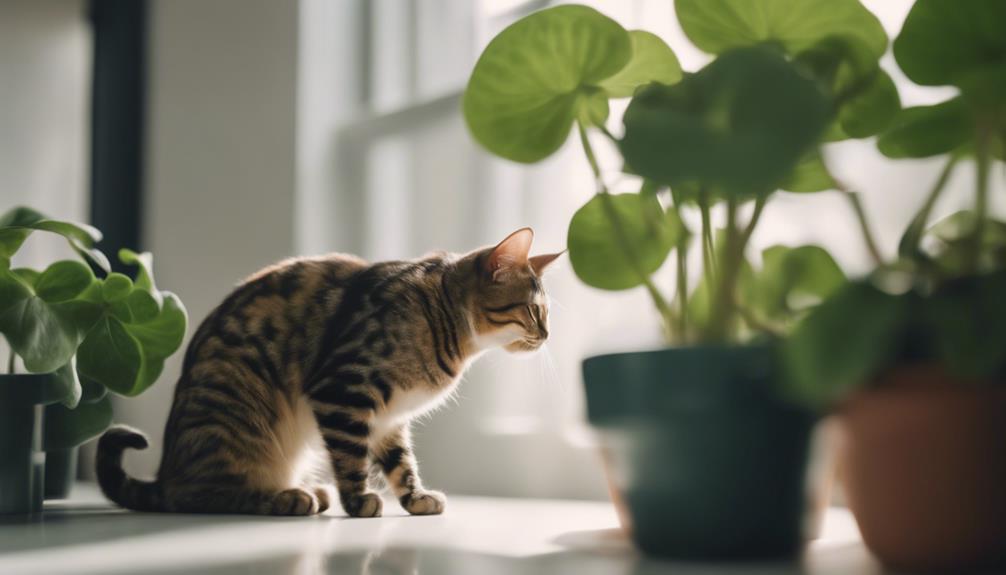
Pilea plants, commonly known as Chinese Money Plants or Friendship Plants, are popular indoor houseplants due to their unique rounded leaves and easy maintenance requirements. They are safe for cats as they are non-toxic. Cat owners can rest assured that Pilea plants pose no harm to their feline companions.
The leaves, stems, and sap of Pilea plants do not contain any harmful compounds for cats, making them a pet-friendly choice.
Toxicity Concerns for Felines
When considering the safety of indoor plants around feline companions, understanding the toxicity concerns for specific varieties is essential for responsible pet ownership. Pilea plants are non-toxic houseplants, making them a pet-safe option safe for pets. Cats can nibble on Pilea leaves without experiencing harmful effects since these plants do not contain any known toxins that can harm cats if ingested.
Monitoring your cat's behavior around plants is still important, but Pilea is generally safe for them.
Symptoms of Pilea Ingestion
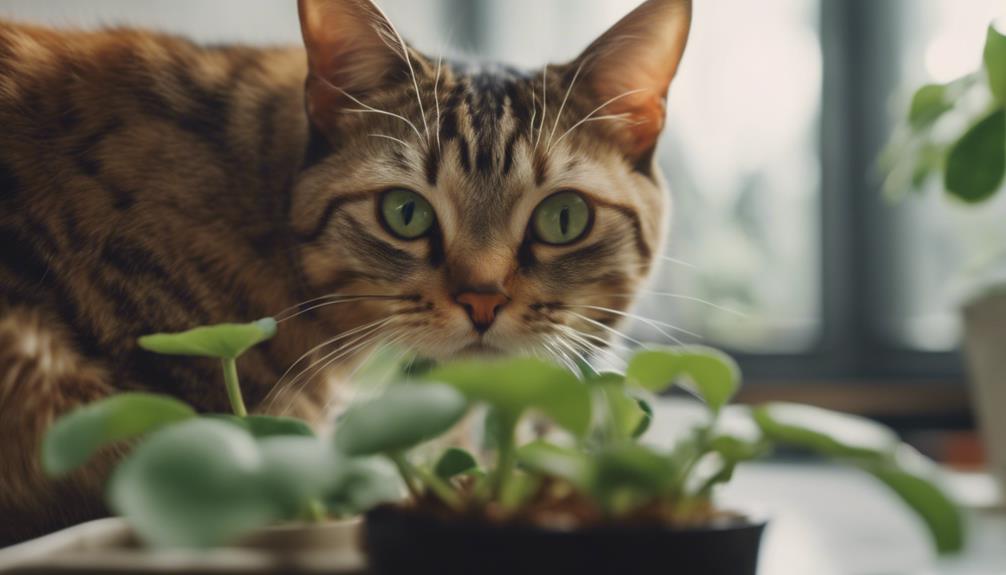
What are the common symptoms that may arise in cats after ingesting Pilea plants?
Ingesting Pilea can lead to symptoms like vomiting, diarrhea, and lethargy in cats. This ingestion may cause stomach upset and discomfort, prompting signs of illness in cats who consume Pilea leaves or stems.
Monitoring cats for any behavioral or health changes post-ingestion is essential, and contacting a veterinarian if symptoms arise is advised for proper evaluation and care.
Treatment for Pilea Toxicity
Upon suspecting Pilea toxicity in a cat, prompt veterinary intervention is essential for providing supportive care and managing potential complications. Treatment for Pilea toxicity may involve supportive care to alleviate symptoms and prevent dehydration. Ensuring the cat stays hydrated is vital during the treatment process. The table below outlines important aspects of treatment for Pilea toxicity in cats.
| Treatment for Pilea Toxicity |
|---|
| Prompt veterinary intervention |
| Supportive care |
| Monitoring for dehydration |
| Providing hydration |
| Managing complications |
Can Cats Be Harmed by Pilea and Peperomia Plants?
Yes, peperomia plants can pose a potential risk of toxicity in cats. These plants contain compounds that can be harmful if ingested by cats. Symptoms of peperomia toxicity in cats may include drooling, vomiting, and difficulty breathing. It’s important to keep these plants out of reach of curious felines.
Preventing Pilea Exposure to Cats
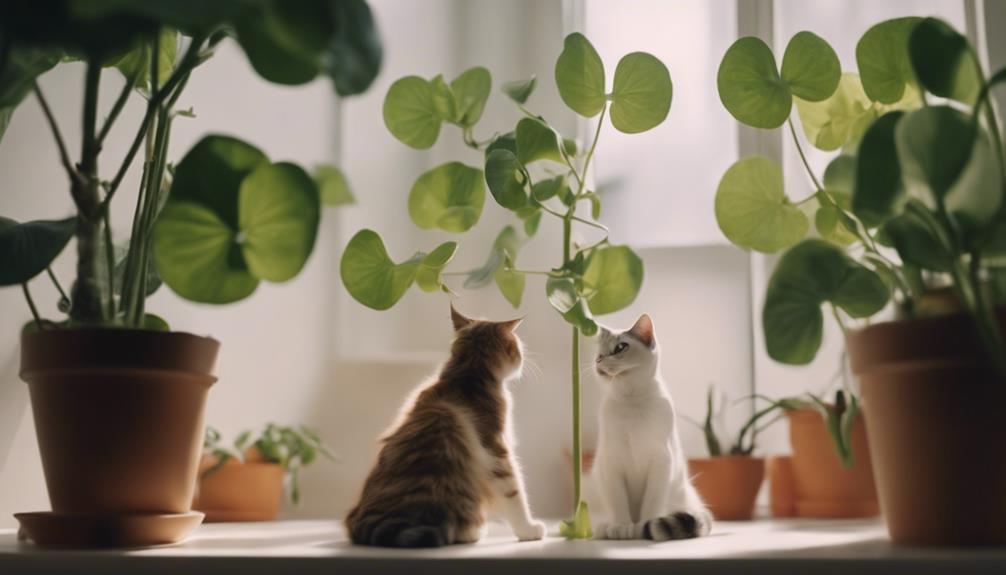
To minimize the risk of Pilea exposure to cats, strategic placement of the plants in areas inaccessible to feline companions is a prudent preventive measure.
Since Pilea plants are non-toxic to cats and considered pet safe, providing alternative safe plants like catnip or cat thyme can help divert their attention.
Monitoring cats' behavior around Pilea plants and ensuring they do not ingest any parts of the plant is recommended.