My Cat Ate Aluminum Foil What Should I Do


If your cat ate aluminum foil, watch for vomiting, gagging, or lethargy. Small pieces may pass, but larger ones can cause harm. Seek emergency vet care if needed. Monitor closely for distress. Emergency treatment is essential if symptoms worsen. Provide details to the vet promptly. Monitor changes in behavior like lethargy or unusual habits. Keep your cat stress-free and hydrated. Prevent future incidents by securing foil and not leaving it unattended. Taking these steps now can be essential for your cat's well-being.
Signs of Aluminum Foil Ingestion

Cats that have ingested aluminum foil may exhibit various signs that indicate potential ingestion. These signs include:
- Vomiting
- Gagging
- Drooling
- Lethargy
- Loss of appetite
- Difficulty passing stool
- Persistent coughing
- Abdominal pain
- Unusual behavior
X-rays can help locate the foil in the cat's digestive system. Immediate vet consultation is vital if any of these signs are observed to guarantee proper evaluation and treatment.
Risks of Aluminum Foil Consumption
Upon ingestion, aluminum foil poses a serious risk of gastrointestinal obstruction in felines.
- Small, un-crumpled foil pieces may pass through the digestive system.
- Large or crumpled foil pieces pose a higher risk of serious health issues.
- Cats may need veterinary intervention if they ingest significant amounts of foil.
Immediate Steps to Take

When your cat has consumed aluminum foil, the first step is to seek emergency veterinary care.
Monitoring your cat's behavior for signs of distress, vomiting, or constipation is vital.
Taking immediate action can help prevent further complications and make sure your cat receives the necessary treatment promptly.
Emergency Veterinary Care
In cases where a cat has ingested aluminum foil, immediate contact with a veterinarian is essential to guarantee swift and appropriate emergency veterinary care.
- Seek emergency care if symptoms like repeated vomiting or lack of appetite occur.
- Provide ingestion details to the vet.
- Swift intervention is vital to prevent potential digestive obstructions or injuries.
Monitor Cat's Behavior
Observing your cat's behavior closely for any signs of distress is crucial after ingesting aluminum foil. Monitor for symptoms like vomiting, lethargy, and abdominal pain. Keep an eye on eating and drinking habits, litter box changes, and unusual behavior. Provide access to water and a stress-free environment. Contact a vet immediately if concerning symptoms arise. Below is a table summarizing key steps to monitor your cat effectively.
| Monitor Cat's Behavior | |
|---|---|
| Symptoms | Vomiting, lethargy, abdominal pain |
| Behavior | Unusual behavior, litter box changes |
| Contact Vet | If concerning symptoms occur |
| Provide Water | Ensure access to water |
| Stress-Free Environment | Monitor in a calm environment |
Prevent Future Incidents
To prevent future incidents of cats ingesting aluminum foil, it is imperative to implement immediate preventive measures within your living space.
- Store aluminum foil in secure, closed drawers or cabinets.
- Avoid leaving food wrapped in foil unattended on countertops.
- Crumple used foil tightly before disposal to minimize the risk of ingestion.
Monitoring Your Cat's Health
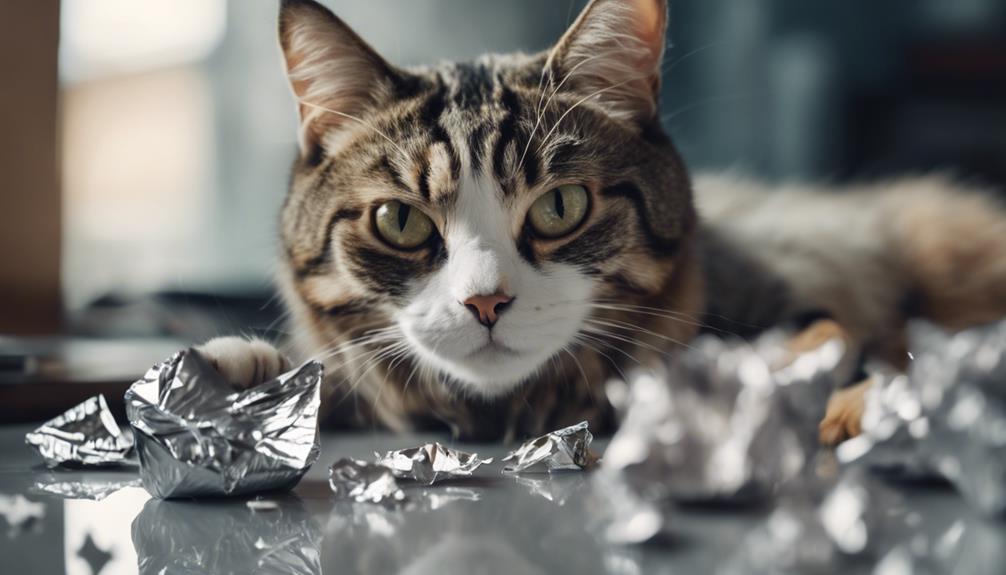
After your cat ingests aluminum foil, it's important to monitor its health closely. Watch for signs of distress such as vomiting, constipation, reduced appetite, lethargy, or unusual behavior.
If you notice any concerning changes in your cat's health, contact a veterinarian promptly for further evaluation and treatment.
Health Check After Consumption
Upon your cat consuming aluminum foil, it is important to vigilantly monitor their health for any signs of distress or complications.
- Watch for abnormal behavior
- Check for constipation
- Monitor hydration levels
If you observe reduced appetite, changes in litter box habits, or abdominal pain, contact a veterinarian promptly. Ensuring your cat's well-being post-consumption is vital for their health and recovery.
Symptoms to Watch
Keeping a close watch on your cat's behavior and physical condition is crucial after they have ingested aluminum foil.
Look out for symptoms like vomiting, lack of appetite, abdominal discomfort, behavior changes, and digestive issues.
Monitor hydration levels and offer wet food to aid digestion.
If you notice any distressing signs, contact a vet promptly.
Observing these symptoms can help ascertain the necessary steps to guarantee your cat's well-being post-ingestion.
Vet Visit Necessary?
Is a vet visit necessary to monitor your cat's health after ingesting aluminum foil?
It is important to observe your cat for symptoms like vomiting, lack of appetite, or abdominal discomfort. Additionally, keep an eye on their litter box for passed foil or abnormal bowel movements.
Contact your vet promptly if you notice any concerning signs or behaviors to guarantee your cat's well-being.
When to Contact a Veterinarian

Promptly contact a veterinarian if your cat has ingested a large or crumpled piece of aluminum foil. Monitor your cat for distress, vomiting, or constipation post-ingestion. Seek veterinary care if any signs of illness manifest within 3 days.
Even if your cat seems fine, consulting a vet for guidance is advisable. Timely intervention can prevent complications, making observation essential after aluminum foil consumption.
Veterinary Treatment Options
What are the essential veterinary treatment options for a cat that has ingested aluminum foil?
- Inducing vomiting to remove the foil
- Monitoring signs of distress or obstruction
- Using X-rays to assess the impact on the cat's digestive system
These actions may help identify any blockages and determine if surgical intervention is necessary.
Veterinary care is vital to address potential health risks associated with aluminum foil ingestion.
Preventing Future Incidents

To minimize the risk of future incidents involving aluminum foil ingestion by cats, it is imperative to implement preventive measures such as securing and properly storing foil away from feline access.
Avoid leaving food remnants on foil to reduce cat attraction. Dispose of used foil by crumpling it tightly to prevent ingestion.
Clean up any small foil pieces promptly to avoid accidental ingestion. Minimize the temptation by keeping foil out of the cat's reach and sight.
Common Symptoms to Watch For
Regularly monitoring your cat for common symptoms is essential after they have ingested aluminum foil to guarantee their well-being and prompt intervention if necessary.
- Vomiting, diarrhea, lethargy, and abdominal pain are common signs to watch for.
- Signs of distress like excessive drooling or difficulty breathing may indicate throat obstruction.
- Observing unusual behavior, blood in vomit or stool, and signs of gastrointestinal obstruction are important indicators of potential internal injuries.
Should I be concerned if my cat has ingested a foreign object like aluminum foil after killing a bat?
If your cat has ingested a foreign object like aluminum foil after killing a bat, it can be concerning. Monitor their behavior for any signs of distress or discomfort. Contact your veterinarian immediately to determine what to do about bat attack. They may advise observation or the need for further intervention to ensure your cat’s health and safety.
Final Thoughts
After monitoring your cat for common symptoms of aluminum foil ingestion, it is important to contemplate some final thoughts on how to prevent such incidents in the future.
Keeping food and aluminum foil separate, ensuring that foil is securely stored, and being aware of the risks associated with cats and small pieces of foil can help safeguard your feline friend. Immediate veterinary attention should still be sought if significant ingestion occurs.