My Cat Killed A Rat What To Do


If your cat has killed a rat, it's a vital part of their natural hunting behavior. Praise your cat for their instinctual prowess. Seal the rat in a plastic bag, then dispose of it in an outdoor garbage bin to prevent contamination. Always wash hands thoroughly afterward. Monitor your cat for any signs of illness, like vomiting or lethargy, which may indicate poisoning. Keep vaccinations up to date and seek vet help if needed. Understanding your cat's behavior and taking appropriate steps is essential for their well-being. Additional valuable advice is accessible in the detailed guidelines provided.
Understanding Your Cat's Behavior

When considering your cat's behavior in relation to hunting and killing rats, it is important to acknowledge their innate instinctual drive.
Cats have a natural inclination to chase and kill small rodents like rats. This behavior is part of their predatory instincts, where they view small rodents as prey animals to be chased and caught.
Understanding this aspect of your cat's nature is vital when addressing their hunting behaviors.
Praising Your Cat's Hunting Instinct
Praising your cat's hunting instinct is essential to acknowledge and encourage their natural predatory behavior. By recognizing and appreciating their feline hunting skills, you can strengthen the bond between you and your pet.
Celebrating their successful rat kill not only reinforces their innate abilities but also provides mental stimulation, fulfilling their instinctual need to hunt.
Acknowledge Feline Hunting Skills
Evolutionarily refined as hunters, cats exhibit a natural instinct to pursue and capture prey, showcasing their inherent hunting prowess.
When your cat kills a rat, acknowledging their feline hunting skills is crucial. Recognizing this behavior not only validates their instincts but also strengthens the bond between you and your pet.
Understanding and appreciating your cat's ability to hunt can lead to a more fulfilling relationship and a happier, healthier cat.
Encourage Natural Predatory Behavior
Acknowledging your cat's natural hunting prowess by encouraging and praising their predatory instincts can foster a deeper connection and fulfillment in your relationship.
When your cat kills a mouse, positively reinforcing their behavior through praise or treats can help satisfy their instinctual needs.
This encouragement of natural predatory behavior not only strengthens the bond with your cat but also allows them to feel accomplished and content.
Proper Disposal of the Rat
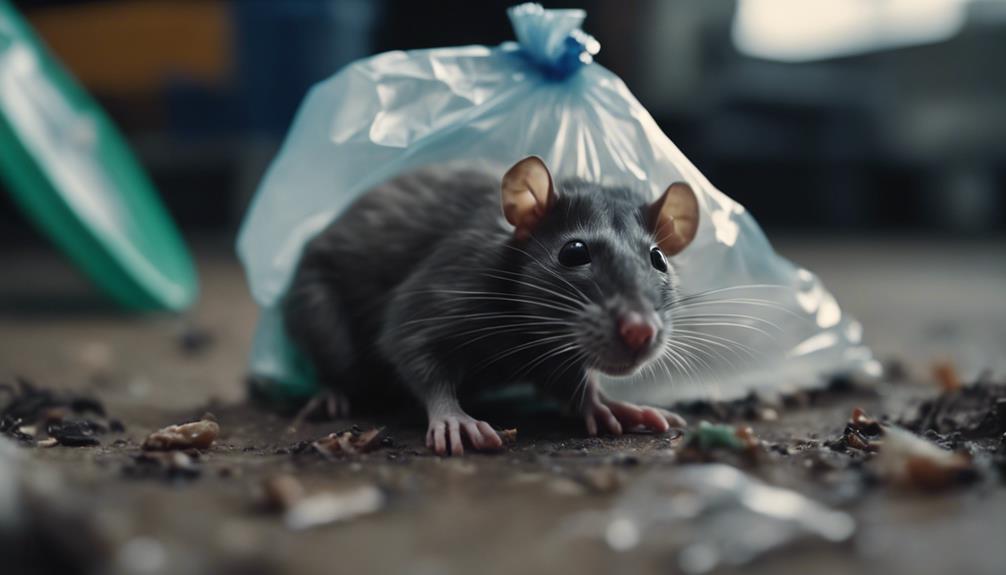
When addressing the proper disposal of a rat that your cat has killed, it is vital to handle the situation with care.
Placing the dead rat in a sealed plastic trash bag, double-bagging it, and then disposing of it in an outdoor garbage bin are essential steps to prevent contamination and reduce health risks.
Remember to thoroughly wash and disinfect your hands after handling the rat to guarantee proper hygiene.
Rat Removal Methods
For proper disposal of the rat after your cat has killed it, place the dead rat in a sealed plastic trash bag.
To guarantee effective rat removal methods, consider the following steps:
- Double-bag the rat to prevent access by other animals, including your cat.
- Dispose of the rat in an outdoor garbage bin to prevent odors and contamination.
- Wash and disinfect your hands after handling and disposing of the rat.
- Prevent your cat from reaching the disposed rat to avoid potential health risks.
Disposing Safely
To guarantee safe and proper disposal of the rat after your cat has killed it, carefully place the deceased rodent in a sealed plastic trash bag.
Double-bagging the rat guarantees proper containment.
Dispose of the rat in an outdoor garbage bin to prevent indoor contamination.
Remember to wash and disinfect your hands after handling and disposing of the rat.
Prevent your cat from accessing the disposed rat to avoid health risks.
Monitoring Your Cat for Signs of Illness
After your cat has killed a rat, it is crucial to vigilantly monitor for any signs of illness that may manifest.
- Watch for symptoms like vomiting, diarrhea, lethargy, or changes in appetite.
- Seek veterinary help if abnormal behavior or health issues arise.
- Be alert to signs of poisoning or infection from contact with the rat.
- Guarantee vaccinations and parasite prevention are up to date for best health monitoring.
Strengthening Home Defenses Against Rats
Enhancing the security measures within your residence can effectively deter rats from invading your home. Seal all entry points, store food in airtight containers, and trim vegetation to eliminate hiding spots.
Set up rat traps strategically and utilize ultrasonic pest repellents for rat control. These methods form a robust defense against rats, aiding in keeping your home free from unwanted rodent pests.
Preventing Future Rodent Incidents
Implementing proactive measures to prevent future rodent incidents is vital for maintaining a pest-free environment in your home.
- Place rodent-proof screens on windows and doors.
- Seal cracks and crevices in walls, floors, and foundations.
- Store food in airtight containers and clean up spills promptly.
- Remove clutter and debris to eliminate rodent hiding spots.
These steps are essential in controlling the rat population and preventing future incidents, whether dealing with wild rats or a pet rat.
Ensuring Your Cat's Health and Safety
To guarantee the well-being of your cat following an encounter with a rat, it is important to prioritize monitoring for any signs of illness and taking necessary precautions.
Monitor your cat for any changes in behavior or health after it brings down a rat. Additionally, sterilize any household items used during the encounter to prevent the spread of germs.
This will help secure your cat's health and safety.
Seeking Veterinary Advice if Needed
If your cat exhibits any signs of illness subsequent to capturing a rat, it is advisable to promptly seek guidance from a qualified veterinarian.
- Look for Symptoms: Monitor your cat for any unusual behavior or physical symptoms post rat encounter.
- Consult for Toxins: Seek veterinary advice if you suspect toxins in or around your home.
- Preventive Measures: Prevent diseases by limiting your cat's outdoor access and consulting with a vet.
- Ensure Well-being: Take precautionary measures to safeguard your cat's health after a rat kill.
Should I Worry If My Cat Ate a Poisoned Mouse After Killing a Rat?
If your cat ate a poisoned mouse after killing a rat, it’s important to act quickly. Contact your veterinarian immediately to discuss the potential risks and steps to take. Look for any unusual symptoms in your cat, such as weakness or vomiting, and monitor closely for any changes in behavior.
Implementing Safe Rodent Control Measures
Using a combination of snap traps, electronic traps, enclosure boxes, live-animal traps, and rodenticides is essential for effectively implementing safe rodent control measures.
| Type of Trap | Description | Effectiveness |
|---|---|---|
| Snap traps | Spring-loaded bars for killing rodents | High |
| Electronic traps | Deliver instant death through electric shock | Modern approach |
| Enclosure boxes | Safe trapping option preventing access by children | Safe |
| Live-animal traps | Capture rodents alive for relocation | Humane |
| Rodenticides | Effective but require caution due to risks | Caution needed |