My Cat Will Only Drink From The Faucet


Cats often prefer drinking from faucets due to their natural attraction to running water and the perceived cleanliness it offers. This behavior may stem from a range of factors, such as stagnant bowl water, whisker stress, and the novelty of faucet drinking. However, exclusive faucet drinking can lead to health issues like dehydration and mineral imbalances. To encourage more traditional water bowl usage, consider using water fountains, placing bowls in quiet areas, and employing positive reinforcement techniques. If your cat persists in faucet drinking, seek guidance from a veterinarian for tailored solutions. Additional strategies for addressing this behavior are available.
Reasons Cats Prefer Faucet Water
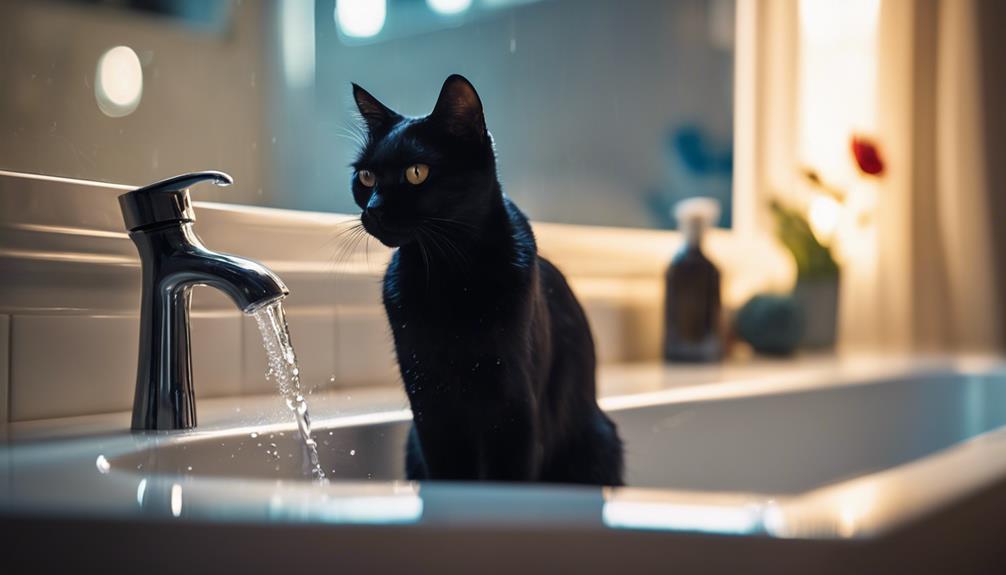
Cats may exhibit a preference for drinking from faucets due to ingrained instincts associated with seeking running water in their natural environment.
The allure of flowing water can attract cats to the faucet, as they may perceive it as cleaner and fresher than stagnant water in a bowl.
This behavior could also be influenced by the excitement and novelty of interacting with the flowing water, making it a preferred drinking source for some felines.
Understanding Cat Behavior Around Water
When observing domestic felines interacting with water, it becomes evident that their behavior reflects a complex interplay of instinctual drives and environmental factors.
Cats may prefer drinking from a faucet due to reasons like stagnant water in a bowl, seeking excitement, or a preference for running water. Whisker stress from small bowls and feeling secure on elevated surfaces can also influence faucet drinking habits in cats.
Potential Health Concerns for Cat Faucet Drinkers
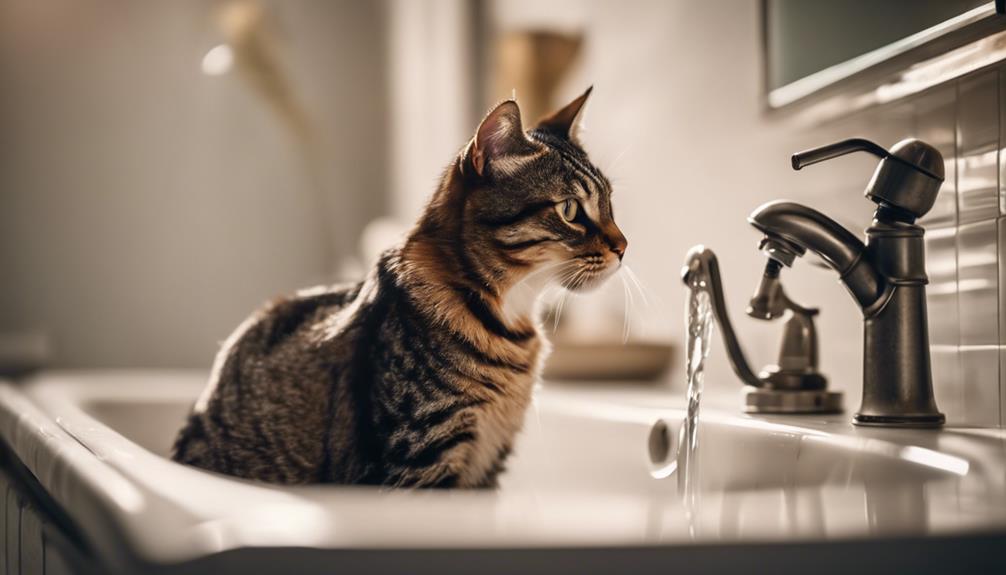
Amidst the allure of running water, felines who exclusively favor drinking from faucets may unwittingly expose themselves to a spectrum of potential health risks.
- Dehydration risk due to limited water intake.
- Imbalance of essential minerals in the body.
- Increased likelihood of urinary tract and kidney issues.
Creating a Cat-Friendly Water Bowl Setup
When establishing a cat-friendly water bowl, it's essential to take into account factors like the benefits of using a water fountain, the location of the bowl, and its accessibility for your cat.
Water fountains can encourage cats to drink more by providing a flowing water source. Placing the bowl in a quiet area and ensuring easy access can help create a stress-free drinking experience for your feline friend.
Water Fountain Benefits
Cat water fountains, designed to mimic the allure of running water, play an important role in creating a cat-friendly water bowl setup.
- Entices Cats: Mimicking running water attracts cats with a preference for it.
- Provides Fresh Water: Fountains offer a continuous flow of filtered water, ensuring freshness.
- Promotes Hydration: By enticing cats to drink more, these fountains can help prevent dehydration and encourage better hydration habits.
Location and Accessibility
Choosing the appropriate location and ensuring accessibility are key factors in creating a cat-friendly water bowl setup. Placing water bowls away from noisy areas can encourage cats to drink from them. Elevated water sources mimic natural settings where cats would drink from streams. Providing multiple water sources in different locations can help cats feel more comfortable and encourage them to drink from bowls.
| Location | Accessibility | Benefits |
|---|---|---|
| Quiet area | Easy to reach | Encourages regular drinking |
| Elevated spot | Visible | Mimics natural drinking spots |
| Away from food | Stable | Prevents contamination |
Training Techniques for Encouraging Bowl Drinking
When training your cat to drink from the bowl, consider the placement of the water bowl and gradually weaning your cat off faucet water.
Positive reinforcement, such as treats or praise, can be effective in encouraging bowl drinking behavior.
It's important to create a consistent and supportive environment for your cat to develop this habit.
Water Bowl Placement
Placing the water bowl strategically within a calm and elevated area can foster a conducive drinking environment for your feline companion.
- Position the water bowl away from noisy or high-traffic areas to encourage drinking.
- Cats may prefer quiet, safe, and elevated spots for secure drinking.
- Keep the water bowl separate from the litter box and feeding area to entice your cat to drink more.
Gradual Faucet Weaning
To facilitate a smooth adjustment to drinking from a water bowl, cat owners can employ gradual faucet weaning techniques. This involves strategically shifting their feline companion's drinking habits from the faucet to a designated bowl.
Start by placing the water bowl near the faucet and gradually moving it to a different location. Encourage your cat to drink from the bowl by offering treats or positive reinforcement.
Consistency and patience are key for successful training.
Benefits of Using a Pet Fountain
Utilizing a pet fountain can greatly enhance a cat's hydration routine by providing a continuous flow of fresh, filtered water that mimics their preference for running water.
- Keeps water cooler and oxygenated, encouraging more drinking.
- Reduces bacterial growth in stagnant water, promoting better hydration.
- Attracts cats with sound and movement, stimulating natural drinking instincts.
Adding Variety to Your Cat's Water Routine
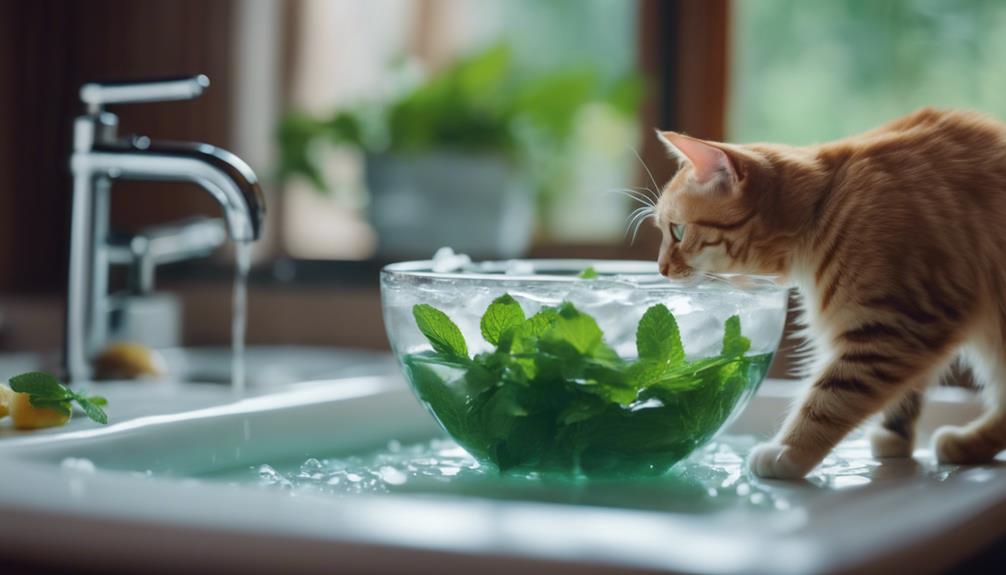
Enhancing your cat's hydration experience can be achieved by incorporating various water sources to add excitement and engagement to their drinking routine.
To make your cat drink from a running faucet, consider investing in a pet fountain or rotating between different types of water bowls. Cats may enjoy the stimulation of flowing water and may prefer cleaner and cooler water from the faucet, enhancing their overall drinking experience.
Monitoring Your Cat's Hydration Levels
Monitoring a cat's hydration levels is crucial for maintaining their overall health and well-being.
- Guarantee sufficient water consumption based on weight.
- Watch for dehydration signs like dry gums and lethargy.
- Recognize early health issues such as kidney disease or diabetes through monitoring.
Consulting a Veterinarian for Drinking Issues
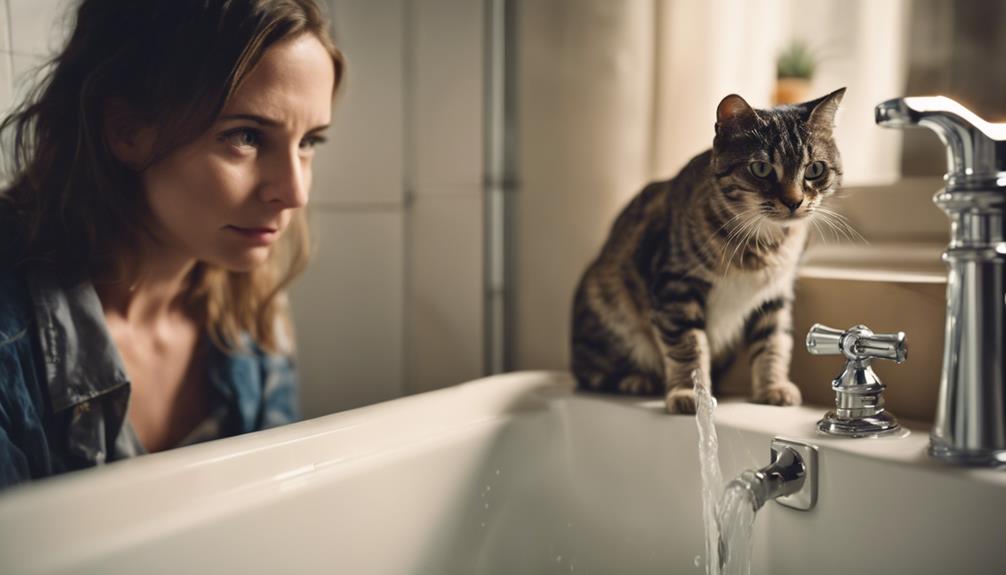
To address any concerns regarding your cat's drinking behavior, seeking guidance from a qualified veterinarian is crucial for identifying and managing potential underlying health issues.
Consulting a veterinarian can help determine if your cat feels unwell, leading to changes in drinking habits such as preferring water from the tap.
Their expertise is essential in diagnosing any medical conditions affecting your cat's hydration needs and providing tailored solutions for excellent well-being.
Is My Cat Smacking Their Lips Because They’re Thirsty and Prefer Drinking from the Faucet?
If you notice your cat smacking their lips, it could be a sign of thirst. Some felines prefer drinking from the faucet because it provides fresh, running water. Ensuring they have access to clean water in their bowl and offering a cat water fountain may help alleviate their thirst.
Patience and Consistency in Changing Cat's Drinking Habits
When attempting to modify a cat's drinking habits, it is important to proceed gradually and introduce alternative water sources slowly.
Offering varied water sources such as a recirculating fountain can help in redirecting a cat's preference from faucets to bowls.
Rewarding desired behaviors, like drinking from a bowl, can reinforce the positive change and encourage consistent drinking habits.
Slowly Introduce Alternatives
In changing your cat's drinking habits to a water bowl, patience and consistency play crucial roles in fostering successful behavioral change.
1) Gradually shift by mixing water flowing from the faucet with water in the bowl.
2) Use metal bowls to create a familiar drinking experience.
3) Encourage positive reinforcement when your cat chooses the bowl.
Offer Varied Water Sources
When addressing a cat's preference for drinking from a faucet, exploring varied water sources serves as a strategic approach in changing their drinking habits.
Providing a recirculating fountain near the sink can help redirect their behavior. Placing a water dish in locations where the cat often drinks can encourage them to try different sources.
Consistency in offering alternatives and patience are key to shifting the cat from faucet to bowl drinking.
Reward Desired Behaviors
To effectively alter a cat's drinking habits, it is imperative to reward desired behaviors such as using a water bowl, as this reinforces positive habits and encourages consistent change over time.
- Use treats or praise to motivate cats to drink from a water bowl.
- Consistency in training is essential for changing a cat's drinking behavior.
- Positive reinforcement techniques can effectively shape a cat's behavior towards using a water bowl.