My Older Cat Is Playing Rough With My Cat Is That Normal


When older cats play rough with other cats, it can be normal behavior, often due to upbringing, lack of expression outlets, or jealousy towards new additions. Understanding older cat behavior is vital as they might not realize their strength, requiring clear boundaries and supervision. Setting playtime rules, redirecting aggression, and providing appropriate toys can help manage rough play. It's important to monitor interactions, intervene when needed, and separate if play escalates. By establishing limits, teaching social skills, and promoting positive interactions between cats, one can enhance their relationship and prevent harm. Understanding these dynamics is key to fostering harmony among feline companions.
Reasons for Rough Play Between Cats

Rough play between older cats and kittens can stem from various underlying reasons, including errant upbringing, lack of appropriate outlets for expression, and potential jealousy towards new kittens.
This behavior may manifest as mock aggression, with older cats sometimes unaware of their strength compared to kittens. Supervision is essential to prevent escalation.
If behavioral changes occur, seeking professional advice is recommended to address the issue effectively.
Understanding Older Cat Behavior
When examining older cat behavior, it is important to explore the nuances that influence their interactions with kittens. Older cats may engage in rough play with kittens due to various reasons like their upbringing, lack of outlets for expression, or jealousy towards new additions. Supervision, proactive measures, and allowing an adjustment period are essential. Seeking professional advice is advisable if rough play persists despite efforts.
| Older Cat Behavior | Key Factors | Management Strategies |
|---|---|---|
| Rough Play | Upbringing, Jealousy | Supervision |
| Adjustment Period | Personality Differences | Proactive Measures |
| Professional Advice | Persistent Behavior | Expert Consultation |
Managing Rough Play Situations
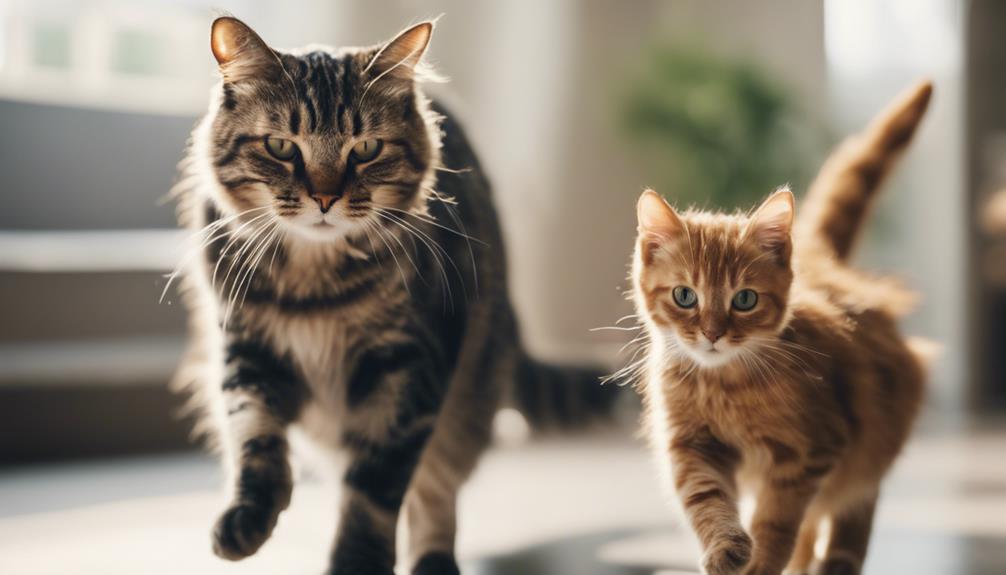
When managing rough play situations between older and younger cats, setting boundaries for play, redirecting aggressive behavior, and providing outlets for energy are crucial points to take into account.
By establishing clear rules for playtime, redirecting any signs of aggression, and ensuring both cats have appropriate toys and activities to release excess energy, you can help create a safe and harmonious environment for your feline companions.
Monitoring their interactions closely and intervening when necessary will facilitate a positive and enjoyable play experience for both cats.
Setting Boundaries for Play
During play sessions with an older cat, it is essential to establish clear boundaries to guarantee safe and enjoyable interactions.
- Avoid rough hand interactions with the older cat.
- Redirect rough play situations using interactive toys.
- Monitor play sessions closely and intervene if needed.
- Use positive reinforcement techniques to encourage gentle play behaviors.
Redirecting Aggressive Behavior
To effectively manage rough play situations in older cats, utilizing interactive toys as redirection tools is an essential strategy to promote appropriate behavior and provide a safe outlet for their energy. Implementing time-outs for the older cat when play escalates can help set boundaries. Avoid using hands as play objects to prevent reinforcing aggressive behavior. Consistent playtime routines and seeking guidance from a professional behaviorist can also aid in managing rough play behaviors.
| Strategy | Description | Benefits |
|---|---|---|
| Interactive Toys | Redirect rough play towards appropriate outlets, promoting positive behavior. | Provides a safe and engaging energy outlet. |
| Time-Outs | Establish boundaries when play becomes too rough, helping cats learn acceptable behavior. | Teaches cats limits and respect for boundaries. |
| Avoiding Body Parts | Prevent using hands in play to avoid reinforcing aggressive behavior. | Minimizes the risk of escalating rough play. |
| Seeking Behaviorist | Consult a professional if rough play persists, for tailored advice and intervention. | Expert guidance for addressing persistent issues. |
Providing Outlets for Energy
Providing suitable outlets for energy is essential in effectively managing rough play situations in older cats.
- Engage older cats with interactive toys
- Offer mentally stimulating activities
- Provide structured playtime
- Create a safe environment for exploration
Establishing Boundaries and Social Skills

When older cats engage in rough play with kittens, they are often setting clear boundaries and teaching social skills. By establishing limits during these interactions, cats can learn how to communicate effectively and avoid potential conflicts.
This process of rough play serves as a natural way for felines to develop their socialization skills and strengthen their relationships within the group.
Setting Clear Boundaries
Establishing clear boundaries is essential for fostering positive social skills and behavior in older cats during play interactions.
- Redirect rough play towards appropriate toys and activities.
- Reward positive interactions and gently discourage aggressive behaviors.
- Use consistent cues and signals to communicate when play becomes too rough.
- Encourage gentle play by modeling appropriate behavior during interactions.
Teaching Social Skills
Teaching cats social skills involves implementing consistent rules and positive reinforcement techniques to establish clear boundaries and encourage appropriate behavior during play interactions. Supervised play is essential for cats to learn and practice these skills.
Addressing inappropriate behaviors promptly helps guide cats in understanding what is acceptable. Creating a structured environment where positive interactions are encouraged can prevent rough play and foster harmonious relationships among cats.
Monitoring Interactions Between Cats
To guarantee a safe and harmonious environment for cats of different ages, consistent monitoring of their interactions is essential.
- Watch for signs of escalating rough play like aggressive body language.
- Intervene if necessary by redirecting attention to toys.
- Separate cats temporarily if play becomes too rough.
- Supervision helps prevent harm and misunderstandings during play.
Techniques for Behavior Management
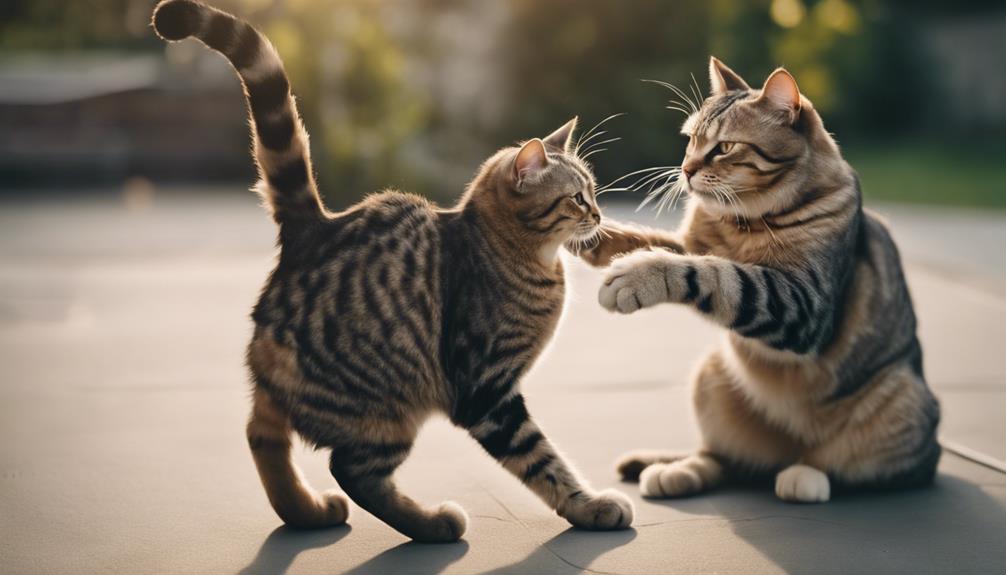
Implementing effective behavior management techniques is essential for maintaining a peaceful coexistence among cats of varying ages. Employ distraction techniques like noise or clapping to intervene in rough play. Separate cats temporarily to prevent fights from escalating. Mildly startle cats to manage aggressive behavior during play. Use time-outs for the older cat when play gets too rough.
Positive reinforcement techniques can effectively redirect rough play behavior.
Promoting Positive Interactions Between Cats
To foster harmonious relationships between cats, it is beneficial to actively promote positive interactions through strategic engagement and environmental management.
- Use interactive toys to redirect rough play.
- Rotate toys regularly to keep cats engaged.
- Supervise playtime to guarantee positive interactions.
- Provide individual feeding areas to reduce conflicts during meal times.
Is Rough Play Between Cats a Sign of Boredom?
Many pet owners wonder if rough play between cats is a sign of boredom. In fact, helping a bored cat is important to prevent excessive rough play. Providing interactive toys, spending quality time with your cat, and creating a stimulating environment can all help alleviate boredom and reduce aggressive behavior.
Encouraging Bonding Between Cats
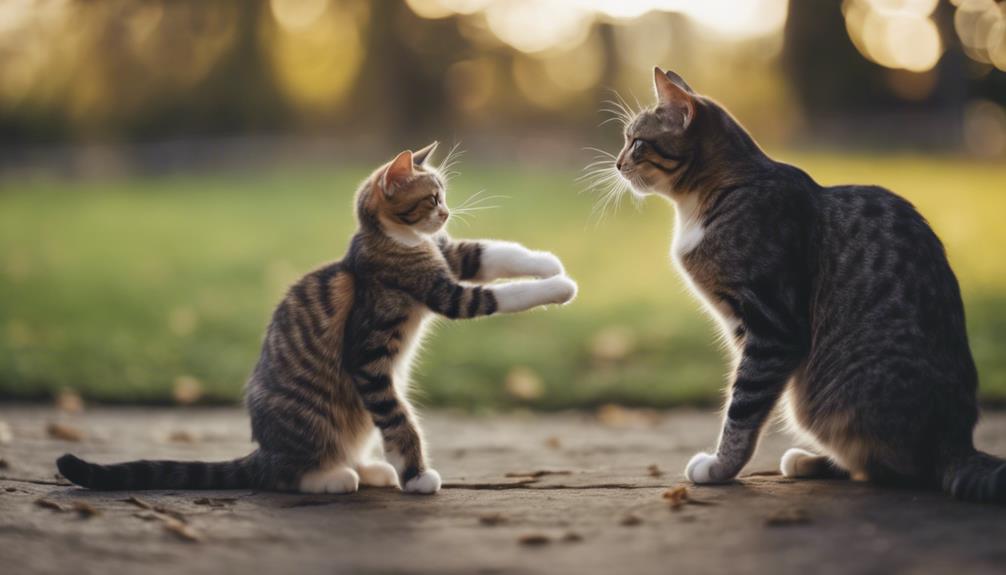
Encouraging bonding between cats can be achieved through various methods that promote positive interactions and shared experiences.
Use interactive toys to engage both cats in playtime activities together.
Provide opportunities for joint grooming sessions to strengthen their bond.
Implement positive reinforcement techniques when they interact peacefully.
Allow supervised play sessions to facilitate socialization and bonding between the cats.
These strategies can help enhance the relationship between your feline companions.