Reasons Your Kitten Might Not Be Eating


If your kitten isn't eating, consider behavioral changes, like stress or unfamiliar surroundings. Dental issues, such as sore gums or teething pain, could be the cause; a vet check-up is recommended. Environmental stress, like moving to a new place, may affect appetite. Health problems, like dental or digestive issues, can also lead to a lack of interest in food. Introducing new foods gradually and offering a variety of flavors may help. To learn more about encouraging your kitten to eat, keep exploring the possible reasons influencing their appetite.
Behavioral Changes in Kitten
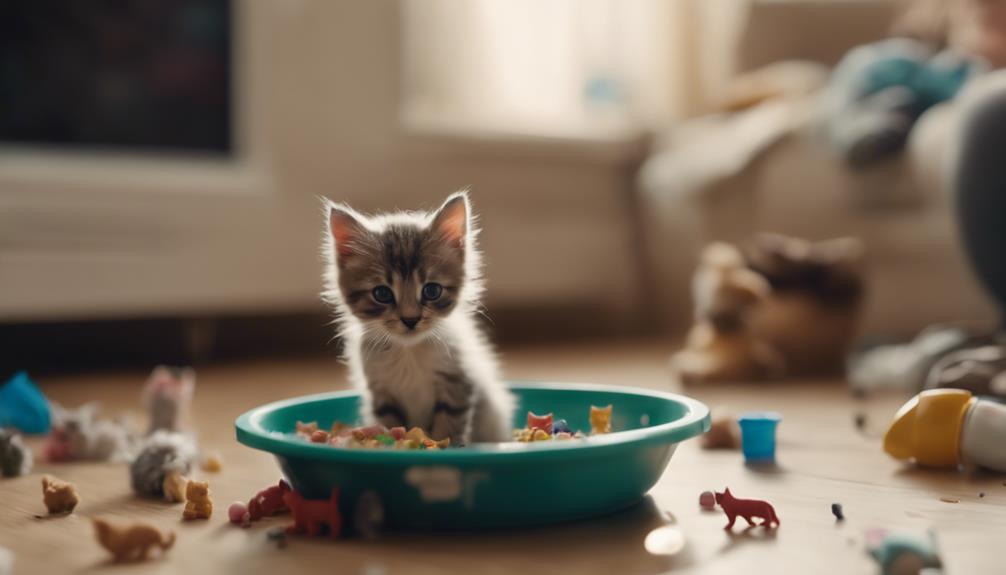
Behavioral modifications in kittens can greatly impact their eating patterns and overall well-being. Factors such as stress, anxiety, unfamiliar surroundings, and loud noises can lead to changes in appetite.
Providing a calm and safe environment is vital to reduce stress-related eating concerns. Behavioral changes, like refusal to eat, may indicate underlying stressors that require attention.
Monitoring your kitten's behavior can offer insights into potential reasons for their eating habits.
Dental Problems and Eating Habits
Dental issues in kittens can greatly affect their eating habits and overall well-being. Sore gums or teething pain may deter kittens from eating.
A vet check-up can help identify and address dental problems like sensitive teeth or mouth discomfort. Ensuring good dental health is vital for maintaining a healthy appetite in kittens.
Addressing dental issues promptly can greatly improve a kitten's willingness to eat.
Environmental Stress Factors
In young kittens, environmental stress factors play a significant role in influencing their appetite and overall well-being.
- New environments can cause stress, affecting food intake.
- Stressful events like vaccinations may lead to a lack of interest in eating.
- Monitoring weight and intake can help kittens adjust to changes and improve their appetite.
Health Issues and Lack of Appetite
Health issues can greatly impact a kitten's appetite. Dental problems such as tooth decay or gum inflammation can make eating painful.
Similarly, digestive issues like stomach upset or infections can lead to a lack of interest in food.
Dental Problems Affecting
Suffering from dental problems can greatly impact a kitten's overall well-being and appetite.
- Kittens may avoid hard foods: Due to sore gums causing discomfort.
- Signs of dental issues: Drooling, pawing at the mouth, or reluctance to eat.
- Regular check-ups are essential: To prevent dental problems affecting the kitten's eating habits.
Digestive Issues Causing
Dental issues affecting a kitten's ability to eat can sometimes lead to digestive problems causing a lack of appetite. Kittens with upset tummies may exhibit a lack of interest in food or refuse to eat due to underlying health issues. Monitoring for signs of digestive issues is important as they can greatly impact a kitten's overall health. See the table below for more information.
| Digestive Issues | Effects |
|---|---|
| Infections | Loss of appetite |
| Parasites | Lack of interest |
| Illnesses | Upset tummy |
| Discomfort | Kitten not eating |
Stress and Anxiety
When considering the factors influencing a kitten's appetite, it is essential to address the impact of stress and anxiety on their eating habits.
- Stress from new environments or changes can lead to anxiety in kittens, affecting their appetite.
- Health issues like infections or parasites can cause lack of appetite in kittens.
- Seeking veterinary help is vital for kittens experiencing appetite issues.
Food Preferences and Transitioning
Efficiently changing a kitten's food preferences can be achieved by gradually introducing new foods over a period of 7-10 days. Start by mixing a small amount of the new food with the old, then slowly increase the new food portion.
Offer a variety of flavors and textures to maintain a neat and comfortable eating routine for your kitten. Use wide, shallow bowls for feeding to guarantee a tidy and comfortable eating routine for your kitten.
Tips for Encouraging Kitten Eating
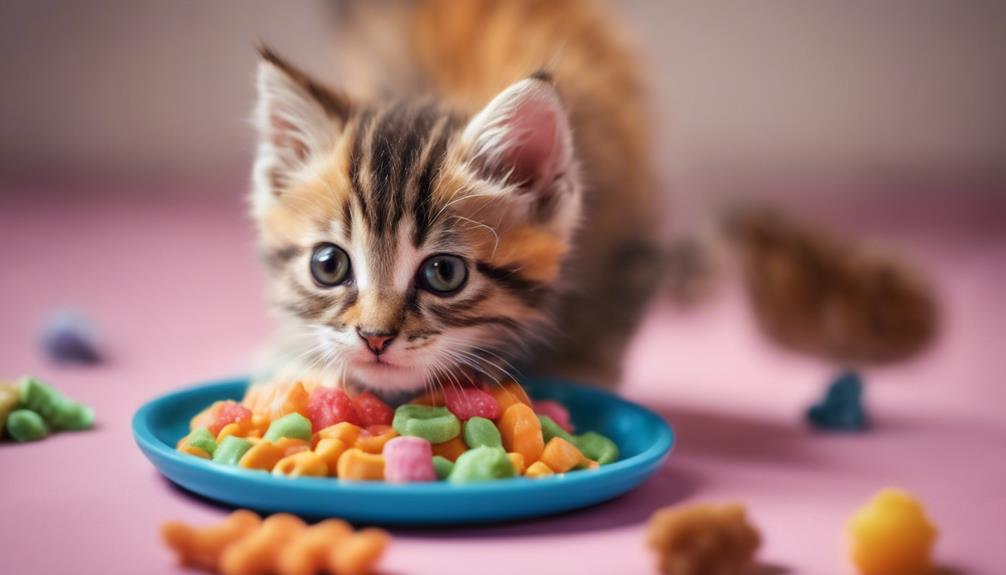
To encourage healthy eating habits in kittens, it is important to introduce new foods gradually and offer a variety of flavors and textures to entice their appetite.
- **Monitor your kitten's response to different kitten food options carefully.
- **Consult your vet if your kitten refuses to eat for an extended period.
- **Help your kitten adjust to dry food by mixing it with wet food initially.