Stop Cats From Eating Dog Food


To stop cats from eating dog food, it's important to understand the risks. Cat food is nutritionally balanced for feline needs, unlike dog food. Cats can develop health issues like obesity and nutrient deficiencies from consuming dog food. Prevent access by using separate feeding areas or elevated feeders for dogs. Monitoring food intake and sticking to feeding schedules helps. Cats need specific nutrients like taurine and arachidonic acid for best health, which are lacking in dog food. Safeguarding your cat's diet is necessary for their well-being. Understanding the differences between cat and dog nutrition is crucial to prevent potential health risks.
Risks of Cats Eating Dog Food
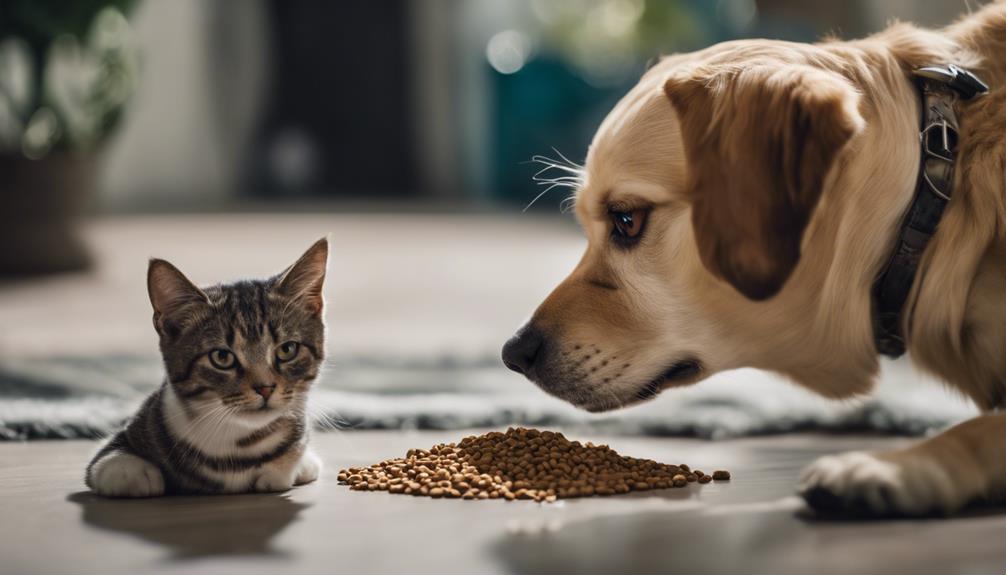
Cats face significant health risks when consuming dog food due to the lack of essential nutrients important for their well-being. Without taurine and other essential nutrients, cats can develop health issues like obesity, vision problems, digestive complications, and liver issues.
Dog food's high carbohydrate content can lead to an imbalanced diet for cats, potentially causing diabetes. Ensuring cats eat a balanced diet designed for their specific nutritional needs is essential for their well-being.
Nutritional Needs of Cats Vs. Dogs
When considering the nutritional needs of cats versus dogs, it is important to understand the distinct dietary requirements each species possesses. Cats are obligate carnivores, requiring diets high in animal-based proteins.
Dog food lacks essential nutrients like taurine and arachidonic acid crucial for cats, leading to potential health issues. Feeding cats dog food can result in nutritional deficiencies due to the differing nutritional needs of these two pets.
Cat Food Vs. Dog Food Differences
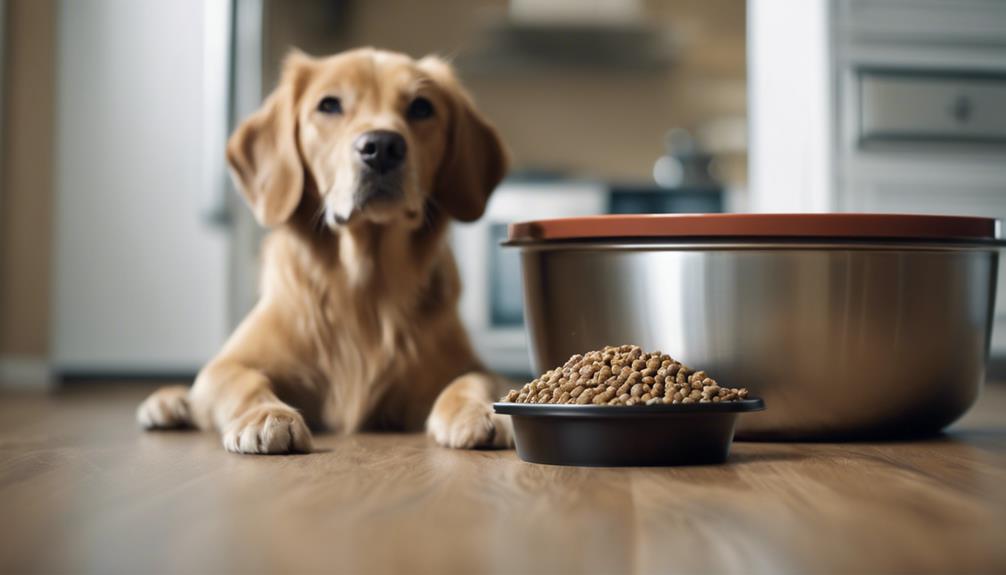
In comparing the nutritional composition of cat food and dog food, the differences are remarkably significant. Cat food is higher in protein, fat, and essential nutrients like taurine, arachidonic acid, niacin, and vitamin A, essential for feline health.
Cat food also contains more calories to meet the higher energy needs of cats. Feeding dog food to cats can lead to nutritional deficiencies and health complications over time, emphasizing the importance of providing the right food for each pet.
Preventing Cat Access to Dog Food
To prevent cats from accessing dog food, consider utilizing separate feeding areas for each pet. Use elevated feeders that are difficult for cats to reach. Monitoring food consumption can also help guarantee that each pet is eating their designated food.
These methods can help maintain a healthy feeding routine for both cats and dogs in a multi-pet household.
Separate Feeding Areas
The implementation of separate designated areas for cat and dog food bowls is vital in preventing cats from accessing dog food regularly. Pets have different nutritional needs, and feeding your cat from the dog's bowl can be harmful.
Dog food is often higher in protein, which may not be safe for cats and can disrupt a cat's diet. Separating the feeding areas is essential to stop your cat from consuming food that is not suitable for them.
Use Elevated Feeders
Implementing elevated feeders for your dog's food bowls can effectively prevent cats from accessing and consuming food that may not be suitable for them. Raised dog bowls help maintain mealtime boundaries, ensuring cats are less likely to steal food.
Monitor Food Consumption
Monitoring food consumption is essential in preventing cats from accessing and consuming dog food. To effectively manage this, consider implementing feeding schedules, supervising meal times, and promptly removing uneaten food.
Additionally, using pet-proof containers or secure lids can deter cats from reaching the dog food. Designating feeding stations or utilizing elevated feeding platforms can also help keep cat food out of reach.
Dangers of Cats Consuming Dog Food
Consuming dog food poses significant risks to cats' health due to the absence of essential nutrients crucial for their well-being. Taurine deficiency, lack of arachidonic acid and preformed vitamin A, digestive issues, obesity, and nutritional imbalances are common consequences.
Cats require specific nutrients found in cat food for peak health, and prolonged consumption of dog food can lead to severe health complications, emphasizing the importance of feeding cats appropriate diets.
Solutions to Stop Cat Food Mixing
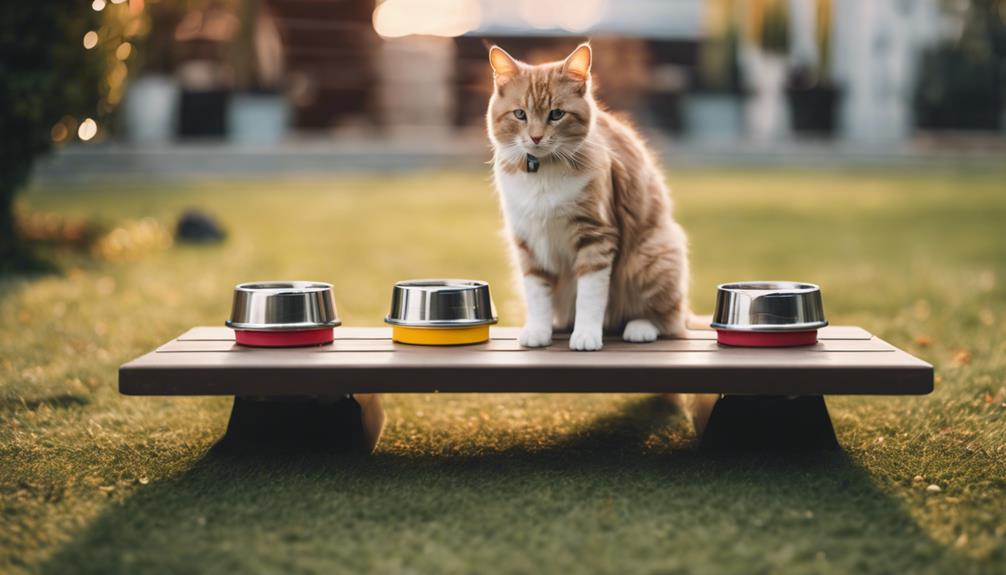
To prevent cats from eating dog food, consider separating feeding areas for each pet. This can help guarantee that each pet sticks to their designated food, reducing the risk of cat food mixing with dog food and potential health issues.
Using raised feeders that are accessible only to the dog can also be an effective solution. This will ensure that the cat cannot reach the dog's food and will be more likely to stick to its own designated food area.
Another strategy is to redirect the cat's attention during meal times. By offering engaging toys or treats in a different area while the dog is eating, you can help prevent the cat from being tempted to steal the dog's food.
Separate Feeding Areas
Implementing designated feeding areas for cats and dogs effectively prevents mixing of their respective foods and maintains feeding boundaries.
- Placing food bowls in different areas prevents cats from accessing dog food.
- Using gates or closing doors keeps pets separated during meal times.
- Preventing access to each other's food reduces the risk of cat food mixing.
- Ensuring a peaceful mealtime environment helps maintain feeding boundaries.
Use Raised Feeders
Using raised feeders can be an effective strategy in preventing cats from accessing dog food and maintaining feeding boundaries. These feeders elevate the dog's food bowl, creating a height difference that cats are less likely to overcome.
Investing in a raised feeder offers a simple solution to prevent cat access, keeping cats away from the designated eating space of dogs and reducing the chances of cat food mixing with dog food.
Redirect Cat's Attention
In addressing the issue of cat food mixing with dog food, redirecting the cat's attention through interactive toys or engaging playtime can be a practical solution to prevent unwanted feeding interactions between pets.
- Use puzzle feeders or food dispensing toys for mental stimulation.
- Implement positive reinforcement training techniques.
- Provide designated feeding spaces.
- Consider deterrent sprays near the dog's food.
Importance of Cat-Specific Nutrition
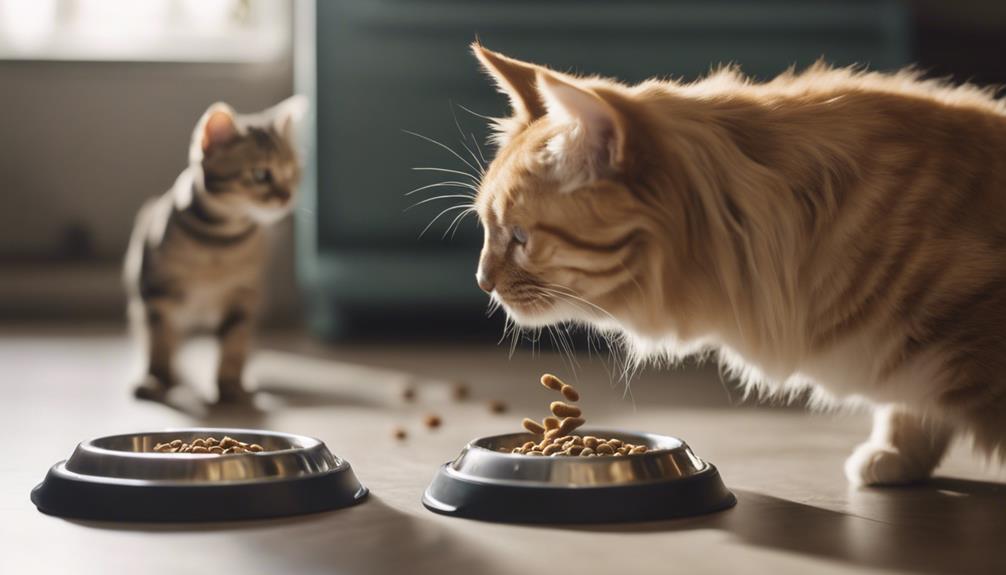
Cats' unique nutritional requirements as obligate carnivores necessitate diets rich in animal-based proteins and essential nutrients like taurine, arachidonic acid, and vitamin A. Cat food is tailored to meet their unique dietary needs, with higher caloric density than dog food to fuel their metabolism.
Adequate hydration is also important, making it essential to choose high-quality cat food that supports overall health and well-being.
Cat Health Risks From Dog Food
When cats consume dog food, they are at risk of developing various health issues.
- Cats can develop heart issues due to taurine deficiency from eating dog food.
- Digestive problems can arise in cats fed dog food long-term.
- Regular consumption of dog food can lead to obesity in cats.
- Nutritional deficiencies may occur if cats are fed dog food regularly.
Ensuring Cat Dietary Requirements
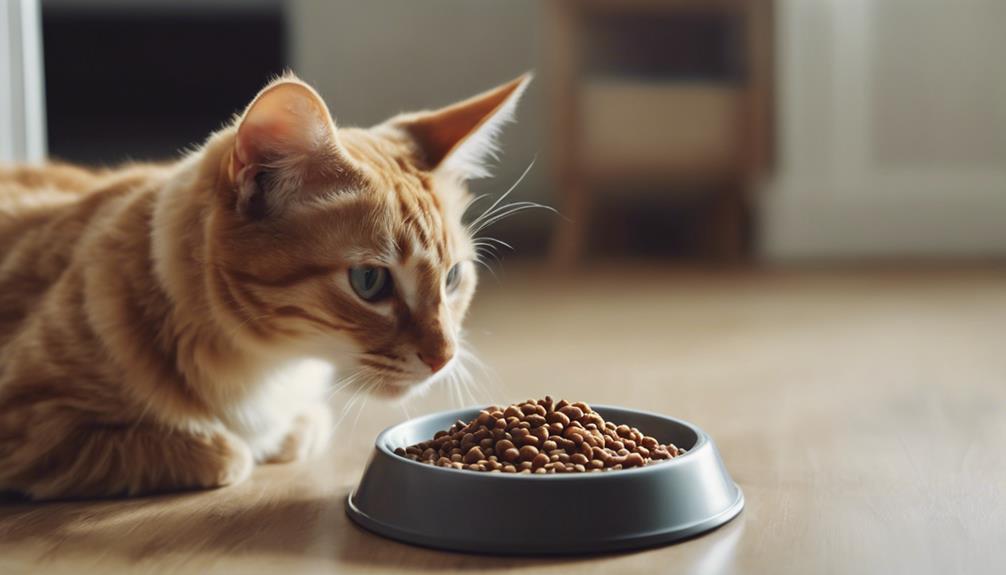
Shifting from the risks associated with cats consuming dog food, ensuring that felines meet their specific dietary requirements is essential for maintaining their peak health and well-being. Cats, as obligate carnivores, need high-quality cat food rich in animal-based proteins like taurine. Taurine deficiency can lead to severe health issues.
Adequate hydration is vital, and cat food should provide the right balance of nutrients to prevent nutritional deficiencies and support their specific dietary needs.
Can Cat Behavior Affect Their Food Preferences, Including Eating Dog Food?
Many reasons cats are better than dogs include their picky eating habits. Cat behavior can greatly impact their food preferences, making them less likely to eat dog food. Cats have specific dietary needs and may reject the taste and texture of dog food, leading to a preference for their own specialized meals.
Safeguarding Cats' Well-Being
To ensure the peak health and well-being of felines, prioritizing their dietary needs and nutritional requirements is vital.
- Choose high-quality cat food rich in animal-based proteins like taurine.
- Regular veterinary check-ups and weight monitoring are essential.
- Watch for signs of nutritional deficiencies to prevent health issues.
- Avoid obesity risks associated with feeding cats dog food.