Ways To Calm A Cat Down At Night


To calm a cat down at night, establish a consistent bedtime routine fitting their natural sleep schedule. Engage in evening play sessions using interactive toys to tire them out. Monitor feeding patterns and adjust daytime activities to keep them busy. Provide a cozy, quiet sleeping environment with soft bedding in a secluded spot. These methods promote a peaceful night's rest. More insights into calming cats further at night await your discovery.
Establishing a Consistent Bedtime Routine
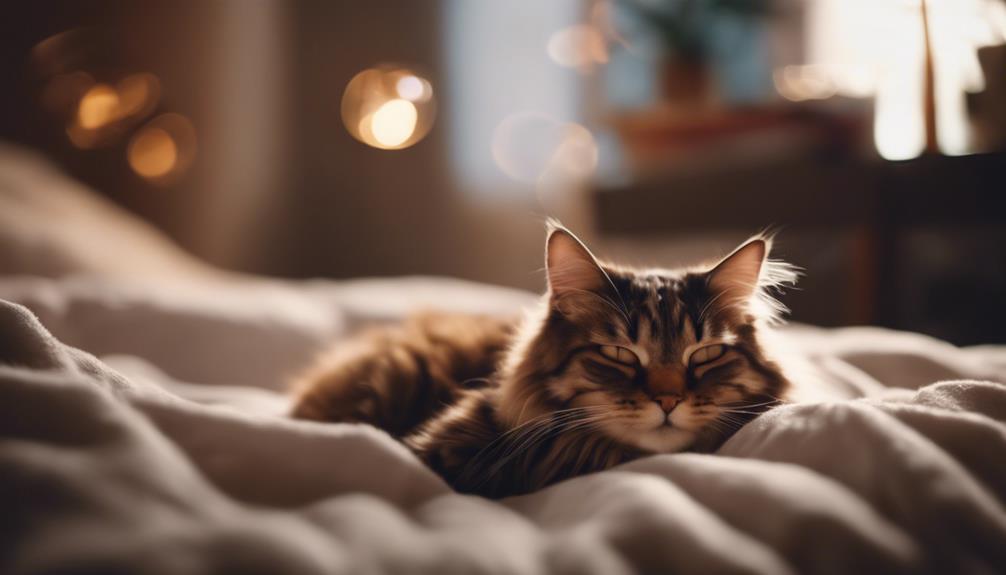
Establishing a consistent bedtime routine is essential for promoting a sense of security and predictability in cats, aiding in their overall nighttime calmness.
Keeping your cat calm involves aligning with their natural sleep schedule, offering a small meal before bedtime, engaging in calming activities like gentle play or brushing, and providing a quiet and comfortable sleeping environment.
These practices help signal to your cat that it's time to wind down and rest.
Incorporating Evening Play Sessions
To further enhance your cat's nighttime calmness, consider incorporating evening play sessions into their routine as a way to engage and tire them out before bedtime.
Utilizing interactive toys such as wand toys or puzzle feeders can provide stimulating activities for your cat in the evening.
Playing with your cat before nightfall can help them settle down and expend excess energy, promoting a more peaceful night for both you and your feline companion.
Monitoring Feeding Patterns
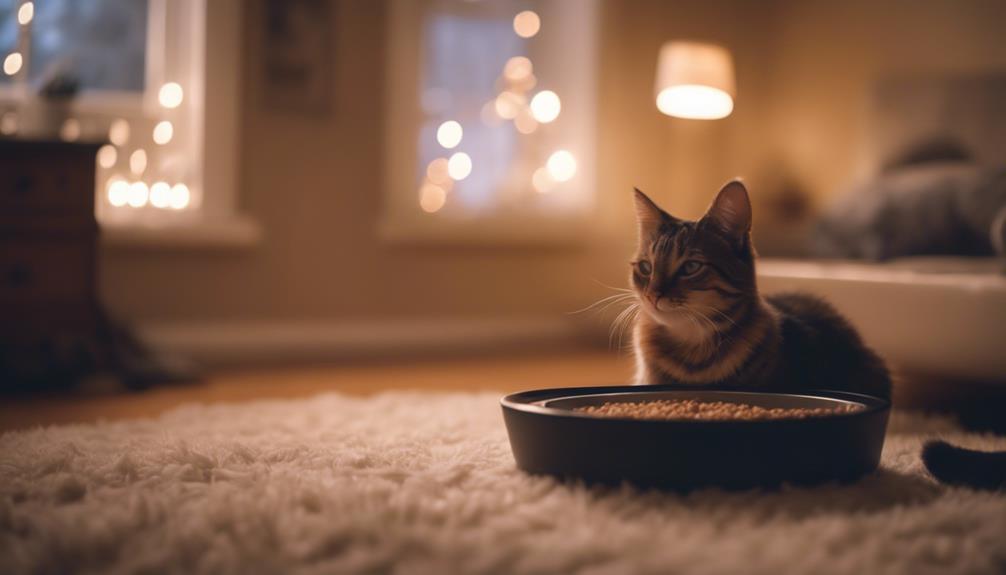
Regularly monitoring your cat's feeding patterns is essential for ensuring their nutritional needs are met throughout the day and night.
- Keep track of the amount of food consumed
- Consider a timed feeder for regulation
- Include a small meal before bedtime
- Use a smart dispenser for portion control
Adjusting Activity Levels During the Day
During the day, it is important to engage your cat in interactive play and provide stimulating activities to help them burn off excess energy.
By incorporating climbing structures, rotating toys, and encouraging hunting-like activities, you can keep your cat busy and active during the day.
Spending quality time with your cat not only strengthens your bond but also provides mental stimulation, helping to reduce their nighttime activity levels.
Providing a Comfortable Sleeping Environment
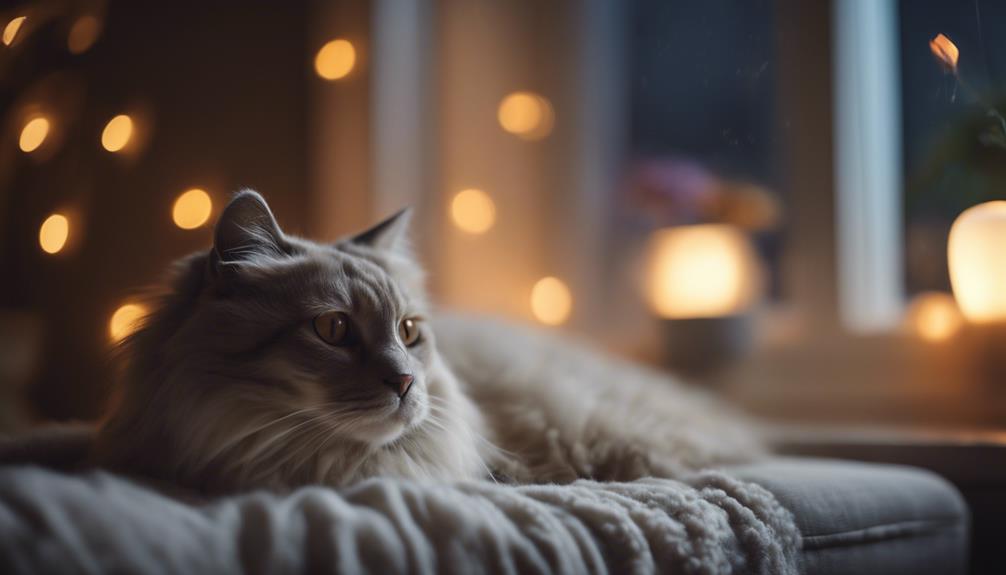
After securing your cat in stimulating activities during the day to burn off excess energy, it is crucial to provide a comfortable sleeping environment conducive to relaxation at night.
- Guarantee your cat has a cozy and quiet sleeping area free from disturbances.
- Use soft bedding or a comfortable cat bed to promote sleep.
- Consider placing the cat's sleeping spot in a secluded area for privacy.
- Provide a warm and inviting environment to help your cat feel secure.
Rule Out Medical Issues
If your cat is exhibiting nighttime restlessness, it's important to consult a veterinarian to rule out any underlying medical issues. Conditions like hyperthyroidism or pain could be causing your cat's behavior, making a thorough examination by a vet important.
Addressing medical concerns first is necessary before considering behavioral interventions to calm your cat at night.
Vet Checkup Importance
Ensuring a thorough veterinary checkup is conducted is essential in ruling out any underlying medical issues that may be causing restlessness in cats during the night.
- Nighttime restlessness may indicate medical issues.
- Changes in behavior could be linked to underlying health problems.
- Vet checkups help diagnose conditions like hyperthyroidism or pain.
- Proper care from a vet can address any health issues affecting a cat's nighttime behavior.
Symptoms to Monitor
Monitoring symptoms that may indicate underlying medical issues is essential when trying to calm a cat down at night. Keep an eye out for signs such as excessive meowing, pacing, or changes in behavior. Additionally, observe alterations in appetite, litter box habits, and grooming patterns.
Consider recent changes in the cat's environment or schedule. If any signs of pain, discomfort, or illness persist, consult with a veterinarian promptly.
Implementing Daily Playtime
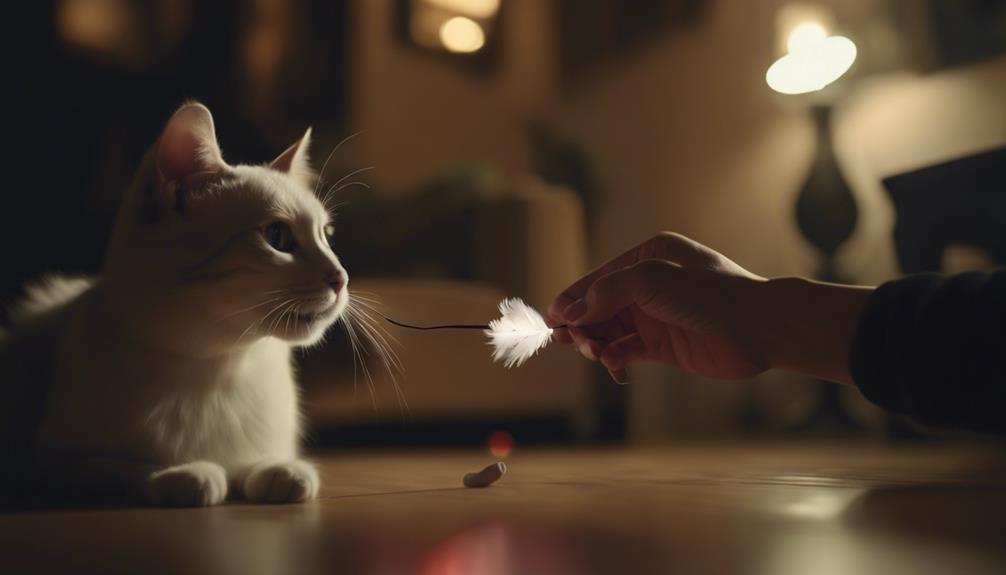
To effectively incorporate daily playtime into your cat's routine, engage them in at least 15 minutes of interactive play each day. This helps release excess energy and keeps your cat entertained. Utilize interactive toys like cat dancers or feather teasers to cater to your cat's likes. Rotate toys regularly to prevent boredom. Playtime not only strengthens the bond between you and your cat but also promotes physical and mental stimulation.
- Interactive play for 15 minutes daily
- Use interactive toys like cat dancers
- Rotate toys regularly
- Strengthen bond and promote stimulation
Creating an Enriched Environment
Consider incorporating various stimulating elements like scratching posts, hiding areas, and elevated spots into your cat's environment to promote mental and physical activity.
Cats prefer heights for security and need mental stimulation. Provide your cat with a water fountain to encourage hydration away from food.
For older cats, safe outdoor access can offer daytime stimulation. Remember, cats are nocturnal, so creating an enriched environment can help calm them down at night.
Can Making My Cat Happy Help Calm It Down at Night?
If your cat is keeping you up at night, implementing some simple tips to make cat happy during the day may help calm it down at night. Providing extra playtime, interactive toys, and regular feeding schedules can all contribute to a happier and hopefully calmer feline companion.
Seeking Professional Veterinary Advice

Upon observing sudden changes in your cat's nighttime behavior, it is advisable to seek professional veterinary advice to rule out potential medical issues.
- Time: Timely intervention can prevent escalating problems.
- Older Cat: Age-related issues may contribute to nighttime disturbances.
- Underlying Medical: Medical conditions could be causing the behavior changes.
- Away from Home: Changes in environment can affect a cat's nighttime habits.