What Is A Group Of Cats Called


In the domain of feline gatherings, a group of cats is known as a 'clowder.' This term holds historical significance, dating back to the late 18th century. Cats in a clowder exhibit various social behaviors, including grooming, playing, and establishing hierarchies. Mutual interactions like grooming and territorial behaviors are common among cat clowders. Understanding the dynamics within a cat group is essential for preventing conflicts and fostering companionship. Explore further into the social dynamics, behaviors, and characteristics of cat groups to gain a more thorough understanding of these fascinating creatures.
Clutter or Clowder: What's the Difference?
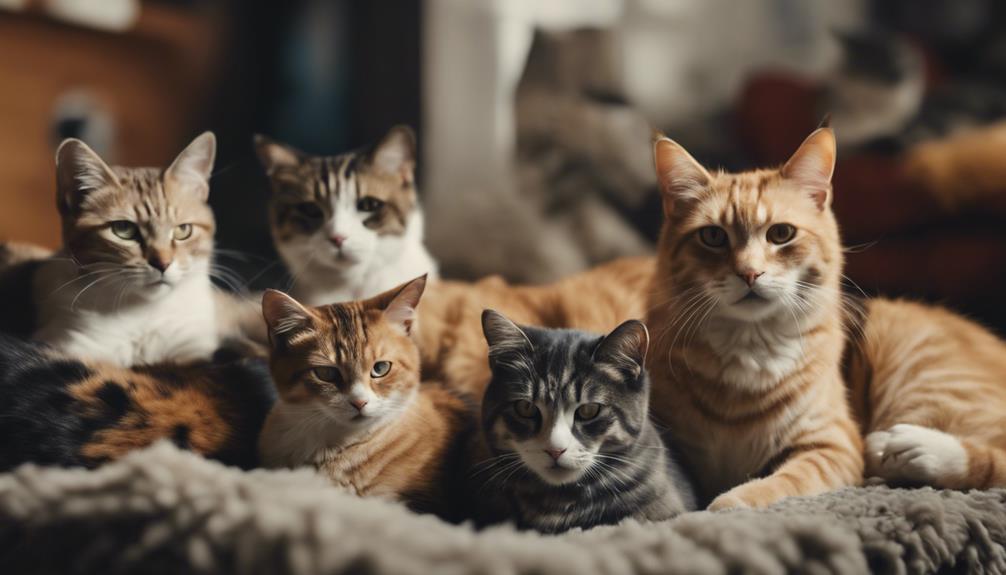
In distinguishing between the terms 'clutter' and 'clowder when referring to a group of cats, the key difference lies in their historical origins and modern usage. 'Clowder' has deep historical roots and is commonly found in literature and everyday language.
On the other hand, 'clutter' is a more modern variation of this term. Both 'clutter' and 'clowder' are used interchangeably to describe a gathering of cats, showcasing the evolution of language.
Historical Origins of Group Names
The historical origins of group names, particularly in relation to cats, provide insight into the evolution of language and the significance attached to collective terms.
The term 'clowder' for a group of cats was first recorded in 1795-1805, possibly stemming from 'clodder' or 'clutter.' Merriam-Webster links 'clowder' to 'clutter,' suggesting a connection to cats' gathering habits.
This historical background contributes to the use of 'clowder' for a group of cats.
Social Dynamics Within Cat Groups
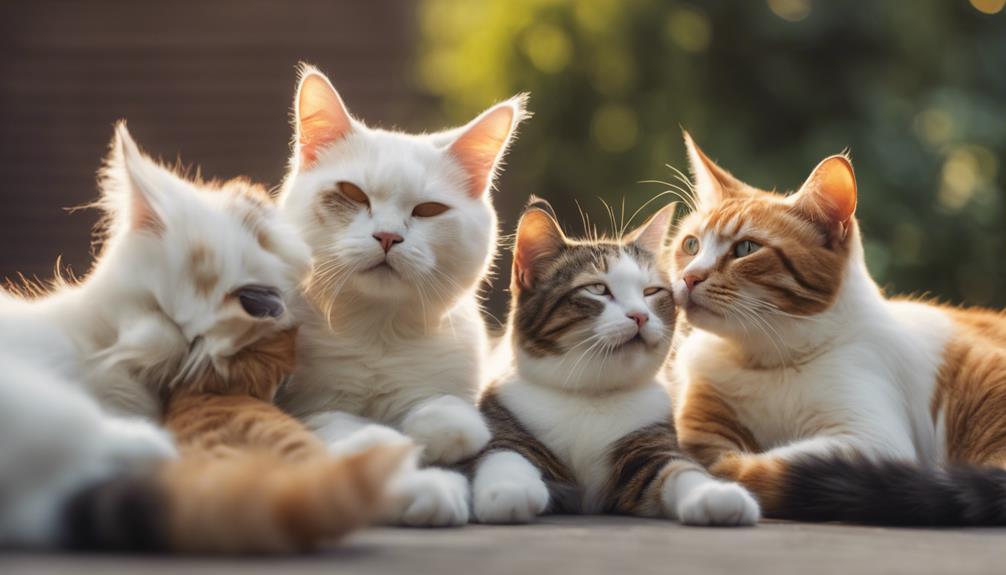
In cat groups, hierarchies can form, with dominant cats establishing control over resources. Cats communicate through behaviors like grooming and rubbing cheeks, fostering bonds within the group.
Conflict resolution strategies may involve posturing, vocalizations, or even physical altercations, shaping the social dynamics within these feline communities.
Hierarchy in Cat Groups
Within cat groups, social dynamics manifest through established hierarchies influenced by factors such as age, size, and personality. Dominant cats assert authority by marking territory and controlling resources, while submissive cats display deferential behaviors like grooming higher-ranking cats.
Social grooming, play, and mutual sleeping reinforce bonds and hierarchy. Understanding these dynamics helps prevent conflicts and fosters harmonious interactions among the cats in a group.
Communication Methods Used
Communication methods play a fundamental role in shaping the social dynamics within groups of cats. Vocalizations like meowing, purring, hissing, and growling, along with body language cues such as tail movements and facial expressions, help cats interact.
Scent marking through rubbing and spraying communicates territory boundaries. Allogrooming promotes bonding, while play behavior establishes hierarchy. These methods enable cats to convey information, establish hierarchy, and strengthen bonds within the group.
Conflict Resolution Strategies
Conflict resolution strategies in cat groups involve a combination of vocalizations, body language cues, and physical interactions to establish boundaries and maintain hierarchy. Cats use behaviors like hissing, growling, and swatting to assert dominance. Alpha cats may display aggression towards subordinate cats. Grooming each other can also serve as a bonding and conflict resolution method. Understanding these dynamics is essential for preventing conflicts and fostering harmony within the group.
| Conflict Resolution Strategies | |
|---|---|
| Vocalizations | Hissing, growling |
| Body Language | Posturing, aggression |
| Physical Interactions | Swatting, grooming |
| Group Dynamics | Establishing hierarchy |
| Communication | Boundary setting |
Common Behaviors in Cat Clutters
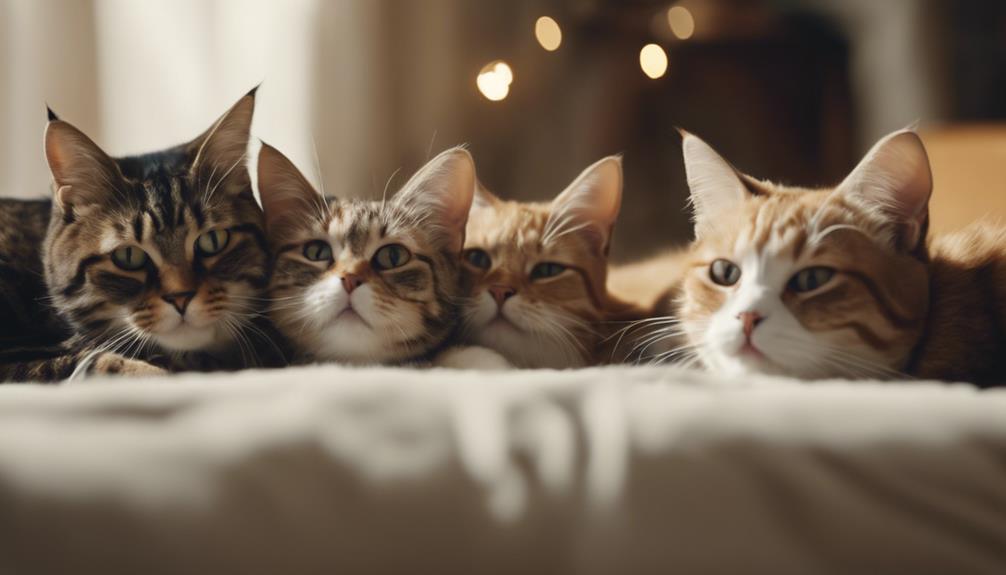
Amidst the dynamic social interactions within cat clutters, common behaviors emerge that strengthen their bonds and define their group dynamics.
Clowders of cats often engage in grooming each other to maintain social bonds, exhibit territorial behavior to establish boundaries, indulge in playful interactions like chasing and play fighting, engage in mutual sleeping and cuddling for security, and communicate through vocalizations, body language, and scent marking to coordinate activities and express emotions.
Notable Characteristics of Cat Groups
Within cat groups, notable characteristics include social behaviors such as grooming, playing, and communicating through body language. Group dynamics may involve hierarchy and territorial behaviors, with cats forming alliances for hunting or defending territory.
Socialization is essential for kittens to learn essential social skills. Group living offers companionship, security, and opportunities for social interaction, enhancing the well-being of these feline collectives.
Comparisons With Other Animal Group Names
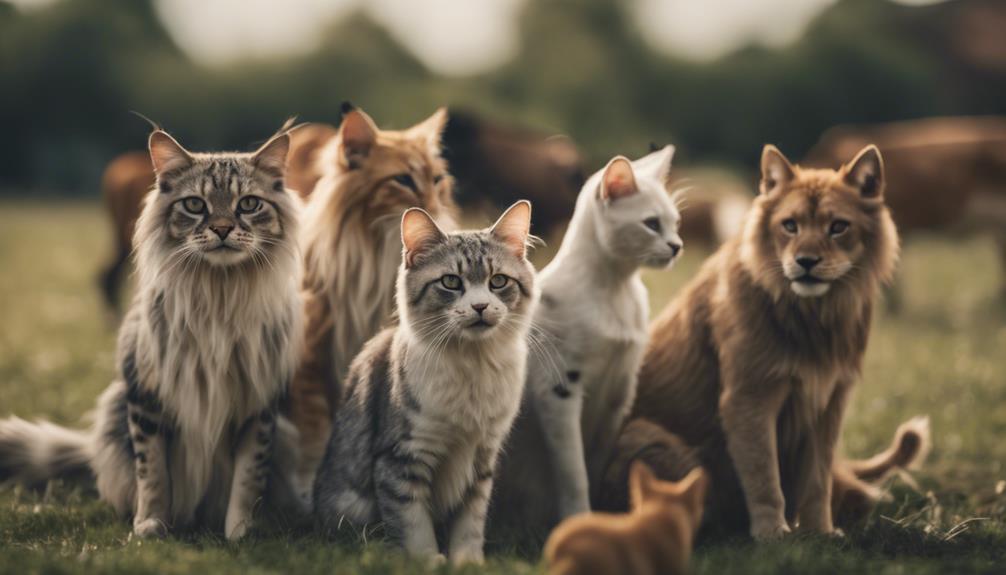
In exploring the names used to describe groups of animals, it becomes evident that various species have unique collective nouns assigned to them, highlighting the diversity and richness of language in depicting social behaviors among different animal groups.
- Cats – Clowder
- Penguins – Colony
- Lions – Pride
- Geese – Gaggle
Fun Facts About Cat Clowders
Cat clowders, also known as clutters or glaring, exhibit fascinating social behaviors that showcase the intricate dynamics of feline group interactions.
These groups, consisting of two or more cats, may engage in activities like grooming and resource-sharing.
The term 'clowder' dates back to the 18th century and is commonly used to describe such groups.
Understanding the dynamics of a cat clowder can aid in providing appropriate care and enrichment, especially for a litter of kittens.
Understanding Feral Cat Colonies

Feral cat colonies, often found in various outdoor environments such as urban areas, abandoned buildings, alleys, or rural locations, consist of groups of wild or stray cats living together.
- Cats in feral colonies exhibit social behaviors like grooming.
- They may share food and protect one another.
- Managing colonies often involves Trap-Neuter-Return (TNR) programs.
- Understanding feral cats is essential for implementing humane population control strategies.
Is It Common for a Group of Cats to Have Lap Cats Among Them?
It’s not uncommon for a group of cats to have lap cats among them. The reasons cats become lap cats vary, from seeking warmth and comfort to seeking attention and affection. Some cats are naturally more inclined to enjoy sitting in someone’s lap, while others may need encouragement to become lap cats.
Importance of Group Bonding in Cats
Group bonding plays a significant role in fostering social cohesion and communication among cats within their clowder. Cats establish hierarchies and territories through interactions that involve mutual grooming, rubbing, and playing, which strengthen group bonds.
Socially bonded cats exhibit reduced stress levels and improved overall well-being. This bonding is vital for cooperative activities such as hunting and raising kittens, emphasizing the importance of group dynamics within a clowder.