Why Are Cats So Flexible


Cats' exceptional flexibility stems from their unique skeletal makeup. They possess elastic spines with up to 53 vertebrae, allowing them to twist, turn, and contort with remarkable agility. Their shoulder blades are attached to muscles, aiding in extending running strides and maneuvering into small spaces. With no collarbone, cats gain increased mobility, enhancing their sleek physique and hunting prowess. This flexibility enhances their hunting skills, agility, and grooming abilities, showcasing their remarkable adaptability in various movements. The feline body's intricate design plays an essential role in their exceptional flexibility and agility.
Evolutionary Adaptations for Flexibility
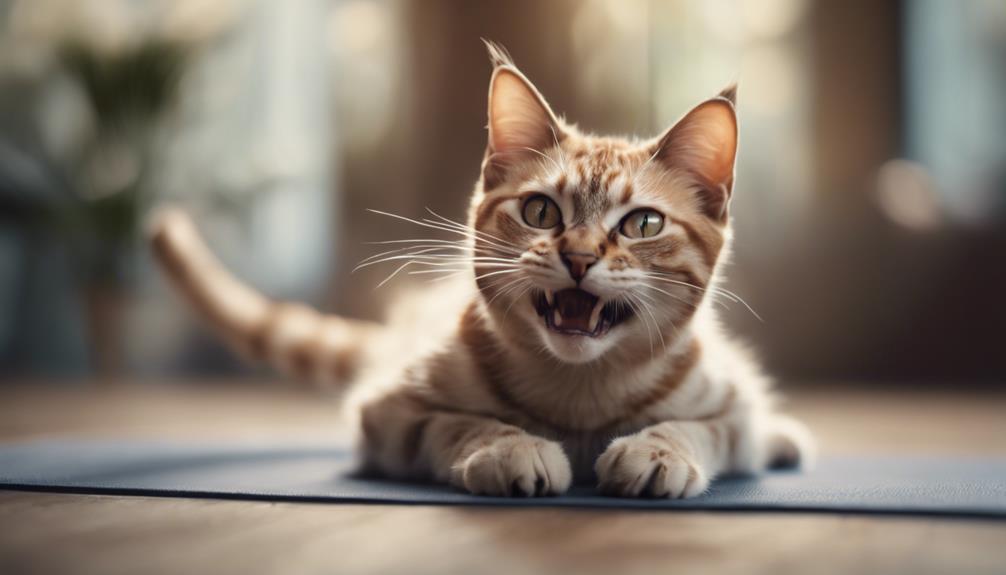
Cats have developed remarkable flexibility as an evolutionary adaptation to enhance their hunting prowess and survival skills. Their elastic spines, with up to 53 vertebrae, allow for agile movements enabling precise hunting techniques.
Unique shoulder blades, lacking a collarbone, aid in fitting into tight spaces for stalking prey. Cats can twist and turn their bodies with agility, a trait essential for grooming and self-care to maintain ideal conditions in the wild.
The Remarkable Cat Spine
Evolution has molded the feline anatomy into a marvel of flexibility, exemplified by the intricate design of the cat's spine. With cushioning discs between vertebrae, cats possess a flexible spine with 53 vertebrae that enables them to rotate their bodies up to 180 degrees.
This exceptional spine structure allows cats to contort, twist mid-air, squeeze into tight spaces, and stretch effortlessly, showcasing their agility in various movements.
Shoulder Blade Flexibility
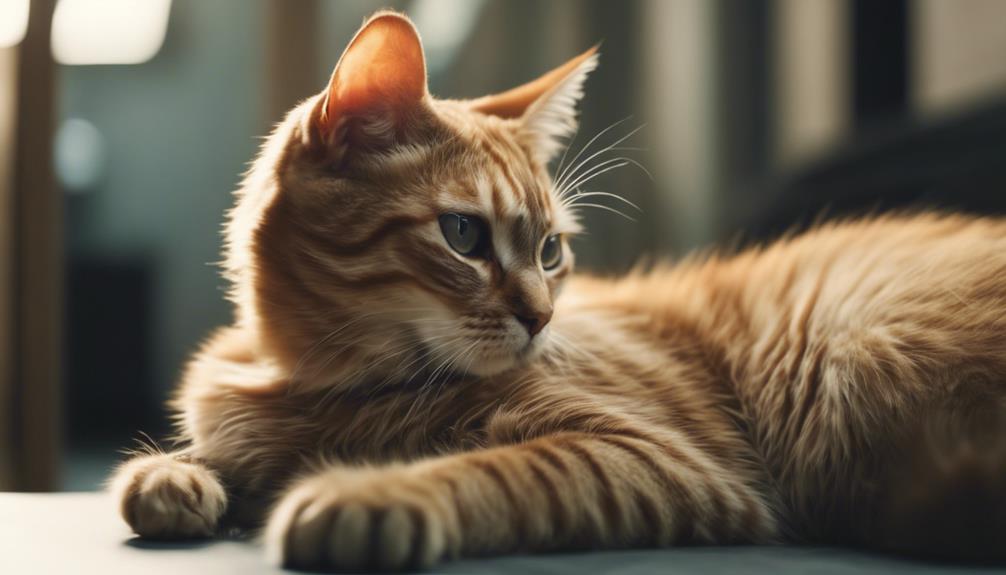
The essential freedom of movement afforded by the unique attachment of muscles to cats' shoulder blades plays a significant role in their remarkable agility and ability to navigate tight spaces effortlessly.
- Cats' shoulder blades are attached to the body only by muscles.
- Muscle attachment in the shoulder blades helps cats extend their running stride.
- Feline shoulder blades enable cats to maneuver easily into small spaces.
- Shoulder blade flexibility is vital for cats' agility, grooming, and hunting behaviors.
The Absence of Collarbone
Cats' remarkable flexibility is partly due to their unique skeletal structure. The absence of a collarbone allows for increased mobility. Unlike humans, cats possess small and undeveloped collarbones, giving them the ability to navigate through narrow spaces effortlessly.
This lack of a prominent collarbone plays an essential role in enabling cats to display their characteristic agility and squeeze into seemingly impossible gaps.
Collarbone Structure in Cats
Contrary to many mammals, cats possess a unique skeletal feature – the absence of a prominent collarbone, known as the clavicle.
- Cats lack a prominent collarbone, aiding flexibility and agility.
- The absence of a long collarbone allows cats to squeeze through tight spaces.
- Their feline shoulder blades help them contort their bodies to fit through narrow openings.
- This unique collarbone structure contributes to their sleek physique and enhances hunting instincts.
Impact on Flexibility
With their unique skeletal structure, cats demonstrate remarkable flexibility due to the absence of a long anchored collarbone. This allows them to rotate their bodies with ease and have a flexible spine that is flexibly connected.
Their low body volume, along with inner ear and elastic cushioning discs, aids in flexing their backs and taking long strides.
Understanding these factors is essential for animal welfare and appreciating cats' exceptional agility.
Agility and Hunting Skills

Cats' agility and hunting skills are honed through their innate abilities to exhibit hunting prowess and speed.
Their graceful movement techniques, facilitated by their flexibility, allow them to navigate various terrains with precision and stealth.
This combination of physical prowess and skillful tactics makes cats formidable hunters in the animal kingdom.
Hunting Prowess and Speed
Demonstrating unparalleled agility and precision, felines showcase remarkable hunting prowess and speed due to their exceptional flexibility.
- Cats' flexibility aids in maneuvering through tight spaces to ambush prey effectively.
- Flexibility allows them to change direction instantly, enhancing agility in hunting.
- Their speed, reaching up to 30 mph, is supported by a flexible spine and shoulder blade structure.
- Quick reflexes and flexible bodies contribute to successful pouncing and capturing prey.
Graceful Movement Techniques
Felines exhibit an impressive display of grace and agility in their movement techniques, showcasing their exceptional hunting skills with unparalleled precision. Their flexible spines allow them to twist mid-air without harm, essential for ambushing prey effectively.
Cats' self-grooming habits benefit from their flexibility, enabling thorough cleaning. Their ability to balance on narrow surfaces using their tail highlights the grace and agility essential for their movements as skilled predators.
Do Cat Whiskers Contribute to Their Flexibility?
Cat whiskers contribute significantly to their flexibility. They are embedded deep in the cat’s body and are sensitive to even the slightest touch. This helps them navigate through tight spaces, detect nearby objects, and even gauge the width of openings. This is why cats have whiskers.
Versatility in Grooming and Cleanliness
With their remarkable flexibility, cats effortlessly reach and groom even the most inaccessible areas, ensuring impeccable cleanliness and hygiene.
- Cats' flexibility enables them to groom hard-to-reach areas thoroughly.
- Feline flexibility aids in self-cleaning, maintaining hygiene, and odor control.
- Cats can twist and contort their bodies for effective self-grooming routines.
- The ability to bend and stretch allows cats to keep their fur clean and free of debris.