
Mother cats move their kittens to create a safe and nurturing environment for their offspring. This behavior stems from maternal instincts geared towards protecting and comforting the young ones. Cats choose secluded spots that are quiet, dark, and odor-free to guarantee the well-being of their kittens. Additionally, relocating kittens can also serve as a way for mother cats to assert dominance through strategic scent marking. Understanding these natural behaviors sheds light on how cats communicate hierarchy within their territory. Exploring the reasons behind this movement reveals fascinating insights into feline behavior and their intricate social dynamics.
Maternal Instincts Behind Moving Kittens
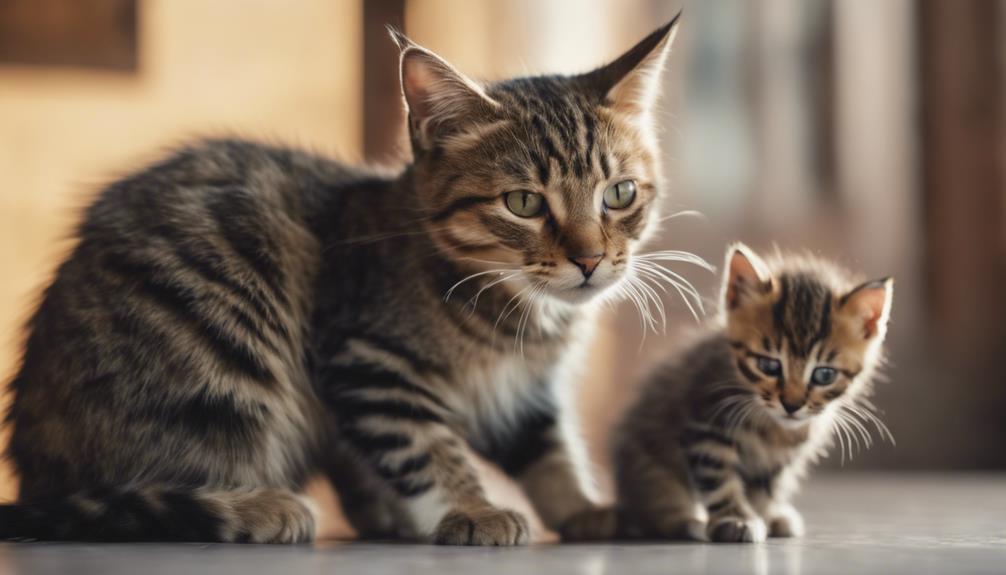
Driven by their innate maternal instincts, mother cats move their kittens to protect them and provide a secure, comfortable, and clean nesting site.
This relocation aims to create a nurturing environment that guarantees the safety and well-being of the offspring.
Seeking Safety and Comfort
Cats relocate their kittens to guarantee their safety and comfort, choosing secluded spots that are free from potential dangers and disturbances. By prioritizing quiet, dark, and odor-free environments, mother cats create a stress-free space for their young to thrive.
This behavior stems from the instinctual drive to safeguard their offspring and provide them with the best conditions for growth and development.
Safety Concerns
To safeguard the well-being of their kittens, mother cats instinctively seek out safe and comfortable environments, such as quiet, dark, and odor-free spaces. They carefully choose secure locations, like your bed, to provide protection and comfort.
Creating a safe environment is essential for mother cats to feel secure in caring for their young. Their natural instincts drive them to find cozy spots that guarantee the well-being and protection of their kittens.
Comfort Preferences
Mother cats, in their quest to guarantee the safety and comfort of their kittens, carefully select quiet and secure locations for nesting. These feline mothers instinctively seek safe, comfortable, and odor-free environments to raise their young.
Establishing Dominance Through Movement
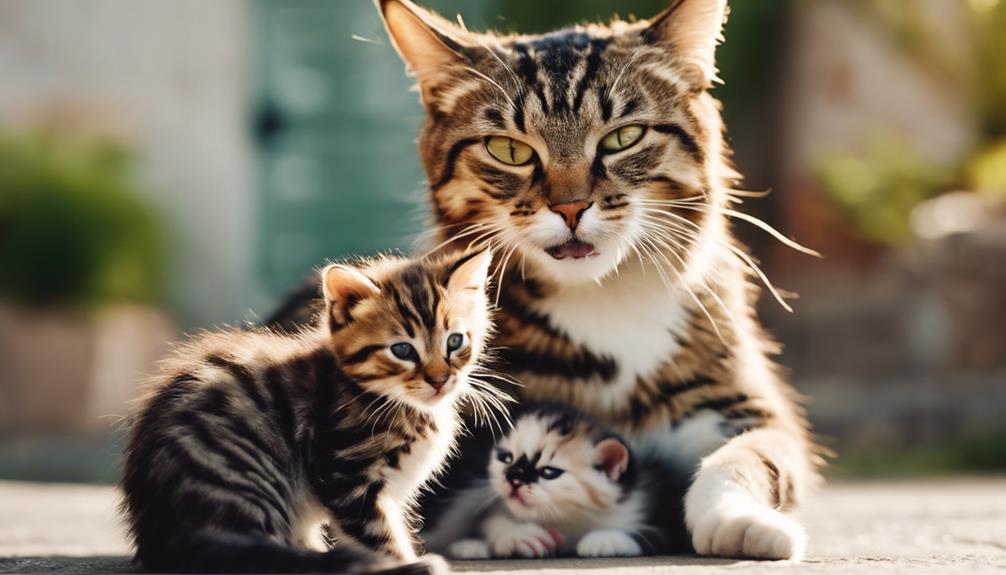
By relocating their kittens to strategic locations, feline mothers subtly assert their dominance within their territorial domain. This behavior serves as a form of scent marking to establish territory and hierarchy.
Placing kittens in specific areas, such as your bed, can be a display of dominance by the mother cat. Understanding this natural behavior sheds light on why cats move their kittens and how they communicate their status within the feline hierarchy.
Attention-Seeking Behavior
Seeking recognition and human interaction, cats may exhibit attention-seeking behavior by relocating their kittens to attract attention from their owners.
- Moving kittens can be a way for cats to express their need for love and affection.
- Placing kittens in different locations may indicate a desire for interaction and care.
- Cats may use their kittens as a means to get desired attention from humans.
- Seeking attention through moving kittens is a common behavior in cats.
Playful and Curious Nature
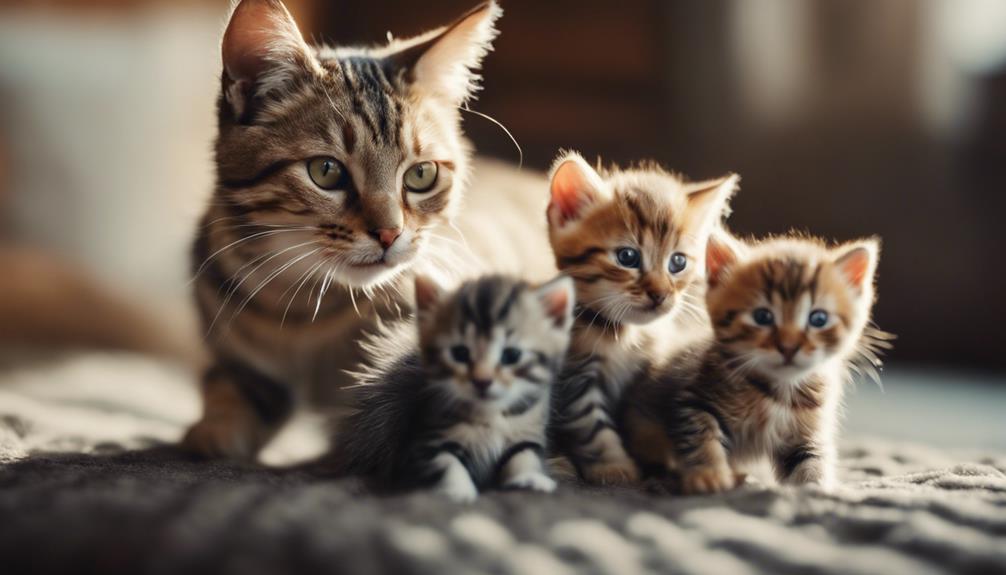
Driven by their intrinsic playful and curious instincts, cats may often relocate their kittens to explore new environments and engage in interactive play. Kittens start moving around, and the mother cat might even consider adding new clean bedding to keep the nest area quiet.
This behavior of moving her kittens is common among playful felines, as it provides stimulation and entertainment for both the mother cat and kittens.
Scent Marking for Territory
Cats engage in scent marking as a way to establish their territory and communicate with other felines. By releasing pheromones from scent glands located in their cheeks, paws, and tail base, cats can claim ownership of objects and surfaces through rubbing.
This behavior not only helps cats create a familiar environment but also serves as a means of reducing stress and anxiety.
Territory Marking Behavior
Utilizing scent marking, felines employ a natural strategy to delineate and uphold their territorial boundaries effectively.
- Mother cats move kittens to spread their scent and assert ownership.
- Scent marking aids in communication with other animals about territory boundaries.
- Moving kittens to areas with their scent creates a familiar and secure environment.
- Scent marking behavior is a natural instinct in cats to protect territory and offspring.
Communication Through Scent
Scent marking in cats serves as an essential form of communication for delineating territorial boundaries and asserting ownership of spaces. Through scent trails left by glands on their face, paws, and tail, cats establish familiar territories.
Mother cats employ scent marking to guide kittens back to the nest and create a secure environment. This communication method aids in reducing stress and helps in interpreting feline behavior within their surroundings.
Instinctive Need for Security
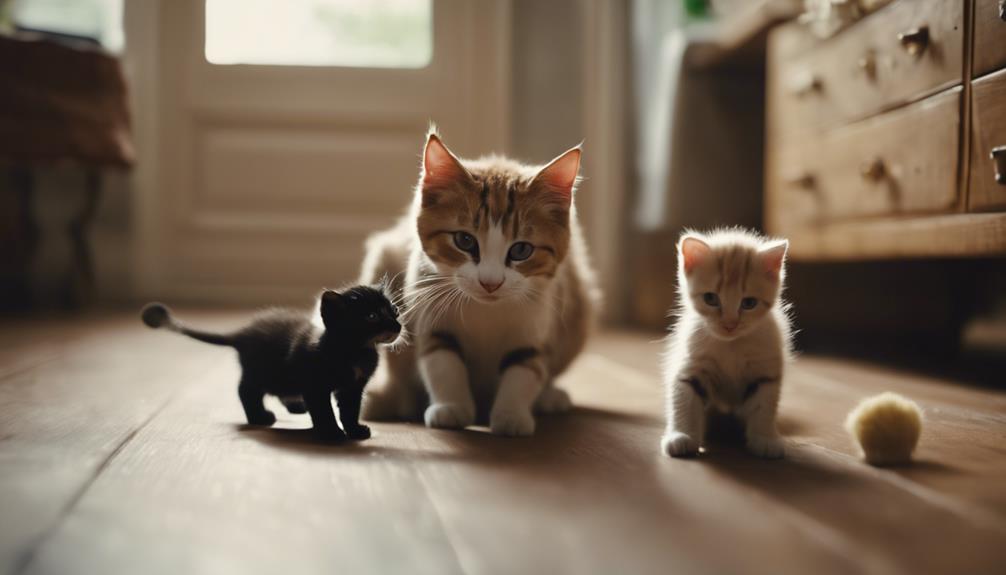
An innate drive for security compels mother cats to carefully relocate their kittens to secluded and sheltered environments.
- Maternal instincts guide cats to seek secure environments for their kittens.
- They aim to protect their young and provide a safer setting.
- Mother cats prefer quiet, dark, and secure locations.
- This behavior guarantees ideal development and fulfills their instinctive need for safety.
Desire for Peaceful Environment
Mother cats prioritize creating a peaceful and secure environment by relocating their kittens away from noise and disturbances. They seek quiet, dark, and odor-free spaces to guarantee the safety and well-being of their offspring.
Cats prefer secluded locations to minimize stress and potential threats to their kittens. Providing a calm and private nesting area can help prevent mother cats from moving their kittens, reducing disruptions and promoting a tranquil atmosphere.
Nurturing Behavior of Mother Cats

Exhibiting a nurturing instinct, mother cats demonstrate their commitment to safeguarding and nurturing their kittens by engaging in deliberate actions to guarantee their safety and well-being.
- Mother cats move kittens to protect them from potential dangers.
- Relocating kittens guarantees a safer, more comfortable environment.
Maternal instincts drive cats to secure offspring well-being.
Moving kittens allows regulation of temperature, cleanliness, and security.