Why Do Cats Rub Against Your Legs


Cats rub against your legs to mark their territory using scent glands. It's a way of communicating and establishing familiarity in their environment. This behavior also signifies social bonding, inclusiveness, and affection towards humans. Through rubbing, cats seek attention, interaction, and show love. It's a form of communication that creates a communal group scent, helping them feel secure. Additionally, during heat, female cats intensify leg rubbing to attract males for mating, while males display heightened behavior to signal readiness in females. These actions are deeply rooted instincts that showcase various aspects of their behavior.
Territorial Marking and Scent Communication
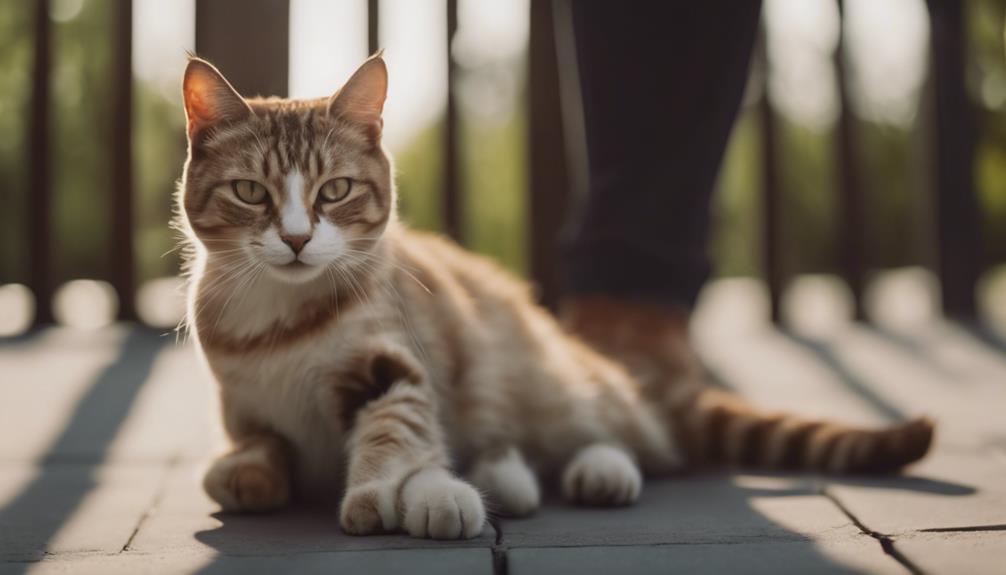
Cats utilize various scent glands located on their cheeks, chin, head, and tail to engage in territorial marking and scent communication through rubbing against objects or individuals. This behavior allows them to mark territory, create a familiar environment, and feel secure.
Neutering male cats can help reduce such territorial behaviors. Rubbing against legs helps cats transfer their scent, marking individuals as part of their territory.
Social Bonding and Inclusiveness
In their interactions with humans, felines often exhibit a behavior that signifies a deep connection and sense of belonging. When a cat rubs against your legs, it is a way of social bonding. This act shows inclusiveness, as your cat marks you with its scent, considering you part of its group.
Seeking Attention and Affection
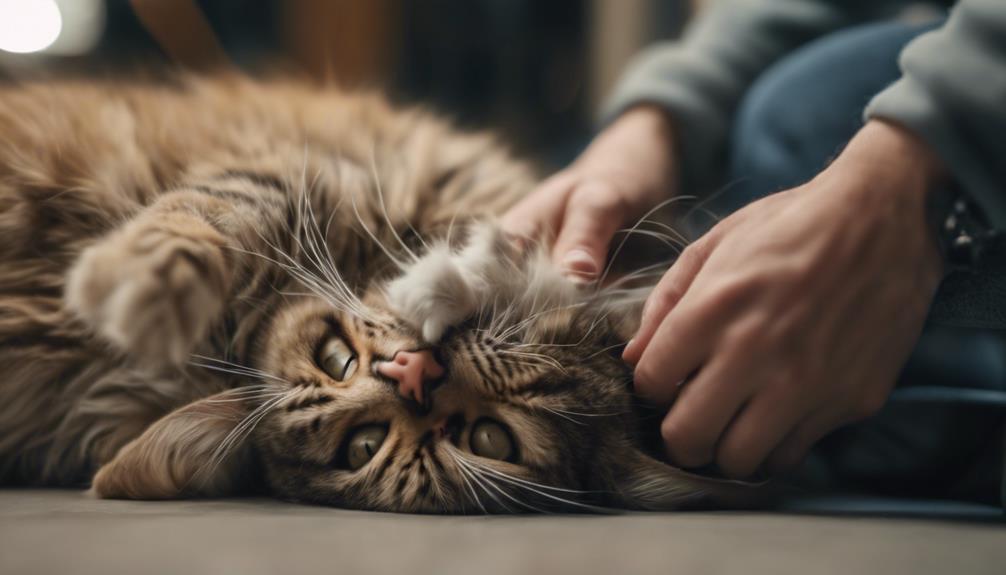
When seeking attention and affection, felines often exhibit a behavior of rubbing against their human companions' legs as a way to communicate their desire for interaction and closeness.
- Cats show love through rubbing behaviors.
- Head bunting is a sign of seeking affection.
- Rubbing against legs is a form of communication.
- Cats mark humans with their scent to show acceptance.
Behavioral Instincts and Habitual Actions
A cat’s inclination to rub against their human companion’s legs stems from deeply ingrained behavioral instincts and habitual actions. This behavior, also known as head bunting, allows cats to mark their territory with their scent, show affection, and create a communal group scent. Cats have scent glands on their cheeks and heads that release pheromones, which they use to communicate with other cats and their human companions. This is why cats rub heads with each other, as it helps them to exchange and strengthen their bond through scent. Understanding why cats rub heads can help cat owners to better interpret their pet’s behavior and build a stronger connection with them.
It is a natural instinct for cats, helping them feel safe and secure in their surroundings.
Signs of Heat and Reproductive Behavior
The manifestation of feline reproductive behavior, particularly during heat cycles, often becomes apparent through observable signs such as increased rubbing against their human companion's legs.
- Female cats may intensify leg rubbing to attract male cats for mating.
- Male cats might exhibit heightened rubbing behavior when a female cat is in heat nearby.
- Rubbing against legs signals sexual receptivity in female cats during heat cycles.
- Increased leg rubbing in cats signifies readiness to mate.