Why Do Ragdoll Cats Go Limp


Ragdoll cats go limp as a display of trust and happiness, reflecting their affectionate and relaxed nature. This behavior is triggered by the release of happy hormones like serotonin and oxytocin. Genetic influences from kitten reflexes also play a role in showcasing their friendly and docile disposition. This unique relaxation reflex is not exclusive to Ragdoll cats, with individual temperament and personality affecting its display. Understanding the mechanism regulating muscle tone and the influence of the nervous system on muscle relaxation sheds light on this fascinating behavior. The Ragdoll flop is a complex interplay of genetic predisposition, hormonal responses, and retained reflexes.
Ragdoll Cats' Limp Behavior Explained
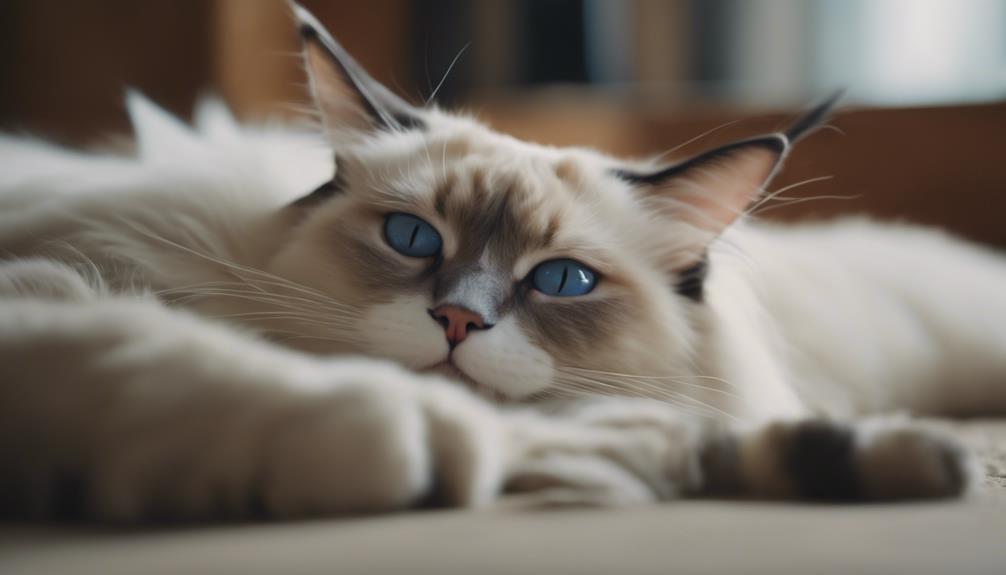
Ragdoll cats' limp behavior is a distinctive trait synonymous with trust and contentment. When picked up, Ragdolls go limp, signaling a bond of trust and happiness with their owners. This behavior is triggered by the release of happy hormones like serotonin and oxytocin. The genetic influence of kitten reflexes also plays a role, showcasing the friendly and docile nature of Ragdoll cats.
Understanding Ragdoll Cats' Floppiness
What factors contribute to the unique floppiness displayed by Ragdoll cats when picked up by their owners?
Ragdoll cats go limp as a sign of trust and happiness, reflecting their affectionate and relaxed nature. The release of happy hormones like serotonin and oxytocin plays a role in this behavior.
Additionally, the genetic inheritance of the kitten reflex may contribute to the Ragdoll flop, which varies based on individual temperament and personality.
The Science Behind Ragdoll Cats' Limpness
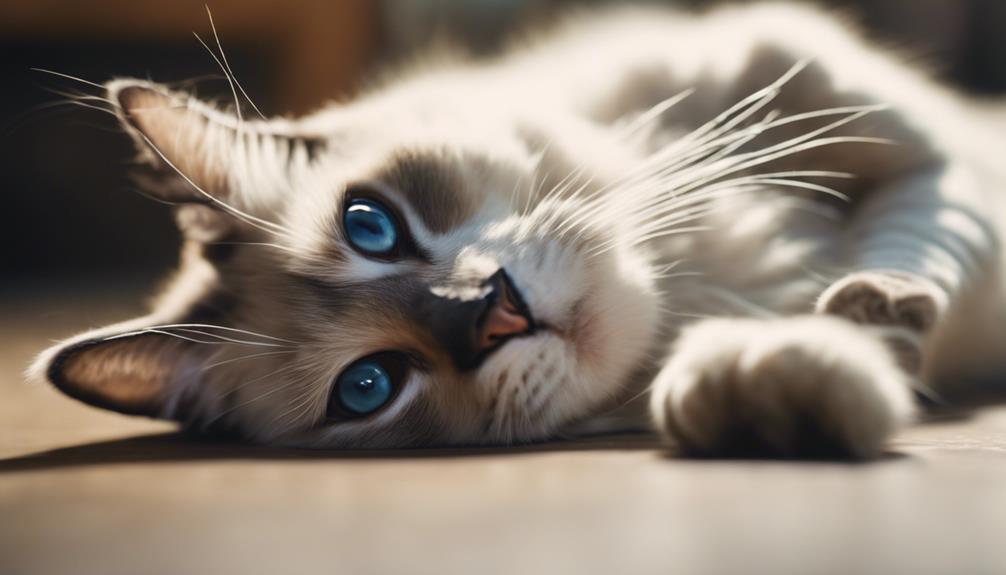
Ragdoll cats’ limpness can be attributed to a mechanism that regulates their muscle tone, influenced by their nervous system. This mechanism is believed to be why Ragdoll cats are known for going limp when they are picked up or held. Their muscles relax and they become floppy, earning them the nickname “puppy-cat”. However, this unique trait can also be a concern for owners, leading to questions about why cats limp suddenly. It is important for owners to understand that this behavior is a natural response in Ragdoll cats and is not necessarily cause for alarm.
This unique trait allows them to relax their limbs fully when picked up or touched, showcasing their calm and docile nature.
Understanding the science behind this behavior sheds light on the fascinating physiological aspects of Ragdoll cats.
Limb Relaxation Mechanism
The limb relaxation mechanism in Ragdoll cats is a fascinating interplay of hormonal responses and retained reflexes from kittenhood. Ragdolls release oxytocin and prolactin when touched, inducing calmness and mimicking the sensation of being carried by their mothers. This leads to their floppy nature when picked up, a behavior not exhibited by all cat breeds, with variability among individual cats.
This unique trait sets Ragdolls apart from other feline companions and contributes to their reputation as gentle and relaxed pets.
Muscle Tone Regulation
In understanding the mechanism behind the limpness of Ragdoll cats, it becomes essential to explore the intricate regulation of muscle tone facilitated by hormonal responses and retained reflexes.
- Hormones like oxytocin and prolactin induce calmness.
- Ragdoll kittens relax when carried by mothers.
- Muscle tone in Ragdoll cats is regulated by hormonal release.
- Limp behavior is a natural response in Ragdoll cats when picked up.
Nervous System Influence
Amidst the gentle demeanor exhibited by Ragdoll cats, their ability to go limp when touched by familiar individuals stems from the intricate influence of their nervous system.
The release of oxytocin and prolactin hormones induces calmness and relaxation, reflecting their docile nature.
This nervous system response, possibly retained from kittenhood, allows Ragdolls to display affection and enjoy being held, highlighting their unique bond with humans.
Ragdoll Cats' Unique Relaxation Reflex
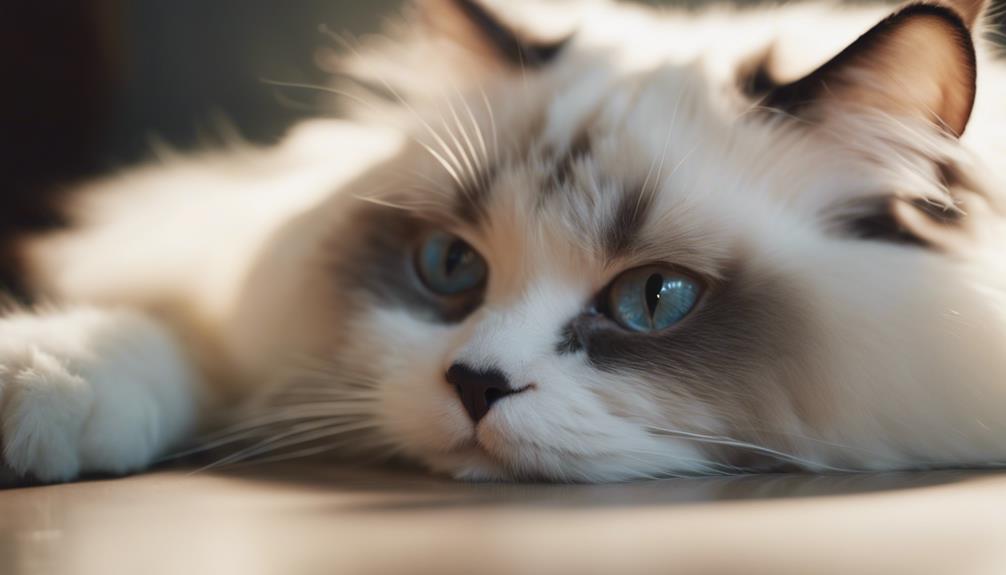
Exhibiting a behavior reminiscent of their kittenhood, Ragdoll cats demonstrate a unique relaxation reflex when held by familiar individuals.
- This reflex is triggered by calming hormones like oxytocin and prolactin.
- Not all Ragdoll cats display this limp behavior.
- The trait is not exclusive to the Ragdoll breed.
- Ragdolls find comfort and security in human companionship.
Factors Influencing Ragdoll Cats' Limp Posture
Ragdoll cats' limp posture is a reflection of their innate genetic predisposition towards relaxation and trust. This behavior, seen when they are picked up, is a sign of affection and showcases their trusting nature. The docile and friendly demeanor of Ragdolls is highlighted through this unique trait, which has been passed down through generations. The release of happy hormones like serotonin and oxytocin further contributes to their limpness.
| Factors Influencing Ragdoll Cats' Limp Posture | |||
|---|---|---|---|
| Genetic Predisposition | Sign of Affection | Trusting Nature | Limp When Picked Up |
Handling Ragdoll Cats' Limpness Safely
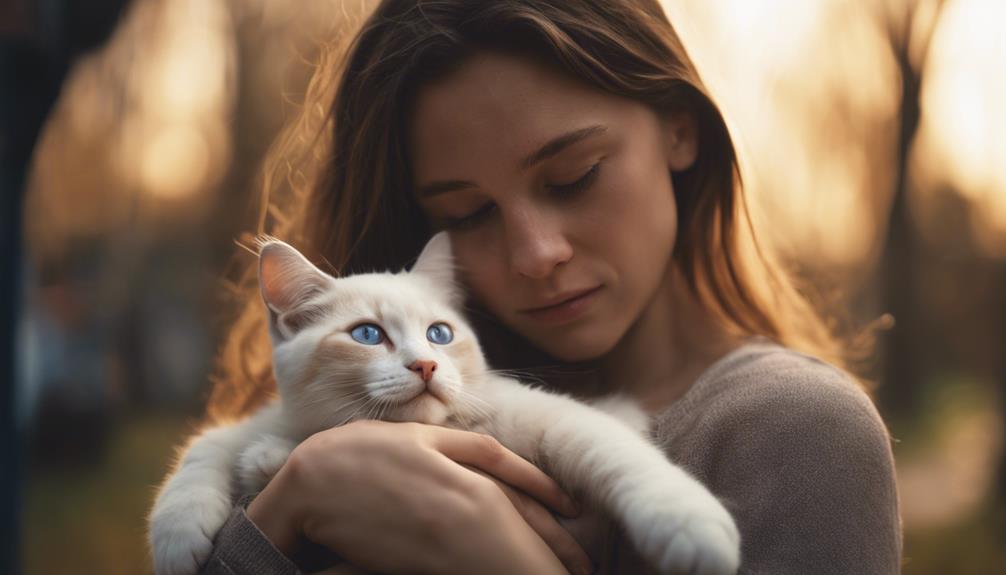
When handling Ragdoll cats' limpness safely, it is important to support their body properly to prevent injury and guarantee their comfort.
- Use both hands to lift and hold them, distributing weight evenly.
- Support the chest, abdomen, head, and hind legs adequately.
- Be attentive to signs of discomfort and respect their need for space.
- Avoid squeezing their chest or abdomen for proper breathing and relaxation.
Enjoying the Affectionate Nature of Ragdoll Cats
Ragdoll cats' affectionate nature shines through their gentle cuddles and purring companionship. Their tendency to go limp in your arms is a heartwarming display of their trust and love. Enjoy these moments of closeness as they bond with you through their unique way of showing affection.
Their affectionate behavior makes Ragdoll cats wonderful companions for those seeking a loving and attentive pet. Their calm demeanor and social nature make them ideal for families or individuals looking for a furry friend to share their home.
Ragdoll cats' ability to form strong bonds with their owners is a testament to their loyalty and devotion. Their affectionate nature extends beyond physical touch, as they often seek out their human companions for companionship and comfort.
Ragdolls' Gentle Cuddles
Known for their gentle and affectionate nature, Ragdoll cats are cherished for their love of cuddling and close contact with their human companions.
- Seeking physical affection, they are often found on laps, earning them the title of 'lap cats'.
- Ragdolls thrive on being held and cuddled, enhancing the bond with their owners.
- Their docile nature makes them ideal cuddle companions for relaxation.
- Going limp when held, their affectionate behavior brings comfort and joy to their owners.
Ragdolls' Purring Companionship
With their innate desire for affection and companionship, Ragdoll cats naturally gravitate towards providing purring companionship to their human counterparts. Ragdolls are known for their lap cat tendencies, finding solace in cuddling and being held. Their affectionate nature enhances the bond with their owners, as they seek human interaction and follow them around the house. This gentle and calm demeanor makes them perfect companions for purring and cuddling.
| Traits | Description |
|---|---|
| Lap Cats | Find comfort in cuddling and being held |
| Affectionate | Seek human interaction and offer companionship |
| Follows Humans | Enjoy being close to owners, purring along |
| Gentle Demeanor | Enhances bond with owners through affection |
Embracing Ragdoll Cats' Calm Demeanor
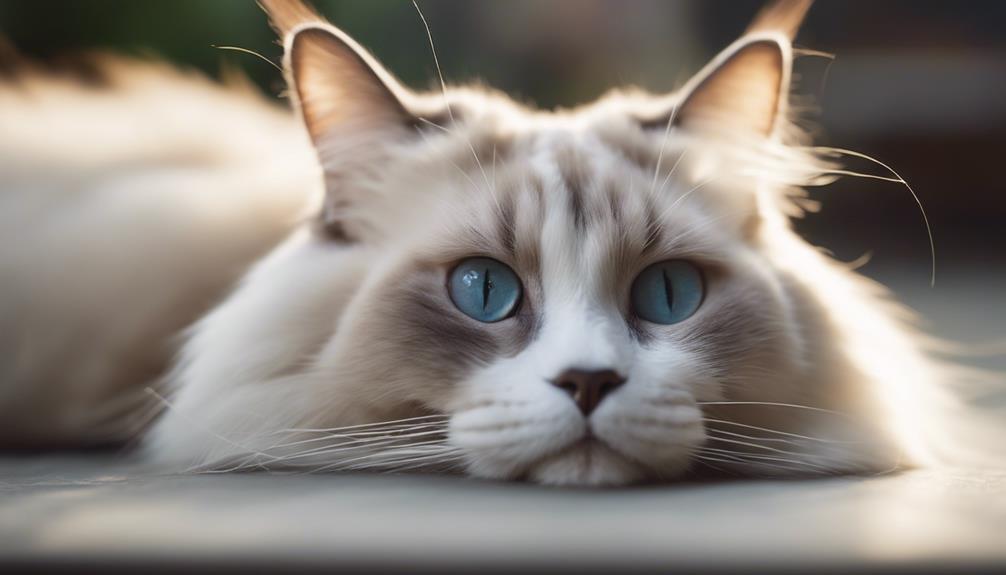
Embracing the calm demeanor of Ragdoll cats can provide owners with a soothing and harmonious companionship experience.
- They exude a gentle nature, making them ideal cuddle buddies.
- Ragdolls are known to go limp in our arms, showing trust and contentment.
- Their floppy behavior when picked up reflects their affectionate personality.
- Owners enjoy their relaxed and affectionate nature, creating a tranquil environment at home.