Why Does Catnip Make Cats Go Crazy


Catnip makes cats go crazy due to a unique compound called nepetalactone. This compound triggers euphoric responses and intense behaviors in cats. Nepetalactone stimulates brain chemicals related to mood and happiness, leading to rolling, flipping, and hyperactivity in cats. It acts as a natural pheromone, inducing frenzy and unusual behavior in felines. The euphoric effect of catnip lasts around 5-10 minutes, with behaviors like rubbing, rolling, meowing, and hyperactivity commonly observed. Understanding the science behind nepetalactone gives insight into why catnip drives cats wild.
The Science Behind Nepetalactone
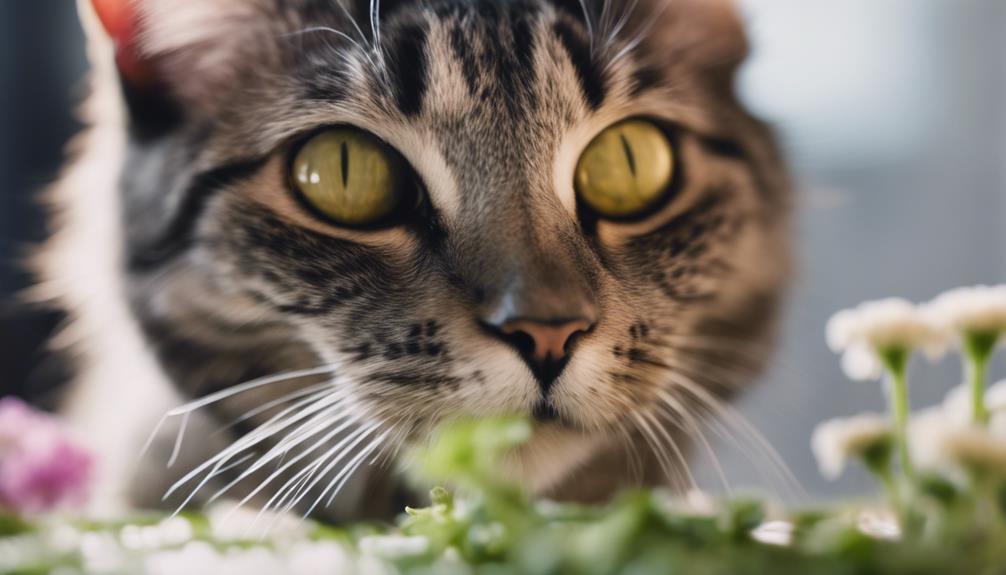
Nepetalactone, the key compound found in catnip, elicits a frenzied response in cats by stimulating brain chemicals associated with mood and happiness.
When cats encounter nepetalactone, a chemical reaction is triggered, leading to effects like rolling, flipping, and hyperactivity.
This natural pheromone for cats creates a temporary state of excitement and euphoria.
Understanding the science behind nepetalactone helps clarify why catnip induces such intense reactions in our feline friends.
Catnip's Euphoric Effect on Felines
Cats experience a euphoric response when exposed to catnip, exhibiting behaviors like rubbing, rolling, meowing, and hyperactivity. Nepetalactone, a compound found in Nepeta cataria, triggers this euphoric reaction by stimulating their brains.
The effects of catnip typically last between 5-10 minutes, creating a short-lived but intense experience. Nepetalactone is the key component responsible for inducing the frenzy of excitement and unusual behavior in cats.
Genetic Sensitivity to Catnip in Cats
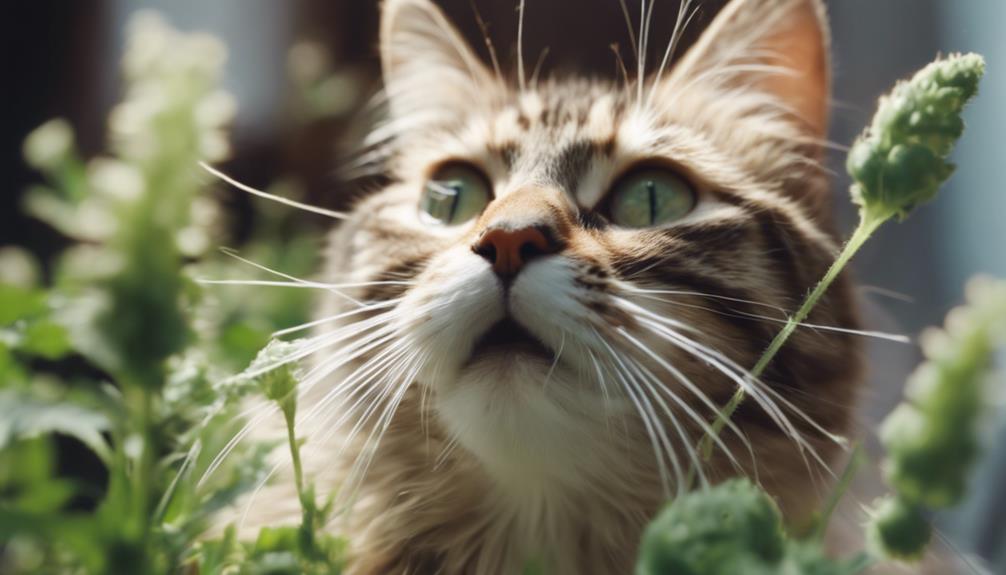
Exploring the genetic sensitivity of felines to catnip reveals intriguing insights into the herb's effects on different individual cats. Approximately 50-65% of cats, including large predatory cats, are sensitive to catnip due to the compound nepetalactone. Sensitivity varies based on genetic makeup, with kittens being immune and 7 out of 10 adult cats finding it irresistible. This genetic predisposition influences their responses to catnip.
| Cats Sensitive to Catnip | Sensitivity Levels |
|---|---|
| Large Predatory Cats | High |
| Kittens | Immune |
| Adult Cats | Varied |
Understanding Cat Behavior on Catnip
The impact of catnip on feline behavior is an intriguing subject that reveals fascinating insights into the mysterious world of cats' responses to this herb. When exposed to catnip, many cats exhibit behaviors such as rolling, rubbing, purring, and playful antics, likely due to the chemical compound nepetalactone, which affects their sensory receptors. However, the effects are temporary and can vary greatly between individual cats, with some showing no interest at all. This often raises the question, is catnip safe for cats, and the answer is generally yes, as it is non-toxic and provides a harmless form of stimulation for most felines.
When cats react to fresh catnip, they are responding to a compound called nepetalactone. This compound triggers a range of behaviors in cats, including rubbing, rolling, meowing, hyperactivity, and even drowsiness.
Understanding how catnip affects cats sheds light on their unique responses to this natural stimulant.
Factors Influencing Catnip Sensitivity
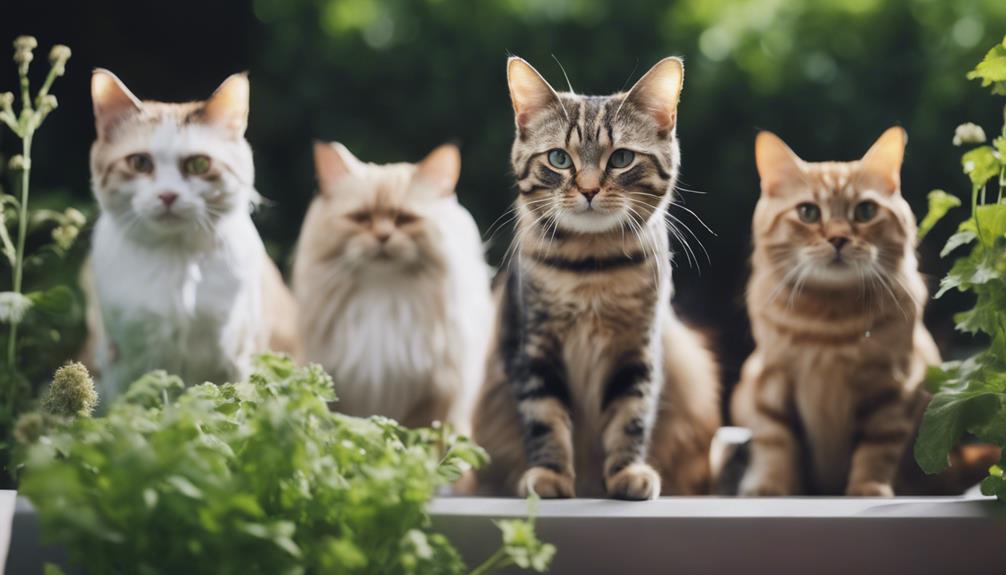
Understanding the intricate interplay of genetic predispositions and environmental factors is essential in deciphering the varying levels of sensitivity that different felines exhibit towards catnip.
Adult cats, responsive to the compound nepetalactone in catnip, display behaviors like rubbing and hyperactivity.
Catnip sensitivity varies based on freshness, exposure, and individual preferences, influencing their reactions to the herb.