Why Does My Cat Chew On Cardboard Boxes


Cats chew on cardboard boxes to fulfill their natural predatory instincts. Mimicking hunting behaviors provides mental and physical stimulation. Kittens may chew to soothe teething discomfort, while adults with red gums might have dental issues. Cats mark territory and communicate through scent glands on boxes. Chewing can also alleviate boredom and provide essential mental engagement. However, chewing cardboard poses health risks like ingestion and choking hazards. To prevent this behavior, consider interactive toys and deterrent sprays. Monitoring your cat's chewing habits and consulting with a vet are vital for their well-being and safety.
Natural Predatory Instinct
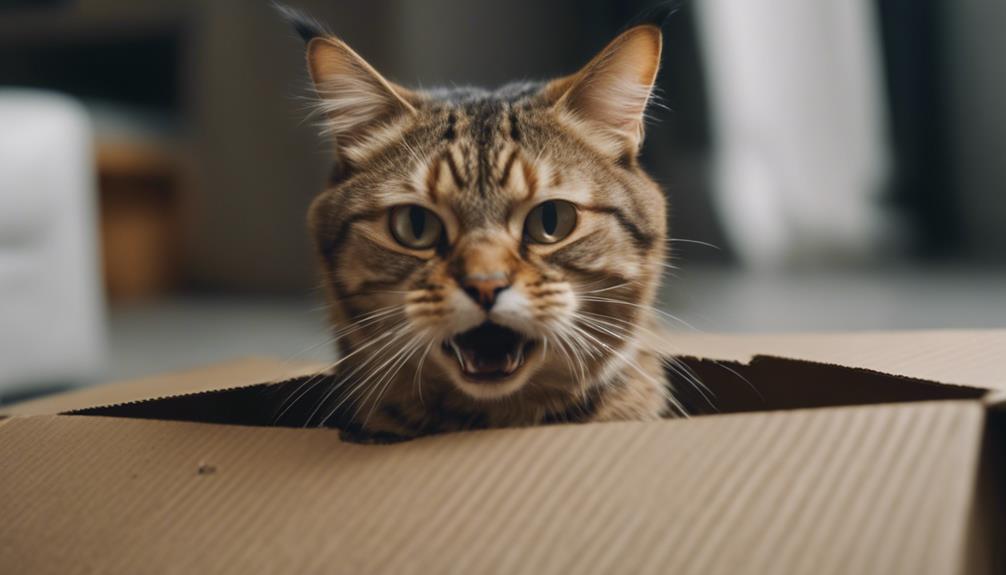
Cats exhibit a natural predatory instinct that drives them to chew on cardboard boxes as a way to mimic hunting behaviors. Chewing on boxes allows cats to engage in play that simulates stalking, pouncing, and capturing prey.
The texture and structure of cardboard trigger cats' instinctual behaviors related to hunting and play. This behavior provides mental and physical stimulation, fulfilling their need for activities similar to hunting in the wild.
Teething And Health Concerns
During the teething process in felines, chewing on cardboard boxes can serve as a soothing mechanism for sore gums.
- Kittens may chew to alleviate teething discomfort.
- Red gums in adults may signal dental issues.
- Gastrointestinal problems can also drive chewing behavior.
- Cats may exhibit prey drive behaviors when playing with cardboard boxes.
Marking Habits
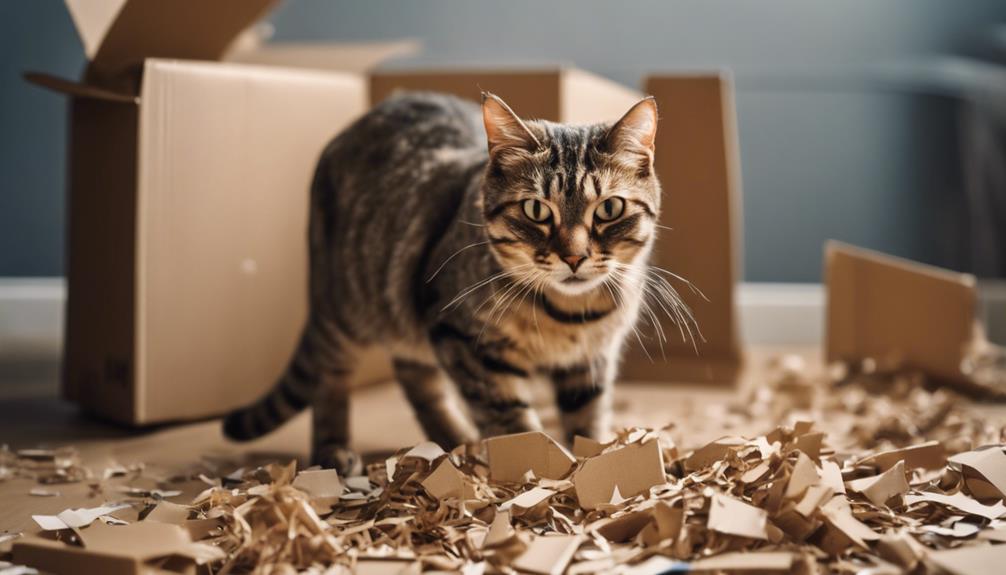
Cats exhibit marking habits by rubbing their scent glands on cardboard boxes to claim ownership and create a sense of familiarity in their environment. This behavior stems from their instinctual need to establish territory and communicate with other cats through pheromones left on the boxes.
Scent Marking Behavior
Engaging in scent marking behavior through chewing on cardboard boxes is a natural instinct for cats, serving as a non-aggressive method for them to claim and establish their territory.
- Cats mark their territory with scent pheromones.
- This behavior mimics rubbing against objects.
- It helps cats feel secure and establish presence.
- Understanding marking habits aids in creating a comfortable environment.
Territorial Instincts Displayed
Demonstrating their innate territorial instincts, cats assert ownership and establish boundaries by marking cardboard boxes with scent markers. This territorial behavior is a reflection of their feline instinct to create a secure environment.
Communication Through Chewing
A common behavior observed in cats when interacting with cardboard boxes is their utilization of chewing as a means of communication and territorial marking.
- Cats chew on boxes to mark their territory through scent.
- Chewing helps cats communicate with others and assert ownership.
- Rubbing cheeks and chewing are non-aggressive ways for cats to claim their space.
- Chewing on boxes is a natural instinct for cats to express ownership and communicate with their environment.
Relieving Boredom
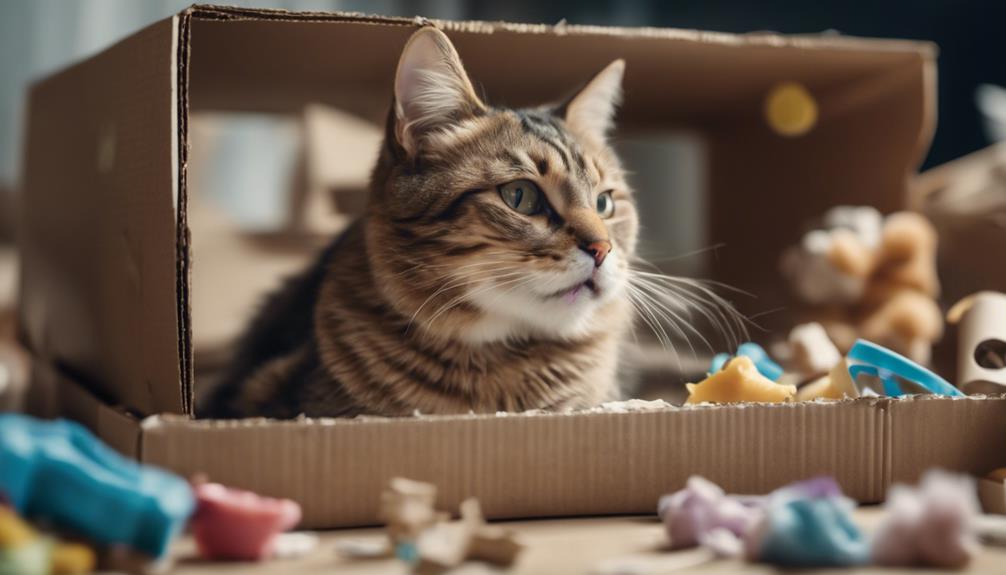
To alleviate boredom, cats may resort to chewing on cardboard boxes as a means of mental stimulation and energy expenditure. Boredom can drive cats to explore their environment and engage in activities that provide entertainment.
Providing interactive toys and creating an enriching environment with stimulating elements can help reduce the likelihood of excessive chewing on cardboard boxes by offering alternative outlets for mental and physical stimulation.
Safety of Chewing Cardboard
Chewing cardboard can present risks to a cat's health, including potential intestinal blockage, ingestion of harmful substances, and choking hazards from large pieces being swallowed.
Monitoring a cat's behavior for signs of distress and seeking veterinary advice for persistent chewing is essential in ensuring their well-being.
To prevent these safety concerns, proactive measures such as removing access to cardboard, providing alternative toys, and using deterrent sprays can help maintain a safe environment for cats.
Cardboard Ingestion Risks
The potential risks associated with ingesting cardboard make it imperative for cat owners to closely monitor their feline companions' behavior around such materials.
- Ingesting cardboard can lead to intestinal blockage in cats.
- Cats chewing on cardboard may ingest toxic substances.
- Swallowing large pieces of cardboard poses a choking hazard.
- Monitor cats for signs of distress if excessive chewing occurs.
Dental Health Concerns
In light of the potential dental health concerns associated with cats' chewing behavior on cardboard, it is essential for cat owners to be vigilant about monitoring their feline companions' oral health.
Excessive chewing on cardboard boxes may indicate underlying dental issues or gum disease. Additionally, swallowing cardboard can pose a risk of intestinal blockage for cats.
If your cat shows signs of distress or illness from excessive chewing, consult a vet promptly.
Behavioral Enrichment Benefits
Cats derive mental stimulation and enrichment from engaging with cardboard boxes, which serve as a safe and entertaining play option that satisfies their natural instincts.
- Cardboard's unique texture engages cats' senses.
- The sound of chewing on cardboard can be satisfying for cats.
- Playing in boxes triggers cats' hunting behaviors.
- Providing cardboard cat toys can offer a safe chewing experience.
Prevention Methods
How can cat owners effectively deter their feline companions from chewing on cardboard boxes?
To prevent cats from chewing on cardboard, remove their access to boxes. Redirect their attention to appropriate toys and scratching surfaces. Use deterrent sprays or scents on the boxes to discourage chewing.
Provide alternative activities like interactive play to reduce boredom. If chewing behavior persists, monitor closely and seek veterinary advice promptly.
Redirecting Chewing Behavior

To discourage cats from chewing on cardboard boxes, providing alternative toys and scratching posts is an effective method for redirecting their chewing behavior.
- Engage in interactive play sessions: Stimulate your cat mentally and physically to reduce the urge to chew.
- Use deterrent sprays: Apply on cardboard boxes to discourage chewing behavior.
- Offer treats or puzzle toys: Keep your cat entertained to prevent boredom-induced chewing.
- Enrich the environment: Provide various toys and activities to divert attention from cardboard boxes.
Is Chewing on Cardboard and Paper a Sign of a Larger Issue with my Cat’s Behavior?
If you’ve noticed your cat eating paper habits, it could be a sign of a larger issue with their behavior. Some cats engage in this behavior due to pica, a condition where they crave non-food items. It’s important to consult with a vet to address any underlying health or behavioral issues.
Is Cats Chewing on Cardboard Boxes and Fingers a Sign of the Same Behavior Issue?
Cats chewing on cardboard boxes and fingers can be a sign of the same cat chewing behavior causes. This behavior is often linked to anxiety, boredom, or the need for dental care. Providing appropriate chew toys and regular dental check-ups can help address the issue.
Monitoring and Veterinary Consultation
When observing your feline companion's behavior around cardboard boxes, it is important to monitor for any potential signs of distress or compulsive chewing that may necessitate veterinary consultation.
Look out for symptoms such as vomiting, diarrhea, or lethargy, which could indicate an underlying health issue.
If your cat's chewing behavior becomes compulsive or if they show signs of pica, seek professional advice promptly to guarantee their well-being.