Why Does My Cat Hunt


Cats hunt due to their innate predatory instincts, driven by ancestral lineage and the need for food, play, and exercise. Their genetic makeup and hardwired brains react to prey stimuli, showcasing evolutionary history. Predatory behaviors like stalking and pouncing are deeply rooted. Toys mimicking prey can help satisfy these instincts. While hunger plays a role, cats hunt for various reasons beyond mere sustenance. To address hunting behavior effectively, understanding these primal instincts is crucial. A balanced approach between instinct and learned behavior is key. Embracing strategies to manage cat hunting behavior can benefit both pets and owners.
Reasons for Cat Hunting Behavior
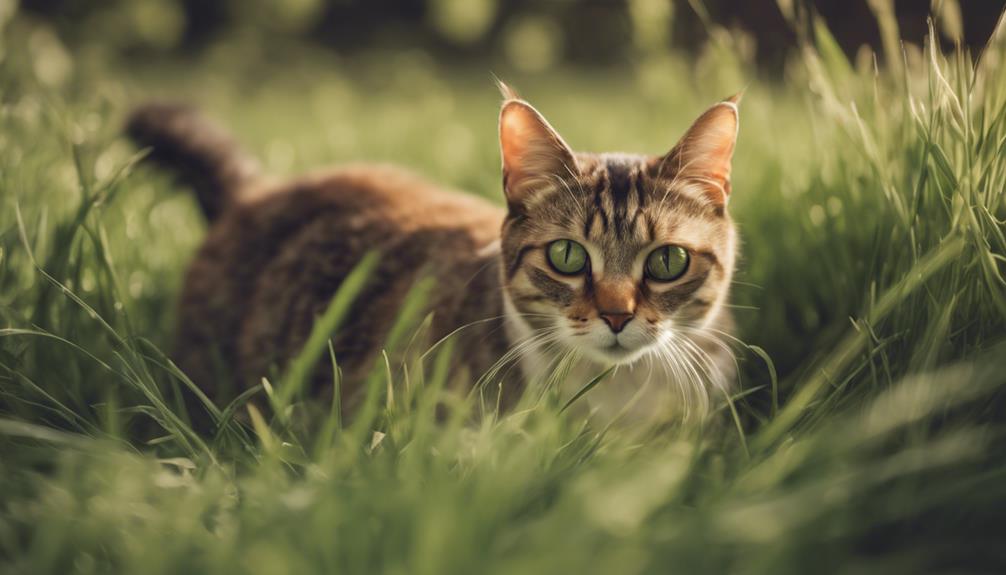
The inherent drive of domestic cats to engage in hunting behavior stems from their ancestral lineage of skilled predators. Cats' natural instincts drive them to hunt not only for food but also for play and exercise.
Even well-fed cats at home exhibit hunting behaviors, as it fulfills their need for mental stimulation. Providing toys that mimic prey and offering a varied diet can help satisfy a cat's hunting instincts within the domestic setting.
Understanding Cat Predatory Instincts
Cats' predatory instincts, deeply rooted in their evolutionary history, are intrinsic to their behavior. Domestic cats exhibit hunting instincts triggered by prey cues, showcasing natural stalking, pouncing, and ambushing behaviors. These behaviors shed light on why cats stalk their prey, often mimicking the same precision and patience their wild ancestors employed. Even well-fed domestic cats may engage in hunting-like activities, driven more by instinct than hunger. This evolutionary remnant highlights their role as natural predators and their remarkable adaptability across environments.
Understanding these instincts is vital for managing and redirecting behaviors effectively. Despite domestication, cats retain their innate drive to hunt, emphasizing the importance of comprehending and addressing these primal instincts to guarantee their well-being in a human environment.
Impact of Domestication on Hunting
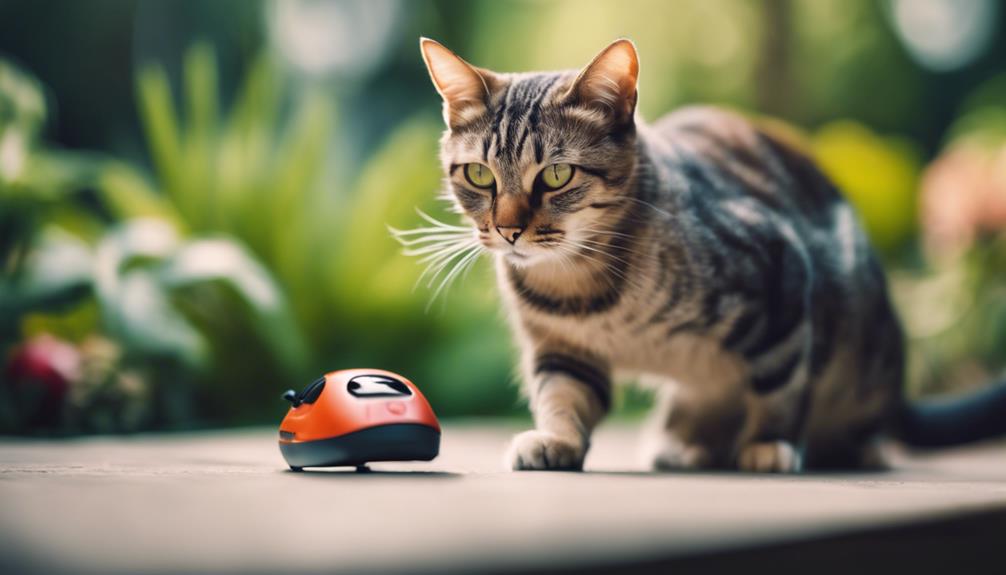
Despite the process of domestication, the innate predatory instincts of cats persist strongly, influencing their hunting behaviors even in a human-influenced environment.
Cats' genetic makeup and hardwired brains make them react to prey stimuli, showcasing ancestral traits from their evolutionary history.
Domestication has not lessened their hunting prowess, as they continue to exhibit natural hunting behaviors, highlighting the lasting impact of their predatory instincts.
Play Vs. Predation in Cats
Cats' play behavior mirrors their instinctual predatory nature, allowing them to refine their hunting skills through playful interactions.
This mimicry of hunting scenarios with toys resembling prey showcases the evolutionary adaptations that drive their actions.
The blend of play and predation in a cat's behavior highlights the intricate balance between instinct and learned behavior in their quest for hunting prowess.
Hunting as Play
Engaging in playful activities, felines exhibit a behavior that closely mirrors their predatory instincts, aiding in the development of essential hunting skills. Play provides mental stimulation, teaching them valuable survival techniques.
The cat feels happy when engaging in play, which helps redirect hunting instincts appropriately. The sound of prey triggers hunting behaviors, allowing cat owners to transfer these instincts positively.
It's important never to punish your cat for displaying natural hunting behaviors.
Instinctual Predatory Behavior
In felines, the distinction between playful behavior and predatory actions is often blurred, showcasing their innate instinctual drive towards hunting. Play behaviors in cats mimic their hunting skills, with hungrier cats engaging more in play before hunting.
Cats may toy with prey due to a fear of injury before making the final kill. Providing prey-like toys can satisfy their hunting instincts, honing their skills and offering physical exercise.
Addressing Hunger in Cat Hunting
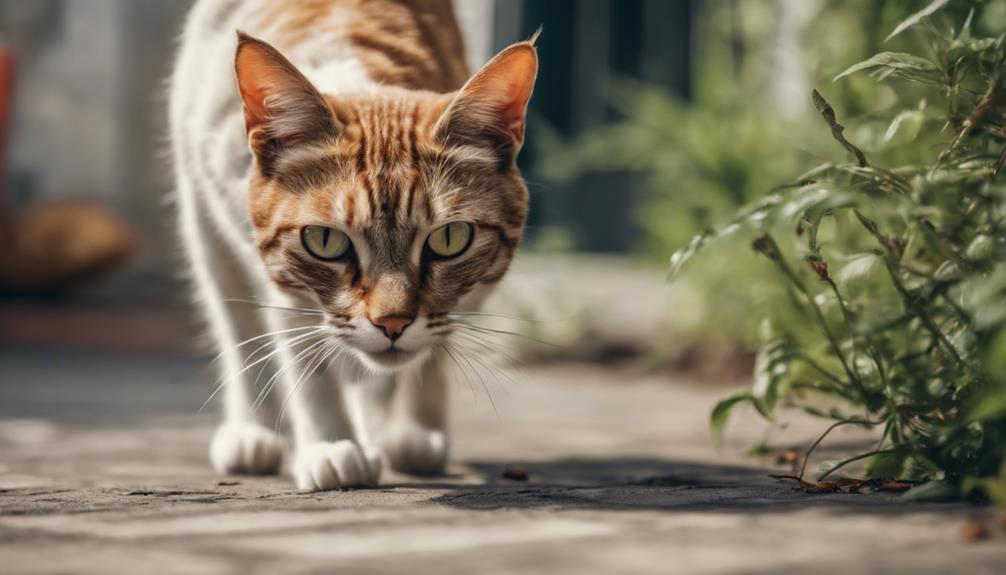
When considering strategies to address hunger in cat hunting behavior, it is important to understand that the motivation for feline predation extends beyond mere sustenance. Cats, even when well-fed, exhibit opportunistic hunting due to deeply ingrained instincts.
Hunting isn't solely driven by hunger; it's an instinctual behavior. Despite a success rate of less than 50%, eliminating hunting behavior in domestic cats by addressing hunger alone may prove challenging.
Strategies to Manage Cat Hunting Behavior
To manage cat hunting behavior effectively, it is important to deter hunting indoors by providing interactive toys that mimic prey. Engaging in regular playtime sessions to satisfy their natural instincts is also crucial. Additionally, offering mental stimulation through puzzle feeders or treat-dispensing toys can be beneficial. These strategies can help redirect your cat's hunting drive into safe and controlled activities within the home environment, reducing the need for them to seek out live prey.
Deter Hunting Indoors
One effective approach to managing cat hunting behavior indoors involves creating a controlled environment that satisfies their natural instincts while minimizing the impact on local wildlife.
- Provide a safe outdoor space like a catio for supervised outdoor time.
- Redirect hunting behavior through interactive play and toys.
- Use collars with a bell to make your cat more visible to prey.
- Offer high meat content cat food and puzzle feeders to reduce the urge to hunt.
Engage in Playtime
Engagement in interactive play sessions with your feline companion can effectively redirect and manage their innate hunting instincts. Through playtime sessions with interactive toys that encourage stalking and pouncing, you can reduce your cat's desire to hunt birds or other prey.
Short, intense play sessions spread throughout the day can satisfy their hunting instincts and keep them mentally stimulated. Puzzle feeders for meals also mimic hunting activities, providing mental enrichment.
Provide Mental Stimulation
How can mental stimulation strategies effectively assist in managing a cat's hunting behavior?
Providing interactive toys, like prey-like toys, satisfies your cat's hunting instincts.
Creating a stimulating environment with climbing structures and hiding spots reduces the need for hunting.
Feeding meals in puzzle feeders mimics hunting behavior, providing mental enrichment.
Rotating toys and introducing new activities prevent boredom and excessive hunting in indoor cats.