Why Does My Cat Kick Litter Out Of The Box


Cats kick litter out of the box to cover their waste effectively. This behavior is deeply ingrained in their instincts for cleanliness and comfort. Testing litter texture and depth with kicking is natural for cats. Providing enough litter is essential to prevent frustration and maintain proper covering. Cat's instinctual behaviors reflect ancestral survival strategies. A properly sized litter box helps maintain cleanliness and allows for natural digging and covering. Cats need space to exhibit their natural behaviors comfortably. Understanding your cat's need for sufficient litter quantity and quality can minimize kicking tendencies and maintain a clean environment. Discover more about your cat's behavior and needs.
Reasons for Litter Kicking Behavior

Litter kicking behavior in cats can be attributed to several reasons that stem from their natural instincts and behaviors. Cats kick litter out of the box to cover their waste, a behavior ingrained in them to avoid attracting predators.
Testing litter texture and depth may also prompt kicking as cats assess its suitability. Additionally, inadequate litter in the box can lead to frustration and kicking, highlighting the importance of providing enough litter for proper covering.
Cat's Instinctual Behavior
Inherent in felines is a deep-rooted instinctual behavior that drives them to meticulously cover their waste in a manner that reflects their ancestral survival strategies.
Cats, influenced by their natural inclination to dig and cover, may exhibit litter kicking even in indoor environments. This behavior, stemming from a need to prevent litter from attracting predators, is deeply ingrained in their instincts and is vital for their well-being and comfort.
Impact of Litter Box Size
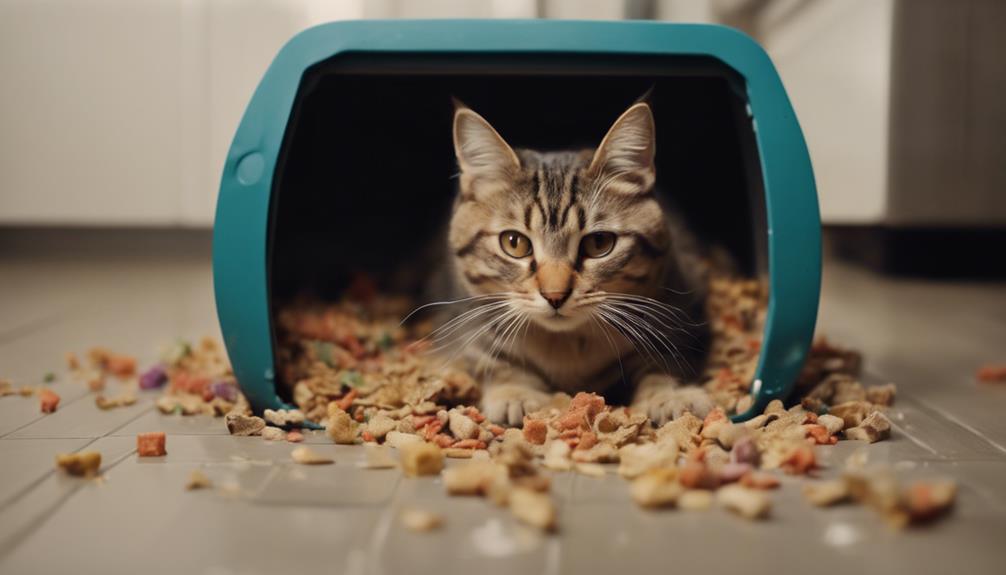
Properly sizing the litter box is essential for maintaining a clean and comfortable environment for your feline companion. A larger litter box allows for proper digging and covering of waste. Cats need enough space to move comfortably and exhibit their natural behavior.
Higher sides can prevent them from kicking litter outside. Inadequate space may lead to frustration and mess, especially in covered litter boxes. Ensuring the box is spacious enough helps maintain cleanliness in the litter area.
Testing and Marking Behaviors
When cats kick litter out of the box, they may be engaging in territorial behavior. This behavior is often a natural instinct for cats to mark their territory. In the wild, cats use their urine and feces to mark their territory, and kicking litter out of the box may be an extension of this behavior. However, if this behavior is sudden and is accompanied by sudden cat hissing behavior, it may be a sign of stress or anxiety. It’s important to monitor your cat’s behavior and seek advice from a veterinarian if you notice any sudden changes in their behavior.
Understanding this aspect of feline behavior can help pet owners address litter box preferences and minimize potential issues related to marking behaviors.
Territorial Behavior Explanation
Testing the litter texture and depth and marking territory are common reasons why cats kick litter out of the box. This behavior is often instinctual and tied to their natural tendencies to dig and bury their waste. If a cat keeps visiting the litterbox frequently, it could also indicate curiosity, a preference for cleanliness, or even a potential health issue like a urinary problem. Ensuring the litterbox is clean and appropriately set up can help minimize the mess and encourage healthy habits.
- Cats may kick litter to assess texture and depth preferences.
- Territorial behavior is exhibited through litter kicking.
- Factors like stress and anxiety can influence marking behaviors.
- Covered litter boxes help control scent marking.
- Enrichment and stress reduction can minimize territorial marking.
Natural Instinctual Marking
Natural instinctual marking behaviors in cats, such as kicking litter out of the box, serve as an essential means for them to establish and communicate their territorial presence. Cats may kick litter while testing the texture and suitability of the litter in the box. Territorial marking through litter kicking can also indicate underlying territorial issues, influenced by changes in the environment or the presence of other pets.
| Natural Instinctual Marking |
|---|
| Territorial Behaviors |
| Establishing Presence |
| Underlying Territorial Issues |
| Texture and Suitability |
Litter Box Preference
In understanding feline behavior, recognizing cats' litter box preferences plays a crucial role in maintaining a harmonious environment for both the cat and its owner.
- Cats may kick litter out of the box to test the texture and depth of the litter, showing preferences for certain types.
- Some cats exhibit marking behaviors by kicking litter, a form of territorial communication.
- Covered litter boxes can prevent litter kicking associated with marking behaviors.
- Addressing reasons for territorial behavior can reduce litter kicking.
- Understanding your cat's litter preferences maintains a clean environment.
Litter Quantity and Quality
Ensuring the proper amount of litter in your cat's box is essential for their comfort and hygiene. Cats require a depth of 2-4 inches of litter to cover waste effectively, preventing them from engaging in kicking behavior.
Additionally, maintaining high-quality litter reduces the likelihood of cats kicking it out of the box, making regular upkeep essential for a pleasant litter box experience.
Litter Amount Affects Behavior
Maintaining an adequate amount of litter in the box is crucial for guaranteeing proper feline elimination behavior and minimizing kicking tendencies.
- Cats need sufficient litter to dig and cover their waste properly.
- Inadequate litter quantity may lead to frustration and kicking behavior.
- Adding more litter guarantees cats have enough material to cover their waste.
- Regular cleaning upholds the quality of the litter, reducing kicking.
- Ensuring the right quantity of litter helps uphold cleanliness and cat comfort during elimination.
Quality Impacts Litter Kicking
The quality of litter, encompassing both its quantity and consistency, plays a significant role in determining whether cats will exhibit kicking behavior outside of their litter box.
Cats may find the litter inadequate if not large enough to cover waste properly, leading to frustration and increased kicking.
Using quality cat litter that is clean, fresh, and the right texture can prevent cats from kicking litter out of the box, helping maintain a comfortable and clean environment for them.
Box Size Considerations Important
Considering the importance of litter quantity and quality in preventing cats from kicking litter out of the box, an essential aspect to address is the size of the litter box itself.
- The litter box should be large to contain the cat's movements.
- Utilizing litter trays can help prevent the cat from kicking out too much litter.
- A larger box can reduce scatter when the cat is digging or covering waste.
- Having more litter can assist in preventing frustration and excessive kicking behavior.
- Higher-sided boxes can also aid in containing litter during play sessions.
Preventing Litter Messes
To minimize litter messes caused by cats kicking litter out of the box, utilize a larger, high-sided litter box. Implement litter mats around the box to catch kicked litter. Regularly clean the box to discourage kicking behavior. Avoid overfilling the box to prevent spillage. Consider adding extra boxes to distribute elimination areas. These simple solutions can help contain litter and prevent it from ending up outside the box.
| Preventive Measures | Description | Benefits |
|---|---|---|
| Larger, high-sided box | Contains kicked litter | Reduces mess |
| Litter mats | Catch litter | Easy cleanup |
| Regular cleaning | Discourages kicking | Maintains hygiene |
| Avoid overfilling | Prevents spillage | Enhances stability |
| Additional boxes | Distributes areas | Minimizes mess |