Why Does My Cat Roll On Concrete


Cats roll on concrete for various reasons. It helps with scent marking, cooling off, and stretching muscles. Rolling aids in grooming, trust display, and instinctual behaviors. Scent marking establishes territory and dominance. Concrete cools them down and offers comfort. Rolling stretches muscles, promotes agility, and satisfies scratching instincts. It also aids in grooming needs, distributes oils, and removes parasites. By rolling, cats display trust, relax, and communicate non-aggression. This behavior is deeply rooted in their evolutionary past for survival and social bonding. Understanding these reasons can provide insight into your cat's well-being and natural behaviors.
Scent Marking Behavior
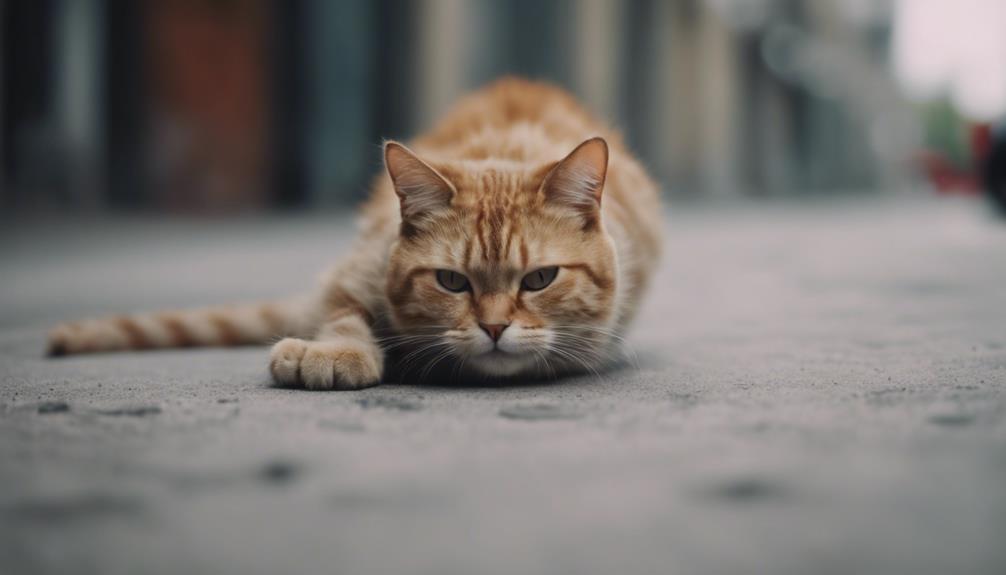
Scent marking behavior in cats, demonstrated through rolling on concrete, is a natural and instinctual method for territorial communication and dominance assertion. Cats utilize scent glands to release a chemical called nepetalactone, marking their territory effectively.
This act of rolling on concrete aids in territory establishment, sending signals to other felines to deter them from invading their space. The behavior stems from cats’ innate need to communicate and assert dominance. By leaving their scent on the ground through glands in their skin, they effectively create a boundary that other cats can recognize. This instinctive behavior ties into their broader communication patterns, much like why cats kick litter out of the box—to spread their scent and mark their presence. These actions, while seemingly mundane, are deeply rooted in their survival tactics and social structures. Another behavior that ties into this territorial marking is the cat lip licking behavior, where cats will lick their lips to spread their scent onto objects or other animals. This behavior serves a similar purpose in marking their territory and communicating with other cats. By understanding these innate behaviors, we can gain a deeper appreciation for the complex social dynamics and survival strategies of our feline companions.
Cooling Off on Concrete
When seeking relief from hot temperatures, cats often turn to concrete surfaces as a means to cool off efficiently. Concrete surfaces aid in heat dissipation, providing a cooling effect for cats.
They regulate their body temperature by transferring heat to the cooler concrete, making it a comfortable spot during warm weather. Cats find concrete soothing due to its ability to remain cooler than other surfaces in the sun, offering a rejuvenating respite.
Muscles Stretching and Scratching
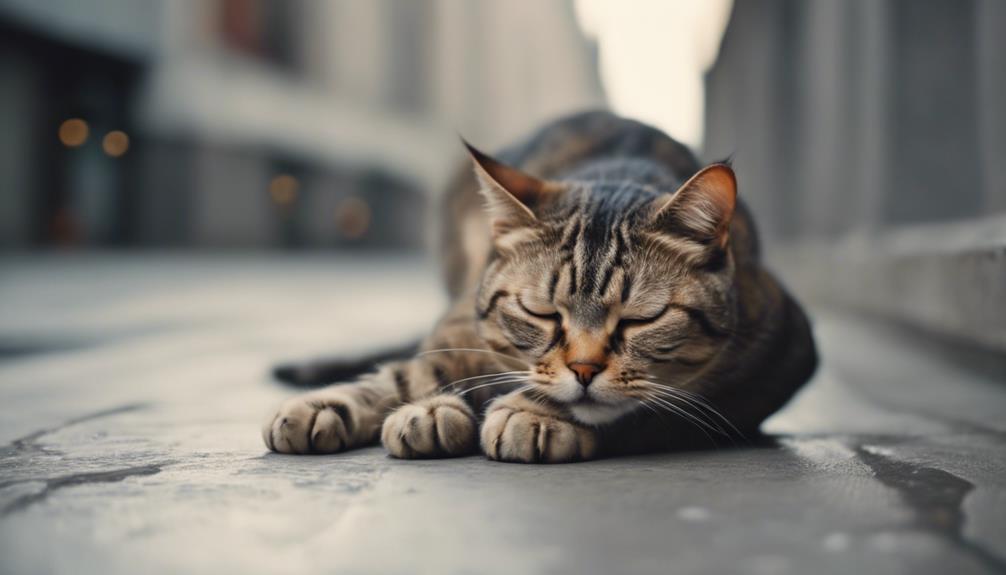
Cats' rolling behavior on concrete serves a dual purpose: it allows them to stretch their muscles and engage in scratching behavior. This rolling behavior also helps to remove dead outer layers of their claws, keeping them sharp and healthy. Additionally, by scratching on concrete, cats are able to mark their territory with the scent glands on their paws. This may be one reason why cats sleep in a ball, as it helps protect their vulnerable underbelly and covers the scent glands on their paws, allowing them to maintain their territorial markings.
By rolling on concrete surfaces, cats can effectively stretch their muscles, promoting flexibility and agility.
Additionally, the rough texture of concrete aids in satisfying their scratching instincts and grooming needs.
Stretching Benefits Muscles
Engaging in muscle-stretching behaviors on rough concrete surfaces serves as a beneficial practice for felines, aiding in maintaining flexibility and agility. Cats instinctively roll on concrete to stimulate circulation and enhance muscle tone. The rough texture of concrete provides a satisfying surface for cats to engage in muscle-stretching activities. Regular stretching on concrete contributes to overall muscle health and physical well-being in cats.
| Muscle-Stretching Benefits | Concrete Surfaces |
|---|---|
| Maintains flexibility | Provides satisfaction |
| Enhances agility | Stimulates circulation |
| Aids in muscle tone | Promotes overall well-being |
| Supports muscle health | Encourages stretching |
Scratching Behavior on Concrete
Concrete surfaces serve as an ideal substrate for feline scratching behavior, facilitating muscle stretching and claw maintenance in cats. The rough texture of concrete helps cats scratch hard-to-reach spots, aiding in grooming and distributing natural oils for a healthy coat.
This scratching behavior also assists cats in relieving itchiness, dislodging built-up fur, and removing parasites from their fur, making it a beneficial part of their grooming routine.
Grooming and Hygiene
Felines exhibit a distinctive behavior of rolling on rough surfaces like concrete for several reasons.
Rolling on concrete helps cats dislodge built-up fur, distribute natural oils for grooming, and maintain their coat's cleanliness.
The rough texture of concrete offers a pleasant scratching sensation, aiding in alleviating itchiness.
Additionally, cats use this behavior as a natural grooming routine to keep their coat healthy and shiny, especially during hot temperatures for a cooling effect.
Trust and Vulnerability Display
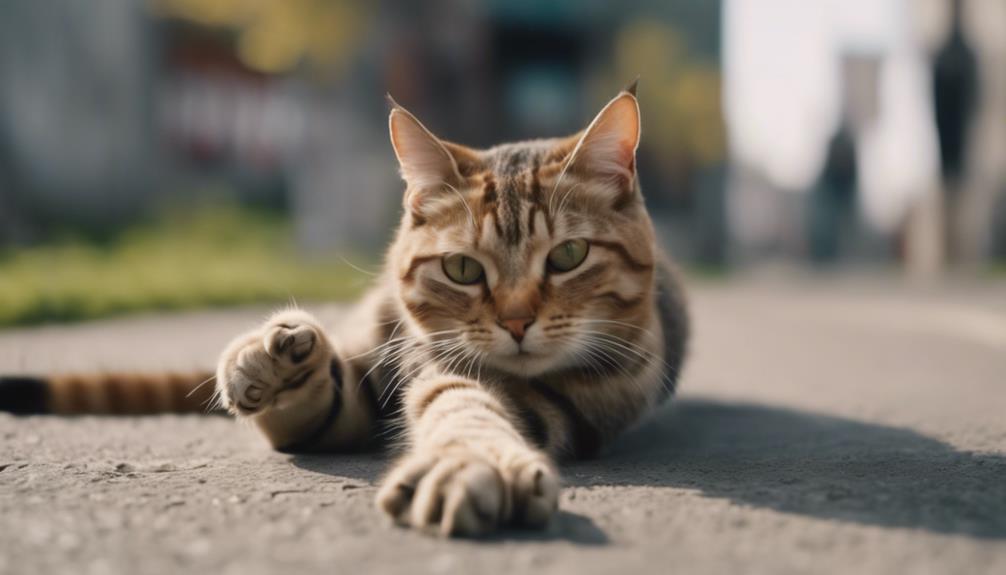
In exploring the behavior of cats rolling on concrete, a significant aspect to ponder is the display of trust and vulnerability inherent in this action.
When cats expose their belly, a sensitive area, through rolling, they communicate comfort, confidence, and submission. This behavior helps them establish social bonds and showcase relaxation.
Rolling on concrete serves as a natural form of communication for cats to express trust and non-aggression towards others.
Is Rolling on Concrete a Sign of Cat Aggression?
Understanding cat rolling behavior can indicate a variety of things, including happiness, relaxation, or a desire to mark territory. However, it can also be a sign of aggression if accompanied by growling or hissing. It’s important to consider your cat’s overall body language and behavior to determine the reason for their rolling on concrete.
Instinctual Behavior
An inherent aspect of feline behavior, the instinctual nature of cats prompts them to engage in various actions, including rolling on concrete surfaces.
This behavior serves multiple purposes, such as marking their territory with scent glands, scratching hard-to-reach spots, regulating body temperature by cooling down or seeking warmth, and even enjoying catnip reactions.
Cats' instinctual behavior is deeply rooted in their evolutionary past and survival strategies.