Why Does My Kitten Climb Me Like A Tree


Kittens climb their owners like trees due to their inherent curiosity, attention-seeking behavior, and natural desire to establish their presence. This behavior is a way for kittens to interact, explore, and demonstrate dominance. Providing a cat tree can offer a safe outlet for their climbing instincts. Cats also crave affection, which can help minimize climbing tendencies. Engaging in interactive play to manage their energy levels is essential. As kittens grow, their climbing behavior usually decreases. Redirecting this behavior positively, such as with designated climbing areas and toys, can foster good habits. Understanding these reasons can lead to a harmonious relationship with your feline companion.
Reasons for Climbing Behavior
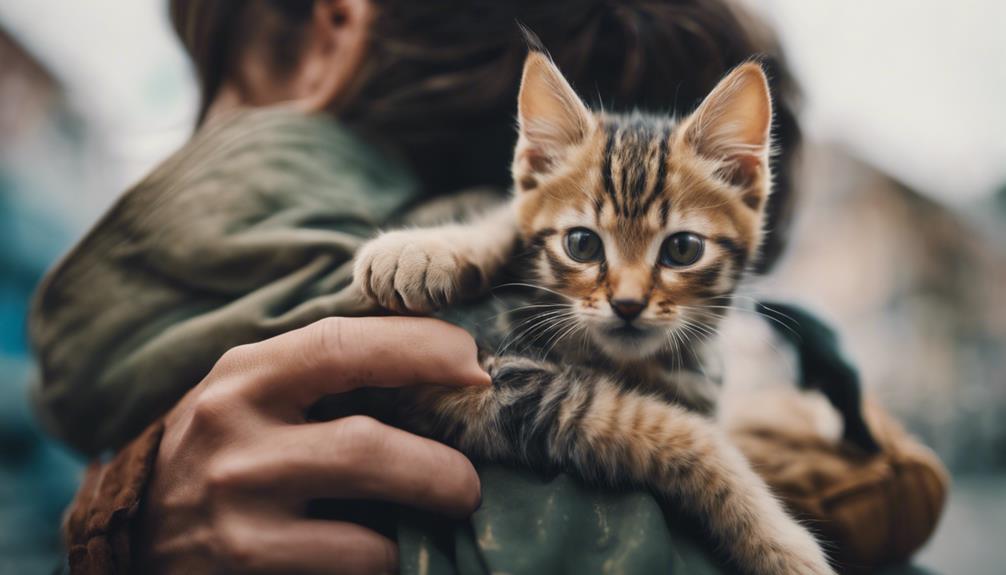
Kittens exhibit climbing behavior towards their owners primarily driven by their innate curiosity and instinctual desire to explore elevated spaces. This behavior can also be a way for kittens to seek attention and interaction with their human companions.
Sometimes, climbing can be a means for kittens to establish dominance or control. Providing a cat tree can offer a safe and appropriate outlet for their climbing instincts, benefiting both the kitten and the owner in cat care.
Importance of Affection
In understanding the behavior of felines, it becomes evident that the importance of affection plays a significant role in their interactions with humans. Cats crave love and attention, leading them to climb on their owners for bonding. Providing affection and spending quality time can reduce climbing behavior as cats feel more secure. Lack of attention may prompt climbing as a way for cats to seek closeness and reassurance.
| Importance of Affection |
|---|
| Craving love and attention |
| Seeking reassurance |
| Strengthening the bond |
| Minimizing climbing behavior |
| Promoting closeness |
Managing Excess Energy

To effectively manage a kitten's excess energy, providing engaging and interactive play opportunities is vital. This helps redirect their climbing behavior towards positive activities.
Interactive toys can keep them entertained and physically active. Regular play sessions are essential for burning off energy in a healthy way, reducing the likelihood of climbing behavior towards owners.
Impact of Kitten's Age
As kittens mature, their inclination to ascend their owners like trees typically diminishes in tandem with their increasing age and development. Young kittens exhibit climbing behavior due to high energy levels and curiosity, which decreases as they age.
This behavior is driven by the instinct to explore and practice physical abilities. As kittens grow, they may seek alternative forms of stimulation, highlighting the impact of age on climbing behavior.
Redirecting Climbing Behavior

To redirect your kitten's climbing behavior, it is crucial to provide them with a designated climbing area, such as a cat tree, to fulfill their natural instincts. Encourage the kitten to climb on appropriate surfaces by using toys or treats, reinforcing positive behavior consistently.
Avoid scolding or punishing the kitten for climbing on undesired surfaces; instead, redirect their focus to the designated climbing area to establish good habits.
Training Kitten Not to Climb
For training your kitten not to climb, redirecting their climbing behavior towards designated areas is essential for fostering appropriate habits.
- Provide a designated cat tree or scratching post for climbing.
- Use toys or distractions to redirect climbing energy.
- Focus on positive reinforcement rather than punishment for using designated areas.
Providing Appropriate Climbing Outlets
An essential aspect of fostering appropriate climbing habits in kittens involves providing designated outlets such as cat trees or scratching posts. Redirecting climbing behavior to these items helps fulfill your kitten's natural instincts while protecting furniture and clothes.
Cats are more likely to use cat trees and scratching posts when available, offering them suitable surfaces to climb and explore, ultimately satisfying their climbing urges in a positive and constructive manner.
Long-Term Behavior Considerations
As kittens progress into adulthood, understanding the persistence of climbing behavior can inform effective long-term management strategies.
Providing alternative climbing options like a cat tree can redirect the behavior.
Encouraging play and interaction can help reduce climbing as kittens mature.
Patience is key as kittens may outgrow climbing behavior with time.