Why Does Your Cat Rub Its Head On You


Cats rub their heads on you to mark territory and show affection. It's a way of communication and bonding through scent. The scent glands around their head, chin, cheeks, neck, and ears help in marking their territory. By doing this, cats also establish familiarity, trust, and ownership. Head rubbing is a display of love, creating a sense of security for both the cat and the human. This behavior strengthens the bond between them. Understanding why cats display this behavior helps in building a strong relationship with your feline companion.
Reasons for Head Rubbing Behavior
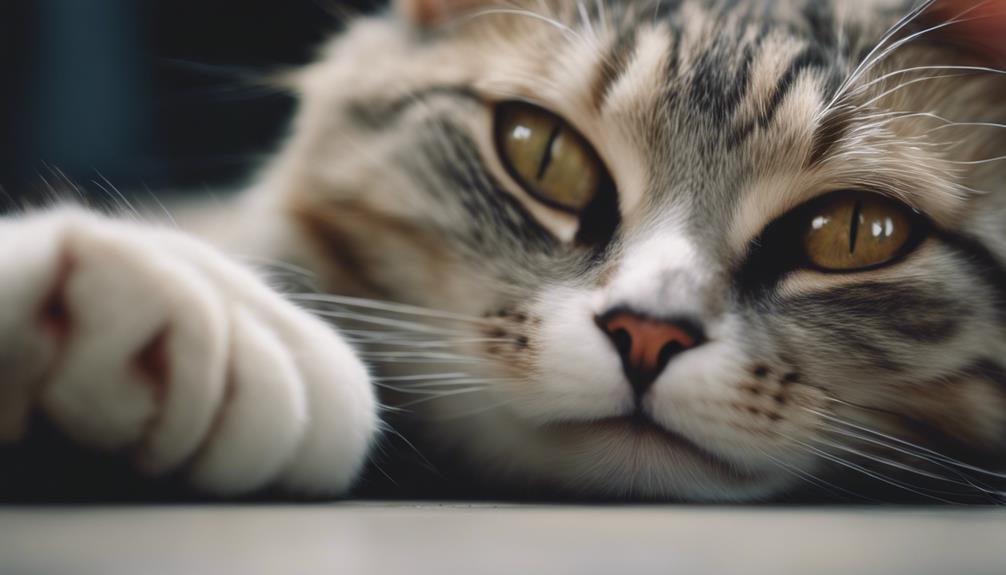
The reasons behind a cat’s head rubbing behavior are rooted in their instinctual need for communication and territorial marking. Cats have scent glands around their head, chin, cheeks, and neck, enabling them to mark their territory and convey messages to others. Understanding cat behavior requires recognizing that head rubbing is a natural way for cats to claim ownership of their surroundings and communicate with the other animals in their environment. By learning about these instinctual behaviors, pet owners can better understand and meet the needs of their feline companions. Observing a cat’s head rubbing habits can provide valuable insight into their state of mind and level of comfort in their surroundings.
This behavior is learned from mother cats and serves as a means of bonding and socialization. Head rubbing can signify various messages, including acceptance, greetings, and adoration towards their owners.
Territory Marking With Head Rubbing
Utilizing their scent glands strategically located around their head, chin, cheeks, neck, and ears, cats engage in head rubbing as a method of territorial marking and communication. By rubbing their heads against objects, cats effectively mark their territory, establishing ownership and boundaries in their environment.
This behavior helps them communicate with other animals, especially males who tend to demonstrate head rubbing more frequently as a territorial display.
Affection Display Through Head Rubbing
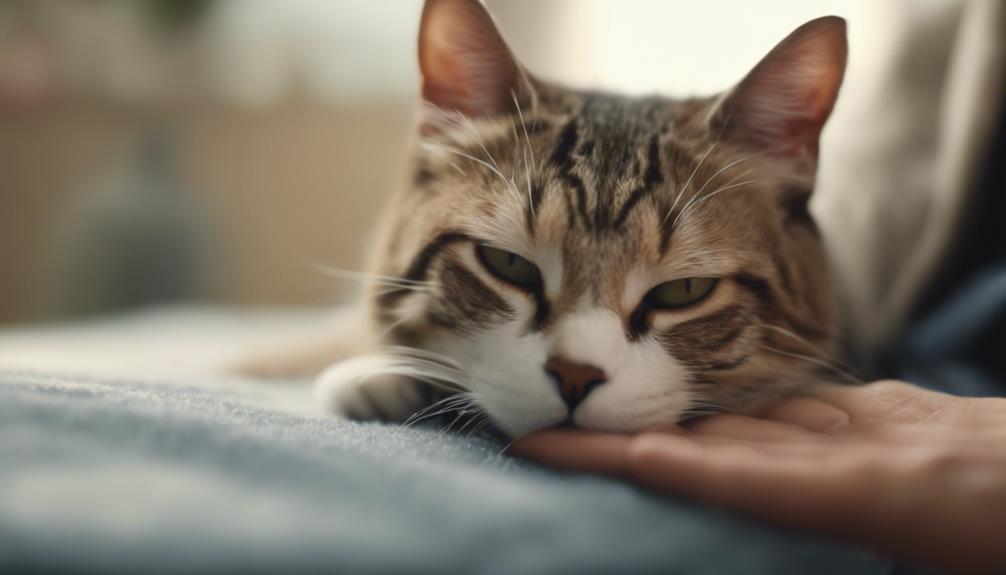
Head rubbing in cats is a common behavior that serves as a form of communication. It is a way for cats to mark their territory and establish a sense of familiarity and ownership. When a cat rubs its head against you, it is not only showing affection but also claiming you as part of its social group. This behavior is a sign of trust and comfort in the cat's relationship with you.
Cats have scent glands located on their heads, which release pheromones when they rub against objects or people. These pheromones create a familiar scent that helps cats feel secure and bonded to their surroundings. Head rubbing is a way for cats to spread their scent and create a comforting environment for themselves and their human companions.
Feline Bonding Behavior
Displaying a unique form of affection, cats express their bond with humans through a behavior known as bunting. Head rubbing is a way for cats to show trust and love, releasing friendly pheromones from scent glands.
This behavior marks humans as friends, creating a sense of security and belonging. Through head rubbing, cats communicate their affection, strengthening the human-cat bond with each interaction.
Scent Marking Communication
Demonstrating a deep form of attachment, cats engage in scent marking communication through affectionate head rubbing, a behavior that serves to strengthen their bond with humans.
- Cats mark their owners with their scent.
- Scent marking creates a sense of ownership.
- Head rubbing displays love and acceptance.
Mutual Trust Demonstration
Evidencing a deep sense of trust and affection, cats utilize head rubbing as a meaningful gesture to solidify their bond with their human companions.
Through this act, cats transfer their scent onto their loved ones, marking them as part of their social group.
This behavior not only signifies comfort and safety but also releases pheromones that strengthen the emotional connection between feline and human, creating a lasting bond built on trust.
Stress Relief via Head Rubbing
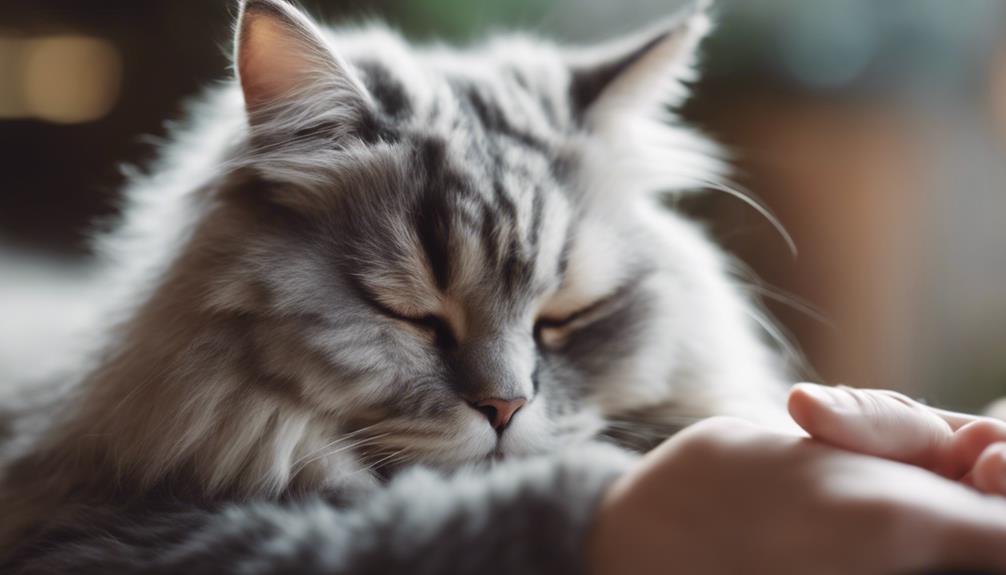
Head rubbing serves as a natural stress-relief mechanism for cats, aiding in their relaxation and emotional well-being. When cats engage in this behavior, they benefit from:
- Gently massaging their head against objects or individuals.
- Releasing tension and promoting a sense of calm.
- Triggering the release of endorphins, which help alleviate stress and anxiety.
Spreading Natural Oils by Head Rubbing
Cats rub their heads on you to spread natural oils from their skin onto their fur, aiding in fur health and appearance. This behavior allows cats to engage in natural grooming, ensuring their fur is well cared for.
Natural Oil Distribution
The distribution of natural oils on a cat's fur through head rubbing is an essential grooming behavior that contributes to the maintenance of a healthy and attractive coat.
This process involves the cat rubbing its face against objects or individuals to spread the oils evenly.
Through this action, the cat's scent is also transferred, marking its territory and creating a familiar environment.
Scent Marking Behavior
Spreading natural oils through head rubbing is an essential scent marking behavior exhibited by felines. Cats have scent glands around their head, chin, and cheeks, allowing them to leave their scent on objects or individuals by the act of rubbing. This behavior is vital for cats in marking their territory and communicating with other cats. The oils help maintain their fur's health, making it a significant part of their grooming routine.
| Scent Marking Behavior | |
|---|---|
| Location of Scent Glands | Head, Chin, Cheeks |
| Purpose of Behavior | Marking Territory and Communicating |
| Benefits | Distributing oils for a healthy coat |
Bonding Through Grooming
Bonding between felines and their human companions is strengthened through the mutual act of grooming, where natural oils are spread through head rubbing. This behavior helps cats maintain a healthy coat and show affection.
Cats tend to bunt their heads against their human's face, sharing their scent and forming a strong bond. Through this grooming ritual, cats not only care for themselves but also deepen their connection with their owners.
Comfort and Security From Head Rubbing
Experiencing head rubbing from cats yields a profound sense of comfort and security for both feline and human counterparts.
Cat rubbing releases pheromones that contribute to these feelings of security. The scent left behind helps cats feel safe and relaxed in their environment, reassuring them.
This natural behavior establishes bonds with trusted individuals, providing a sense of familiarity and comfort in their surroundings.
Significance of Head Rubbing Behavior
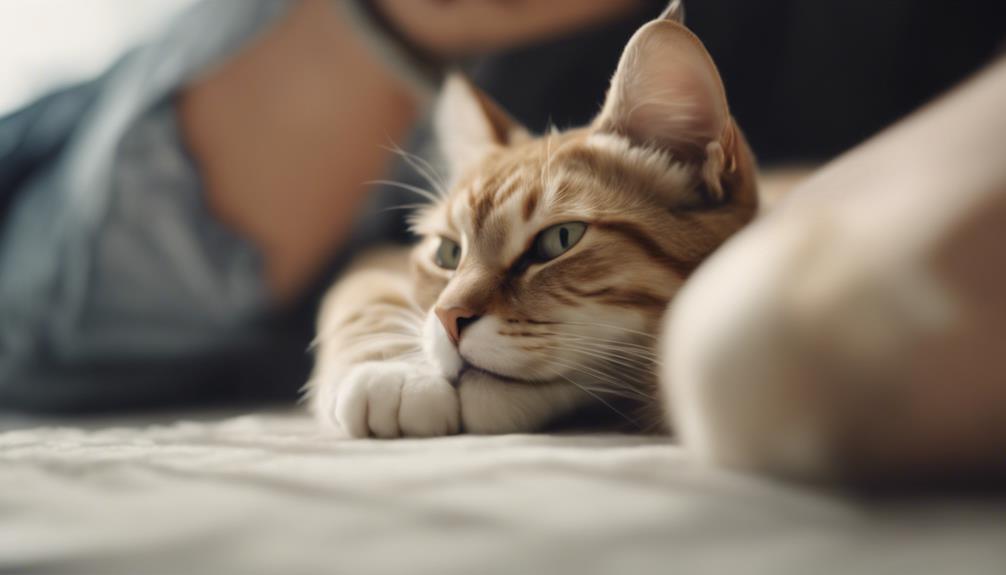
A fundamental aspect of feline communication and social interaction, head rubbing behavior in cats serves as an essential means of marking territory and fostering bonds with their human companions.
When cats rub their head on you, they are claiming you as part of their territory and social group. By leaving behind their scent, they signify ownership and comfort, strengthening the bond between cat and owner.