Why Doesnt My Cat Like Catnip


Cats may not like catnip due to genetic predispositions, breed factors, and individual variations in sensitivity. Genetics play a significant role, with some cats naturally averse. Certain breeds, like Siamese and Maine Coons, are more responsive. Age also affects sensitivity, with kittens and older cats less likely to react. Persian cats generally show lower sensitivity. Exploring alternative stimulants, such as valerian root and silvervine, can offer new options. Understanding these factors can shed light on your cat's preferences. Further insights into catnip reactions and alternatives can provide valuable information for cat owners.
Genetic Predisposition to Catnip Sensitivity

Genetic predisposition greatly influences a cat’s sensitivity to catnip, with approximately two-thirds of cats responding to this herb due to their genetic makeup. Kittens under three months old and senior cats are less likely to react to catnip. It is also possible for a cat to have a stronger or weaker reaction to catnip based on their individual genetic predisposition. Some cats may go crazy for catnip, rolling around and rubbing against it, while others may simply sniff it and walk away. It’s all about catnip reaction and how the cat’s specific genetic makeup influences their response to the herb. So, the next time you offer your feline friend some catnip, just remember that their genetic predisposition plays a big role in how they will react to it.
Personal preference and genetic predisposition play a significant role in determining a cat's response to catnip. Cats that do not like catnip may have a natural aversion to the stimulant effects.
Breed Influence on Catnip Response
Certain cat breeds exhibit varying degrees of sensitivity to catnip, influencing how they respond to this herb. Breeds like Siamese, Maine Coons, and Ragdolls tend to be more sensitive to catnip, while Persian cats typically show lower sensitivity. However, individual variations within breeds can also affect a cat's response.
The sensitivity to the catnip gene usually emerges between 3 to 6 months of age, highlighting the role of breed influence in cats' reactions to catnip.
Individual Variations in Catnip Sensitivity

Individual cats exhibit varying levels of sensitivity to catnip due to a combination of genetic factors and personal preferences. Genetic factors play a significant role in determining how a cat responds to catnip, while age can also influence their sensitivity.
Kittens under 3 months and senior cats are less likely to react strongly. Exposure to catnip at a young age can shape a cat's preferences, but some cats may naturally have an aversion to it.
Persian Cats and Catnip Sensitivity
Persian cats, a breed known for their luxurious coats and sweet temperament, exhibit lower sensitivity to catnip compared to other feline counterparts. This reduced reaction to catnip is believed to stem from genetic factors that influence how Persian cats perceive and respond to the herb.
While some Persians may still display mild interest in catnip, their behaviors are generally less pronounced than those of other breeds.
Persian Catnip Sensitivity
With varying degrees of sensitivity to catnip documented among feline breeds, Persian cats have been noted for exhibiting a comparatively lower reaction to this herb.
Catnip gene sensitivity typically emerges between 3 to 6 months of age in Persian cats.
While some may show indifference, others might still display mild interest.
This range of reactions showcases the unique responses Persian cats can have towards catnip.
Genetics and Catnip Response
When considering the response of cats to catnip, a key aspect to explore is the interplay between genetics and the varying sensitivities exhibited by feline breeds, such as the Persian cat's notably lower reaction to this herb.
Genetics play an important role in determining how cats respond to catnip, with Persian cats often displaying a reduced sensitivity compared to other breeds. This genetic predisposition can explain why some cats do not exhibit a liking for catnip.
Behavioral Reactions to Catnip
Among various feline breeds, differences in sensitivity to catnip have been observed, with certain breeds, such as the Persian cat, displaying a notably reduced reaction to this herb.
- Persian cats have lower sensitivity to catnip.
- Sensitivity to catnip varies within breeds like Siamese, Maine Coons, and Ragdolls.
- Catnip gene sensitivity typically appears in cats between 3 to 6 months of age.
- Unique reactions to catnip in different breeds are influenced by genetic factors.
Exploring Alternative Stimulants for Cats
Exploring alternative stimulants for cats presents a promising avenue for enhancing feline enrichment beyond traditional catnip. Valerian root and silvervine are viable options, especially for catnip non-responders. Products like Cat Twig Silvervine stick toy offer stimulating experiences.
Additionally, rosemary and peppermint can provide alternative sources of enrichment. Blends of catnip and silvervine cater to diverse sensitivities within feline families, ensuring all cats can benefit from these alternative stimulants.
Silver Vine as a Catnip Alternative
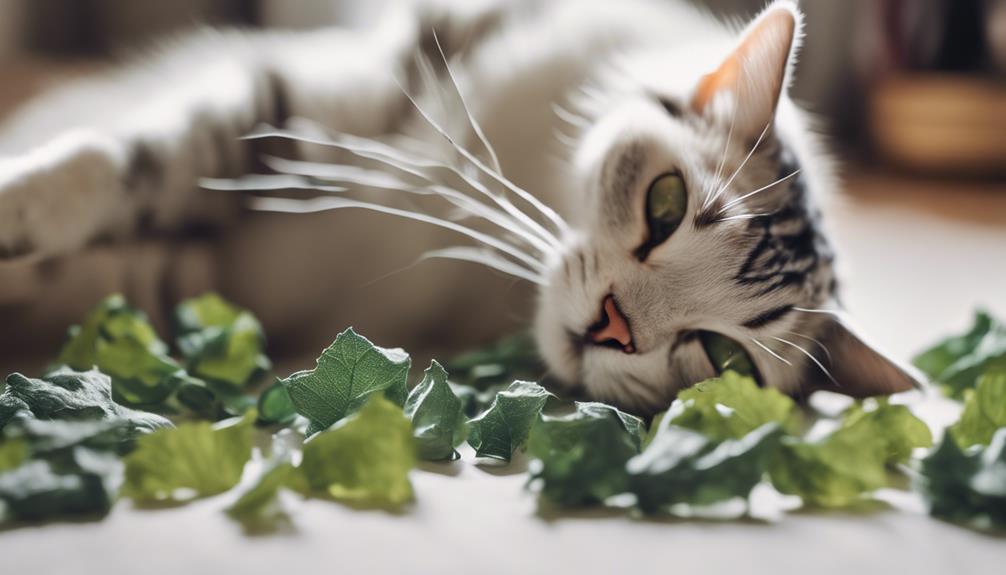
Silver Vine, also known as Actinidia polygama, offers a compelling alternative to catnip for cats that do not respond to traditional catnip stimulation.
- Silver vine, a plant native to Asia, provides a mild euphoric response in cats.
- Around 75% of cats not reacting to catnip positively respond to silver vine.
- Silver vine sticks or powder, containing actinidine, are easily available.
- It is a popular substitute for catnip in pet stores.
Valerian Root for Cat Stimulation
Valerian root, an alternative to catnip, can stimulate cats through its potent aroma, offering stress relief and a potential euphoric effect.
Some felines are drawn to the appealing scent of valerian root, which can be found in different forms like sticks or powder at pet stores.
When exploring cat stimulation options, valerian root stands out as a beneficial alternative to catnip, providing a safe and enjoyable experience for your furry companion.
Valerian Root Benefits
Known for its stress-relieving properties and appealing scent, the herb Valerian root can elicit a mild euphoric response in cats, similar to the effects of catnip.
- Valerian root provides a calming effect for cats.
- It can be an alternative for catnip-sensitive cats.
- Silvervine sticks are another catnip alternative.
- Valerian root can be purchased online or at health food stores.
Catnip Vs Valerian
In the world of feline enrichment, catnip and valerian root present intriguing alternatives for stimulating cats with varying sensitivities to conventional catnip. Valerian root contains actinidine, triggering playful and euphoric reactions in cats. Some cats may prefer valerian's strong smell over catnip, leading to positive responses. Valerian root, known for stress relief in humans, can have a similar calming effect on cats. It is available in various forms for cat enrichment.
| Catnip | Valerian |
|---|---|
| Contains nepetalactone | Contains actinidine |
| Affects around 70-80% of cats | Stimulates cats not responding to catnip |
| Provokes playful behavior | Triggers playful and euphoric reactions |
| Typically induces a short-term high | Can lead to positive responses due to strong smell |
| Widely used for cat entertainment | Also provides calming effects |
Safety Considerations for Cats
When considering the well-being of feline companions, it is imperative to address safety considerations associated with introducing alternative stimulants like valerian root for cat enrichment.
- Valerian root is a safe alternative to catnip, providing a mild euphoric response.
- Some cats find the strong smell appealing, leading to playful behaviors.
- It can act as a natural stress reliever for cats.
- Available in health food stores or online for cat enrichment.
Understanding Catnip Preferences
Genetic predispositions and individual tastes greatly influence cats' responses to catnip, shedding light on the complexity of feline preferences towards this popular plant. Around 30-50% of cats lack the gene that makes them sensitive to catnip.
Factors like age and personal preference can also impact a cat's reaction to catnip. For cats that do not enjoy catnip, alternatives like silvervine and valerian root can provide similar effects.