Why Dont My Cats Cuddle With Each Other


The lack of cuddling between your cats can be due to differing personalities, territorial instincts, and the need for personal space in multi-cat settings. Cats with assertive or dominant personalities may prioritize personal space, impacting their cuddling behavior. Territorial instincts, where control over resources is vital, can also affect their interactions. Additionally, if cats haven't socialized well together, forming social hierarchies may be challenging. Understanding individual comfort preferences, hierarchy dynamics, and the importance of personal space can foster better relationships. Exploring these factors could shed light on why your cats aren't cuddling as much as expected.
Personality Differences
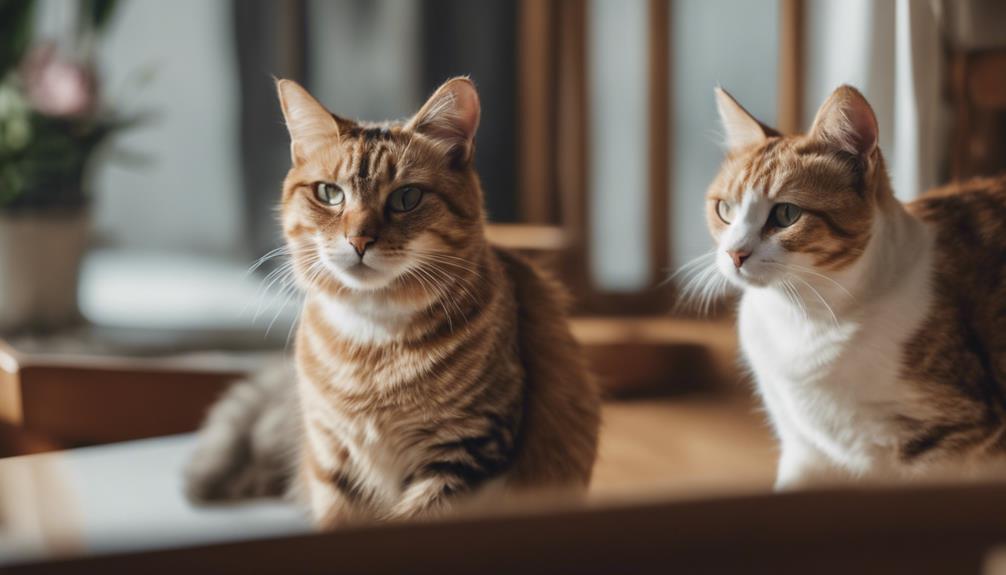
Personality variations greatly impact cats' preferences for cuddling with each other. Some cats with more social personalities may enjoy cuddling, while others with a preference for solitude may not. Understanding these cat personalities is essential in creating harmonious relationships among them.
Cats with assertive or dominant personalities may prioritize personal space over cuddling, leading to differences in comfort levels with physical contact and closeness.
Territorial Instincts
Driven by their innate instincts, cats exhibit territorial behavior that influences their interactions with other felines. This behavior stems from the need to control essential resources like food, water, and resting areas.
Cats may display territorial aggression when they feel their space is threatened, leading to conflicts. Understanding and respecting cats' territorial instincts are crucial for promoting harmony and reducing tension in households with multiple cats.
Lack of Socialization
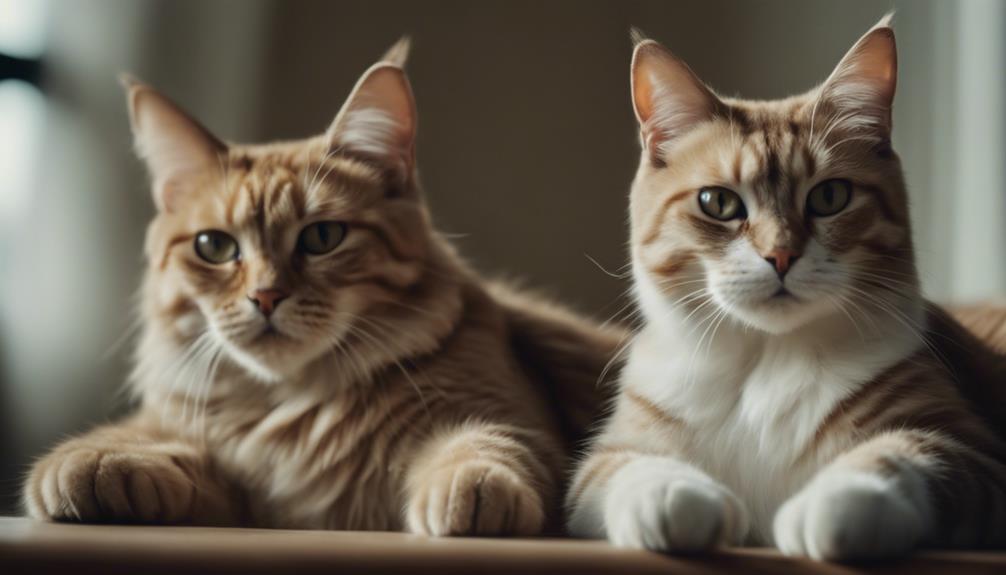
Cats who don't receive proper socialization early on may struggle with forming social hierarchies and may exhibit individual preferences for interaction. Social hierarchies can impact how cats interact with each other, potentially leading to a lack of cuddling behavior.
Understanding individual cat preferences is essential in addressing the impact of socialization on their social interactions.
Social Hierarchy Impact
During their early development, the lack of proper socialization can greatly impede cats in establishing a clear social hierarchy with their feline companions. Social hierarchy is essential for cats’ relationships and affects their cuddling behaviors. Proper socialization allows cats to understand each other’s boundaries and cues, which contributes to a more harmonious living environment. Without it, cats may exhibit territorial and aggressive behaviors, causing tension within a household. This can be especially challenging in multi-cat households where establishing a clear social hierarchy is crucial for maintaining peace. Similar to television show characters and cats, individuals within a feline group must navigate their social position in order to coexist peacefully.
Cats that miss out on learning social cues may find it challenging to engage in cuddling. Adequate socialization helps cats comprehend hierarchy, promoting more harmonious interactions and potentially fostering cuddling behavior among them.
Individual Cat Preferences
Lack of proper socialization during the critical period of 2 to 7/8 weeks can greatly influence individual cat preferences, potentially leading to a decreased inclination for cuddling with other cats. When a cat used experiences limited positive interactions with other cats early on, they may not develop a desire for close contact. Socialization shapes cats' behavior, impacting their willingness to cuddle with feline companions.
| Socialization | Cat Preferences | Cuddling |
|---|---|---|
| Influences behavior | Shapes individual likes | Decreased inclination |
Need for Personal Space
One's understanding of feline behavior can be enhanced by recognizing the significance of personal space for these solitary and independent animals. Cats, like humans, require personal space to feel secure, relax, and maintain control over their environment.
This space allows them to engage in activities like resting, grooming, and playing without feeling crowded. Respecting a cat's need for personal space can foster trust and strengthen the bond between the cat and their owner.
Hierarchy in Multi-Cat Household
In a multi-cat household, the establishment of a hierarchy based on dominance and submission greatly influences the interactions and behaviors among feline companions.
Dominant cats may control essential resources like food, toys, and resting spots, while submissive cats display deference through grooming or body language.
This hierarchy can impact various interactions, including cuddling behavior, among cats.
Managing these dynamics is vital for fostering better relationships and harmony among the feline group.
Individual Comfort Preferences
Cats exhibit different sleeping spot preferences, with some felines favoring secluded areas while others enjoy more open spaces. Establishing personal space boundaries is important for cats, as it allows them to feel secure and comfortable in their environment.
Additionally, cats may have varying temperature preferences, influencing their choice of cozy spots for relaxation.
Different Sleeping Spots
Each feline's chosen sleeping location reflects their unique comfort preferences and individual personality traits.
| Sleeping Spot | Description |
|---|---|
| Near Humans | Enjoy proximity to their owners for security. |
| Elevated Areas | Prefer high spots for observation and safety. |
| Secluded Corners | Seek quiet and hidden spots for solitude. |
| Warm, Cozy Spots | Favor warm and soft areas for comfort. |
Personal Space Boundaries
Respecting the personal space boundaries of felines is essential for fostering harmony among multiple cats in a household. Cats have individual comfort preferences when it comes to personal space, with some preferring solitude over cuddling with other cats.
Acknowledging and understanding each cat's need for personal space is vital for their well-being. Cats may differ in their tolerance for physical contact and may not always seek out cuddling with others.
Variable Temperature Preferences
Under what conditions do felines exhibit variable temperature preferences, impacting their interactions with one another? Cats have distinct temperature preferences, with some preferring warmth and others coolness. Their bodies adjust through seeking warm spots or cool surfaces. Fur thickness and coat length play a role in their comfort.
Cats may avoid cuddling if feeling too hot or cold, prioritizing personal comfort. Understanding and accommodating these preferences can enhance their environment.
Scent Changes in Cats
Scent changes in cats play an important role in their communication and social interactions within a multi-cat household. Cats rely on scent for recognition, and changes can result from stress, illness, or new additions in the environment.
Disruption in scent recognition can lead to confusion and conflicts among cats. Managing scent changes, such as through territory marking, is vital for maintaining harmony and reducing tension among cats in a multi-cat household.
Potential Illness in a Cat
Identifying potential illness in a cat is essential for safeguarding their well-being and addressing any health concerns promptly. Signs of illness may include changes in eating or drinking habits, lethargy, hiding, vomiting, diarrhea, coughing, and unusual behaviors like excessive grooming. Regular veterinary check-ups play a vital role in early detection. Monitoring these symptoms can help guarantee the health and happiness of your feline companion.
| Symptoms | Description | Importance |
|---|---|---|
| Changes in Eating | Indicates potential illness | Early Detection |
| Lethargy | Sign of sickness | Prompt Attention |
| Hiding | Could signal underlying health issues | Veterinary Check-ups |
| Vomiting | Requires monitoring | Health Maintenance |
| Excessive Grooming | Unusual behavior with health implications | Vet Consultation |
Unique Bonding Behaviors
When monitoring a cat's behavior, particularly in the context of their social interactions, it becomes evident that cats exhibit unique bonding behaviors that play a significant role in their relationships.
Mutual grooming is a common behavior seen among cats, where they groom each other, distributing scent and oils that promote familiarity and comfort. This grooming ritual helps strengthen social bonds between feline companions.