Why Is Cat Licking Floor


When a cat licks the floor, it could be due to natural instincts, health issues, or curiosity about textures. Cats may lick to explore scents, cope with stress, or seek moisture. Behavior could signal anxiety, hunger, or medical problems like Pica. Monitoring abnormal licking is essential for their well-being. Providing varied water sources and a stimulating environment can deter this behavior. If excessive licking persists, consult a vet for guidance. Alternatively, redirecting attention with toys and positive reinforcement may help. Understanding the reasons behind floor licking is key to promoting your cat’s overall health and happiness. Another common behavior that cat owners may wonder about is why cats lick faces. This behavior is often a sign of affection and bonding, as cats may groom their human companions as a way of showing love and trust. Additionally, licking faces can also be a way for cats to mark their territory and show ownership over their humans. Understanding these behaviors and responding appropriately can strengthen the bond between cats and their owners.
Reasons for Floor Licking Behavior
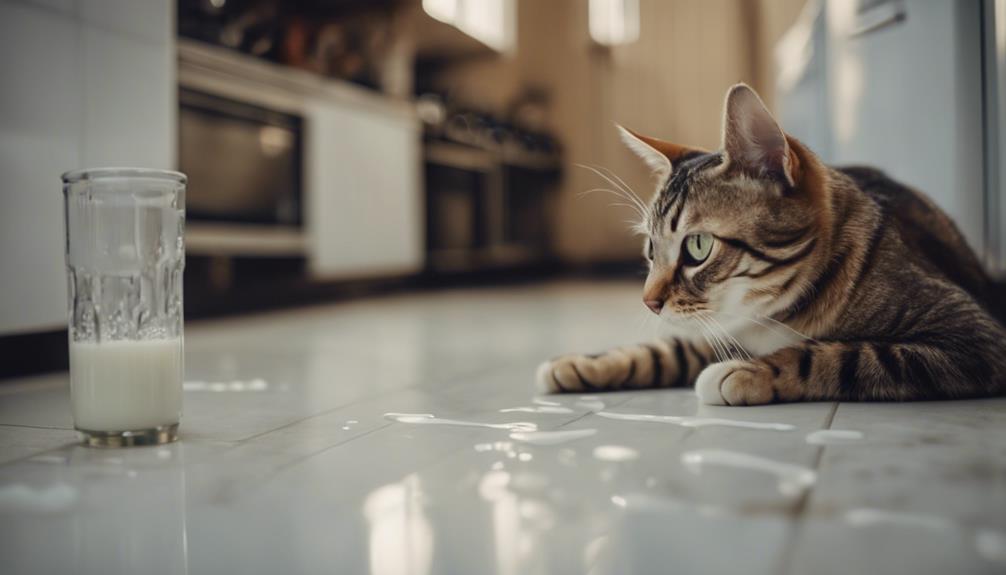
Frequently, cats exhibit floor licking behavior due to various underlying reasons that stem from their natural instincts and potential health issues.
This licking behavior can range from exploring scents and tastes to coping mechanisms for stress or discomfort.
Compulsively licking the floor may signal medical conditions like pica or pruritus.
Understanding these reasons is essential in addressing the well-being of feline companions.
Preference for Different Textures
Cats may exhibit a preference for exploring and experiencing different textures when engaging in floor licking behavior.
- Smooth surfaces attract some cats to lick the floor.
- Rough textures on the floor might pique a cat's interest.
- Licking various floor textures satisfies cats' curiosity.
- It is a natural behavior for cats to engage their senses and investigate their surroundings.
Seeking Alternative Water Sources
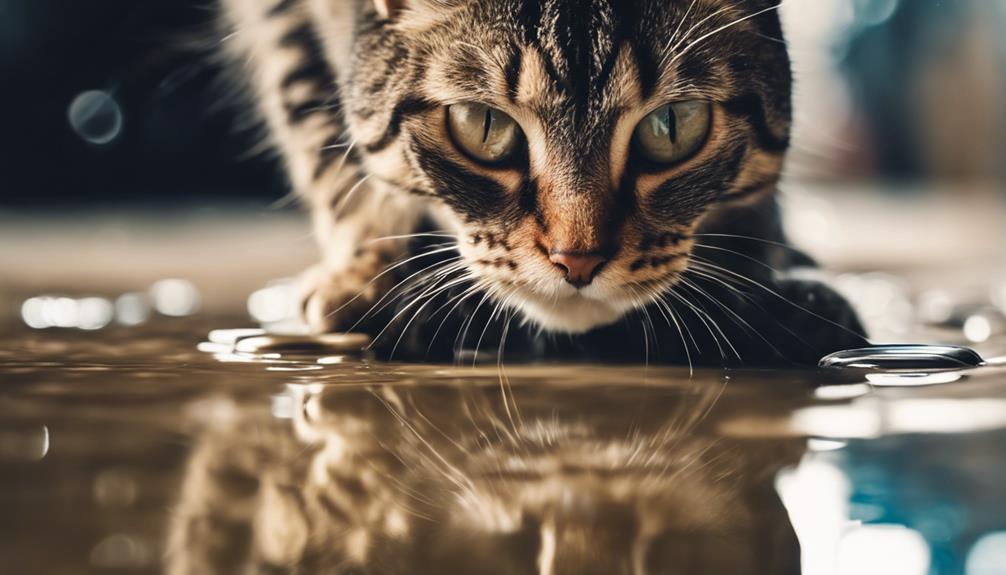
In their quest for hydration, felines may resort to licking the floor as they seek alternative sources of water. Cats exhibiting this behavior may be indicating abnormal thirst, possibly signaling an underlying health issue.
Providing multiple water bowls and monitoring water intake can help prevent cats from resorting to licking the floor for moisture. Encouraging adequate hydration and addressing health concerns can deter cats from seeking water in this unconventional manner.
Sign of Anxiety or Hunger
A common behavior observed in felines, licking the floor can serve as a potential indicator of underlying anxiety or hunger in cats.
- Cats may lick the floor as a self-soothing mechanism to alleviate anxiety.
- Licking around food bowls can be a sign of hunger in cats.
- Licking the floor to find food remnants can indicate a need for more frequent or larger meals.
- Chemical cleaners on the floor may attract cats to lick, posing a toxic risk.
Potential Underlying Medical Conditions
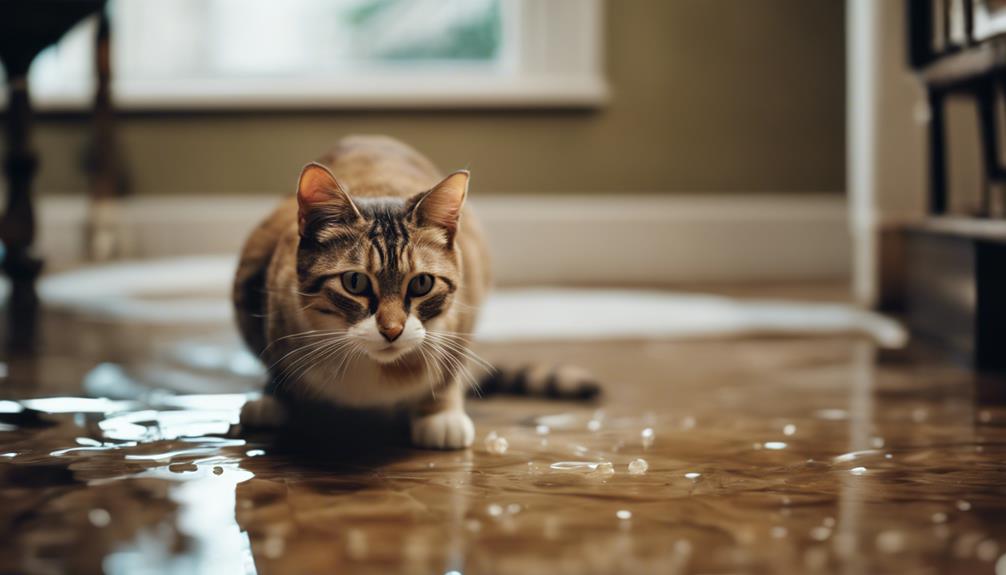
Licking the floor in cats can sometimes be an indication of underlying medical conditions, particularly a condition known as Pica. Cats with Pica may exhibit compulsive behavior, showing an urge to consume non-edible items. This behavior can lead to digestive issues and even medical emergencies.
Veterinary evaluation is essential if symptoms of Pica, such as excessive floor licking, are observed, to address the underlying cause promptly for the cat's well-being.
Addressing Excessive Licking Behavior
To effectively address excessive licking behavior in cats, it is essential to understand the potential underlying causes and implement appropriate interventions.
- Monitor licking behavior for abnormalities
- Seek veterinary advice
- Provide a stimulating environment
- Address potential triggers like stress or health issues
Preventative Measures for Floor Licking
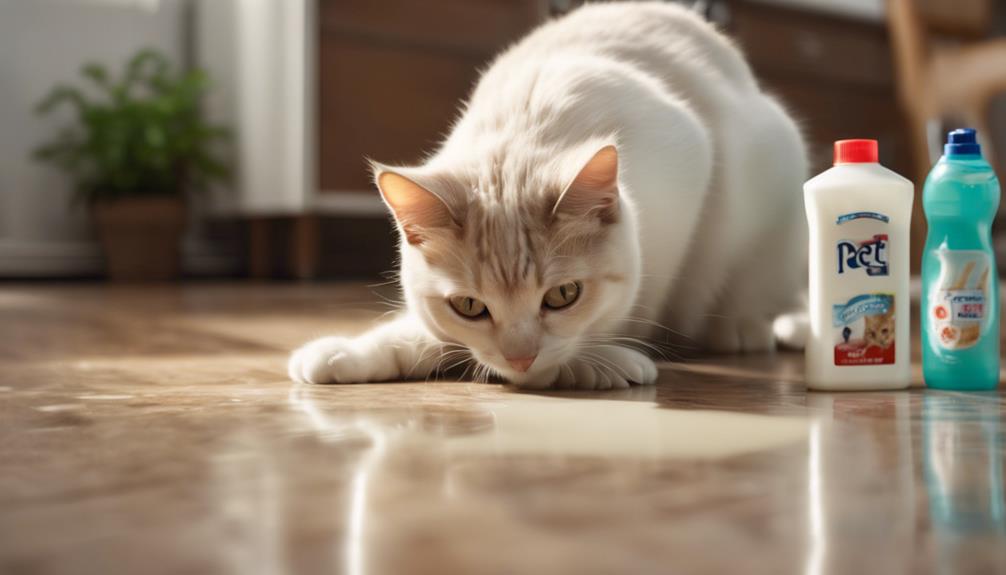
To prevent cats from licking the floor, providing mental and physical stimulation through interactive toys and engaging activities can be effective. Redirecting a cat's attention to toys, treats, or food can help discourage floor licking behavior.
Rewarding positive behavior and placing treats in other areas to encourage exploration are beneficial strategies to deter cats from licking the floor.
Reasons for Floor Licking
Exploring the reasons behind a cat's inclination to lick the floor can provide valuable insights for pet owners seeking to prevent this behavior and guarantee their feline companion's well-being.
- Cats may lick the floor due to spilled food or interesting scents.
- Natural exploration behavior drives cats to taste different textures.
- Pica behavior may indicate underlying medical conditions.
- Pruritus causing itching can lead to floor licking.
Training Alternatives for Cats
An effective approach to deterring cats from licking the floor involves implementing training alternatives that redirect their focus and provide appropriate sensory stimulation. Positive reinforcement techniques like clicker training can discourage this behavior, while interactive puzzle feeders and cat toys can offer mental and physical stimulation.
Using cat grass or catnip can provide alternative sensory experiences, reducing the likelihood of cats seeking unusual textures on the floor.
Health Risks Involved
Ingesting non-food items from floor licking poses significant health risks for cats, including the potential for life-threatening conditions such as blockages.
- Chewing on power cords while licking the floor can result in dangerous electrocution for cats.
- Many common houseplants, often found on floors, are toxic to cats if ingested through licking.
- Placing toxic items out of reach can help avoid health risks associated with floor licking.
- Seeking veterinary advice is essential if a cat exhibits floor licking behavior to prevent potential health hazards.
Promoting Cat's Overall Well-Being

To enhance a cat's overall well-being, ensuring a stimulating environment with interactive toys and playtime is essential. Providing multiple water sources for hydration can reduce the urge for floor licking. Redirecting a cat's attention to treats or toys elsewhere can break the habit.
Using pet-safe cleaners and removing access to toxic substances prevent exposure. Monitoring behavior changes and seeking veterinary care for underlying medical issues keeps cats healthy and happy.