Quick Answer
Cat-proofing a home means removing the two real dangers — things that are toxic and things that trap — then accepting that cats will climb, scratch, and explore. The essentials: keep lilies and a handful of other truly toxic plants out entirely, secure windows and balcony screens, hide dangling cords and small ingestible objects, and fasten top-heavy furniture a cat might climb. Then add what the cat needs: scratching posts, safe perches, and a window view. Done right, cat-proofing protects the cat without turning your home into a bare room (ASPCA: Toxic and Non-Toxic Plants).
- Toxic first: lilies (all parts, even pollen) are the biggest killer; check every plant against the ASPCA list.
- Windows and cords: secure screens, manage blind cords, and put away string-like toys after play.
- Think vertical: a cat-proof home gives cats safe high places — they'll find unsafe ones otherwise.
Why "Cat-Proof" Is Really "Cat-Safe"
You can't make a home completely cat-proof in the sense of stopping a determined climber — cats are designed to jump, climb, and investigate. What you can do is remove the hazards that injure or poison them, so their natural curiosity is safe. The ASPCA Animal Poison Control Center fields thousands of calls a year about cats eating plants and household items, and its toxic-plant database is the reference standard for which greenery is dangerous (ASPCA: Toxic and Non-Toxic Plants). If you take one thing from this guide, take the plant check — it's the highest-stakes, lowest-effort fix in cat-proofing.
Room-by-Room Plant Check
Before bringing any plant home, check it against the ASPCA's toxic and non-toxic lists — the database covers common houseplants and garden plants and is searchable by plant name (ASPCA: Toxic and Non-Toxic Plants). The highest-risk offenders for cats:
| Plant | Risk level | What to do |
|---|---|---|
| Lilies (true lilies, day lilies) | Extreme — kidney failure from even small amounts, including pollen | Remove entirely; no safe placement exists in a cat home |
| Sago palm | Severe — liver failure from any part, especially seeds | Remove entirely |
| Tulips, hyacinths (bulbs) | Moderate — bulb is most toxic; GI upset, worse with more | Keep bulbs inaccessible or skip cut flowers |
| Aloe, jade, snake plant | Mild-moderate — GI upset | Place out of reach or swap for cat-safe alternatives |
| Pothos, philodendron, monstera | Moderate — mouth irritation from calcium oxalate crystals | Out of reach, or swap |
| Spider plant, Boston fern, cat grass, calathea | Safe | Fine to keep — grow cat grass as a safe chew target |
If you suspect your cat has eaten any part of a toxic plant, call your veterinarian or the ASPCA Animal Poison Control hotline (888-426-4435) immediately — do not wait for symptoms. And remember the "grass" trick: many cats chew plants out of instinct, and a pot of cat grass gives them a legal target that protects your other greenery.
The Room-by-Room Sweep
- Kitchen: lock cleaning supplies and secure trash bins (hinged lids or a cabinet latch). Keep cats off counters during cooking — see our cat-friendly home setup guide for the counter-training method — and never leave food with onions, garlic, grapes, raisins, or xylitol (artificial sweetener in some peanut butters and gum) accessible.
- Bathroom: keep the toilet lid down (some cats drink from or fall into open bowls), store medications and floss in cabinets, and close the dryer and washer doors when unused — cats climb into warm machines.
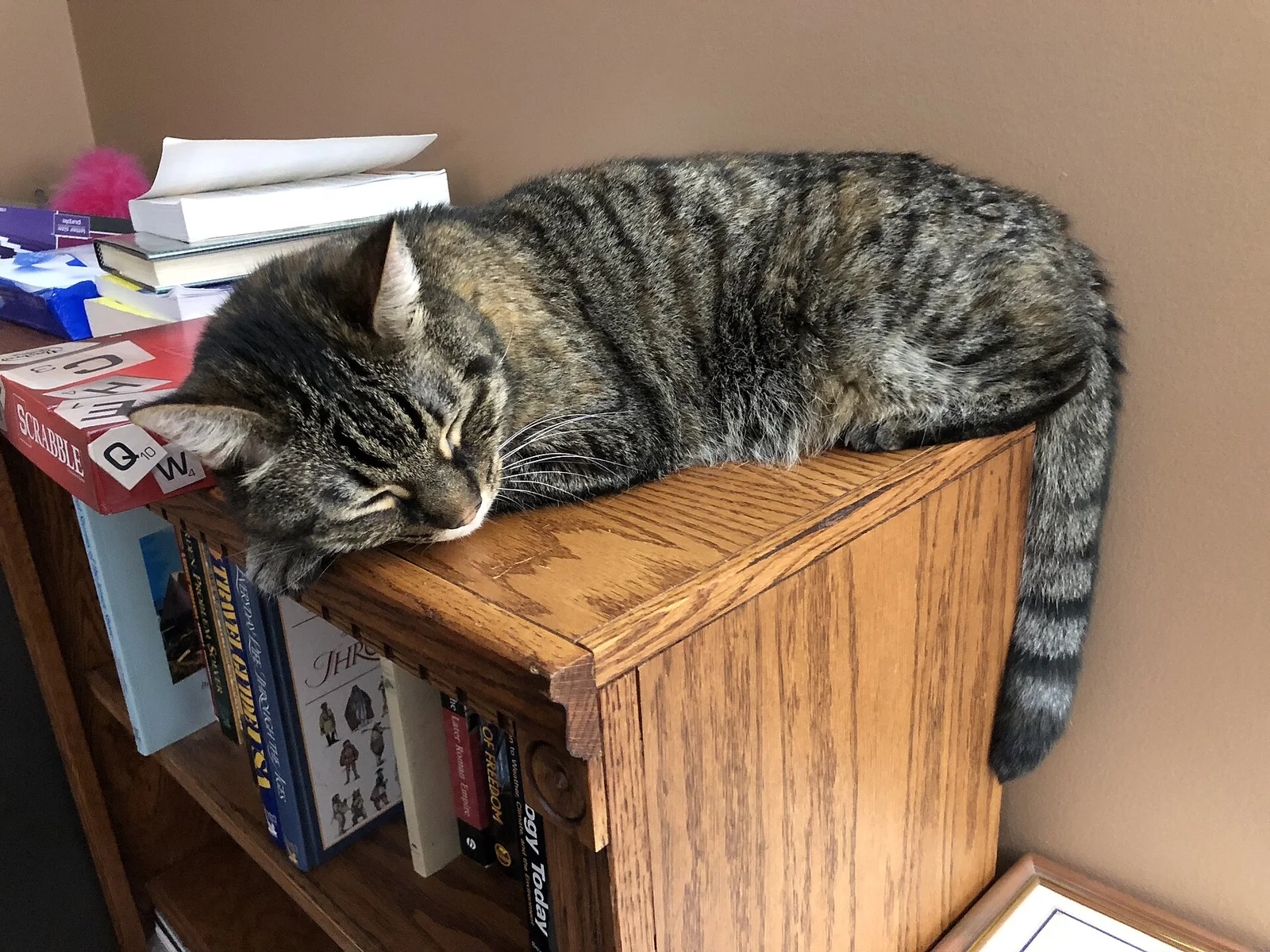
- Living room: anchor bookshelves and TV stands to the wall, manage blind and curtain cords (loop them high or use cord cleats), and put away string, ribbon, and small toys after supervised play — string and hair ties are a leading cause of intestinal blockage surgery. A cat on a high bookshelf with loose objects is an accident waiting to happen, as our hero photo shows; secure loose items or accept the shelf as a cat perch and clear it.
- Bedroom: check under the bed and in drawers before closing them, and keep laundry off the floor if you have kittens. Elastic bands and buttons are tempting and dangerous.
- Windows and balconies: ensure screens are secure and snug — cats push weak screens out. Balconies need full enclosure (catio netting) for safe access. Open windows are a top fall risk for cats; the "high-rise syndrome" is real in apartments.
- Garage and storage: antifreeze is sweet-tasting and lethal — a single lick can kill; store it sealed and clean spills immediately. Rat poison and slug bait are also fatal; prefer pet-safe pest methods.
Add What the Cat Actually Needs
Cat-proofing has a second half that most guides skip: giving the cat approved outlets for the behaviors you can't stop. A cat without a safe high perch will use the top of the fridge; a cat without a good scratch will use the sofa; a cat without a window view will find the blinds.
- Scratching posts — tall, sturdy, in the rooms where the cat lives, placed near where they already scratch. Our guide to stopping furniture scratching kindly covers placement and materials.
- Vertical space — cat trees, wall shelves, or a cleared bookshelf top. Cats feel safer high up; it's enrichment, not spoiling.
- Window perches — a padded shelf at a sunny window is a favorite, and bird-watching is mental exercise. See our indoor enrichment basics for more.
- Secure the new-cat setup — if you're preparing for a new arrival, the first-week setup matters most; our first 72 hours guide and cat-friendly home setup walk through the gradual introduction.
Common Mistakes Owners Make
- Focusing only on furniture damage. Sofa scratches are annoying; lilies and open windows are lethal. Prioritize by risk, not by annoyance.
- Assuming "houseplants are fine." Many popular houseplants are toxic to cats — check every single one against the ASPCA list (ASPCA list). "He never touches them" stops being true the day it isn't.
- Leaving string and ribbon out. Linear foreign bodies (string, tinsel, hair ties) are among the most dangerous ingestions — they can saw through the intestine. Put them away after play, always.
- Weak window screens. "It's only the second floor" doesn't apply — cats fall from second-story windows regularly and can be badly injured.
- Cat-proofing only the kitten stage. Kittens fit through smaller gaps and climb less than adults — but adults jump higher and knock more over. Re-sweep the home as the cat grows.
- Forgetting the human hazards. Many "cat-proofing" failures are actually owner habits: food left out, meds on the nightstand, laundry baskets with elastic. Adjusting habits is half the job.
When to Call a Vet
Call your vet or the ASPCA Animal Poison Control hotline (888-426-4435) immediately if your cat has eaten a toxic plant, any human medication, chocolate, xylitol, grapes or raisins, or an unknown object — do not wait for symptoms. Also call right away for: suspected antifreeze ingestion (emergency), a fall from a window or balcony, or vomiting, drooling, or lethargy after eating anything suspicious. When in doubt, call — the hotline and your vet are used to "I'm not sure" calls, and early treatment is what saves cats. Cat Cafe Central is educational content and cannot diagnose or treat your cat.
Trusted Sources
Related Guides and Tools

Kitten Care Basics: A First-Year Guide for New Kitten People
A first-year kitten guide covering safe rooms, food, litter, play, handling, vet visits, and healthy routines.

First-Time Cat Owner Checklist: What to Prepare Before Adoption
A calm, practical checklist for new cat owners covering supplies, rooms, routines, vet prep, and the first week.

How to Set Up a Cat-Friendly Home Without Overcomplicating It
Create a cat-friendly home with separated resources, vertical space, scratching options, quiet retreats, and predictable routines.
Related glossary: Toxin, Kitten Proofing, Safe Room.