What to Feed a Cat: A Beginner's Guide to Meals, Water, and Treats
A beginner-friendly overview of complete cat food, wet versus dry food, treats, water placement, and food changes.
Category
Plain-English feeding routines, food transitions, hydration, and weight basics.
Cats are obligate carnivores: Cornell's Feline Health Center puts it plainly — their nutrition has to come from animal tissue, in proportions close to what a hunter would eat, which means a lot of protein, a moderate amount of fat and very little carbohydrate. That one fact explains most feeding advice worth keeping.
| Food type | Water content | What it means at home |
|---|---|---|
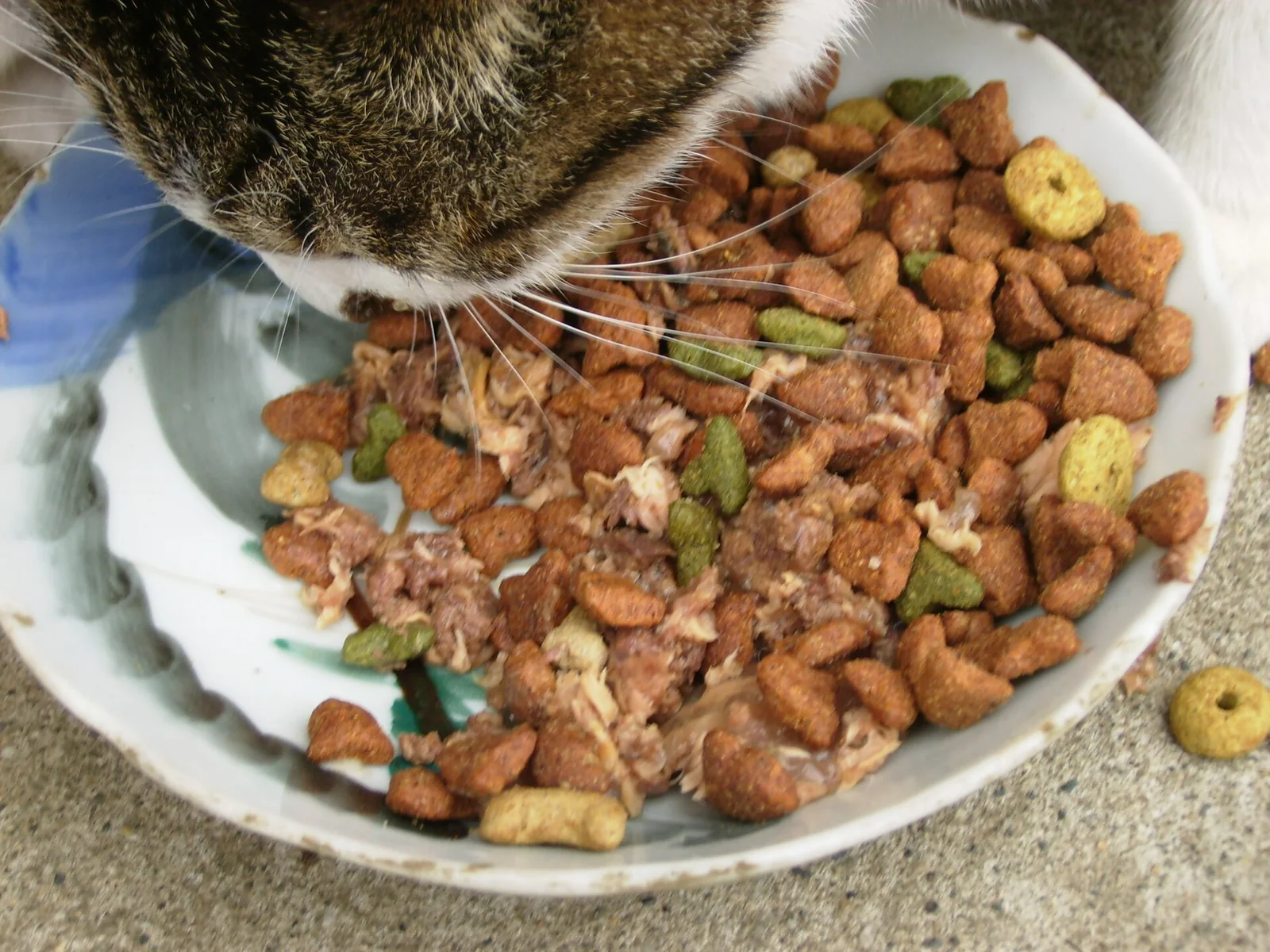
| Dry kibble | About 6-10% | Cheapest and easiest to leave out — but the least water per bite. Store it airtight, watch the expiry date (vitamins fade and fats turn rancid over months), and measure portions rather than topping up the bowl. |
| Semi-moist | About 35% | A middle ground on cost and palatability. Dries out quickly once the pack is open, so it suits a smaller household. |
| Canned / wet | At least 75% | The closest thing to a food that is also a drink, and usually the most palatable. Refrigerate whatever is left in an opened can. |
Two exceptions worth knowing: raw meat is not a safe treat (Cornell flags the infection risk), and cow's milk is a poor one, since many cats are lactose intolerant. And if your cat stops eating altogether, that is a veterinary question rather than a food question — a cat that refuses food and loses weight can deteriorate quickly.
Keep reading: the beginner feeding guide, the food transition plan for switching brands, feeding through the kitten year, and calmer multi-cat mealtimes.
Sources: Cornell Feline Health Center — Feeding Your Cat, ASPCA — Cat Nutrition Tips, International Cat Care — Cat care by life stage.
A beginner-friendly overview of complete cat food, wet versus dry food, treats, water placement, and food changes.
A gradual cat food transition plan with practical pacing, appetite checks, and what to do if your cat refuses the new food.