Quick Answer
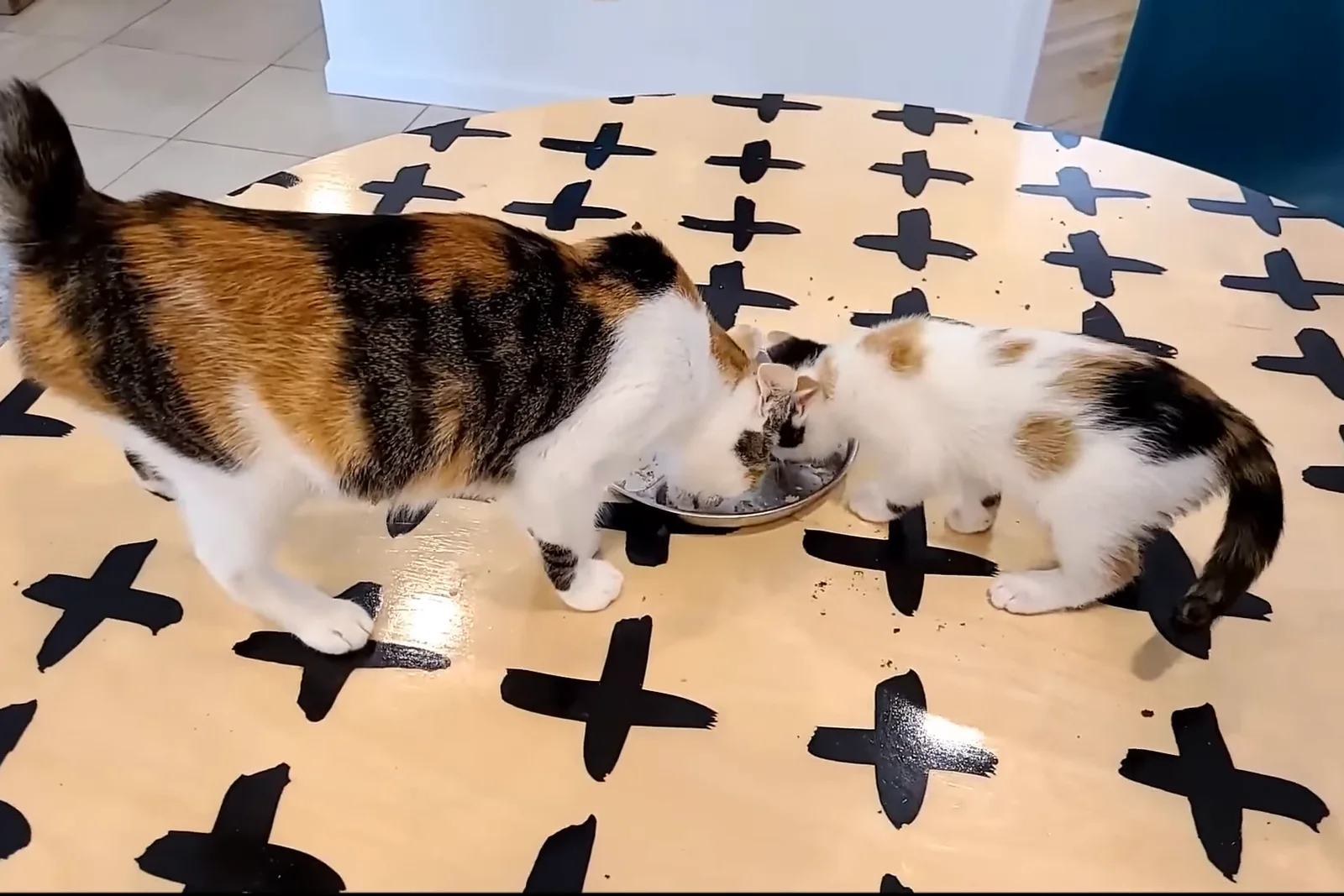
Multi-cat meals go wrong for one reason: cats are solitary feeders being asked to eat in a group. The fix is environmental, not behavioral — give every cat their own feeding station in a separate location, positioned so no cat has to turn their back or cross another cat's path to eat. The working formula is one bowl per cat plus one extra, spread through the home rather than clustered in one kitchen corner (International Cat Care: Multi-cat households).
- Separate the stations: different rooms or floors beat bowls lined up in a row — visual barriers (a wall, a doorway, different heights) stop the silent staring contests that make cats eat fast or walk away.
- Measure, then watch: portion control only works if you know who is eating what — measured meals let you catch weight loss early, which is the most important health metric in a multi-cat home.
- Special diets need hardware: when one cat is on a prescription diet, microchip feeders or supervised meals in closed rooms are the only reliable options.
Why Feeding Time Is Where Tension Shows First
Domestic cats descend from solitary hunters, and food is the resource they are least willing to share on someone else's terms. In a group-living home, cats will often suppress their natural preference for eating alone — because eating at all beats eating stressed — but suppression has a cost. The cat that is consistently watched, crowded, or blocked at the bowl eats faster, eats less, or stops approaching mealtimes altogether, and the fallout shows up as weight loss, vomiting after bolted meals, and the kind of low-grade vigilance that veterinarians link to stress-related disease.
It gets worse when you cannot see it. Ohio State's behavior specialists describe "silent conflict" in multi-cat homes: one cat who never backs away, denies others access to resources, and can empty a room by merely walking through it; and another cat who yields every resource, eats last, and develops stress-linked problems like cystitis in response (OSU Indoor Pet Initiative: Conflict Between Cats). Mealtimes are where this dynamic is easiest to observe — and easiest to fix, because you control the environment.
Building Good Feeding Stations
Layout does more work than any amount of mealtime supervision. Apply these rules:
- One station per cat, plus a spare, in different locations. Different rooms, different floors, different counters of the house — anywhere each cat can eat without being seen by the others. A row of bowls is one station, no matter how many bowls are in it.
- No dead ends. Place bowls away from corners and walls so a cat can face any direction while eating, keep an eye on the room, and leave without passing another cat. A cat whose only exit routes past a rival will eat quickly, guard, or skip meals.
- Elevation helps: a station on a table, shelf, or windowsill (for cats who can jump there comfortably) adds another layer of separation in the same room.
- Water stations, too: cats prefer to drink away from food and from other cats. Multiple large water bowls (ceramic, glass, or stainless) filled to the brim in different rooms are a cheap stress-reduction win.
- Scent and sight matter: if two cats glare at each other across a hallway between stations, add a visual barrier — a plant, a piece of furniture, a doorway they pass through at different times.
If space is genuinely tight (studio apartment, no spare rooms), the same rules compress: staggered feeding times with one cat in a closed bathroom or bedroom while the other eats, rotating stations, and elevated feeding spots buy most of the benefit.
A Feeding Routine That Scales
Structure beats spontaneity once there are three or more cats in the conversation. The pattern that works best across most households:
| Element | What to do | Why it helps |
|---|---|---|
| Schedule | Two to four set wet-food meals a day, at consistent times | Predictability lowers mealtime vigilance; frequent smaller meals suit feline digestion better than one large serving |
| Placement | Separate stations, visual barriers, no dead ends | Removes the competition that makes cats eat fast or not at all |
| Portions | Measured amounts per cat, adjusted to body condition | Lets you track individual intake — the earliest illness signal |
| Dry food | If used, leave measured amounts in puzzle feeders or multiple locations, not one communal bowl | Lets cats choose when to eat, and separates the act of eating from social pressure |
| Leftovers | Remove wet-food leftovers after about 30 minutes | Stops the same food being defended, picked at, or spoiled across hours |
Also worth doing: a weekly weigh-in (a kitchen scale with a cat on it, or a visit to any vet clinic scale) for each cat, recorded somewhere. In multi-cat homes, weight is the one number that tells you what the group dynamics are hiding — and an unplanned loss of 5-10% is worth a vet call in any cat, especially seniors. Our feeding estimator helps set the starting portion for each cat's weight and life stage.
Special Diets in a Shared Home
The hardest multi-cat feeding scenarios all involve asymmetry: one cat on a weight-loss or prescription diet, one free-choice grazer, one kitten needing extra meals. Practical options, roughly in order of effort:
- Microchip feeders. The cat wears a microchip (many are already chipped); the feeder lid opens only for its assigned cat. This solves both the "who eats what" problem and the "food left out for the grazer gets eaten by the glutton" problem — place feeders in separate spots.
- Rooms as feeding stations. Serve meals in closed rooms, one cat per room, then collect bowls. Unromantic, extremely effective — this is how many breeders and multi-cat fosters feed entirely.
- Height and time staggering. A cat who can jump eats on the counter while the other eats on the floor; a dieting cat eats first, the others later. Layer with location so no cat has to travel past another's station.
- Puzzle feeders for the food-secure cats. If one cat is done eating while another grazes, give the fast cat a puzzle feeder timed to the start of the slow cat's meal to occupy them elsewhere.
Whatever combination you choose, do not rely on "watching them" during meals as the strategy — cats time their stealing precisely when humans are distracted, and the stress of being policed is itself a problem. Build the environment so supervision does not need to be perfect. Related reading: our guide to changing a cat's food safely (essential when a diet change triggers household chaos), and litter box troubles, which share the same resource-competition root cause as mealtime issues in many homes.
Spotting Trouble Before It Becomes a Vet Bill
Multi-cat meals are a daily diagnostic session if you know what to watch. The signals below usually appear before anything looks "wrong" from the sofa:
| What you notice | What it often means | First move |
|---|---|---|
| One cat hovering, waiting for another to finish | Resource guarding by a more confident cat | Separate stations, visual barriers, or staggered meals |
| Bolting food, then vomiting shortly after | Competitive eating | Smaller portions, slower bowls, more stations, fewer cats per meal |
| A cat leaving the bowl when another enters the room | Silent conflict — the yielder is stressed at meals | Feed in separate rooms for a while; review the whole resource map |
| Gradual weight loss in one cat of several | Under-eating from stress, or an underlying illness | Weigh weekly; vet visit if loss continues or hits 5-10% |
| Mealtime yowling, pacing, stove-hopping | Underlying hunger or food-craving behavior; check portions first | Confirm feeding amounts are right before treating it as a behavior issue |
Two rules of thumb: any cat losing weight should be seen by a vet, and any cat who stops eating for more than 24 hours is an urgent case — not a wait-and-see (our guide to a cat who stops eating explains why, and what to check first). In an older cat, weight loss plus eating normally is a classic early flag for thyroid or kidney issues that bloodwork catches easily.
Common Mistakes in Multi-Cat Feeding
- Free-feeding one communal bowl "because they share fine." They often do not share fine — you just cannot see the order of events. Use measured meals or separated puzzle feeders until you can.
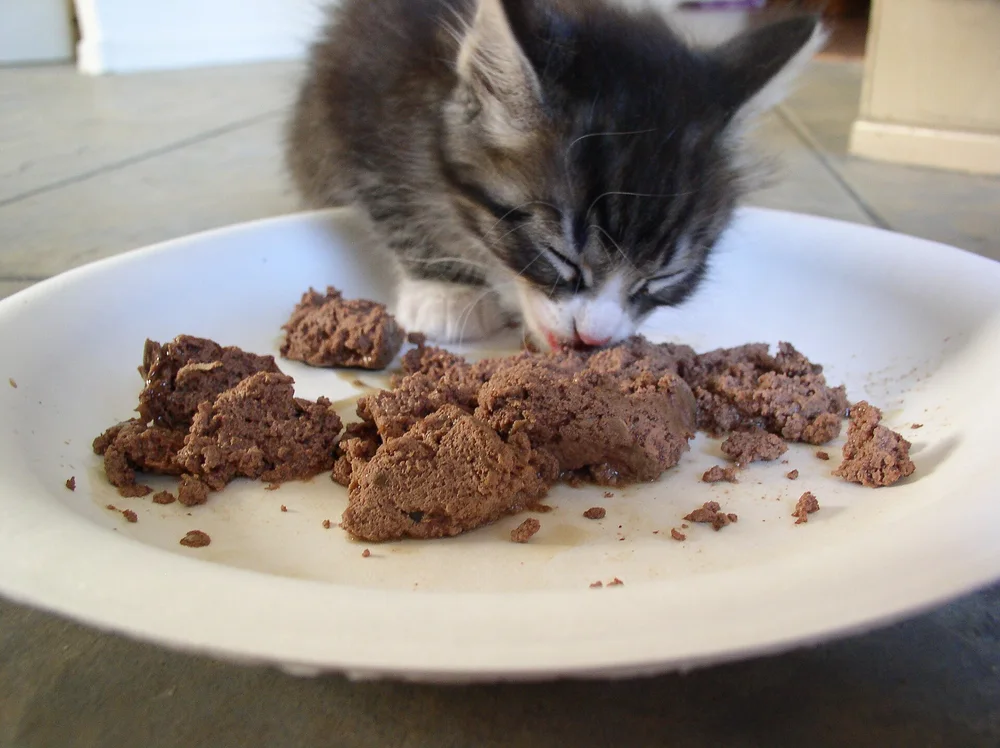
- Adding a kitten's bowl to the lineup. Kittens need 4-6 small meals a day; adult cats need two or three. Serve the kitten's meals separately so the adults do not poach them.
- Treating bowls as a group activity. A row of bowls in the kitchen is the feline equivalent of forcing strangers to eat elbow-to-elbow. Spread out.
- Ignoring the shy cat's intake. The quiet cat who "eats later" is the one most at risk; if in doubt, feed in a closed room and log the amount.
- Blocked litter trays — the sequel. The same resource competition that hits food hits litter trays (one per cat plus one, in separate locations). Our litter box setup guide and box planner cover the math.
When to Call a Vet
Book a visit for any cat with unexplained weight loss, a cat who stops eating for more than 24 hours, repeated vomiting after meals despite slower feeding, or a cat who suddenly will not eat in the presence of other cats when they usually do. Sudden preferences and avoidances are often medical before they are behavioral. Cat Cafe Central is educational content and cannot diagnose or treat your cat — for anything sustained or worsening, contact your veterinary team; feeding recommendations for medical conditions should come from your vet.
Trusted Sources
Related Guides and Tools
How to Introduce Two Cats Slowly and Kindly
A slow cat introduction plan using separation, scent, feeding distance, visual access, and supervised meetings.
What to Feed a Cat: A Beginner's Guide to Meals, Water, and Treats
A beginner-friendly overview of complete cat food, wet versus dry food, treats, water placement, and food changes.

How to Set Up a Cat-Friendly Home Without Overcomplicating It
Create a cat-friendly home with separated resources, vertical space, scratching options, quiet retreats, and predictable routines.
Related glossary: Resource Guarding, Body Condition Score, Feeding Station.