
Quick Answer
The first 72 hours are about safety and quiet, not bonding tricks. Set your new cat up in one small, cat-proofed room with food, water, a litter tray, and somewhere to hide — then let them set the pace. Expect hiding, cautious sniffing, and eating only when the house is still; that is normal coping, not rejection (iCatCare: Helping your new cat or kitten settle in).
- Carry the carrier straight into the base room and open the door — never tip the cat out or drag them from the carrier.
- Keep visits short and calm. Refill food and water, scoop the tray, sit quietly for a few minutes, and leave.
- Track without hovering: note what is eaten, whether the tray is used, and where the cat hides. Patterns tell you far more than a nervous first hour.
Why the First 72 Hours Matter So Much
A new home is not a simple room change — it is a territory change. Cats are territorial animals that rely on familiar scent, routine, and predictable surroundings to feel safe. International Cat Care describes cats as needing a secure "den" area within their territory; moving them into a new house strips away almost every scent marker they trust (iCatCare: Helping your new cat settle in).
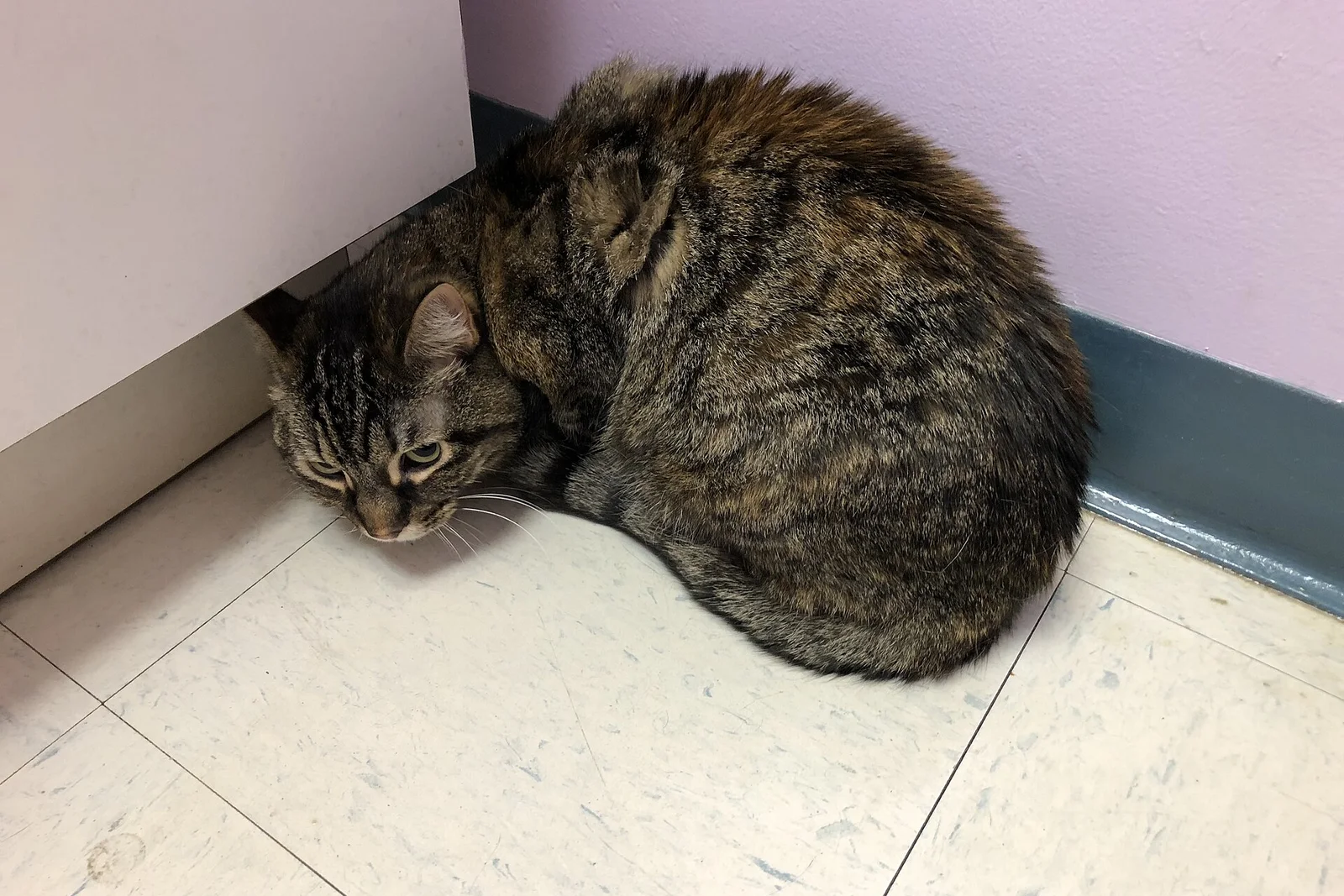
That is why the first three days look uneventful on purpose. Hiding, flattening, a tucked tail, or only coming out at night are all common stress responses in a healthy cat adjusting to a new normal. The goal of this window is not affection — it is to let the cat confirm one simple fact: this room is safe, food appears, nothing grabs them.
Owners who rush this stage usually pay for it. Forcing interaction, introducing the whole house on day one, or inviting friends "to meet the new cat" adds pressure exactly when the cat's stress hormones are highest. Slow is not a delay; it is the fastest reliable route to a confident cat.
Arrival Day: What to Do, In Order
Come home directly, with the carrier covered or at least stable and secure. Have the base room already set up — bed, food, water, litter, and a hiding spot — before the cat arrives (iCatCare: Preparing for your new cat or kitten).
- Walk the carrier into the base room and close the door. Set it on the floor, open the door, and step back. Let the cat come out in their own time — some take minutes, some take hours.
- Say little, do little. Normal voices, slow movements. Do not pick the cat up "to reassure" them; from the cat's side, restraint from a stranger is the opposite of reassurance.
- Leave the room. Once the cat is out and the basics are in place, leave them alone. Check in quietly rather than sitting and staring.
- First night: keep the house quiet and the base room dark-ish. A nightlight or dim lamp is fine. Cats often explore and eat more confidently overnight — expect movement after everyone is asleep.
If there are other pets or children, they do not meet the newcomer yet. This holds for the whole first 72 hours and, for resident cats, proceeds only through a deliberate scent-and-space introduction — not a hallway greeting.
The 72-Hour Plan at a Glance
Every cat moves at their own pace, but here is the shape of a gentle first three days. Use it as a map, not a schedule.
| Day | Focus | What you do | Signs it's going well |
|---|---|---|---|
| Day 1 | Safety and quiet | Carrier into base room; essentials in place; minimal visits; no visitors, no introductions | Cat emerges at some point; may explore the room; may hide for hours — both normal |
| Day 2 | Routine and reading the room | Same feeding times; sit quietly nearby; short, low-key play attempts only if the cat initiates | Eating and drinking; using the litter tray; choosing a favorite hiding or perching spot |
| Day 3 | Confidence building | Brief gentle contact if the cat approaches you; keep the room door closed to the rest of the house | Coming out while you're present; slow blinks; rubbing against furniture; interest in toys or windows |
Resist the urge to expand the cat's world on a calendar. The room-by-room opening of the house should follow the cat's signals — curiosity, relaxed body language, and a settled eating routine — not the day count. If the cat is still spending all day hidden on day three, that is information, not failure: slow down, keep the routine boringly consistent, and read our guide on helping a cat who hides after adoption and the one for a shy cat settling in.
What Belongs in the Base Room
The base room works best when it is small, quiet, and low-traffic — a bedroom, office, or utility room rather than a hallway or open living area. Everything a cat needs should be reachable without leaving the room (iCatCare: Preparing for your new cat or kitten).
- Litter tray — placed away from the food and water, and not in a corner the cat can be "trapped" in. One tray per cat plus one is the standard starting point; our litter box setup guide covers placement and tray types.
- Food and water — the food the cat was already eating; the first days are not the moment for a diet change.
- Hiding places — two kinds. A "hiding with the option to watch" spot (under a bed, behind a chair, in a cat tunnel) and a proper cave or box with soft bedding. Cats recover faster when they hide on their own terms.
- Vertical options — a shelf, cat tree, or cat bed on a dresser. Height helps a nervous cat feel in control; it is also where calmer behavior tends to appear first.
- Nothing dangerous. Cords secured, plants checked against the toxic list, windows securely screened. Cat-proof the room the same way you would the rest of the house — our cat-proofing guide walks through it room by room.

What to Track (and What Not to Worry About)
In the first 72 hours, four simple data points tell you the most: how much is eaten, how much is drunk, whether the litter tray is used, and where the cat chooses to hide. Check these quietly — glance at the bowls, look in the tray, note the hiding spot — rather than following the cat around.
What not to worry about: hiding during the day, exploring at night, eating less on day one (a small dip is typical), and a cat who prefers watching you from under furniture. What to watch more carefully: a cat who eats nothing for 24 hours, does not urinate for a similar stretch, sits hunched with eyes half-closed, or seems to be straining in the litter tray. Any of those moves from "settling in" territory into a vet call — cats who stop eating can develop serious liver problems quickly.
If the cat is coming out, sniffing, and then retreating, that is textbook progress — the investigation-return pattern means the room is starting to register as safe.
Common Mistakes in the First Three Days
- Giving the whole house on day one. A single small territory is a kindness; an open-plan home is a maze of unknowns. Expand slowly, one room at a time.
- Inviting visitors to meet the cat. A stream of strangers is the fastest way to turn a calm arrival into days of hiding.
- Pulling the cat out of hiding. It removes the one coping tool the cat has chosen. Sit near the hiding spot and talk quietly instead — let the cat decide.
- Switching food immediately. New home stress plus a new diet is a classic recipe for stomach upset. Keep the current food, then transition slowly later if needed.
- Letting the cat outdoors. Indoors only for at least the first weeks (longer if you plan an indoor life): a nervous cat who bolts has no reason yet to come back.
When to Call a Vet
Call your veterinarian if the new cat has not eaten for more than 24 hours, has not urinated within about 24 hours, shows straining, repeated vomiting or diarrhea, labored breathing, or any discharge from eyes or nose — and if the cat came from an unknown background, book a check-up within the first few days regardless of how well things seem to be going (Cornell Feline Health Center: Choosing and caring for your new cat). A phone call costs nothing; waiting on a sick, stressed cat costs a lot. Cat Cafe Central is educational content and cannot diagnose or treat your cat.
Trusted Sources
Related Guides and Tools

Cat Hiding After Adoption: What Helps and What Makes It Worse
Understand normal adoption hiding, create safer hiding options, track food and litter, and know when hiding needs help.

Understanding Cat Body Language: Ears, Tail, Eyes, and Distance
Learn how to read common cat body language signals so you can respond with less pressure and more trust.
How to Help a Shy Cat Settle In Without Pushing Too Hard
A gentle plan for shy cats using safe rooms, predictable visits, low-pressure play, scent, and patience.
Related glossary: Safe Room, Stress, Slow Blink.