Quick Answer
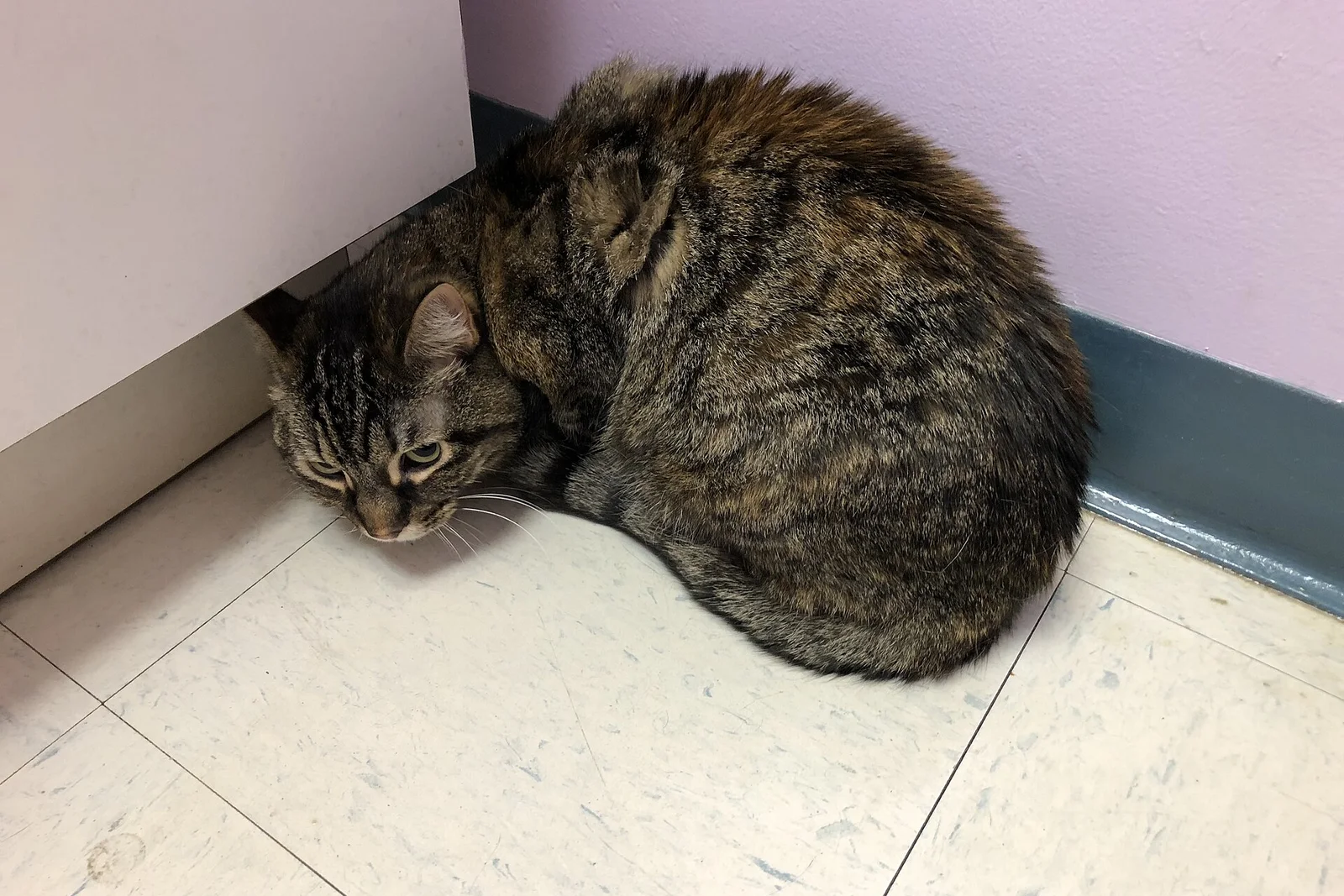
Shy cats do not need persuading — they need a safe room, predictable routines, and a human who does not take silence personally. Set the cat up with everything they need in one quiet room, let them set the pace, and expect days-to-weeks rather than hours for a full thaw. Slow is fast: a cat that chooses to approach builds real trust, while a cat that is chased into cuddles learns that people are unpredictable (International Cat Care: Helping your new cat or kitten settle in).
- Safe room first: quiet space, all resources, several hiding options — a room the cat can predict is the foundation of every next step.
- Be boring on purpose: sit on the floor, read or scroll, ignore the cat. Curiosity is on your side; pressure is not.
- Let eating be the barometer: normal meals (even if eaten at midnight) is the best early sign things are working; a cat that stops eating entirely is a call-the-vet situation.
Why Some Cats Are Shy — and Why It Is Normal
Shyness in cats is not a defect. It is a survival strategy shaped by genetics, early socialization, and experience — cats who were not socialized to household life as kittens, cats from hoarding or shelter situations, and cats from quieter outdoor backgrounds all read the average home as a predator-rich environment at first. Everything in a new house is novel: sounds, smells, the resident human's expectations, possibly other animals. A cat who hides first and investigates later is behaving exactly as feline nature recommends.
What shy cats are not is broken. They are also not all the same: some warm up in a day and simply prefer minimal handling; others take a month of patient, low-pressure coexistence before they sit on the sofa with you. The work is the same either way — give the cat control over every interaction and let genuine affection be something they choose (International Cat Care: Stress in cats). Our guide to cats hiding after adoption covers the first days in depth if that is where you are right now.
Setting Up the Safe Room
The safe room is the base camp from which confidence grows. It should be quiet, contained, and complete — food, water, litter, bed, hiding places, and a scratching option, all inside. Key layout rules that shy cats vote for with their behavior:
- Separate the stations: food and water on opposite sides from the litter tray, water a little apart from food. Cats by instinct avoid drinking next to where they eat or eliminate.
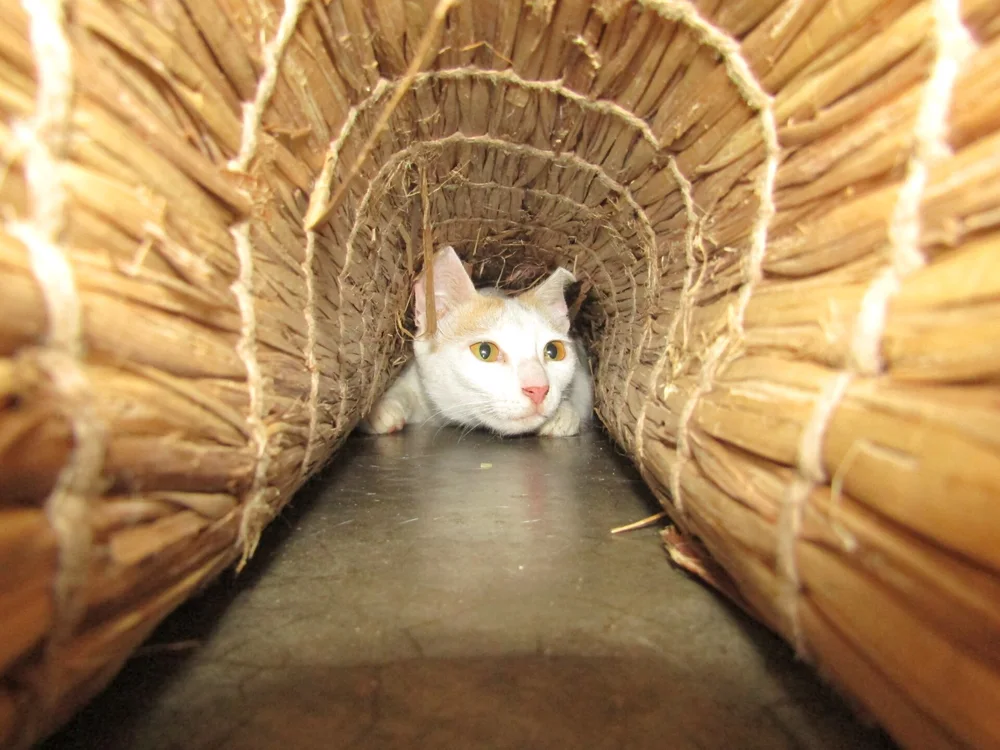
- Offer at least two hiding places in different locations — a box on its side with a blanket inside, a covered bed, a spot under furniture. Hiding spots you choose are better than the ones the cat finds under the one couch you cannot reach.
- Give elevation: even a shy cat wants an overview. A shelf, cat tree, or wardrobe top provides a watching platform where the cat feels safe, and safety is the gateway to curiosity.
- Familiar smells if available: bedding from the previous home, or a worn t-shirt of yours in the cat's bed, gives the nose something to trust. A synthetic pheromone diffuser can help take the edge off.
Keep the door closed to start (or use a baby gate if the cat must share a space with other animals). One room first is not a punishment — it is a manageable world, and from a manageable world the cat can expand.
How to Be the Right Kind of Company
The daily practice that works: spend time in the room without demanding anything. Sit on the floor — you are less intimidating at cat level — read, work, or watch something quietly. Let the cat observe you being harmless. Over days, move slightly closer, but keep letting your presence predict nothing but good things: food appearing, a treat tossed gently in the cat's direction (not hand-held; tossing lets the cat take it without touching you), a wand toy dragged slowly in their eyeline.
Interaction rules for the convalescent trust of a shy cat:
- Let the cat initiate everything. Every approach, sniff, and head-bump should be the cat's decision. When they do approach, stay still and let them explore.
- Blink slowly and look away. Soft eyes and a slow blink communicate "not a threat" in cat language (full slow-blink guide) — and looking away is the politest thing you can do to a nervous cat.
- Do not pick up a hiding cat. Dragging a cat from a hiding spot destroys the one thing they trust (the spot) and teaches them to fear you. If you must move the cat for their safety, move them calmly in a familiar carrier or wrapped in a towel.
- Keep play appointments. A shy cat often rediscovers confidence through play: a wand toy they can stalk and pounce without being handled is a bridge between hiding and engaging. Our body language guide helps you read when to ease off.
What Progress Actually Looks Like
Shy cats thaw on their own schedule, but the sequence is fairly predictable. Use this as orientation, not a deadline — every cat moves at their own speed:
| Stage | What you may see | What you do |
|---|---|---|
| First 24-48 hours | Hiding, eating little or only at night, avoiding the litter tray when you are present | Everything in place, minimal visiting, no forcing |
| Week 1 | Eating reliably (even at odd hours), using the litter tray, exploring the room when alone | Short calm visits, let the cat watch you, gentle treat tossing |
| Weeks 2-3 | Staying out while you are in the room, playing from a distance, first slow-blink exchanges | Regular play sessions, start hand-fed treats from a seated position |
| Weeks 3-6+ | Approaching voluntarily, being close to you, accepting gentle touch, exploring beyond the safe room | Open the room up gradually; supervise; let the cat choose the new territory |
Two warnings to take seriously: a cat who is not eating or not using the litter tray for more than about 24 hours should be checked by a vet, and a cat who seems to have stopped progressing — or has visibly lost weight or looks unkempt — also deserves a clinical look rather than more patience. Body problems and "behavior" problems are frequently the same problem in cats.
Expanding the World Past the Safe Room
When the cat is eating, playing, and looking comfortable in the safe room, crack open the world deliberately. Let the cat explore the rest of the home while other animals and loud activity are elsewhere, so the first tours are quiet and uneventful. If there is a resident cat, this is the moment to start the slow, parallel progress toward coexistence — sniffing under the door, scent swapping, then short visual introductions with a barrier. Our full walkthrough of introducing two cats (and the broader cat-friendly home setup) is designed for exactly this phase; do not let the two cats meet open-plan on day one, no matter how ready you feel.
For guests, the rules are simple: explain that the cat is in training and must be ignored. No grabbing, no cornering, no "just let me hold her." A shy cat who is met with indifference by visitors will come out on their own timetable — and visitors who comply get the better cat for it later.
Common Mistakes with Shy Cats
- Interpreting hiding as rejection. It is fear, not judgment. The cat is not "deciding" to snub you, and taking it personally tends to produce exactly the pushy behavior that confirms the cat's fears.
- Pulling the cat out of hiding spots. This is the single fastest way to lose trust — the hiding spot is the cat's safety system, and safety comes before sociability.
- Too much eye contact. Staring is a feline threat in disguise. Soften your eyes, blink, and look away.
- Inviting a parade of visitors "to socialize the cat." The way to socialize a shy cat is calm monotony with the fewest people first.
- Confusing shy with sick. Decreased activity, hiding, poor appetite, and unkempt coat are also illness signals in cats. If anything seems off beyond timidity — particularly not eating or obvious weight loss — call the vet.
When to Call a Vet
Contact a veterinarian promptly if your shy cat stops eating for more than 24 hours, stops using the litter tray, hides while also losing weight or looking dull-coated, shows pain signals when touched, or lashes out in genuine aggression (as opposed to the swat-and-retreat of a scared cat). Sudden reactivity in a formerly calm cat can itself be a pain sign. Cat Cafe Central is educational content and cannot diagnose your cat — when in doubt, ask the professionals; the Ohio State Indoor Pet Initiative's problem-solving hub is also a solid starting point for the behavior side.
Trusted Sources
Related Guides and Tools
Cat Hiding After Adoption: What Helps and What Makes It Worse
Understand normal adoption hiding, create safer hiding options, track food and litter, and know when hiding needs help.

Bringing Home a New Cat: A Gentle First 72-Hour Plan
A step-by-step first three days plan for helping a new cat decompress, eat, explore, and trust the household.

Understanding Cat Body Language: Ears, Tail, Eyes, and Distance
Learn how to read common cat body language signals so you can respond with less pressure and more trust.
Related glossary: Safe Room, Slow Blink, Stress.