
Quick Answer
Hiding is not a problem to fix — it is a coping strategy working exactly as designed. Give your new cat one small, safe room with food, water, a correctly set up litter box, and hiding places, then let curiosity set the pace. Most cats begin exploring within days; shy adults may need weeks. Forcing interaction almost always resets the clock.
- Sit quietly in the room and read aloud or talk softly — presence without pressure builds familiarity.
- Let the cat choose every contact: the treat is tossed, the hand stays still.
- Worry about appetite and litter use, not about affection. Eating and clean habits are the real early milestones.
Why New Cats Hide
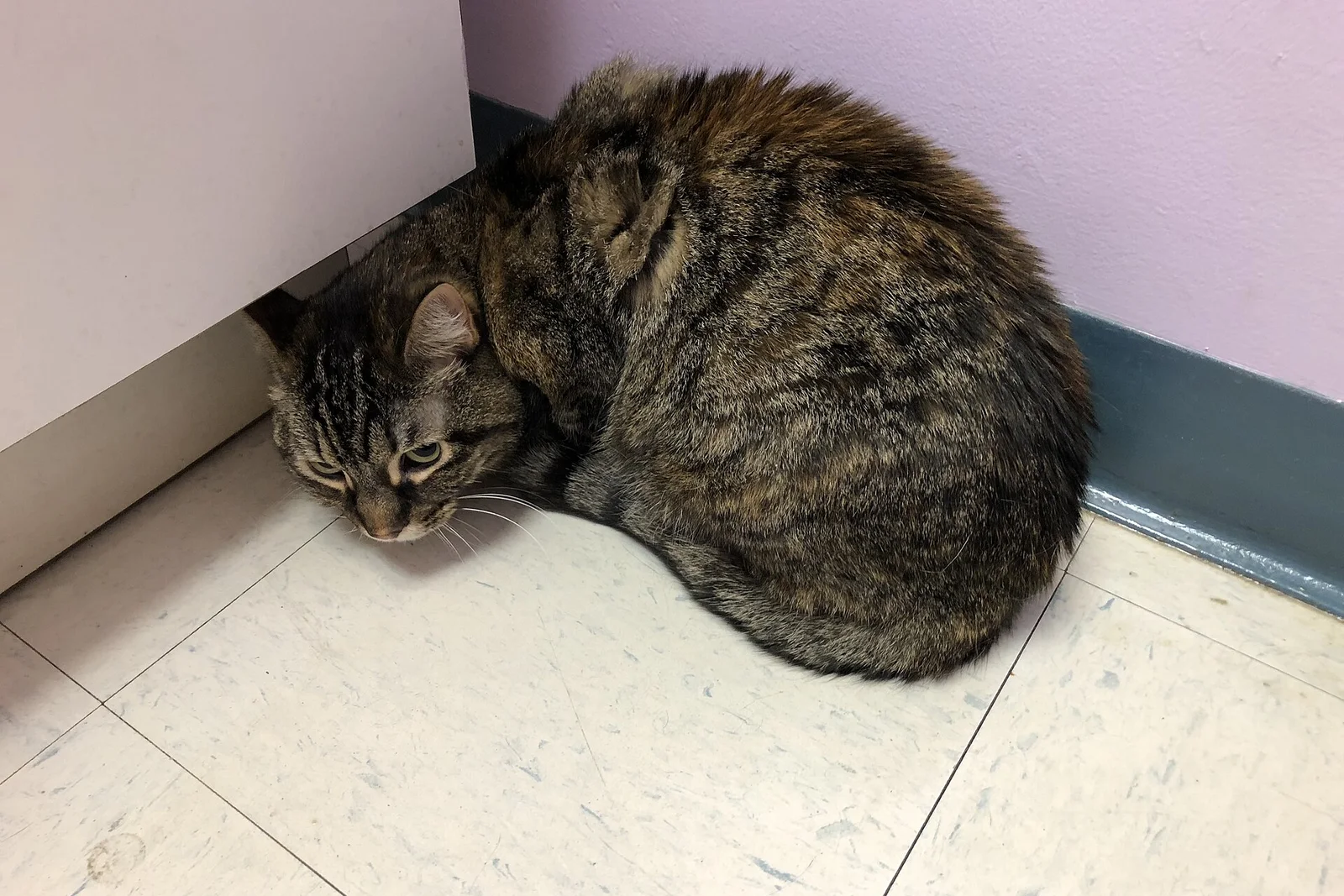
To a cat, your home on day one is a territory of completely unknown smells, sounds, and sightlines. Hiding is how a prey species says "I need the perimeter secured before I come out." A cat who slips under the bed and stays there is not being dramatic; they are doing precisely what instinct instructs until the environment proves safe.
Shelter cats have often just lived through the most stressful chapter of their lives — losing a home, the shelter itself, transport, and now another strange place. Each transition strips away the scent map a cat relies on. Rebuilding that map takes real time, and the pace belongs to the cat.
International Cat Care recommends preparing a single quiet room with everything the cat needs before arrival — food and water, a bed, a litter tray, toys, and a scratching post — and letting the cat establish confidence there before the rest of the house opens up (iCatCare: Helping your new cat settle in). That single decision prevents most hiding from ever becoming a weeks-long standoff.
A Realistic Timeline (the "3-3-3" Idea, Reframed)
Rescue communities often quote the 3-3-3 rule: three days to decompress, three weeks to learn your routines, three months to feel truly at home. Treat it as a gentle average, not a schedule. Some confident kittens claim the sofa by night two. An under-socialized adult may still duck under the bed when guests arrive months later — and that is okay.
The useful version of the rule is directional, not a deadline: progress looks like eating in your presence, then sleeping outside the hiding spot, then exploring while you are in the room, then initiating contact. Watch for those firsts and celebrate them quietly. A cat who eats while you are in the room is already telling you the trust account is growing.
What Settling In Looks Like, Week by Week
Hiding is a symptom rather than a stage, so the useful question is not “is my cat hiding?” but “is the hiding getting shorter while eating, drinking, and litter habits stay normal?” International Cat Care lists hiding among the recognised signs of chronic stress, which is why the daily basics — not the amount of visible affection — are the measures that matter in the first month.
| Stage | Typical hiding | What helps most | Red flag |
|---|---|---|---|
| First 24–72 hours | Under the bed, behind furniture, or in a closet; mostly out of sight | One quiet room, food and water close by, litter box nearby, no visitors | Nothing eaten or drunk for 24 hours |
| Week 1 | Comes out at night or when the house is quiet, retreats when people move | Predictable routines, sitting on the floor at a distance, letting the cat approach you | No litter output, or hiding together with vomiting |
| Weeks 2–4 | Visible more often, explores the room, keeps a chosen safe spot | Scent swapping, short play sessions near the hiding place, one change at a time | Progress slipping backwards after a scare or a move |
| Beyond 4 weeks | Some cats keep a “home base” permanently — often normal | Keep the base and add hiding places instead of removing them | Only leaving cover to eat and toilet, or new fearfulness |
The pattern to aim for is a widening circle, one the cat widens on its own terms. If the circle shrinks, or a cat stops eating, that is the moment to talk to a veterinary team rather than waiting for the cat to settle.
Step-by-Step Plan
- Prepare one room before pickup day. Quiet, closable, with food, water, litter, a bed, a box or covered cave, and something to scratch. Move slowly and keep doors and windows shut.
- Make the hiding spot safe, not forbidden. An open cardboard box in the corner beats the far underside of the bed. If the cat chooses under the bed anyway, that is allowed — do not drag them out.
- Visit often, demand nothing. Ten quiet minutes several times a day, sitting at cat level, reading or scrolling. Drop a treat at a respectful distance and leave.
- Feed on a predictable schedule. Routine is the fastest way to teach a nervous cat that good things arrive on time. Keep the same bowls, same spots, same times.
- Open the house gradually. Once the cat explores the first room with confidence — usually days to a couple of weeks — crack open the next space and let them patrol it at their own pace.
- Grow contact on the cat's terms. Slow blinks, a finger held out at nose height, play with a wand toy dragged past (not at) the hiding spot. First touches are usually a bump of the nose, not a hug.
A Practical Example
A newly adopted two-year-old spent her entire first day under the guest bed. Her people did exactly one thing right: nothing dramatic. They ate dinner in that room, dropped a treat each time they left, and kept the litter box and water in the same corners.
Day three she ate while they sat talking softly. Day five she slept on the bed skirt at the edge of the hiding spot. Day eight she followed the sound of the treat jar into the hallway. Nobody ever pulled her out or reached under the bed — and that is precisely why the timeline compressed. Every small first was her decision, so none of it needed to be unlearned later.
Compare that with the common anti-pattern: friends invited over on day two, a cat dragged out "so guests can meet her," and a reset that costs a week of trust. The math of slow is faster.
What Helps Most (Small Things, Big Effect)
Vertical space helps more than floor space. A cat tree or a cleared shelf near the room gives a cautious cat a second option besides under-furniture: high ground where they can watch the household safely. Predictable sound helps too — many cats relax to low human chatter or a steady household rhythm faster than to silence, because silence makes every noise an event.
Scent is the quiet superpower. Leave a worn t-shirt near the food bowl, swap bedding between the cat's area and yours, and let the home smell like a shared space before touch ever happens. The indoor enrichment planner can help you stage the room once the cat starts exploring.
If your cat must share the house with another pet, stretch this plan: full scent-swapping first, then feeding on opposite sides of a closed door, and only then short visual intros. Our guide to introducing two cats walks that sequence in detail, and helping a shy cat settle in adds handling practice for the deeply cautious.
Common Mistakes
- Dragging the cat out to "show" them the home. It teaches the one lesson you do not want: you are unpredictable.
- Reaching under the bed. Every grab from the dark converts your hand from friend to threat.
- Visitors too early. A week or two of quiet beats a month of recovery from one loud first impression.
- Reading affection as the milestone. Eating, drinking, and using the box are the milestones; cuddles arrive when they arrive.
- Changing everything daily. New food, new litter, new furniture in week one stacks stressors. Change one thing at a time.
When to Call a Vet
Hiding plus not eating for more than about 24 hours, no litter output, vomiting, or labored breathing is no longer an adjustment story — call a veterinarian. Cats who stay hidden but eat, drink, and use the box are usually on a normal timeline; cats who skip meals are not, and appetite loss in cats escalates quickly. Cat Cafe Central is educational and cannot diagnose your cat.
Trusted Sources
Related Guides and Tools

Bringing Home a New Cat: A Gentle First 72-Hour Plan
A step-by-step first three days plan for helping a new cat decompress, eat, explore, and trust the household.
How to Help a Shy Cat Settle In Without Pushing Too Hard
A gentle plan for shy cats using safe rooms, predictable visits, low-pressure play, scent, and patience.

Understanding Cat Body Language: Ears, Tail, Eyes, and Distance
Learn how to read common cat body language signals so you can respond with less pressure and more trust.
Related glossary: Safe Room, Stress, Slow Blink.