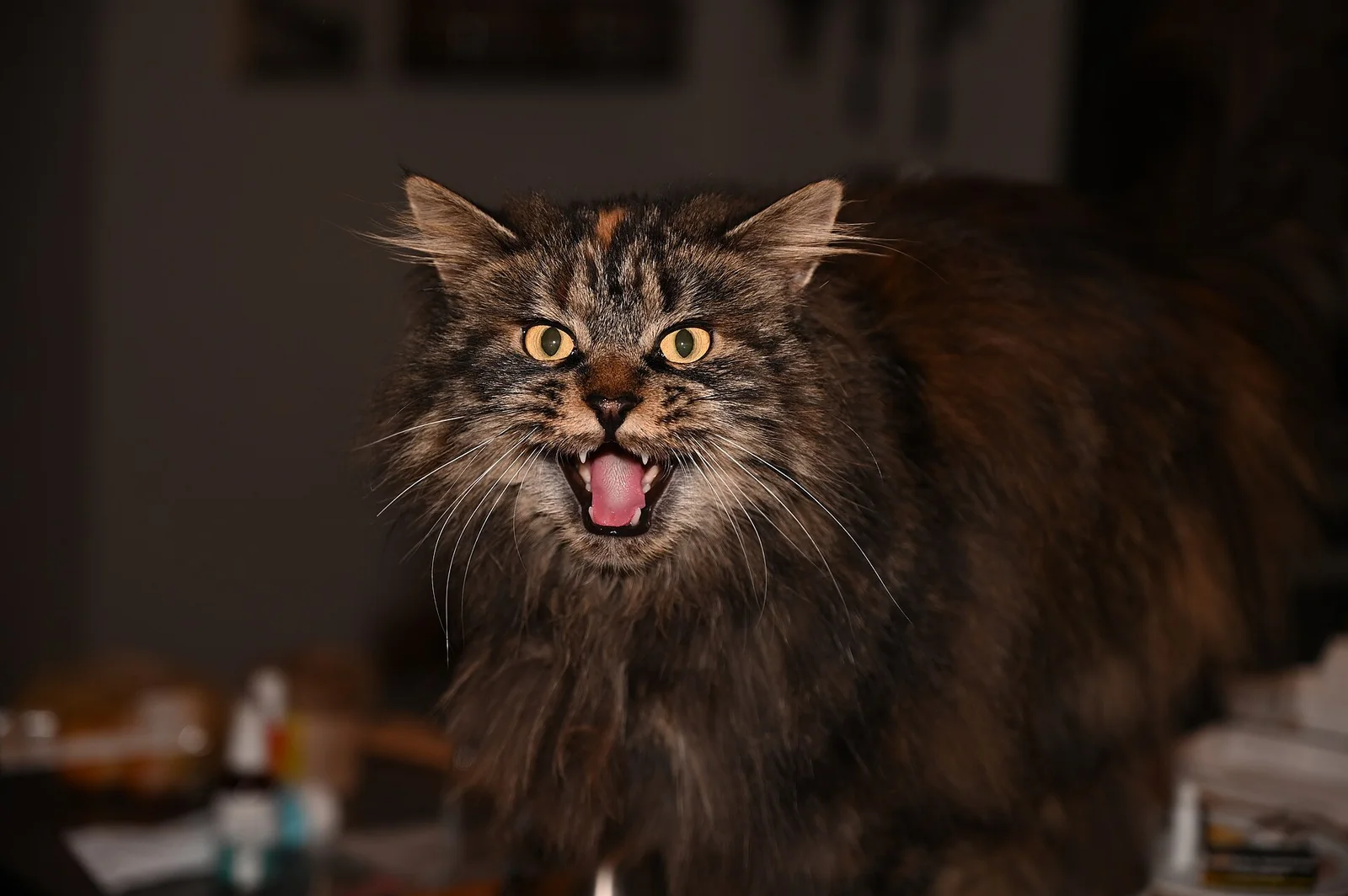
Quick Answer
Nighttime meowing is rarely "the cat being difficult" — it's usually one of four things: boredom and excess energy, an interrupted routine, a medical issue (especially in senior cats), or simple hunger. The fix starts with a vet check to rule out pain, thyroid problems, or cognitive decline — then a predictable evening routine of play, a late meal, and ignoring the 3 a.m. performance. Cats are crepuscular, meaning they're naturally most active at dawn and dusk, so some nighttime wakefulness is normal; the goal is redirecting it, not eliminating it entirely (iCatCare: Cat Communication — cats even use different vocalizations on purpose).
- Senior cat, suddenly vocal at night? Vet first — hyperthyroidism, kidney disease, and cognitive decline all cause it.
- Young cat, endless 3 a.m. energy? Schedule play before bed and a late snack; then ignore the meows.
- Never reward the yowling with attention or food. Even negative attention teaches the cat that meowing works.
Why Cats Vocalize at Night
Cats don't meow at night to annoy you. Meowing is a behavior cats developed largely for humans — adult cats rarely meow at each other. International Cat Care notes that cats communicate with people through vocalization in ways they don't with other cats, and individual cats learn which sounds get results (iCatCare: Cat Communication). If your cat discovered that 3 a.m. yowling gets you out of bed — even to shout — that behavior is now reinforced.
Biology matters too. Cats are crepuscular: wired to hunt at dawn and dusk. An indoor cat with no outlet for that energy will find one, and vocalizing at your bedroom door is a natural candidate. Add a human schedule that leaves the cat alone and quiet all day, and you have a recipe for a cat who is wide awake, under-stimulated, and social at exactly the hours you're trying to sleep.
Medical Causes: Rule These Out First
Sudden or intense nighttime vocalization — especially in a cat over 7 — deserves a vet visit before any behavior plan. The medical causes of increased vocalization in senior cats are common and treatable:
| Cause | Typical signs alongside night meowing | Why it matters |
|---|---|---|
| Hyperthyroidism | Weight loss with a big appetite, restlessness, increased thirst | Common in older cats; highly treatable with medication or diet |
| Chronic kidney disease | Drinking more, urinating more, dull coat, mild nausea | Very common in seniors; earlier diagnosis means better management |
| High blood pressure | Disorientation, dilated pupils, vocalizing at walls | Often secondary to kidney or thyroid disease; treatable |
| Pain (arthritis, dental) | Stiffness, hiding, reluctance to jump, changed grooming | Pain peaks at night when the house is quiet and the cat is less distracted |
| Cognitive decline | Yowling at night, wandering, forgetfulness, changed sleep cycles | Affects older cats like dementia in humans; manageable with routine and sometimes medication |
If your cat's night vocalization is new, loud, or paired with any of these signs, start with the vet — a behavior plan built on top of an untreated thyroid problem won't work and will delay real treatment.
Calm Fixes: The Evening Routine
Once medical causes are cleared, the fix is a routine that spends the cat's natural energy before your bedtime. This is the same principle as our daily play routine guide, timed for the evening:
- Schedule a real play session 30-45 minutes before bed. Use a wand toy and let the cat "catch" it repeatedly — the catch is what satisfies the hunting drive. Ten to fifteen minutes of active play beats an hour of half-hearted attention.
- Feed a meal (or a portion of it) after play. In the wild, cats hunt, catch, eat, then groom and sleep. Play-then-meal mimics that sequence and triggers the post-meal sleepiness. If you feed multiple meals, see our multi-cat feeding guide for scheduling without competition.
- Add an evening food puzzle. A puzzle feeder or a few kibble scattered in a treat ball gives an early-morning cat something to do besides wake you. Our indoor enrichment guide has more ideas that work overnight.
- Make the bedroom off-limits, consistently. If the cat sleeps with you and it works, fine — but if the cat is waking you, closing the door and holding the boundary every single night is the fastest fix. Inconsistent responses ("sometimes I let him in") train the longest, loudest meowing.
- Ignore the 3 a.m. concert. No talking, no shushing, no feeding, no opening the door to yell. Any response — even angry — teaches the cat that persistent meowing produces human attention. This is the hardest step and the most important one.
- Be patient for 1-2 weeks. Extinction bursts are real: the meowing often gets louder for a few nights before it stops. Consistency is the entire game.
The 4 a.m. feeder problem. If your cat wakes you at the same early hour every day asking for food, they're running on an internal clock you trained. The fix is to stop feeding on demand entirely and move the breakfast to a set time you choose — after your alarm, never in response to meowing. Cats adapt their internal clocks to routine within a week or two; the yowling at the old feeding time fades once it stops producing food. If you can't sleep through the transition, earplugs or a white-noise machine get you through the extinction window without breaking the rule.
Two-cat households. If one cat starts yowling at night after a new cat arrives, the vocalization may be distress about territory or access — see our guide to introducing two cats for the gradual method, and check that both cats have their own food, water, and litter stations so neither feels it must guard resources overnight.
Special Support for Senior Cats
Senior cats with night vocalization need extra compassion. If your vet has cleared medical causes, try: a nightlight near the cat's bed (older cats with reduced vision are comforted by light), a warm, low-sided bed in a quiet spot, extra daytime interaction, and keeping the daily schedule — feeding, play, and bedtime — as regular as possible. Cats with cognitive decline often do better when their environment stays predictable. For more on caring for an aging cat's changing needs, our kitten care basics cover the other end of life, and your vet can point to senior-specific resources.
Common Mistakes Owners Make
- Getting up and feeding the cat "just this once." One reward can undo a week of ignoring. The cat doesn't think "tonight was special" — it thinks "meowing eventually works."
- Yelling or squirting water. Negative attention is still attention, and it damages trust. The goal is zero response, not an angry response.
- Only addressing the night, not the day. A cat who sleeps alone all day will be awake all night. Daytime play and interaction are half the fix — see our enrichment guide for solo-play ideas while you're at work.
- Skipping the vet for seniors. If you assume "she's just getting old and chatty," you can miss hyperthyroidism or high blood pressure — both very treatable when caught.
- Free-feeding an overweight or bored cat. All-day kibble removes the natural play-then-eat rhythm and can contribute to obesity. Scheduled meals give structure to the day and the evening routine.
When to Call a Vet
Call your vet if night vocalization is new and intense, if your senior cat is yowling more than usual for more than a few days, or if the meowing comes with weight change, increased thirst, appetite changes, disorientation, or any signs of pain. A same-week appointment is appropriate for most of these — the conditions behind them are common, treatable, and best caught early. Cat Cafe Central is educational content; it cannot diagnose your cat.
Trusted Sources
Related Guides and Tools
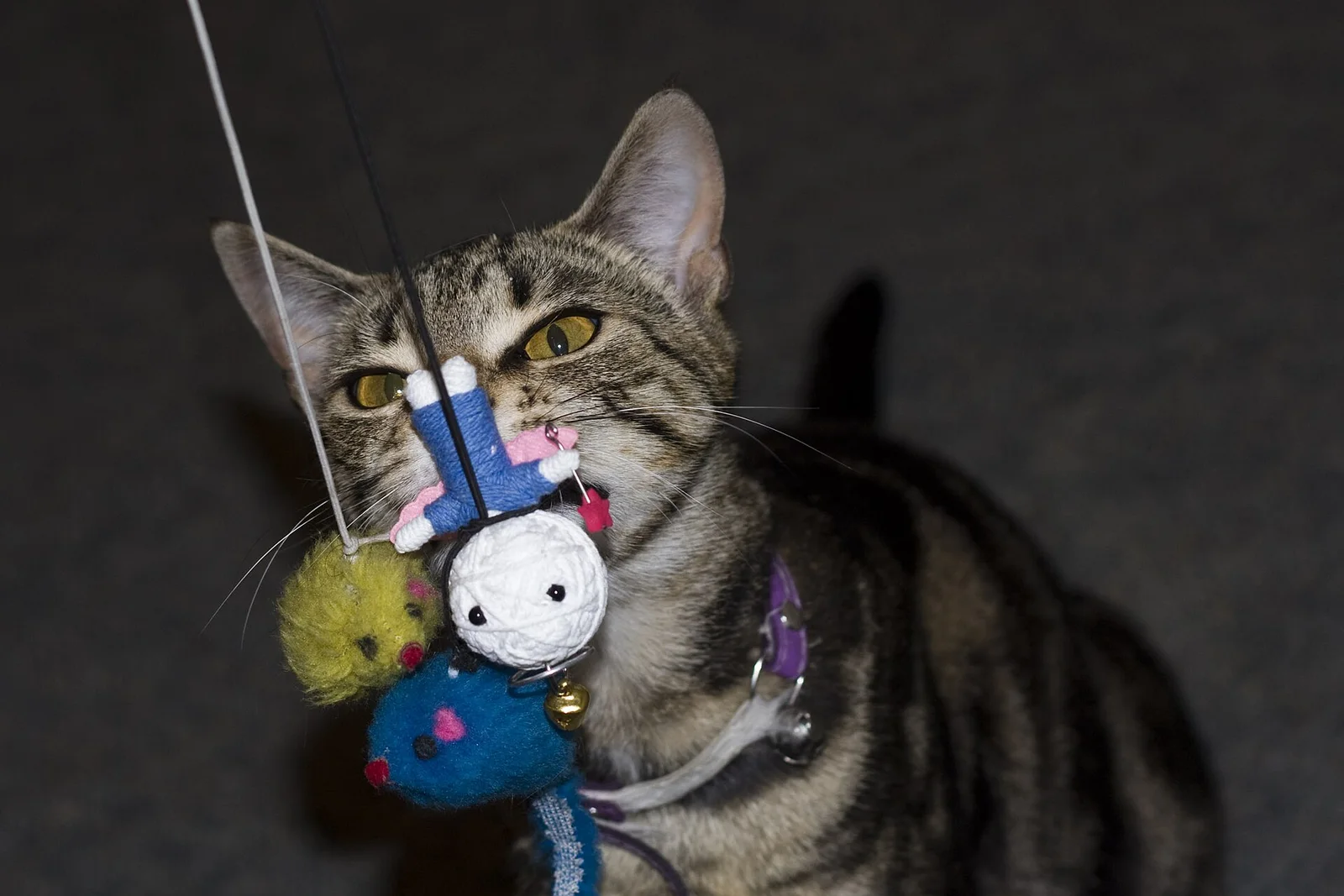
How to Build a Daily Play Routine Your Cat Actually Uses
Design a simple daily play routine around your cat's energy, favorite prey style, schedule, and wind-down needs.
Indoor Cat Enrichment Basics: Play, Climbing, Scratching, and Choice
A practical enrichment guide for indoor cats, including play routines, food puzzles, scratchers, windows, and rest.
Understanding Cat Body Language: Ears, Tail, Eyes, and Distance
Learn how to read common cat body language signals so you can respond with less pressure and more trust.
Related glossary: Prey Sequence, Reinforcement, Senior Cat.