Quick Answer
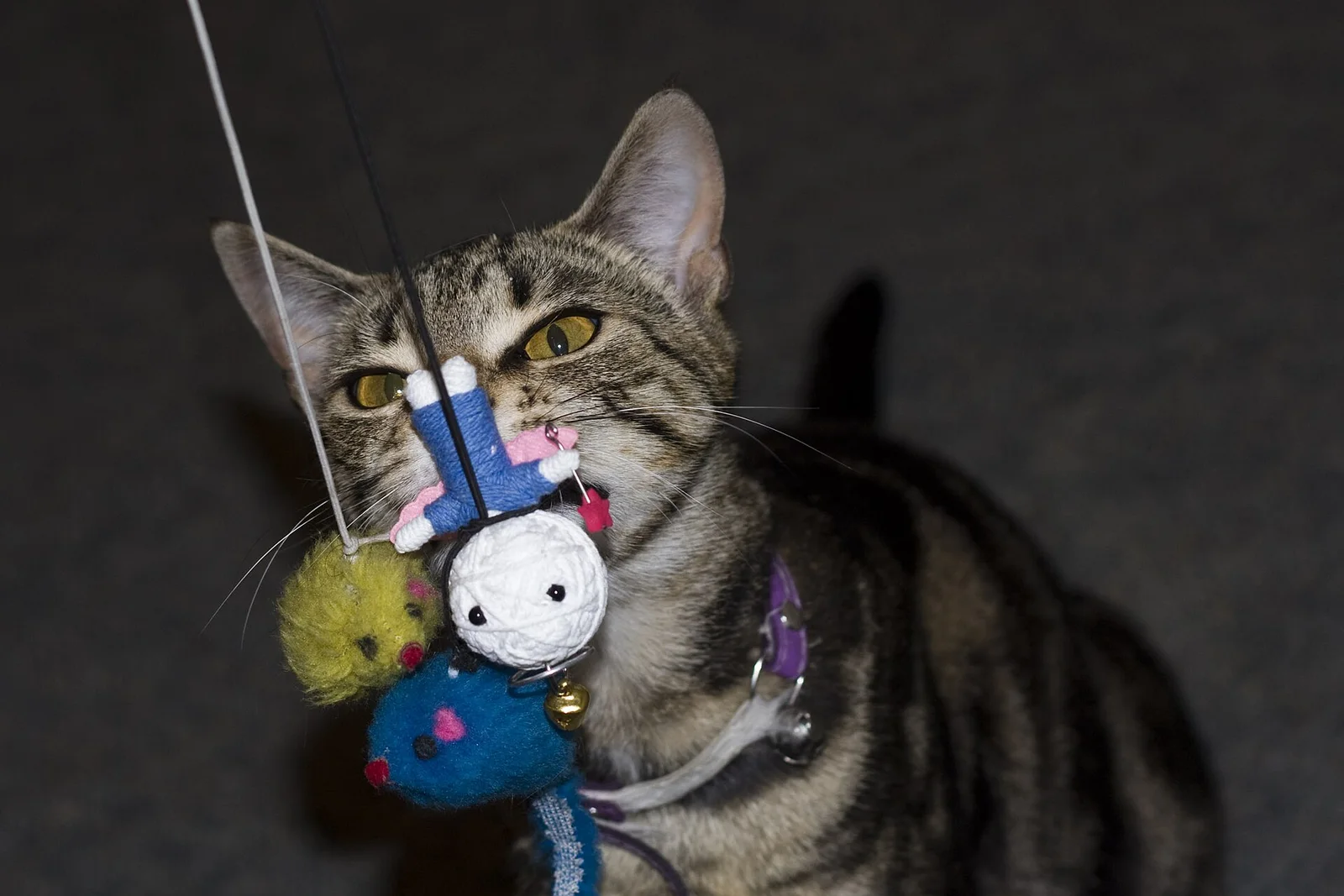
The routine that works is two short sessions a day, built around your cat's natural hunting pattern: search, stalk, chase, pounce, catch. Five to fifteen minutes per session is plenty for most cats — sprinters, not marathon runners — and every session should end with a catch and a small reward, not with the toy simply vanishing (International Cat Care: Playing with your cat).
- Morning and evening: cats are naturally most active at dawn and dusk, which is exactly when play pays the most dividends — including quieter nights.
- Finish the hunt: let the cat catch the toy regularly; ending after a catch mimics a successful hunt and prevents frustration.
- Play before food, not after: a hunt-then-eat sequence matches feline biology and helps a wound-up cat wind down.
Why a Play Routine Is Health Care
For an indoor cat, play is not entertainment — it is the main outlet for the predatory sequence their body is built to run. Ohio State University's Indoor Pet Initiative lists the payoff plainly: play develops your bond with the cat, improves behavior and health, reduces the incidence of obesity, and makes a cat active during the day so they sleep longer and bother you less at night (OSU Indoor Pet Initiative: Increasing the Activity of Your Cat).
Boredom in cats does not look like boredom. It looks like 3am sprints, ambushing ankles, over-grooming, furniture destruction, and a cat that seems "sudden" about everything. A reliable daily routine is one of the cheapest behavior interventions available, and unlike most interventions it is genuinely fun for both parties. The cats that get the least play are often the ones with the most behavior "problems" — the correlation is not a coincidence.
Find Your Cat's Prey Style
Not every cat hunts the same way. Some want the toy in the air, some want it skittering along the floor, some want it peeking out from behind furniture and vanishing. Watching which one lights your cat up is the whole game — and the movement pattern matters more than the toy's appearance.
| Prey style | How to move the toy | Games that fit |
|---|---|---|
| Aerial hunter | Feather wand cast upward, fluttering down; pauses in the air | Wand toys with feathers; "flying" prey over furniture |
| Ground stalker | Low, jerky drags along the floor with sudden freezes | Fur mice on a line; shoelace drags; towel "burrow" games |
| Ambush watcher | Prey appears from behind cover, disappears, reappears | Wand toy around chair legs, boxes, doorframes |
| Pouncer / chaser | Fast erratic dashes across open floor | Fetch with reeled toys; running between two people |
| Bat-and-carry | Lightweight toys batted and carried; small tosses | Ping-pong balls, small soft toys, kick toys |
One word of caution on the laziest option: a laser pointer lets a cat stalk, chase, and pounce, but never catch — finish every laser session with a wand toy or treat so the hunt has an ending (iCatCare). Our play style quiz is a quick way to map your cat's preference if you are not sure where to start.
Building the Routine into Your Day
A routine survives only if it fits your real schedule. The shape below works for most households:
- Morning (5-10 min): play before breakfast. Start slow — let the cat stalk — then build to two or three pounces, end with a catch, then serve food. This sequence is the closest thing to a natural hunt-then-eat cycle you can offer indoors.
- Evening (10-15 min): the main session, ideally before the dinner meal too. This is the one that buys you a calmer night: an exercised cat sleeps, and a cat that has completed a "hunt" is far less likely to conduct one across your duvet at 4am.
- Micro-sessions as needed: a wand flicked for two minutes when the cat is restless counts. The goal is frequency and completion, not duration.
Rotate toys and keep favourites slightly scarce. Cats habituate fast — leave a few toys out, but keep the best wand or mouse in a drawer and bring it out only for sessions. That contrast is what keeps play interesting, and it is the same reason the OSU initiative advises against leaving every favourite toy out all day (OSU Indoor Pet Initiative).
The Toy Toolkit That Covers Everything
You do not need a toy chest. You need coverage of the hunting sequence, in a few different textures:
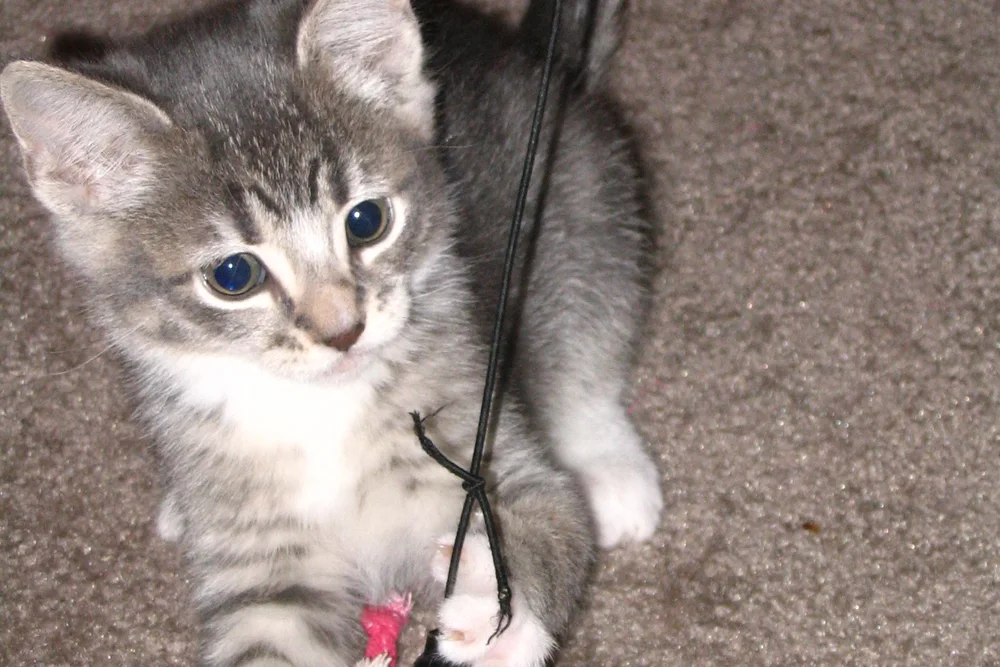
- A wand toy with interchangeable feather and mouse ends — the workhorse of interactive play. Put it away between sessions and keep spare ends so the toy can "change species" when interest fades.
- Small fur mice in rotation — cats toss, carry, and "kill" these alone. Keep two or three so there is always a fresh-feeling one.
- Floor skitters: ping-pong balls, crumpled paper, a shoelace with a knot at the end — cheap, safe, endlessly battable on hard floors.
- Boxes and bags: a plain cardboard box is an activity centre. Brown paper bags are fine under supervision (cut the handles first); plastic bags are not.
- Food puzzles: for food-motivated cats, a simple puzzle feeder or a paper bag with kibble turns a meal into a hunt. Start embarrassingly easy and let the difficulty climb with the cat's enthusiasm.
Safety notes: never use hands or feet as prey — it teaches biting, and the lesson lands permanently. Avoid string, ribbon, and wool balls left out unsupervised; swallowed linear objects cause serious intestinal injuries. And retire any toy with loose parts before it becomes a snack.
Kittens, Seniors, and Multi-Cat Homes
The routine flexes by age. Kittens need short, frequent play — think two minutes, several times a day — always via wand toys that keep your fingers out of range, and always ending gently by fading the toy and redirecting to food rather than abruptly stopping mid-chase. Senior cats still play; keep sessions low and slow, work with their mobility (floor-level dragging rather than high jumps), and let them win often — even a cat who plays lying down is still getting the mental and physical benefits.
In multi-cat homes, the trap is one cat monopolizing the session while a shier resident gives up. Read who actually wants to play versus who is being crowded, and carve out individual sessions — even five minutes in a separate room with each cat individually can reset the whole group's energy. If play between cats tips into real conflict (blocking, staring, guarding), that is a resource and tension problem rather than a play problem — our guide to indoor enrichment and the scratching guide cover the environment side, while our body language guide helps you tell play from pressure.
Common Play Mistakes
- Moving the toy like a helicopter. Prey is erratic and stops to hide — sprint, freeze, hide, reappear. Fast constant motion is harder to track than slow stop-start motion.
- Never letting the cat catch anything. A hunt without a kill is frustrating; land the catch several times per session.
- Ending cold. Finish with a catch, then a treat or a small meal, then put the toy away after the "kill" — not mid-pounce.
- Hands as toys. Fun at eight weeks, stitches at eight months. Hands are for petting and feeding, full stop.
- Playing right before a performance. Would you play intensely with a cat and then expect instant calm? Wind-down after play, or schedule sessions to end at the meal.
When to Call a Vet
Play is also a health signal. Back off and book a visit if play triggers sudden panting or open-mouth breathing, if your cat suddenly refuses to jump or chase when they normally would (that can be pain, not laziness), if enthusiasm collapses for more than a day or two, or if sessions end in genuine aggression. Cat Cafe Central is educational content and cannot diagnose your cat — contact a veterinarian promptly for any sudden change in activity, appetite, or mobility.
Trusted Sources
Related Guides and Tools
Indoor Cat Enrichment Basics: Play, Climbing, Scratching, and Choice
A practical enrichment guide for indoor cats, including play routines, food puzzles, scratchers, windows, and rest.
Cat Meowing at Night: Calm Fixes That Respect the Cat
Troubleshoot nighttime meowing with health checks, play timing, feeding rhythm, boredom, and reinforcement patterns.
Understanding Cat Body Language: Ears, Tail, Eyes, and Distance
Learn how to read common cat body language signals so you can respond with less pressure and more trust.
Related glossary: Prey Sequence, Zoomies, Enrichment.