Quick Answer
Enrichment is not about buying a cat more stuff — it is about giving an indoor cat ways to do the things cats are wired to do: hunt, climb, scratch, hide, rest, and choose. Build around five pillars (play, vertical space, scratching, foraging, retreats), put each one where your cat already spends time, and vary the details weekly. Done well, enrichment is the cheapest behavior insurance you can buy: it prevents the boredom-linked problems — furniture scratching, night yowling, over-grooming, and weight gain — before they start.
- Play = hunting. Two short wand-toy sessions a day that end with a "catch," so the sequence feels complete.
- Height = confidence. At least one high perch in the room where the family lives — cats want to watch from above.
- Scratching = marking. Stable posts near sleeping spots and doorways — the same places a cat marks.
- Foraging = thinking. Replace at least one meal or snack a day with a puzzle feeder or a treat scatter.
- Retreat = recovery. A covered bed or box your cat can disappear into without being followed.
Why Indoor Life Needs a Little Engineering
Indoor cats live longer, safer lives — that part is settled. The trade-off is that indoor life removes most of the outlets an outdoor cat would use all day: chasing, climbing, patrolling a territory, and finding new vantage points. When those needs go unmet, cats do not just nap more. Behavior specialists at Ohio State's Indoor Pet Initiative describe indoor cats whose environment lacks stimulation as prone to boredom-linked problems: destructive scratching, over-grooming, compulsive behaviors, night activity, and obesity from inactivity and free-feeding (OSU Indoor Pet Initiative: Basic Needs).
The good news is the fix is a design problem, not a cat problem. Enrichment that matches how cats are built — small, frequent hunting successes; high places; scratchable surfaces; hiding spots; and control over their own day — prevents most of these issues and gives an anxious cat somewhere to put nervous energy.
The Five Pillars of Enrichment
Think of this as a checklist to audit your home against. Every pillar counts once; a household with ten toys and no height still has a gap.
| Pillar | What good looks like | Cheap starter move |
|---|---|---|
| Play (hunting) | Two daily wand-toy sessions, 10-15 minutes, ending in a catch and a small reward | One wand toy with 2-3 interchangeable lures, kept in a drawer between sessions |
| Climbing (vertical space) | At least one perch higher than every doorway in a main room; a route up to it | A window perch or a shelf cleared at cat height near a window |
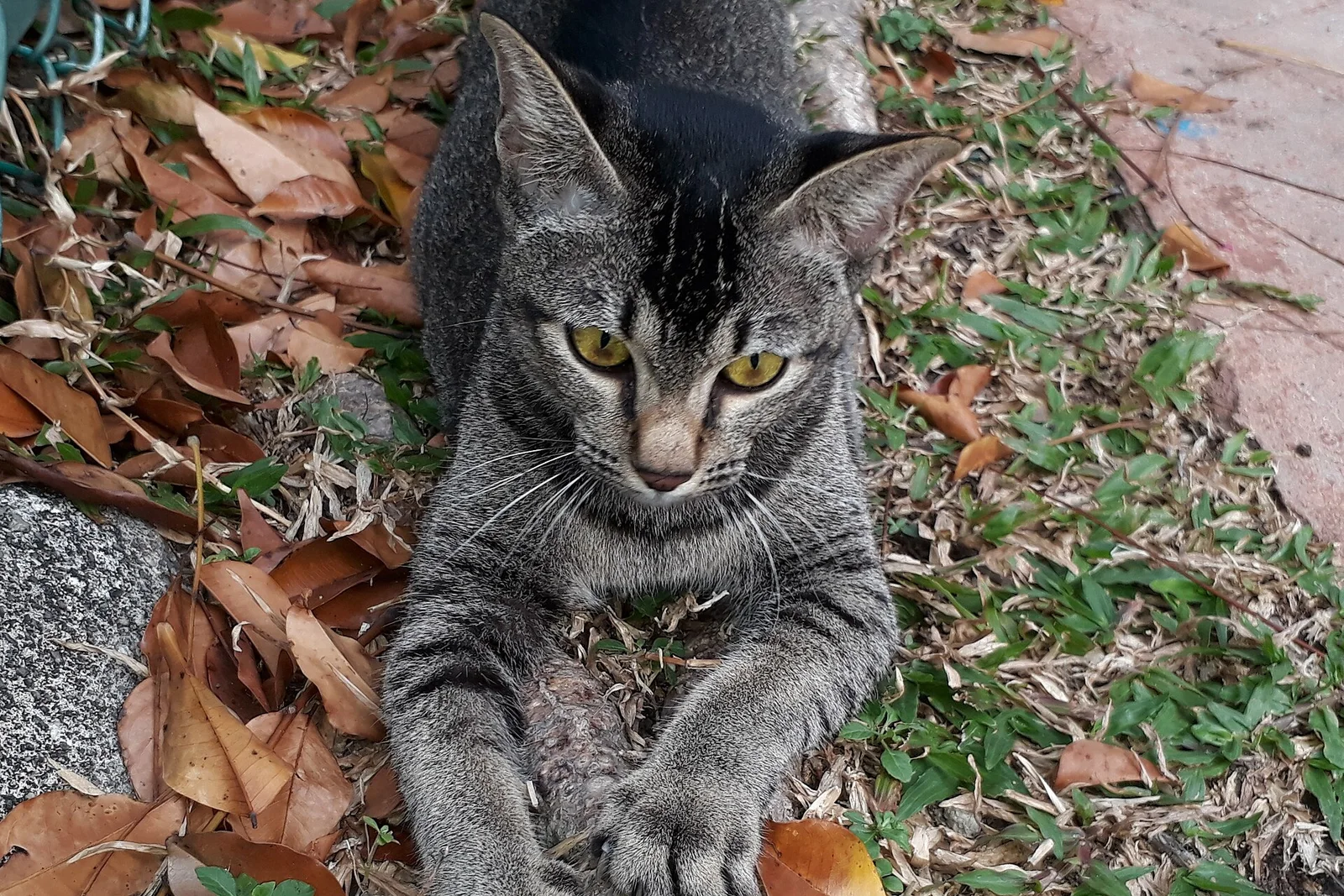
| Scratching | One stable post per cat plus a spare; both vertical and horizontal options | A corrugated cardboard pad placed by the sofa |
| Foraging (food puzzles) | At least one meal or snack a day requires effort to eat | Scatter a portion of kibble in a clean muffin tin or on a towel with folds |
| Retreat and rest | Covered sleeping spots and a hiding place in more than one room | A cardboard box with a blanket, placed out of traffic |
Play That Actually Counts
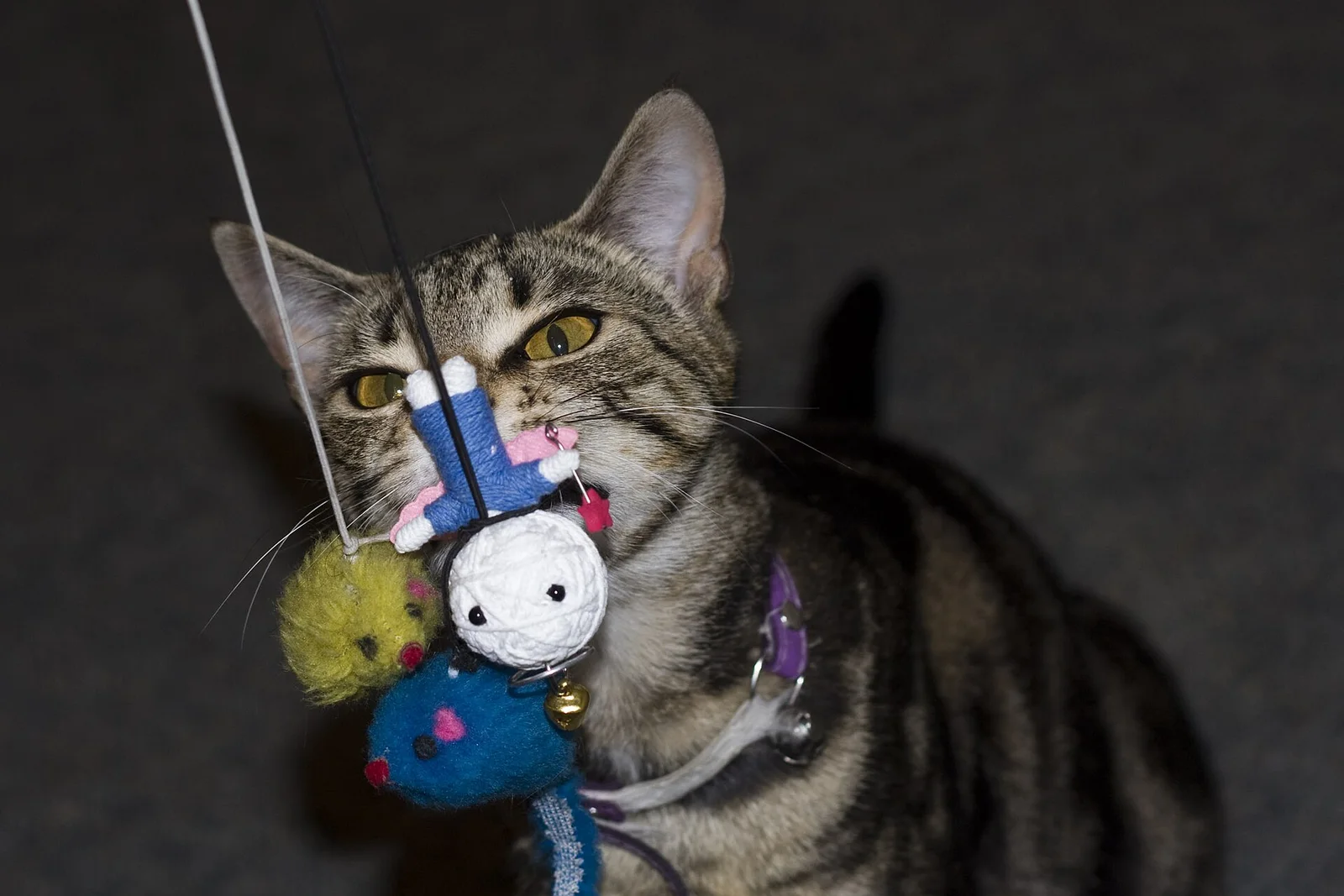
Play is the pillar most owners overestimate. Ten minutes of flicking a laser pointer is not the same as a hunting sequence — the sequence is stalk, chase, pounce, catch, and only then "eat." A wand toy lets you run all of it: drag the lure low and slow like prey, let the cat stalk, sprint, and finally land on it. When your cat wins, they should close out with the capture — a small treat or a bite of their regular food — or the hunt feels unfinished and can leave a cat keyed up at night instead of relaxed.
- Two sessions a day beats one marathon. Morning and evening mirror a cat's natural activity peaks. Our daily play routine guide has a schedule you can copy.
- Rotate the toys. Keep 4-6 lures and swap them weekly. Novelty is the enrichment; a box of familiar toys on the floor is furniture.
- Pace by the cat. Kittens burn hot and short; seniors often prefer slow, low-travel play on a soft surface. Stop before your cat quits — ending on a win keeps the next session easy to start.
- Safety basics. Never leave string, ribbon, or hair ties unattended — linear toys are a swallowed-object hazard. Wand play is supervised play; solo toys (balls, chasers) are what stays out.
Vertical Space Without a Catio
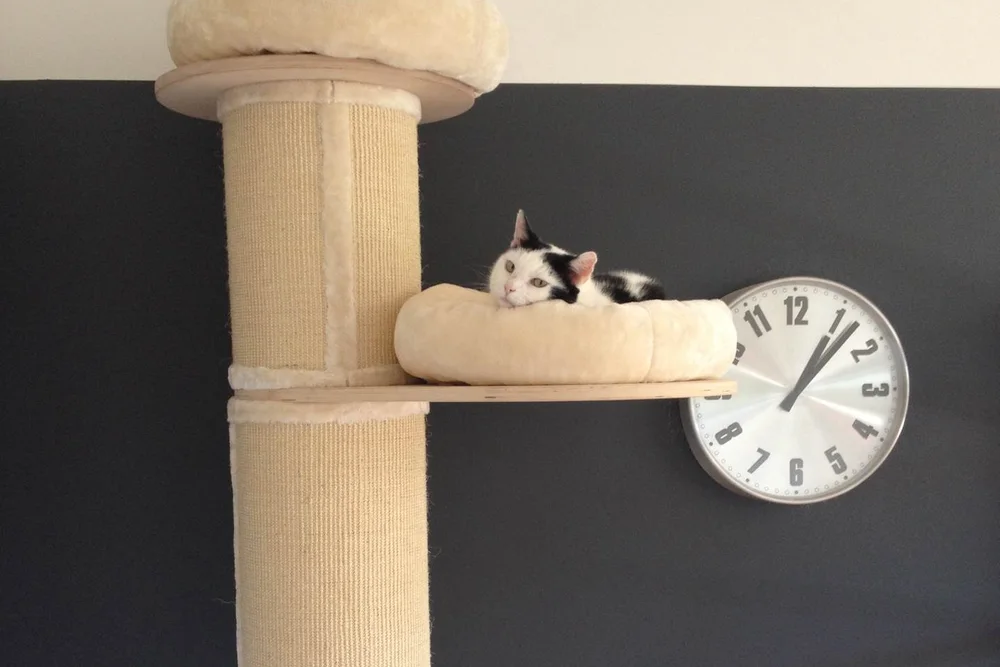
Height is the most underrated enrichment. Cats use elevation to feel safe, watch the room, and claim territory — a cat tree in a corner nobody uses is worth less than a single shelf over the sofa. Design upward routes instead of buying a single tower:
- Start where the cat already sits. If they like the window, the perch goes by the window. If they watch you cook, the perch goes above the kitchen counter line.
- Give a route, not just a stop. A clearable shelf → a second shelf → a tree top lets a cat move up to safety instead of being cornered. Rope-bridge or step tiles work for wall routes.
- Anchor everything. Cats launch themselves off perches at speed; a top-heavy tree or unsecured shelf is a hazard. Renter-friendly options: a tension-pole tree, or a perch clamped under a sill — no drilling, and still stable.
- Stack the pillars. The best cat trees include a scratchable post, a high platform, and a hide in one footprint — height, scratching, and retreat in the space of a single chair. Our cat-friendly home setup guide walks room-by-room placement.
Turn Meals Into a Job
In the wild, a cat's day is mostly hunting punctuated by eating. Indoors we invert that — two big meals and nothing to do — and then wonder why the cat is bored at 4 a.m. Foraging fixes both the boredom and the meal. Start with the easy wins:
- Scatter feeding. Toss a portion of dry food into a clean muffin tin, an egg carton, or a snuffle mat. One meal becomes a fifteen-minute hunt.
- Puzzle feeders that match the cat. Begin with a shallow, easy puzzle and progress to rolling treat balls and maze feeders as the cat gets good at it. A puzzle that is too hard is just a closed bowl — a few free rewards the first day keep your cat working.
- Timed for energy, not rage. A food puzzle in the evening gives an active cat a project before bed. Frozen treats (a dish of wet food or broth, no seasoning) turn hot days into work, too.
- Multi-cat caution. Puzzles distribute unevenly in busy households — pair each cat's puzzle with a separate location, the same principle as multi-cat feeding stations.
Choice and Novelty: the Secret Ingredient
The final piece is control. Cats are most relaxed when they can approach, avoid, and choose — enrichment that boxes a cat in creates stress, not fun. Aim for more options than the cat needs, in more than one room: two water bowls, two beds, two ways up, a quiet room and a social room. Then add cheap novelty on rotation: a paper bag to investigate, a box to claim, a new cardboard angle to sniff, a treat hidden under a cup. Swap the rotation weekly and the home stays interesting without a single new purchase — our indoor enrichment planner helps you build a weekly rotation your cat actually uses, and the enrichment plan generator lays out a full day of activities.
Common Enrichment Mistakes
- Buying gear, skipping placement. The best tree in a dead corner loses to a cardboard box in the right spot. Place by the cat's existing routines first.
- One-and-done setup. Enrichment is a practice, not a purchase. If a toy has been on the floor untouched for two weeks, rotate it out — it is scenery, not stimulation.
- More cats, same resources. Multi-cat homes need the pillar counts multiplied: one perch per cat at the cat's comfort height, one feeding station per cat, and litter trays per the usual math.
- Forcing the interaction. Drag a toy at a cat who is backing away and you are teaching avoidance. Offer, pause, let the cat come to the game.
- Ignoring rest. A cat sleeping 16 hours a day is not under-stimulated — napping is the job. Enrichment compensates for the hunting they no longer do, not for the resting they still need.
- Treating senior cats as done. Older cats need enrichment too, adapted: lower perches, gentler play, easier puzzles, and warm sunbeam spots promoted to official real estate.
When to Call a Vet
Reach for a vet, not a toy upgrade, if a previously active cat suddenly loses interest in play, if grooming goes beyond normal — bald patches, scabs, chewing at the coat — or if hiding increases, appetite changes, or your cat seems painful or stiff after resting. Behavior shifts are often an early illness signal in cats, and pain (dental disease, arthritis) is a common reason enrichment suddenly fails. Cat Cafe Central is educational content and cannot diagnose your cat — for anything sustained or worsening, contact your veterinary team.
Trusted Sources
Related Guides and Tools
How to Build a Daily Play Routine Your Cat Actually Uses
Design a simple daily play routine around your cat's energy, favorite prey style, schedule, and wind-down needs.
How to Stop Furniture Scratching Kindly: Redirect, Protect, and Reward
A humane furniture scratching plan that gives cats better scratch options and protects furniture while new habits form.

How to Set Up a Cat-Friendly Home Without Overcomplicating It
Create a cat-friendly home with separated resources, vertical space, scratching options, quiet retreats, and predictable routines.
Related glossary: Enrichment, Prey Sequence, Puzzle Feeder.