Quick Answer
You will not stop a cat from scratching — scratching is normal claw maintenance and communication, not misbehavior. What you can do is make the right surfaces more attractive than your furniture: provide stable scratching posts that are tall enough for a full stretch, place them where your cat already scratches and where they sleep, and protect the furniture while the new habit forms. Redirect and reward; never punish.
- Right post, right place. Cats scratch to loosen the outer husk of their claws, to stretch, and to leave a scent-and-scratch mark that says "this is mine." A wobbly, waist-high post loses to a solid sofa arm every time (International Cat Care: Scratching on furniture and carpets).
- Make it the obvious choice. Rub catnip on it, play a wand-toy game around its base, and reward the moment claws touch it — that is how a new scratching spot gets adopted.
- Protect while you train. Cover the damaged spot so the old habit fades while the post habit builds. Plan for weeks, not days.
- Trim as a backup, not the plan. Regular trims reduce damage but do not meet the need — turning a furniture problem into a claw-care problem is not the goal (see our calm nail-trimming guide).
Why Cats Scratch — Three Jobs, One Behavior
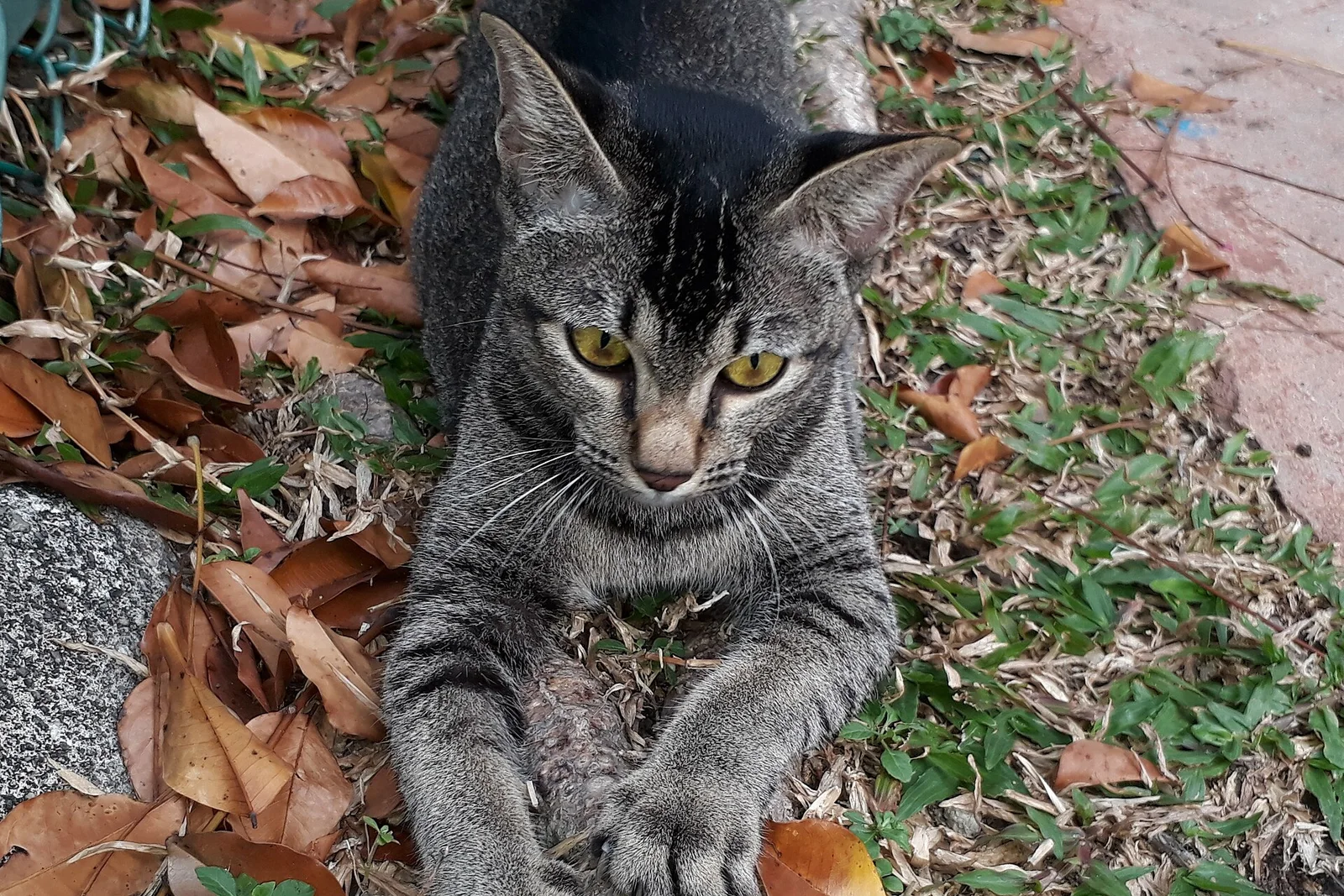
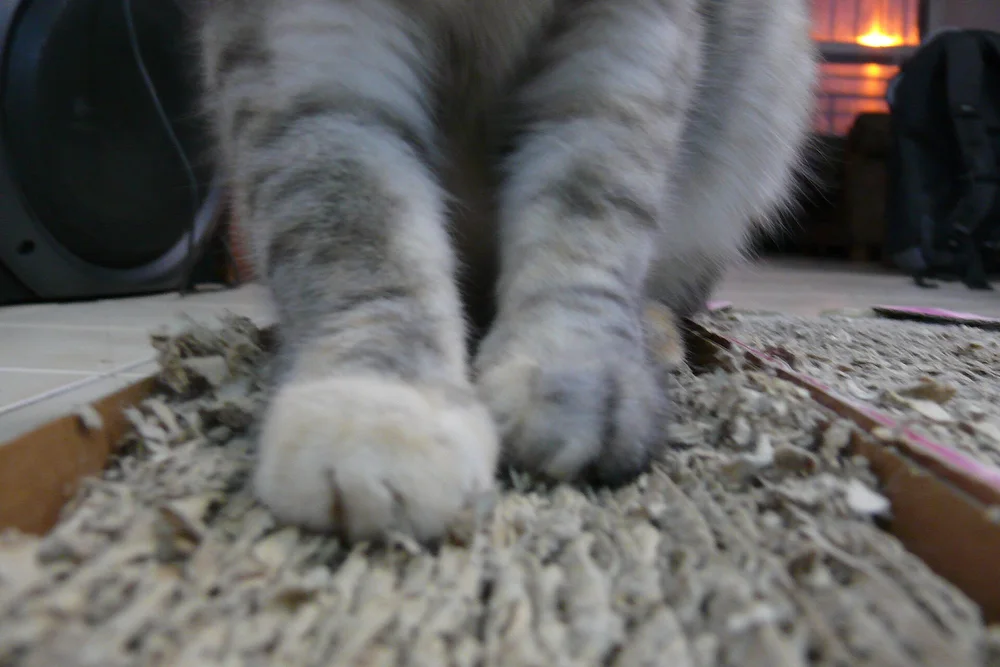
Scratching does three jobs at once, which is why "just stop doing that" is not an option a cat can take. First, it maintains the claws: cats drag their front claws downward — a motion called stropping — to shed the worn outer husk and expose a sharp new edge. Second, it is exercise: a full scratching stretch works the front legs, shoulders, and spine, which is why cats often scratch right after waking up. Third, it is communication: glands between the paw pads leave a chemical message on the surface, and the marks themselves are visible signals to other cats, so scratching is closer to posting a notice than to sharpening a pencil.
| What the scratching is doing | What you will notice | What actually helps |
|---|---|---|
| Claw maintenance (stropping) | Shed claw husks near a favorite spot; claws look clipped and neat | At least one sisal, wood, or cardboard post that does not wobble; occasional tip trims |
| Stretching and exercise | Cat at full stretch, claws dug in high, often just after a nap | A post taller than the cat at full stretch, placed near where they sleep |
| Territory marking | Scratches cluster around doorways, windows, corners of new furniture | More posts in those spots; calm the household; one post per cat plus a spare |
| Attention (learned) | Scratching starts when you walk in or while you are watching | Reward the post, not the performance; give play on a routine instead |
One diagnostic clue is worth knowing before you buy anything: if the scratched spots are concentrated in one or two places, your cat is telling you about a surface preference — solve it by matching the post. If scratching is spread all over the home, especially around doors and windows, the pattern more often signals a general sense of insecurity, and the fix leans toward more resources and calmer territory rather than one perfect post.
Reading Your Cat's Scratch Style
Watch your cat for a week before spending money. The two things to notice are direction and height.
- Vertical or horizontal? Most cats drag down on a vertical surface — a post, a tree trunk, the side of the sofa. Some prefer horizontal surfaces — carpet, rugs, flat cardboard pads — and a horizontal scratcher will win where a post never got a look.
- How high? A cat scratching textured wallpaper at chest height needs a vertical surface it can hit at the same height. Upright posts should be as tall as the cat is when standing on hind legs in a full stretch — a short kitten post never gets used by an adult.
- What texture? Sisal rope and wood suit most cats; corrugated cardboard offers less resistance and is often the winner for kittens and senior cats, who find it easier to dig in. Carpet-covered posts work for some cats, but if the sofa is carpet, a carpet post can blur the message — sisal is the clearer signal.
- Where does it happen? The spot tells you placement. Cats scratch where they hang out and where they transition between areas, which is precisely why a post tucked behind a door in a spare room is ignored.
The Redirect Plan, Step by Step
This sequence is the version that keeps working in real homes, including rentals where mounting anything on a wall is not an option:
- Provide the right post. Stable and heavy enough that it does not move when pushed — a post that topples mid-scratch teaches a cat to distrust it. In multi-cat homes, plan on one post per cat plus one extra, in different locations, so no cat has to compete for the resource — the same resource-spacing rule that a cat-friendly home setup follows.
- Place it where the scratching is happening. Right next to the damaged furniture at first — you are offering an alternative, and alternatives beat willpower. A second post goes near a favorite sleeping spot, because cats stretch and scratch after waking.
- Prime it so it gets used. Rub catnip or silvervine on the post, pre-scratch the surface lightly with a screw tip as a visual cue, and play a wand-toy game around the base so claws land on it in play. Place treats or a food puzzle on or by the post. If your cat's claws touch it once, reward immediately — praise or a treat within a couple of seconds.
- Protect the target while the habit builds. A throw over the sofa arm, double-sided tape on the scratched area, or a simple corner guard breaks the old pattern long enough for the new one to take hold. Keep the protection in place for several weeks — removing it after two days is the most common reason the plan "fails."
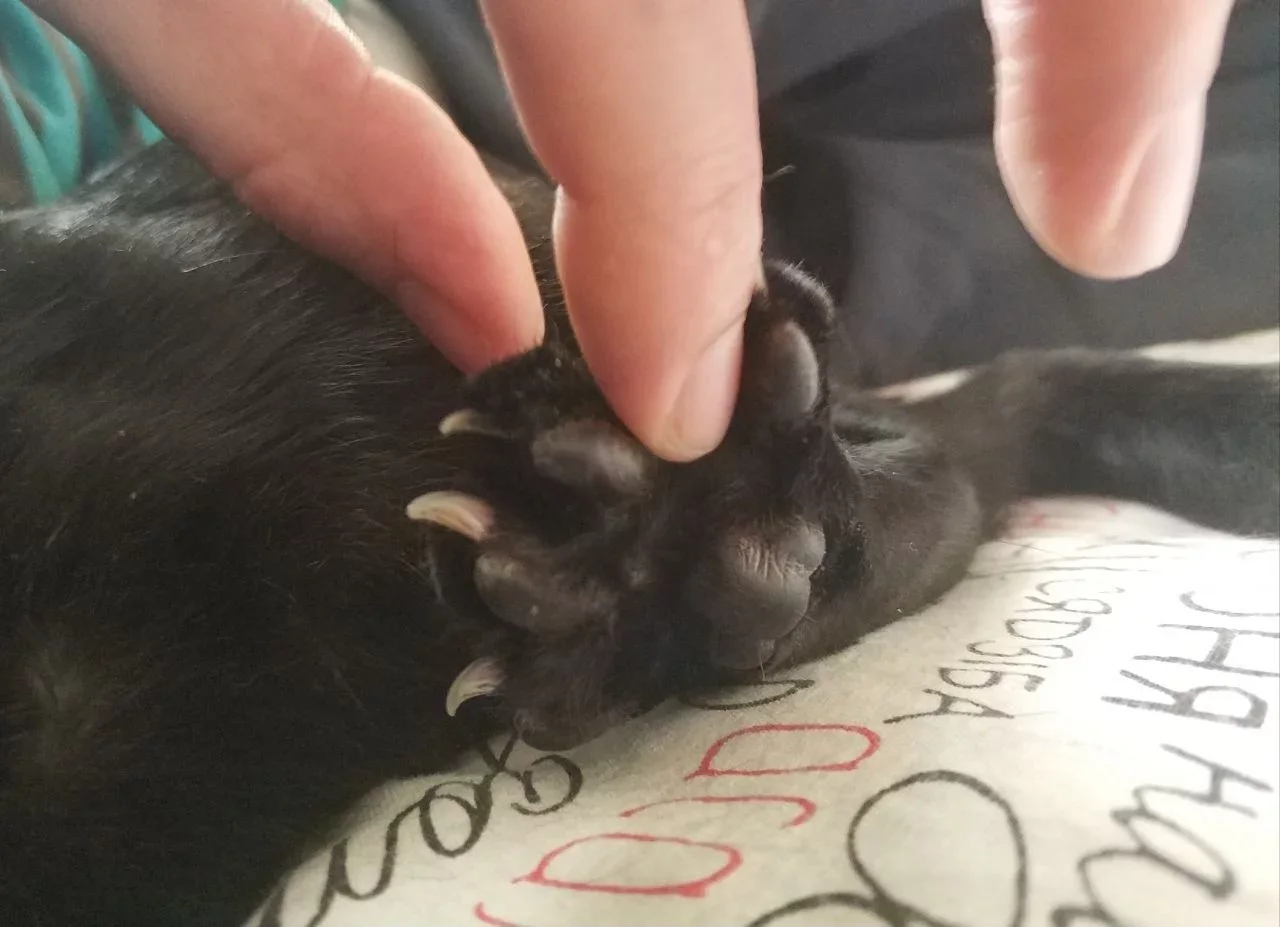
- Trim the claws while you wait. Shorter tips mean less damage from any accident scratch while the post habit forms. Our step-by-step trim guide covers doing it calmly. Trimming is support, not the solution.
- Review after a month. Still using the sofa and ignoring the post? Adjust: move the post closer to the scratch spot, upgrade the surface, add height, or change style (vertical to horizontal). A post your cat ignores is information, not failure.
Protecting Furniture While the Habit Forms
The protection layer matters more than most guides admit, because a cat who can still scratch the sofa will keep rehearsing the sofa habit while you are not looking. Practical options, from least to most invasive:
- Textiles. A throw or slipcover over the scratched arm blunts both the scratch and the habit. Wash it now and then, since cats sometimes target furniture because of residual scent.
- Double-sided tape or slick covers. These change how the surface feels, which is the fastest way to make an arm boring. Clear adhesive guards made for furniture corners work well on modern upholstery.
- Barriers with purpose. Do not just wall off the area — pair every barrier with a better option nearby. Removing scratchable surfaces without adding a legal outlet is how furniture problems turn into carpet problems.
- Scent and pheromones. In homes where scratching exploded after a move, new furniture, or a new pet, a synthetic pheromone diffuser can take the edge off the insecurity that fuels marking-scratch.
What Does Not Work (Please Don't)
- Punishment. Spray bottles, claps, and shouting reliably produce scared cats and secretive scratching. Cats do not connect delayed punishment to the act, and the scratch often continues the moment you leave (reading cat body language helps you see the stress the punishment adds).
- Declawing. Removing the claws means amputating the last bone of each toe — it is major surgery with lifelong behavioral and pain risks, and it is opposed or banned by veterinary and animal-welfare bodies worldwide. Every scratching problem has a humane path; this is not one.
- Trimming-only plans. Claw trims reduce damage but leave the urge unmet. A cat still needs to scratch somewhere.
- Foil-and-hope. Foil deters some cats and is ignored by others. It treats the symptom; without a replacement option, the cat simply relocates the behavior.
- Bad post placement. A post in a corner nobody uses, a room the cat never enters, or against a wall it cannot stretch on will look like proof that "posts don't work." Placement is half the fix.
A Note for Senior Cats
Senior cats often scratch less — not because the need disappeared, but because arthritis makes the full stretch uncomfortable. Watch for the opposite problem: claws that grow long enough to catch in soft furnishings or curl toward the pads, which hurts. Older cats may need regular trims because they cannot maintain their own claws as easily, and very overgrown or thickened claws can also be an early sign of conditions like osteoarthritis or hyperthyroidism, so unusual claw changes deserve a vet's look. For comfort, offer lower-resistance options — an angled cardboard scratcher, a short horizontal pad, or a lower post — and keep the nail-trim routine gentle and frequent rather than heroic and rare.
When to Call a Vet
Book a visit if scratching becomes intense enough to cause bald patches or broken skin, if it starts suddenly alongside hiding, house-soiling, or appetite changes, or if claws are catching, curling into the pads, or growing noticeably thick. Scratching that erupts with skin irritation is usually medical (allergies, parasites, or stress-related over-grooming), not a discipline problem. Cat Cafe Central is educational content and cannot diagnose your cat — for anything sustained or worsening, contact your veterinary team.
Trusted Sources
Related Guides and Tools
Indoor Cat Enrichment Basics: Play, Climbing, Scratching, and Choice
A practical enrichment guide for indoor cats, including play routines, food puzzles, scratchers, windows, and rest.
How to Trim Cat Nails Calmly, One Tiny Step at a Time
A gentle cat nail trim process using handling practice, good light, tiny sessions, and safe clipping technique.

How to Set Up a Cat-Friendly Home Without Overcomplicating It
Create a cat-friendly home with separated resources, vertical space, scratching options, quiet retreats, and predictable routines.
Related glossary: Scratching, Territory, Positive Reinforcement.