Quick Answer
Many cats never need their nails trimmed — scratching naturally maintains claw length — but indoor cats, seniors with arthritis, and cats who can't scratch normally often do. The calm method: wait for a relaxed moment, press the paw gently to extend each claw, and trim only the clear tip, well away from the pink quick. Two or three claws per session beats ten stressful ones. If your cat's claws click on the floor, catch on fabric, or curve into the paw pad, it's time to trim (iCatCare: Trimming Your Cat's Claws).
- Check first: claws clicking on hard floors, catching in blankets, or visibly curving = time to trim.
- The safe zone: only the clear tip past the pink quick — when in doubt, trim less.
- Never declaw: it's banned in many countries and causes long-term pain; scratching posts are the humane alternative.
Why Nail Care Is About Comfort, Not Cosmetics
A cat's claws grow continuously, like human nails, and the outer layer sheds naturally through scratching — which is why cats who use scratching posts often never need help. International Cat Care's position is clear: most cats don't need their claws trimmed because scratching maintains them at a good length, and routine trimming isn't advisable since cats need healthy, sharp claws for climbing, playing, and defense (iCatCare: Trimming Your Cat's Claws).
The exceptions are real, though. Senior cats with arthritic joints may stop scratching because it hurts to stretch, and their claws can then overgrow — catching in soft furnishings or even growing into the paw pad, which is painful and can lead to infection. Indoor cats on soft carpet may not wear claws down either. When overgrowth happens, trimming isn't cosmetic; it's comfort and health care.
How to Tell If Your Cat Needs a Trim
| Signal you notice | What it means | Action |
|---|---|---|
| Claws click on hard floors when walking | Claws touch the ground at full length | Trim the front claws |
| Claws catch in blankets, sweaters, carpets | Claws have hooked past the pad line | Trim — check the quick carefully |
| Claw visibly curves toward the paw pad | Overgrowth, common in seniors who can't scratch | Trim soon; if already touching the pad, see a vet |
| Cat gets a claw stuck and has to free it | Hooked tip snags on fabric loops | Trim the hook off all front claws |
| Cat scratches the post regularly, no signs above | Natural maintenance is working | No trim needed — leave the claws alone |
If none of these apply and your cat scratches a post regularly, skip the trim — the post is doing the job. Scratching is also exercise and marking behavior, so never remove or discourage the post itself; see our guide on redirecting scratching kindly if the furniture is the target instead.
Senior and arthritic cats deserve extra checks. These cats often can't scratch effectively anymore, so check their claws weekly even if they never needed help before — Cornell's senior-cat guidance notes older cats may scratch less, so nails should be checked regularly (Cornell: Special Needs of the Senior Cat).
The Calm Step-by-Step Method
Preparation is 80% of a calm trim. If your cat has never been handled around the paws, spend a week on paw-touching before you ever pick up clippers.
- Choose the right moment. Trim when the cat is sleepy or freshly relaxed — after a meal or a play session — not when they're alert and active. A drowsy cat is a cooperative cat.
- Gather everything first. Cat-specific nail clippers (guillotine or scissors style), styptic powder or cornstarch for accidents, and a towel in case you need to pause. Never chase a cat around the house with clippers.
- Get comfortable. Sit on the floor or a couch with the cat in your lap, or have them stand on a table with a helper gently steadying them. Some cats do best swaddled in a towel with one paw out at a time — that's fine and calm.
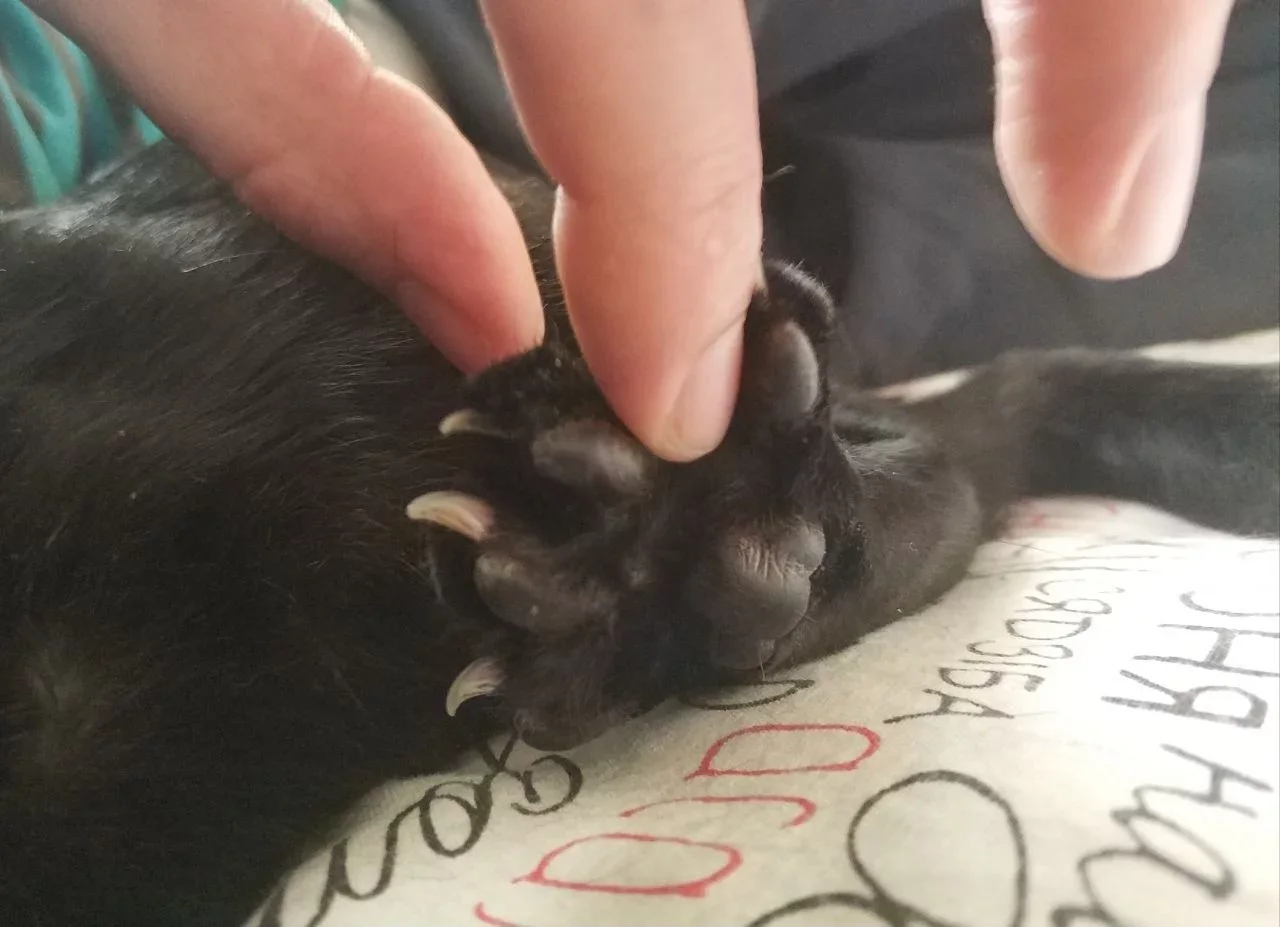
- Extend one claw at a time. Press the center of the paw pad gently — the claw extends automatically, exactly as in the photo above. Look for the pink quick inside the claw.
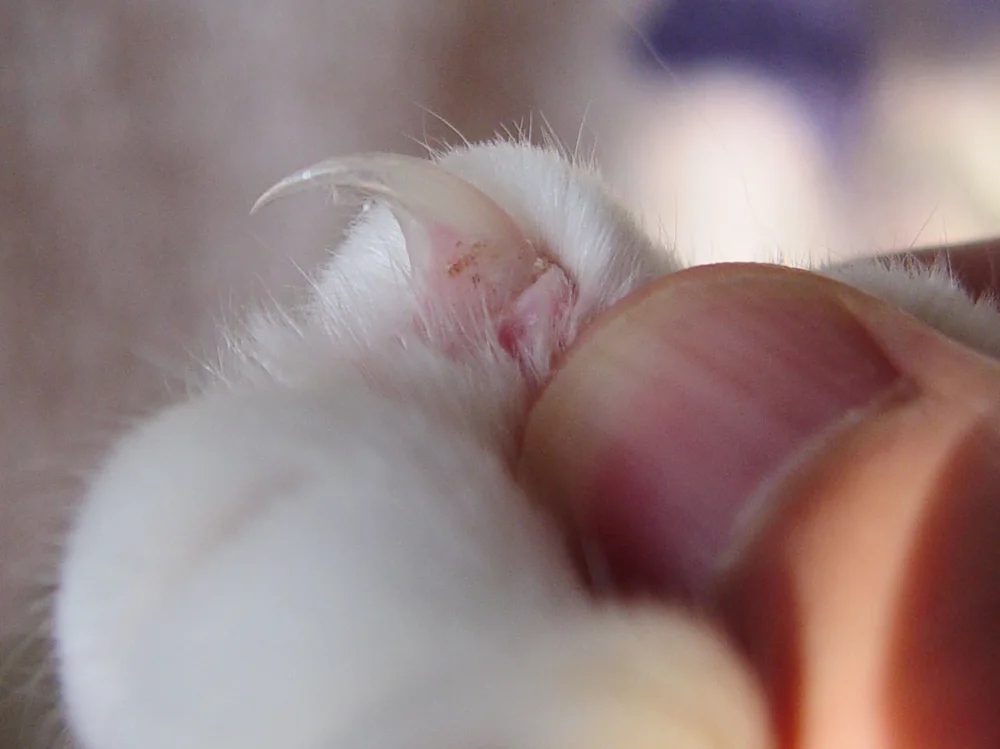
- Trim the clear tip only. Cut at a slight angle, a few millimeters past the quick, removing just the hook. In clear or white claws the quick is easy to see; in dark claws, trim very small amounts and stop at the first sign of the inner nail changing texture or color. When in doubt, trim less.
- Front paws first, back paws only if needed. Front claws grow faster and catch more because cats use them for climbing and play. Hind claws often stay naturally worn in cats who scratch — check them, but don't assume they need the same schedule. If you're unsure what's normal for your cat's age, our vet care basics guide covers the checkup conversations worth having.
- Do two or three claws, then stop. Give a treat and end the session on a win. You can finish the rest tomorrow — a calm routine over days beats a stressful marathon.
- Handle accidents without drama. If you nick the quick, apply gentle pressure with styptic powder or cornstarch for a minute. It bleeds a little and looks dramatic but is rarely serious — and staying calm tells the cat there's nothing to fear. If bleeding doesn't stop after several minutes of pressure, contact your vet.
- Praise and reward every session. A treat immediately after each trim builds the association that makes next time easier. Our grooming basics guide covers how to make handling routine.
When Trimming Isn't Working
Some cats genuinely cannot tolerate home trims, and that's okay — there are good alternatives that don't involve restraint battles or harm:
- Ask your vet or a groomer. A professional trim is quick, and many clinics do nail trims as a walk-in service for a small fee.
- More scratching surfaces. Sometimes "needs a trim" is really "needs a better scratch." A sturdy sisal post in the cat's favorite stretch spot does double duty — see our guide to scratching done kindly.
- Never use nail caps as a trim alternative for a distressed cat. International Cat Care advises against caps because they can be distressing and prevent normal claw behaviors — and declawing is outright banned in many countries as inhumane surgery (iCatCare: Trimming Your Cat's Claws).
- Pair handling with food. Lick mats or small treats during paw handling retrain a cat who associates paws with being held down.
Common Mistakes Owners Make
- Cutting into the quick. The most common mistake — always look before you cut, and cut less than you think you need. Dark claws are high-risk; trim microscopically.
- Trimming cats who don't need it. Over-trimming leaves cats without their natural defenses and can make them anxious. If the claws aren't overgrown, leave them.
- Making it a wrestling match. Pinning, scruffing, or chasing the cat trains them to fear the clippers permanently. Slow, voluntary sessions win.
- Rushing the whole job in one sitting. A full trim on a reluctant cat in one go teaches dread. Two claws a day is a completely valid schedule.
- Ignoring senior cats' claws. Arthritis changes everything — seniors who always maintained their own claws can develop painful overgrowth quickly. Check weekly.
Trusted Sources
Related Guides and Tools
Cat Grooming Basics: Brushing, Nails, Teeth, and Coat Checks
A low-stress grooming primer for brushing, nail checks, teeth basics, handling practice, and when mats need help.
How to Stop Furniture Scratching Kindly: Redirect, Protect, and Reward
A humane furniture scratching plan that gives cats better scratch options and protects furniture while new habits form.
Vet Care Basics for New Cat Owners: Visits, Records, and Red Flags
Understand routine veterinary care, adoption exams, records, vaccine conversations, and signs that should not wait.
Related glossary: Quick, Positive Reinforcement, Scratch Post.