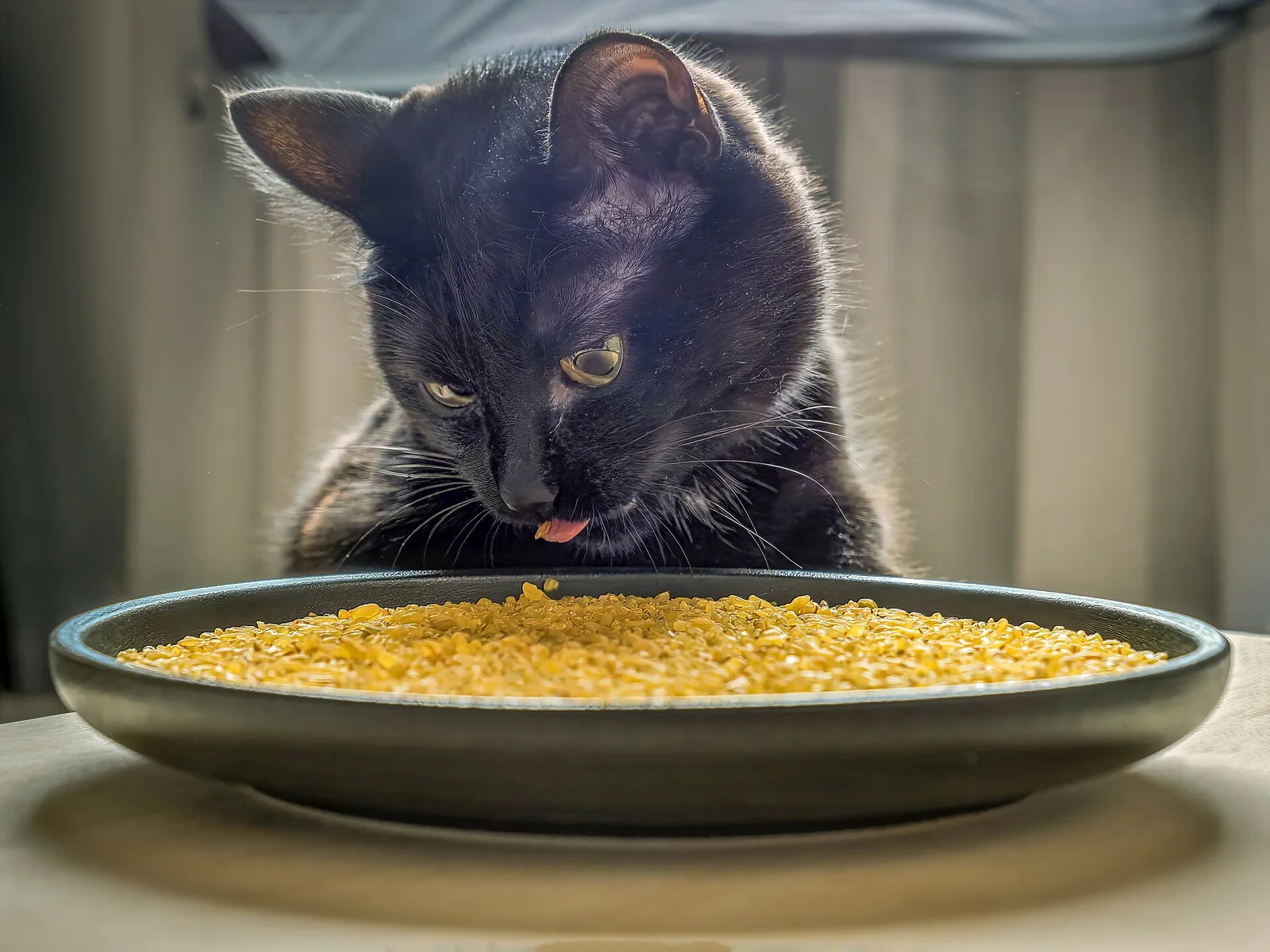
Quick Answer
A healthy cat should never go more than about 24 hours without eating — and far less for kittens. If your cat is refusing food, the first step is timing: a single skipped meal after a treat-heavy day is different from two days of refusal. Watch for the danger signs that mean an immediate vet call: lethargy, vomiting, diarrhea, hiding, straining to urinate, or a cat who smells bad from the mouth. Cats hide illness well, and a cat who stops eating is often showing you the first visible clue of a deeper problem (Cornell: Anorexia in Cats).
- Under 6 weeks old: 12 hours without food is an emergency — call your vet immediately.
- Adult cat: 24 hours without food warrants a vet call; don't wait for day three.
- Any cat with other symptoms: don't wait — call the same day.
Why a Cat Who Stops Eating Needs Attention Fast
Cats are not like dogs when it comes to skipped meals. When a cat fasts, even briefly, their body starts mobilizing fat for energy. In cats, that fat mobilization can overwhelm the liver, leading to hepatic lipidosis — a serious, potentially fatal condition where the liver becomes clogged with fat. Cornell's Feline Health Center explains that anorexia is a clinical sign of many different feline health problems, from diabetes and kidney disease to pancreatitis and hyperthyroidism — and that food avoidance can even have psychological roots, like disliking a new food or stress after another animal moves in (Cornell: Anorexia).
Cornell is blunt about the stakes: whatever its cause, anorexia can have a severe impact on a mature cat's health if it persists for as little as 24 hours. For a kitten younger than six weeks, food avoidance for just 12 hours can be lethal. That urgency is why the checklist below starts with timing and vet thresholds before it ever gets to food brands or flavor tricks.
Step-by-Step Checklist: What to Check
Work through this order. It rules out the dangerous causes first and saves your vet a guessing game.
- Check the timeline. One missed meal after a change in routine (new food, new schedule, travel, guests) is common. Two or more missed meals, or any single missed meal with other symptoms, moves you to the vet call.
- Look at the mouth. Lift the lips gently: red or swollen gums, brown tartar lines, a broken tooth, or something stuck between teeth are all appetite killers. Dental disease is one of the most common reasons older cats stop eating, and it's treatable.
- Smell for clues. A sweet or fruity breath smell can signal kidney issues; a foul smell can mean dental infection. Cats with advanced kidney disease sometimes develop a characteristic odor.
- Check the litter box. No urine or very little urine in 24 hours is an emergency — especially in male cats, who can develop life-threatening urinary blockages. Diarrhea or constipation can also suppress appetite.
- Feel for fever. Warm ears, a warm nose, lethargy, and hiding together suggest a fever or infection. A cat with a fever often stops eating entirely.
- Review what changed. New food? New bowl? Moved the bowl? New pet? A dirty bowl or stale food left out all day can also turn a cat off — cats have extremely sensitive noses and some refuse food that's been sitting out too long.
- Consider the food itself. If you recently switched brands or flavors, some cats stage a hunger strike. That's real, but the rule still applies: if refusal passes 24 hours, involve the vet rather than playing a switching game. See our guide to transitioning cat food safely for the gradual method that avoids this.
When Each Symptom Means Vet Now
Use this table to sort what you're seeing. When in doubt, the vet call is always the right answer — this is guidance, not a diagnosis.
| Symptom alongside not eating | What it can mean | Timing |
|---|---|---|
| Vomiting repeatedly, or any vomiting in a kitten | Gastrointestinal upset, obstruction, or systemic illness | Vet same day |
| No urine in 24h, straining in the box, crying while urinating | Urinary blockage (life-threatening, especially males) | Emergency — go now |
| Lethargy, hiding, not grooming | Fever, infection, pain | Vet same day |
| Yellow tint to gums or skin | Possible liver disease (hepatic lipidosis) | Emergency — go now |
| Weight loss over 2+ weeks | Kidney disease, diabetes, hyperthyroidism, cancer | Vet this week |
| Bad breath, drooling, pawing at mouth | Dental disease, mouth pain | Vet this week |
| Drinking much more water than usual | Kidney disease or diabetes | Vet this week |
For a fuller picture of which symptoms need urgent attention and which can wait for a scheduled visit, our cat symptom checklist walks through the same triage logic interactively.
Safe Ways to Encourage Eating at Home
These tricks are only appropriate after you've ruled out emergency signs and ideally after a vet conversation. They work for the common cases: a picky cat, a cat recovering from a minor upset, or a cat whose appetite dipped during a routine change.
- Warm the food. Heating wet food for about 10 seconds (test it first — it should be lukewarm, never hot) intensifies the aroma. Cats decide with their noses first.
- Offer something stinky. Fish-based foods are famously tempting, but keep it as a short-term tool, not a new permanent diet — see our beginner's guide to cat food for balanced choices.
- Try a different texture. A cat who refuses pâté may accept shreds, chunks, or even kibble softened in warm water. Texture preferences are deeply personal.
- Feed small, frequent portions. A tiny portion every few hours is less intimidating than a full bowl and lets you track exactly how much is eaten.
- Move the bowl. A quiet corner away from the litter box, washer, and other pets removes the stress that can suppress appetite. If you have multiple cats, check our guide to managing multi-cat feeding — food competition is a common hidden cause.
- Use your hands. Some cats will eat from a flat plate or directly from a finger when they refuse a bowl — hand-feeding a few bites can "reset" a reluctant eater.
Common Mistakes Owners Make
- Waiting it out. "He'll eat when he's hungry" is dangerous advice for cats. Their fasting metabolism makes them uniquely vulnerable — the 24-hour mark matters.
- Switching foods daily. Rapid food changes cause stomach upset, which makes the not-eating worse. If you must switch, follow the 7-day transition method.
- Only offering treats. A cat who holds out for treats and refuses meals can end up nutritionally unbalanced — treats are not a diet.
- Forgetting kittens and seniors need different timelines. Kittens can crash in 12 hours; seniors often have underlying conditions that make fasting dangerous sooner.
- Ignoring a multi-day pattern. A cat who eats less over weeks, not days, may have dental pain or an early chronic condition. Slower isn't safer — it's just less obvious.
When to Call a Vet
Call your veterinarian immediately if your cat has gone 24 hours without eating (12 hours for a kitten under six months), or if the not-eating comes with vomiting, lethargy, hiding, straining to urinate, yellow gums, or any other worrying symptom. Cornell's advice is direct: consult a veterinarian immediately upon noticing any signs of feline anorexia, and follow all guidance on providing nourishment while the cause is found (Cornell: Anorexia). Cat Cafe Central is educational content — it cannot diagnose your cat, and nothing here replaces a vet's judgment.
Trusted Sources
Related Guides and Tools
What to Feed a Cat: A Beginner's Guide to Meals, Water, and Treats
A beginner-friendly overview of complete cat food, wet versus dry food, treats, water placement, and food changes.
How to Transition Cat Food Without Upsetting the Routine
A gradual cat food transition plan with practical pacing, appetite checks, and what to do if your cat refuses the new food.
Vet Care Basics for New Cat Owners: Visits, Records, and Red Flags
Understand routine veterinary care, adoption exams, records, vaccine conversations, and signs that should not wait.
Related glossary: Appetite, Hydration, Emergency Sign.